



CV
Dr. Carmit Valensi is a senior researcher at the Institute for National Security Studies (INSS) and Head of the Syria Research Field. She specializes in contemporary Middle East affairs, strategic studies, military concepts, and terrorism, and her work on these subjects has appeared in academic and professional publications. She is the co-author of the book Syrian Requiem: The Civil War and its Aftermath (Princeton University Press, 2021). Dr. Valensi earned her Ph.D. in political science at Tel Aviv University, focusing on "hybrid actors" such as Hamas, Hezbollah, and FARC. She holds a B.A. in Middle East history and political science, and an M.A. in diplomacy studies from Tel Aviv University. In 2010-2011 she was a research fellow in the Fox Fellowship program in regional and international studies at Yale University. Dr. Valensi served as a senior advisor in the Intelligence corps and worked as an analyst at the IDF's Dado Center for Interdisciplinary Military Studies.
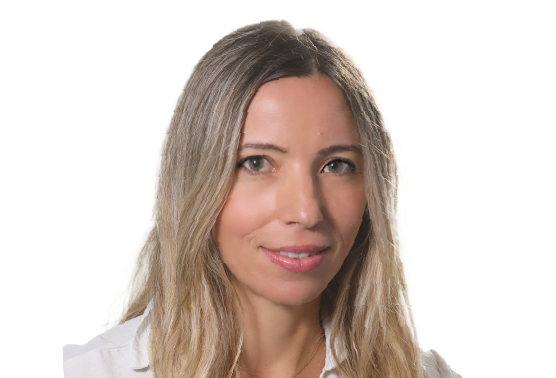
Carmit Valensi
Senior Researcher
carmitv@inss.org.il
03-640-0481
Publications
All PublicationsIsrael’s Red Line in Syria—and the Price of Confrontation with Turkey
Should Israel have taken military action in Syria at the risk of escalating tensions with Turkey, and how should it address Turkish entrenchment in Syria moving forward?
27 August, 2026The Race for $216 Billion: Syria’s Economy and Reconstruction Efforts in the al-Sharaa Era
A year and a half after Assad's fall: What is the state of the Syrian economy, and what can it teach us about the future of the new Syria?
14 July, 2026Syria in the Shadow of the War with Iran: Repositioning and Exploiting Regional Opportunities
What are the implications of the campaign in Iran for Damascus, how is the al-Sharaa regime working to exploit new opportunities, and what should Israel be paying attention to?
31 March, 2026Between Peace and Hudna: Islamic Discourse in Syria and the Israeli Dilemma
How does the religious establishment of the “new Syria” view the possibility of an agreement with Israel—and what can be learned from this?
16 January, 2026The New Syria—One Year After al-Sharaa’s Rise to Power
How does Syria look one year after the fall of Bashar al-Assad’s regime—both domestically and internationally—and what are the recommendations for Israel?
14 December, 2025The Collapse of the Assad Regime and Syria’s Future Through the Lens of Syrian Textbooks
This article examines the characteristics of the Syrian state and the events that led to the fall of Bashar al-Assad and the rise of the new regime, as reflected in the official curriculum from 2017–2026.[1] It proceeds from the assumption that curricula are a useful tool for Curriculum Informed Strategic Assessment (CISA). Experience shows that curricula can be read prospectively, because they reflect a national vision, or retrospectively, to assess their effects—and where the textbooks anticipated developments and or did not. In this article, we examine in hindsight the relationship between textbooks and the Assad regime’s policy during the Iron Swords War, as well as the events that led to the regime’s collapse. Looking ahead, we seek to understand where Syria is headed, on the assumption that the shaping of the new curriculum is an important axis as part of the broader pattern of the nation’s development. Broadly speaking, at least for the present, we identify in the new regime an aspiration to maintain the country’s authoritarian character and to build a nationalist, strong and ambitious Arab state committed to conservative Islam, while preserving strategic flexibility in the region. Syria is in a period of formation and construction, so the current environment remains complex. Jihadist elements exist, but they are not part of the official curriculum. Thus, the curriculum aligns with the regime’s broader direction, which seeks—at least for the present—to preserve the emerging status quo in Syria.
2026-06-01 All magazine articles
Media
All media A Turkish visit to Syria has Israel worried
1 October, 2026
Netanyahu's Message to the World
1 October, 2026