


Publications
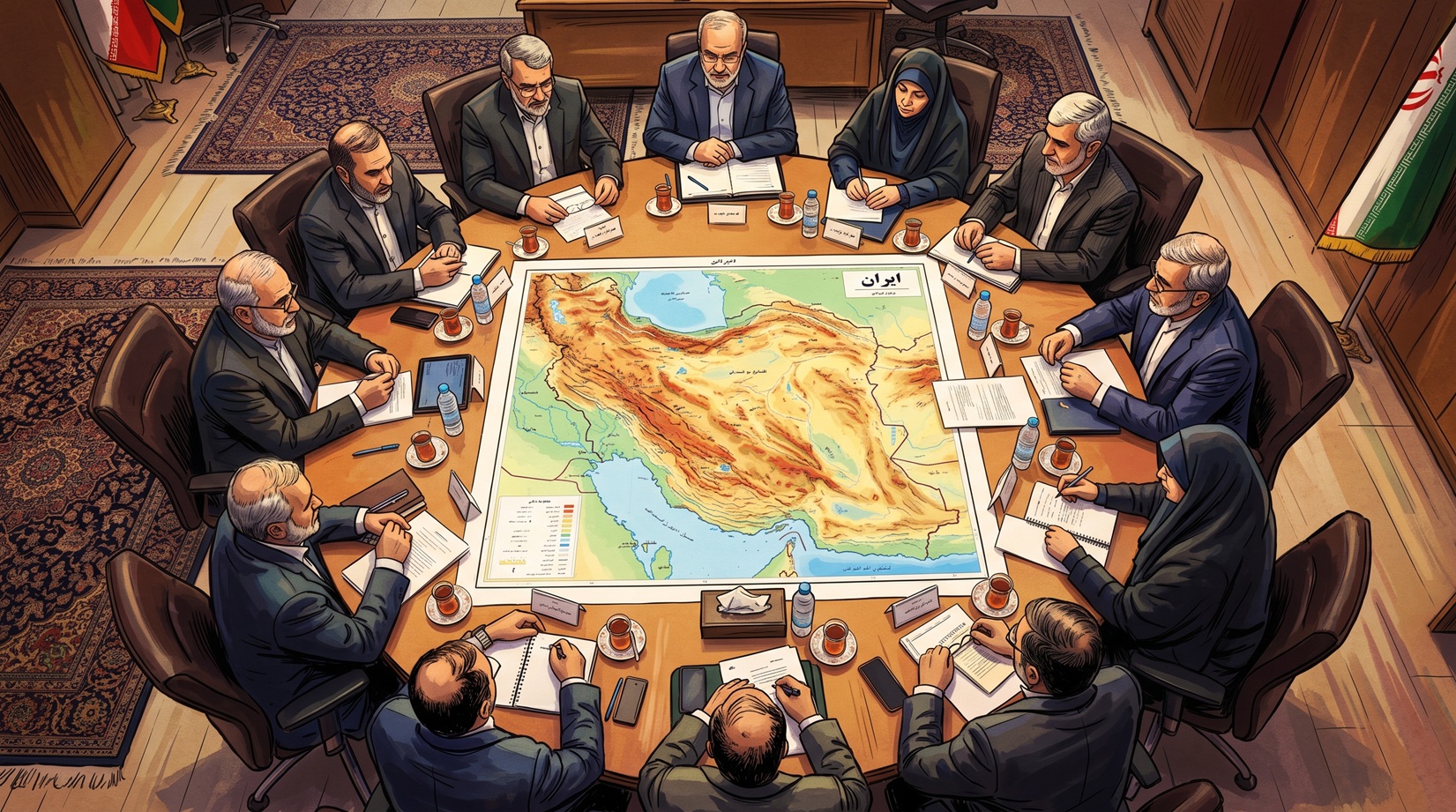
Conclusions from a discussion among Iranian experts, in which criticism was voiced against Tehran's war strategy
INSS Insight No. 2202, October 14, 2026
Follow us on GoogleIn a recent expert discussion held in Tehran marking 46 years since the outbreak of the Iran–Iraq War, three Iranian researchers discussed the lessons of Khomeini’s decision to accept a ceasefire in July 1988 and their implications for the current conflict with the United States. The researchers pointed to Iran’s difficulty in defining achievable political goals and ending wars; the danger of overestimating its capabilities and missing diplomatic opportunities; and the impact of revolutionary ideology on the willingness to compromise. The discussion reflects criticism of several assumptions: that time necessarily works in Iran’s favor, that continued resistance amounts to victory, and that control over the Strait of Hormuz guarantees political gains. The central lesson is that continuing a confrontation without an exit strategy could force Tehran to compromise in the future under even harsher conditions.
In July 1988, Iran’s leader, Ruhollah Khomeini, was forced to accept UN Security Council Resolution 598, which brought an end to the Iran–Iraq War after eight years of fighting. Khomeini compared the decision to "drinking a chalice of poison"—an expression that has since become a symbol of painful political decision-making, in which the Iranian leadership is forced to accept a compromise that runs counter to its stated goals. Nearly four decades later, against the backdrop of the ongoing confrontation with the United States, the debate in Iran is once again turning to the circumstances that led to that historic decision and the lessons that should be drawn from it today.
In an expert discussion held in Tehran to mark 46 years since the outbreak of the Iran–Iraq War, recently published on the Khabar Online website, three Iranian researchers highlighted strategic failures from the war era that may also be relevant to the present reality. Although the discussion focused primarily on the 1980s war, the participants explicitly referred to the current confrontation with the United States and to more recent conflicts. The central message was that Iran struggles not only to end wars, but also to define what constitutes victory, to recognize when a diplomatic opportunity has arisen to end a campaign, and to translate military achievements into political gains. The participants pointed to a combination of mistrust toward the adversary; flawed intelligence assessments of its intentions and capabilities; maximalist, unachievable goals; the influence of revolutionary ideology; the lack of a clear exit strategy; and a perception that equates negotiations with surrender, and political compromise with treason.
Historian Mohammad Doroudian argued that one of Iran’s central problems is its difficulty ending wars and crises once they have begun. In this context, he mentioned not only the Iran–Iraq War but also the hostage crisis at the U.S. Embassy in Tehran and the current confrontation with Washington. “War for war’s sake is meaningless,” said Doroudian. Recent conflicts require Iran to define not only its military objectives, but also the conditions for ending the fighting.
Doroudian criticized the prevailing perception among certain factions in Iran that the threat posed by its enemies is a permanent state, and therefore fighting must continue without clearly defining a victory point. This perception, which is also influenced by religious and historical roots, risks turning the continuation of the struggle itself into an objective, without sufficient evaluation of the political gains that can be derived from it.
Particularly noteworthy is his reference to the Iranian perception of deterrence in the Strait of Hormuz. Doroudian challenged the assumption that Iran's ability to control the strait and disrupt the flow of global oil and trade guarantees deterrence against an American attack. He recalled that, contrary to expectations in Tehran, Iranian strikes on oil tankers did not prevent the United States from responding with military force. According to him, the mere ability to inflict damage on an adversary does not guarantee that they will refrain from using force. This distinction is especially significant given the current Iranian view that control of the Strait of Hormuz and the ability to damage the global economy grant Tehran strategic leverage over Washington. Doroudian's remarks suggest that a distinction must be made between the ability to cause pain to an opponent and the ability to force a change in their policy.
Prof. Jahangir Karami, an international relations expert at the University of Tehran, presented sharp criticism of the lack of strategic realism in Iran's decision-making. According to Karami, war must serve clear, achievable political objectives. Military successes are not enough if one does not know how to translate them into political gains, and there is no reason to assume that continued fighting will necessarily improve Iran’s bargaining position.
Karami warned against overestimating Iranian capabilities, underestimating those of its adversaries, and the tendency to set maximalist demands without examining the practical possibility of achieving them. He emphasized that a military advantage may be temporary and that political opportunities do not remain open indefinitely. Rejecting a compromise in the hope of securing better terms could ultimately force the leadership to accept the same compromise—or an even worse one—after its military, economic, and political position has deteriorated.
One of the most important lessons presented by Karami concerns the need to evaluate the country’s national stamina. According to him, decision-makers must not assume that Iran can continue the struggle indefinitely without accounting for the cumulative costs to its economy and society. Waiting too long risks narrowing the window of options to the point where compromise is no longer a strategic choice, but a necessity born of a lack of alternatives.
Karami also referenced what he termed the "Turkmenchay Syndrome," referring to the 1828 treaty imposed on Iran by Russia in the 19th century. He argued that the historical memory of that treaty contributed to the development of a political mindset that views negotiations as a sign of weakness, compromise as surrender, and an agreement as betrayal. This mindset risks paralyzing diplomatic initiatives even when they may serve Iran's national interests.
Researcher Sahand Iranmehr emphasized the impact of revolutionary ideology on how victory and defeat are defined. He noted that when a war is framed as an absolute moral struggle between truth and falsehood, and when sacrifice and resistance are themselves seen as expressions of victory, defining realistic political goals and accepting compromises becomes more difficult.
Iranmehr warned in particular of the potential gap between the rhetoric used to mobilize the public for war and the leadership’s need for diplomatic flexibility. Promises of absolute victory, alongside framing any compromise as surrender to the enemy, risk creating public expectations that the leadership will struggle to walk back. When circumstances eventually demand a shift in course, supporters of the regime may see the decision as a betrayal of those promises. In this context, Iranmehr highlighted the tension between the demands of war and the need to maintain national cohesion. Rallying the public around ideas of sacrifice and resistance may assist the leadership during wartime, he observed, but it also restricts its ability to conclude the conflict when conditions change.
The significance of this discussion lies not merely in its critique of the past, but primarily in its implications for the present. It reflects a willingness among Iranian scholars to challenge several basic assumptions of strategic thinking in Tehran. First, it casts doubt on the assumption that time inherently works in Iran's favor. The premise that prolonging the confrontation—and the economic and regional costs it imposes on the United States—will force Washington to compromise fails to account for the possibility that Iran's own endurance will also erode, and that Tehran's bargaining position may actually weaken over time.
Second, the discussion sharpens the distinction between survival and victory. The mere fact that the Iranian regime has managed to survive recent conflicts and maintain its resistance does not necessarily indicate success in achieving its stated political objectives. Similarly, the ability to disrupt shipping in the Strait of Hormuz or inflict economic damage on the United States does not guarantee that Tehran can force an agreement on its preferred terms.
Third, the discussion raises the question of the Iranian leadership's ability to prepare the public for a potential compromise. The more the leadership continues to frame the conflict in terms of an existential struggle and absolute victory, the harder it may be to justify a future diplomatic settlement that does not realize all of its demands.
This discussion should not be taken as evidence of a shift in Iran’s official policy, and one should certainly not deduce from it that its participants believe the confrontation should be brought to an end at any cost. Nevertheless, it does point to a concern over repeating past patterns: continuing the confrontation without a clear exit strategy, overestimating Iran’s bargaining power, and missing diplomatic opportunities out of a belief that time works in Tehran’s favor.
The central lesson emerging from the discussion is that the question is not merely how Iran can continue the struggle, but also when and under what conditions it should end it. Otherwise, Tehran may once again find itself in a position where the cumulative military, economic, and social costs force the leadership to accept a compromise under harsher terms than those that could have been achieved earlier. Nearly four decades after Khomeini's decision, the question of the "chalice of poison" continues to occupy those shaping strategic discourse and making decisions in Tehran.