


Publications
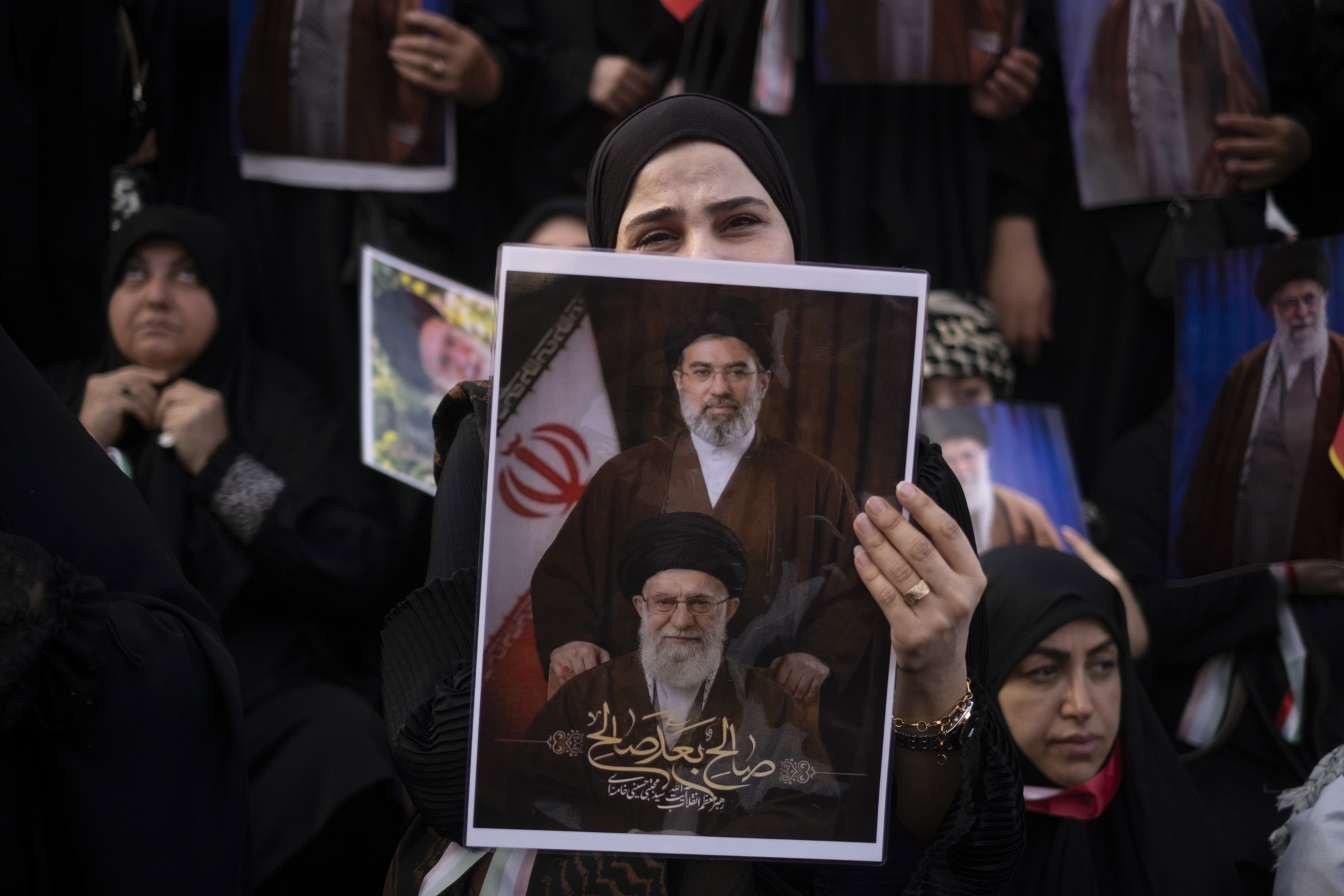
Mojtaba Khamenei succeeded his father following his assassination last February, but has not appeared in public since. How is Iran working to preserve the Supreme Leader's legitimacy, and how might his continued absence impact the regime's stability?
INSS Insight No. 2199, September 15, 2026
Follow us on GoogleAmid the ongoing absence of Iran’s leader, Mojtaba Khamenei, the Iranian media has recently featured a growing number of references emphasizing his experience, qualifications, involvement in state affairs, and standing alongside his father, while also providing religious justification for his absence. Accounts from his associates and supporters reflect an intensifying effort to bolster the legitimacy of a leader who assumed office without significant formal public experience and limited religious standing, amid criticism over hereditary succession and doubts regarding his condition and decision-making capacity. Despite efforts to establish his legitimacy, his prolonged absence risks worsening the legitimacy crisis and accelerating the evolution of the “Third Islamic Republic” toward a model in which the religious framework is preserved, but the core of governing power gradually shifts to the security establishment and the Islamic Revolutionary Guard Corps (IRGC).
Recently, a growing number of references in the Iranian media have emphasized the experience, skills, and capabilities of Iran’s Supreme Leader, Mojtaba Khamenei. Since being appointed to succeed his father, who was killed in the opening strike of the war on February 28, 2026, he has not appeared in public. Although messages, decrees, and statements have been published in his name, and senior regime officials continue to regard him as the ultimate authority, the messages released under his name have not been accompanied by public appearances, photographs, or recent recordings. While Iran’s state-affiliated media has sought to justify his prolonged absence on security grounds related to the ongoing conflict with the United States, the growing number of reports about him may indicate an increasing need on the part of the regime to address public and political doubts regarding his health, his ability to function, and whether he is even alive.
One of the most prominent favorable references to Mojtaba appeared in an extensive interview recently given by Farid al-Din Haddad-Adel, the brother of Mojtaba’s wife, Zahra, who was killed alongside his father and other family members at the start of the war. Haddad-Adel, who has known Mojtaba closely for nearly three decades, portrayed the new leader as an extremely modest individual who lived for years in a small apartment, abstained from luxuries, paid meticulous attention to financial matters down to the smallest detail, helped with household chores, and maintained a strict lifestyle without imposing it on his family. The interview went beyond constructing Mojtaba’s moral character and elaborated on his governance skills. According to Haddad-Adel, Mojtaba served for roughly 25 years as his father's assistant on security, military, and political affairs. Since 1997, he was entrusted with political assignments, including resolving disputes among senior officials, advancing the "resistance economy," and maintaining ties with military commanders. Particularly significant was Haddad-Adel’s reference to an account made by former IRGC deputy commander Ali Fadavi. According to this account, when questions arose as to whether an operational directive issued by Mojtaba was indeed binding, his father responded: "Agha Mojtaba's word is my word." The father was also said to have emphasized that his son was not merely an "Agha-Zadeh" (the son of a senior official), but an "Agha" in his own right, meaning a person of standing and authority.
Other recently published accounts have likewise sought to emphasize that Mojtaba was far more deeply involved in affairs of state than his low public profile might have suggested, that he was very familiar with the issues on the national agenda, and that senior establishment figures had recognized his authority even during his father’s lifetime. One such account, shared on social media by the religious eulogist Abbas Heidarzadeh, described how, following his father's death, Mojtaba's brothers and other senior figures prayed behind him. Heidarzadeh stressed that he is "fully informed about developments and in command of all issues." According to him, the head of the endowment foundation in the city of Mashhad noted that Mojtaba is in completely good health, facing no physical or cosmetic impairments, and that his speech is fully functional. He even claimed that Mojtaba attended his father's funeral ceremony. According to another account published in an Iranian journal by the cleric Mohammad-Mehdi Haqqani, a longtime friend of the new leader, Mojtaba himself was reluctant to be appointed as his father's successor and, prior to the war, his name had not even been raised in the "Assembly of Experts" responsible for appointing Iran's Supreme Leader. According to Haqqani, the only explanation for his selection as successor was a "special grace bestowed by the 'Hidden Imam' (the Twelfth Shia Imam who is expected to return as the Mahdi, or messiah, at the end of days), who himself placed the cloak upon Mojtaba's shoulders." Haqqani also praised Mojtaba's record as a combatant during the Iran-Iraq War, including his participation in operations that incurred heavy casualties among Iranian fighters.
References to Mojtaba’s absence have also taken on an unusual dimension. Senior cleric Ayatollah Mohammad Mehdi Mir-Bagheri, a member of the "Assembly of Experts" and one of the radical camp's prominent ideologues, compared Mojtaba’s absence (ghayba in Persian) to the tradition of the disappearance of prophets and even to that of the Twelfth Imam. In a televised interview, the cleric said there was nothing problematic about “Imam Mojtaba” also disappearing, like the Hidden Imam. According to the official narrative of mainstream Shia Islam (Twelver Shiism), the son of the eleventh Imam, Hassan al-Askari, disappeared from public view in the year 260 AH (874 CE). Shias believe that he initially maintained contact with his followers for approximately seventy years through four special representatives (a period known as the "Minor Occultation"), followed by the stage of the "Major Occultation," which continues to this day. Mir-Bagheri’s statements over the years have reflected messianic-eschatological views advocating an ongoing struggle between the camp of believers and the camp of infidels until the end of days. The attempt to grant Mojtaba’s prolonged absence a theological framework represents an effort to transform it from a source of weakness into an expression of religious legitimacy, relying on the concept of "occultation," which is considered one of the foundational pillars of Shia thought.
The need to fortify the new leader’s legitimacy is particularly evident given the problematic circumstances under which Mojtaba assumed office. Unlike his father, who became Supreme Leader after approximately a decade in senior official positions, most notably as president of the Islamic Republic from 1981 to 1989, Mojtaba operated behind the scenes for most of his life. Although he was known to wield considerable influence in his father’s office, to be involved in sensitive matters, and to maintain close ties with senior security and intelligence officials (particularly in the Islamic Revolutionary Guard Corps), he did not acquire significant experience in any formal public role. His religious standing also remained relatively limited, despite efforts in recent years to promote him within the religious hierarchy. Similar efforts were made at the outset of Ali Khamenei’s tenure to bolster his standing, particularly given doubts regarding his religious credentials. Unlike his father, however, who could leverage the institution of the Supreme Leader, his office, and his ties with the security and religious establishments to gradually become the central locus of power in the Islamic Republic, Mojtaba must consolidate his rule under far tougher conditions: amid war, a deep economic and social crisis, and an acute crisis of legitimacy facing the Islamic regime, particularly while he himself remains absent from the public arena.
Added to this is the inherent problem of dynastic succession from father to son. Even prior to his appointment, the prospect of Mojtaba succeeding his father sparked criticism that such a move would constitute a departure from the principles of the revolution, which abolished the monarchy and opposed hereditary succession. Therefore, even if Mojtaba's appointment following his father's assassination was primarily intended to signal continuity, stability, and defiance in the face of war, it did not dispel the lingering questions surrounding his legitimacy and his ability to establish independent authority. One attempt to address this criticism can be found in remarks by "Assembly of Experts" member Saeed Soleh-Mirzaei. He claimed that, in early 2024, Ali Khamenei denied rumors that he had barred the Assembly from discussing his sons' names within the committee tasked with identifying candidates to succeed him. According to the senior cleric, Mojtaba's name was included among the individuals evaluated by the committee, and he was even listed among the leading candidates from a pool of several dozen clerics. He emphasized that there was no religious or logical justification for preventing the son of an officeholder from assuming responsibility.
Not all statements concerning Mojtaba’s qualifications should necessarily be assumed to form part of a coordinated campaign. Some may reflect a natural desire by family members, associates, and regime supporters to defend the new leader against criticism. Nevertheless, it is evident that the longer Mojtaba remains physically absent, the greater the effort to create a public presence for him through intermediaries, amid mounting doubts about his ability to exercise his authority independently and effectively, arbitrate among competing centers of power, impose his will on the system, and serve as a source of political and religious authority in a time of crisis.
The elimination of Ali Khamenei marked Iran's entry into the era of the "Third Islamic Republic," following two previous periods: the era of the revolution's founder, Ruhollah Khomeini (1979–1989); and the Second Republic, shaped by the 37-year rule of the elder Khamenei. Whether Mojtaba can accumulate sufficient power to establish autonomy in governing and consolidate his position as Supreme Leader remains one of the central questions shaping the Third Republic. Therefore, it can be assumed that efforts to bolster the legitimacy of the new and absent leader will continue as long as no clear answer is given regarding his condition. It is doubtful, however, whether these efforts will suffice to convince the public if his temporary absence becomes a permanent reality that can no longer be explained by security considerations. His continued absence risks widening the gap between the regime and society, heightening rumors and uncertainty, and making it difficult to determine who is actually making the decisions and to what extent Mojtaba depends on his advisors and the senior IRGC officials surrounding him.
Under these circumstances, the Third Islamic Republic may undergo a transition—perhaps gradually—toward an alternative model of governance in which the formal framework of the rule of the Islamic jurist is preserved, while the center of power shifts increasingly toward the security establishment and the Islamic Revolutionary Guard Corps. Such a regime could later evolve into one-man rule. Iran has undergone a similar process in the past: Reza Khan, the military officer who founded the Pahlavi dynasty, ruled as prime minister under the last Qajar Shah, Ahmad Shah, beginning in 1921, until he brought about the Shah’s removal and proclaimed himself Shah in 1925.