


Publications
Spotlight, November 15, 2026
Follow us on GoogleIn the second week of November 2026, the US naval posture in the Middle East remained at roughly its March 2026 level, and a third carrier strike group is approaching the theater. Two aircraft carriers, 13 destroyers and a cruiser are operating in the CENTCOM area of responsibility (with four more destroyers under the US Sixth Fleet in the Mediterranean), while the USS Theodore Roosevelt Carrier Strike Group was in the Indian Ocean on November 13, en route to the region. In the air, no combat aircraft or bomber arrivals were reported between November 8 and 15, but the network of about 200 tankers remains in place. Meanwhile, Washington stood up Task Force Iron Gate to extend its blockade of Iran from sea to land, Iran intensified its harassment campaign in the Strait of Hormuz and claimed drone attacks on Bahrain, and no US decision to resume major operations has been reported.
Background: Coercion Extends from Sea to Land
The US naval blockade of Iran was ordered on April 13, 2026, after nuclear negotiations collapsed, was suspended in June under a US-Iran memorandum of understanding, and was reimposed following Iranian attacks; according to US Central Command (CENTCOM), enforcement resumed on July 14. CENTCOM estimates that the blockade has denied Iran more than $30 billion in crude oil exports, with nearly 150 vessels diverted and five disabled since July.
Washington is now extending this pressure campaign onto land. Alongside the naval blockade, the US military has stood up Task Force Iron Gate to interdict Iranian transfers of advanced weapons and other sanctioned materiel across Iran’s land borders and the Caspian Sea. Iron Gate is the land-domain extension of Project Freedom: whereas the blockade targets shipping linked to Iranian ports, Iron Gate covers overland lines of communication, the Caspian, and the associated supply and financial networks. Its mission also includes halting the flow of dual-use technologies and disrupting what Washington terms illicit revenue streams. The task force will be headquartered in Tampa, Florida, and will operate with interagency partners.
President Trump declared the task force in “full force and effect” on November 8, said on November 9 that the war “militarily is effectively over” and that the United States is “keeping it the status quo,” and wrote on November 12, “We don’t need a deal with Iran.” CENTCOM stated on November 11 that US forces are keeping the Strait of Hormuz open, enforcing the blockade, and working with interagency partners to deny the IRGC use of land routes and the Caspian.
Iran and Its Proxies: Harassment and Escalatory Signaling
Iran is running an information and harassment campaign to discredit the US-escorted corridor through the Strait of Hormuz. Iranian naval forces continue to claim that merchant vessels are hitting naval mines along the US-backed route in the southern part of the strait, likely in order to erode operators’ confidence in US escort operations and force transits through Iranian territorial waters. The IRGC issued such claims almost daily: tankers (November 11–12), a gas carrier (November 13), and two tankers, including a supertanker (November 14). Actual attacks on shipping also continued: on November 10, an ADNOC vessel was damaged in UAE waters, and a tanker was struck by a projectile, injuring its crew. The UK Maritime Trade Operations (UKMTO) has logged 163 conflict-related maritime incidents since February 28, eight of them in the reporting week. Shipping through the Strait of Hormuz remains significantly below pre-conflict levels, with vessel traffic still about 65% lower despite US efforts to restore normal maritime operations; until the war began in February, roughly a quarter of the world’s seaborne oil passed through the strait.
Iran has also claimed attacks on US bases. On November 13, the IRGC claimed to have destroyed a US early-warning radar in Bahrain in retaliation for the strike on Sirik; CENTCOM reported that two one-way attack (OWA) drones were shot down with no damage, and the IRGC claim is unverified. The IRGC claimed a second drone attack on Bahrain on November 15. At the same time, Tehran stepped up its escalatory signaling: on November 8, the IRGC announced that it had lifted its self-imposed 2,000 km missile-range cap; on November 10, Deputy Foreign Minister Gharibabadi met the Russian ambassador to coordinate against Iron Gate; and on November 11, Mohsen Rezaei warned that US bases from the Middle East to Europe would be targeted.
As for capabilities, US intelligence reportedly credits Iran with 1,500–2,500 missiles, and the GCC secretary-general told the UN Security Council on November 13 that Iran has launched more than 7,000 missiles and drones at GCC states since February 28. Among Iran’s proxies, the Houthis stepped up missile and drone fire against Saudi Arabia, which confirmed a hit on the East-West pipeline on November 9. IDF Intelligence reportedly assesses that in a renewed war with Iran, Hezbollah would join the fighting “with very high probability” and resume attacks on communities in northern Israel.
Decision and Diplomacy: A Standstill in Washington
No decision to resume major operations has been reported, and Washington is currently at a standstill. The November 9 new moon, cited by officials as a favorable window, passed without major operations. After meeting Qatar’s prime minister on November 9, President Trump said that military action “doesn’t seem to be a very necessary thing” but that US forces are “locked and loaded.” Reuters reported on November 14 that he told advisers he may hold off if Iran and the Houthis refrain from new provocations. Within the administration, Secretary of State Rubio said on November 13 that there was “no need for military action” given the economic pressure, and on November 12 Trump redirected Vice President Vance from the Iran talks to domestic priorities.
Regional actors are pulling in different directions. Saudi Arabia and Turkey continue to urge restraint, while Israel has pressed for a new campaign, and Mossad chief Gofman met the CIA director in Washington on November 13. CENTCOM publicly dismissed as “mere speculation” reports that it had told Israeli representatives to prepare for possible renewed fighting with Iran. Meanwhile, Israeli defense officials and the IDF assessed during security briefings that there is no immediate or urgent requirement to launch a strike. In Tehran, the parliament speaker said Iran is ready for war, or for talks if its seven conditions are accepted, and the IAEA reported on November 13 that Iran refuses to discuss inspections while under threat of attack. The next decision point is expected on November 19, when Trump is due to raise Iran with Xi and Putin in Shenzhen.
Naval Forces: Two Carriers on Station, a Third Inbound
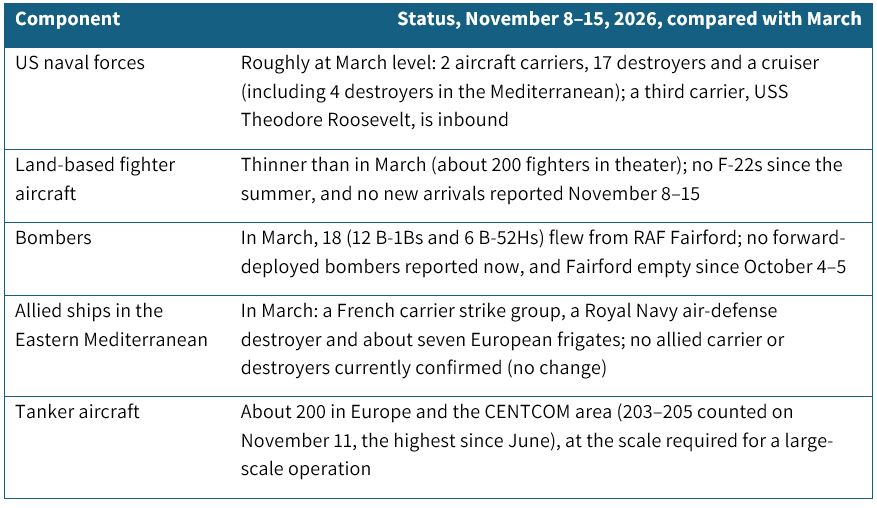
About 17 US warships remain in the CENTCOM area of responsibility: the aircraft carriers USS George Washington and USS George H.W. Bush, 13 destroyers and a cruiser (11 destroyers and the cruiser in the Arabian Sea, two destroyers in the Red Sea), and the expeditionary sea base USS Miguel Keith. The USS Boxer Amphibious Ready Group, with the 11th Marine Expeditionary Unit, has repositioned to the Indian Ocean and was near the Laccadive Sea on November 9.
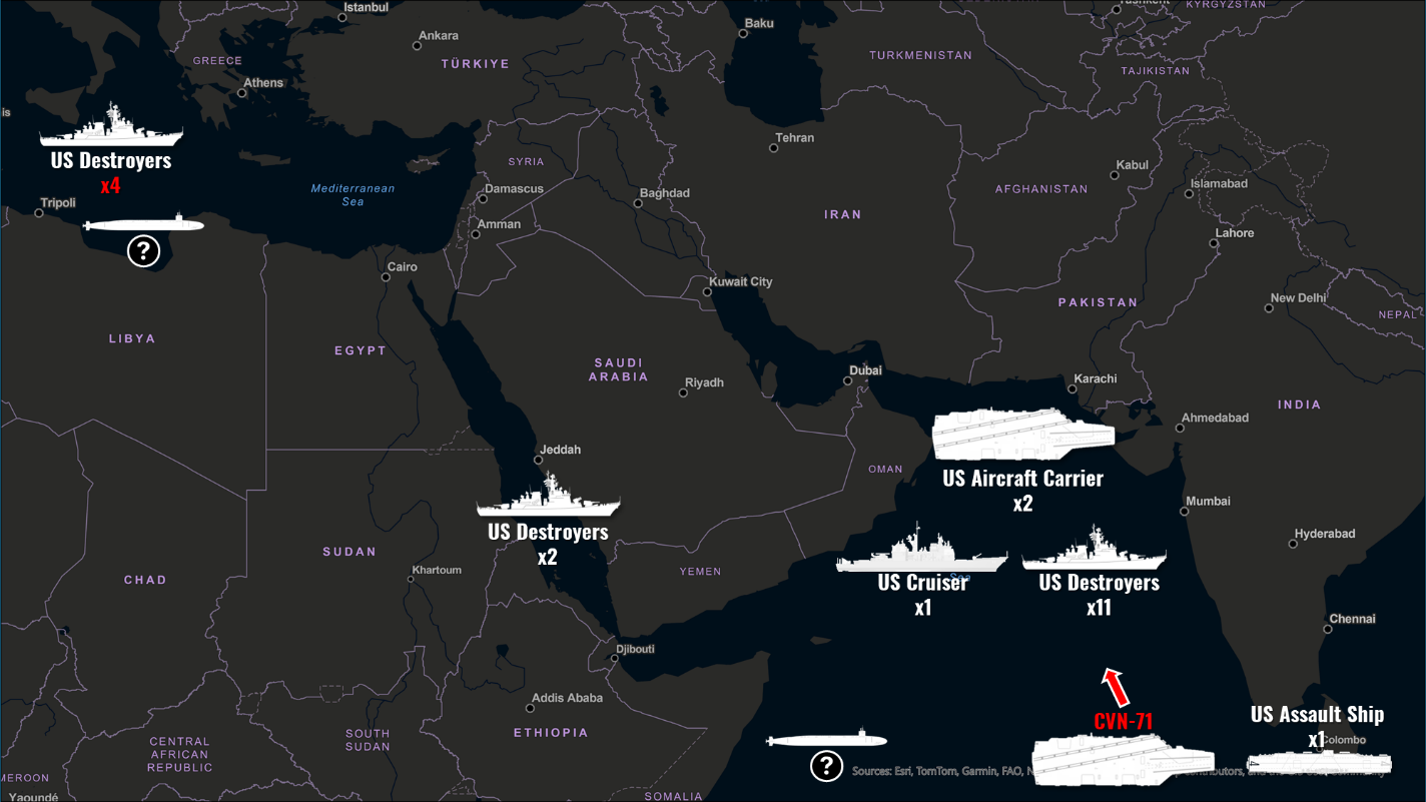
Figure 1: US naval forces deployed in the Mediterranean, the Red Sea and the Arabian Sea, and the USS Theodore Roosevelt (CVN-71) en route to the theater
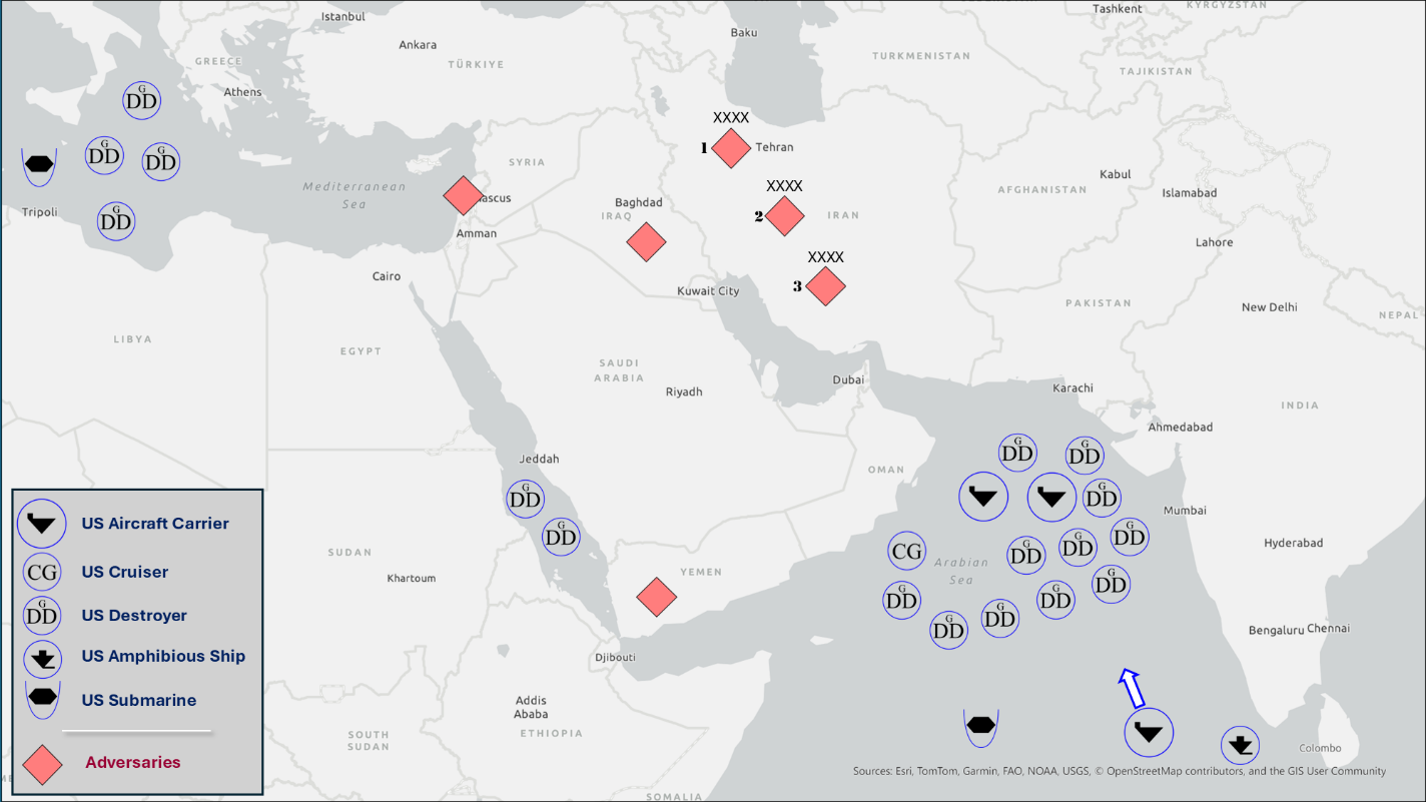
Figure 2: Tactical map of US aircraft carriers, destroyers, cruisers, amphibious ships and possible submarines, alongside adversary forces in the region
The key question is whether the next carrier arrives as reinforcement or rotation. The Theodore Roosevelt Carrier Strike Group departed Singapore on November 8–9, transited the Strait of Malacca, and by November 13 was in the Indian Ocean en route to the CENTCOM area, together with the cruiser USS Chosin and the destroyer USS Decatur; the destroyer USS Paul Hamilton detached to the South China Sea. Its arrival is expected within days. The USS Makin Island Amphibious Ready Group, with the 13th Marine Expeditionary Unit, departed Yokosuka on November 7; following the end of Exercise Malabar on November 12, it remains in the Seventh Fleet area and is due in theater later this month.
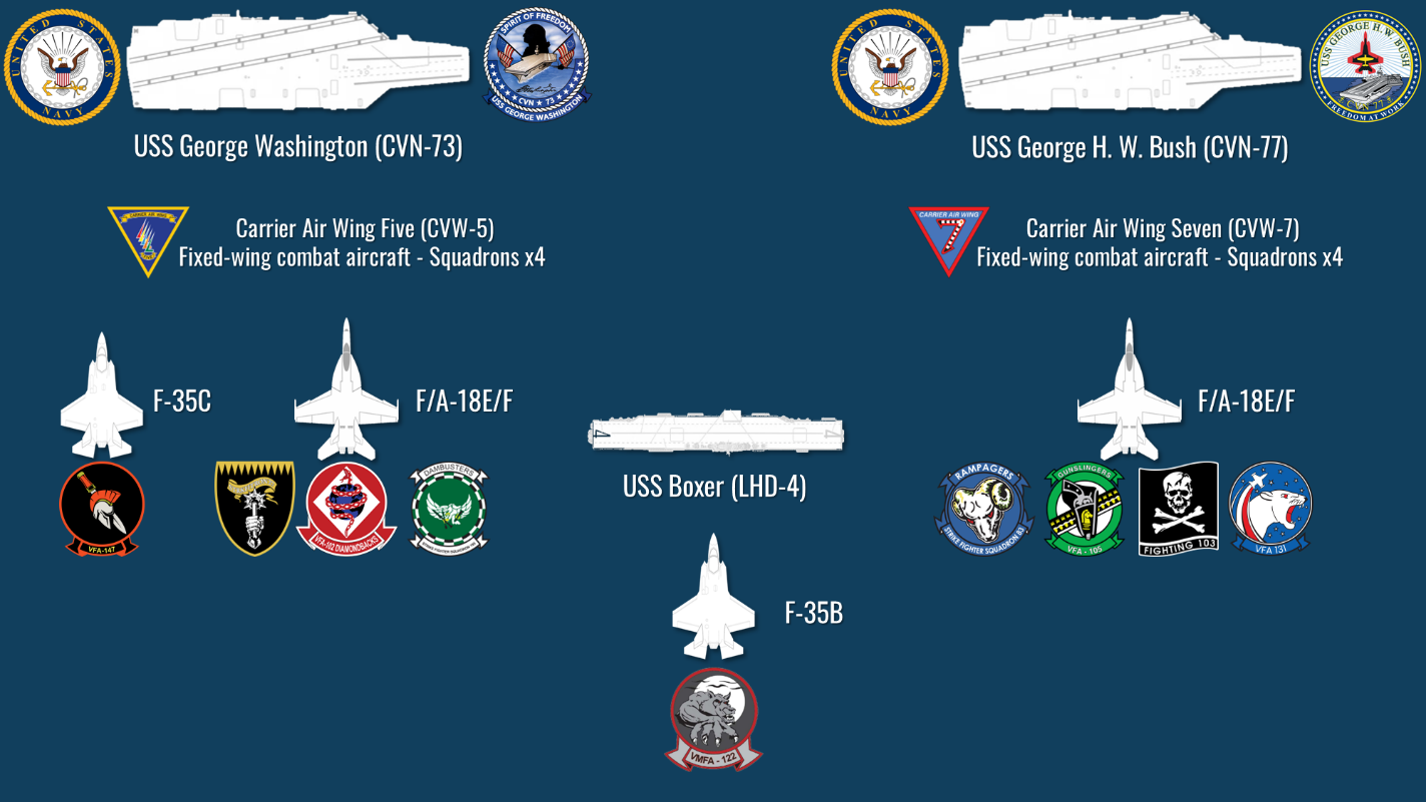
Figure 3: The aircraft carriers USS George Washington and USS George H.W. Bush with the strike fighter squadrons of Carrier Air Wings 5 and 7, and the amphibious assault ship USS Boxer with F-35B aircraft
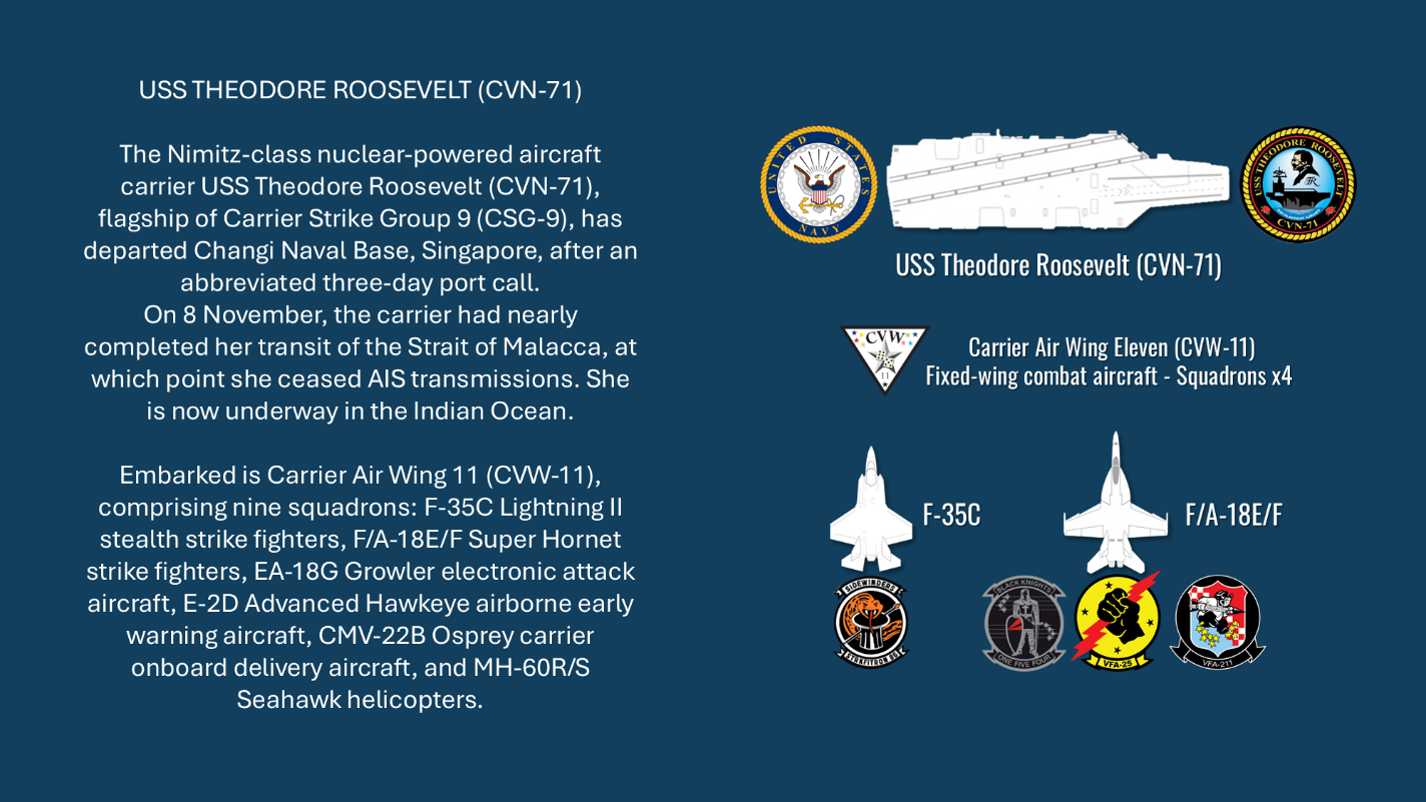
Figure 4: USS Theodore Roosevelt (CVN-71), flagship of Carrier Strike Group 9, with the strike fighter squadrons of Carrier Air Wing 11
Sustainment considerations point toward a longer presence. The George H.W. Bush deployment has been extended: on November 9, Navy leadership told families that the carrier, which departed Norfolk on March 31, will miss the holidays and that they should plan for a worst case of 12 months deployed, with USS Eisenhower being readied as its eventual relief. Reuters reports that all three carriers could remain in theater if required. Meanwhile, the destroyers USS Spruance and USS Michael Murphy, which deployed with the Lincoln Carrier Strike Group, returned to homeport on November 12–13 after 357 and 346 days at sea, respectively.
In the Mediterranean, four deployed US Sixth Fleet destroyers were reported, one more than in the previous report. Under a 2023 agreement with Spain, the destroyer force at Rota grew from four to six hulls, and the sixth arrived this year. Each Aegis-equipped destroyer is a multi-mission combatant capable of anti-air, anti-submarine and anti-surface warfare. In a recent interview, Sixth Fleet commander VADM Jeffrey Anderson suggested that the sixth destroyer could not arrive soon enough, and RADM (ret.) Mark Montgomery assessed that, since senior military leadership has judged that Rota needs more naval capacity, not less, any reduction would be a strategic error.
Air Power: No New Arrivals, Dispersal in Europe
No combat aircraft or bomber arrivals were reported between November 8 and 15, unchanged from the previous week. US land-based strike aviation remains thinner than in March: about 200 fighters are in theater, with no F-22s since the summer. Excluding the Theodore Roosevelt Carrier Strike Group, US personnel in the theater are assessed at about 50,000. The forward bomber force is also unchanged, with none reported: in March, 18 bombers (12 B-1Bs and six B-52Hs) flew from RAF Fairford, whereas the base has been empty since the last B-1Bs left on October 4–5. On November 10, the US Justice Department indicted three members of a Kataib Hezbollah front group over a plot, disrupted on September 27, to attack US bombers at RAF Fairford with small explosive-laden drones.
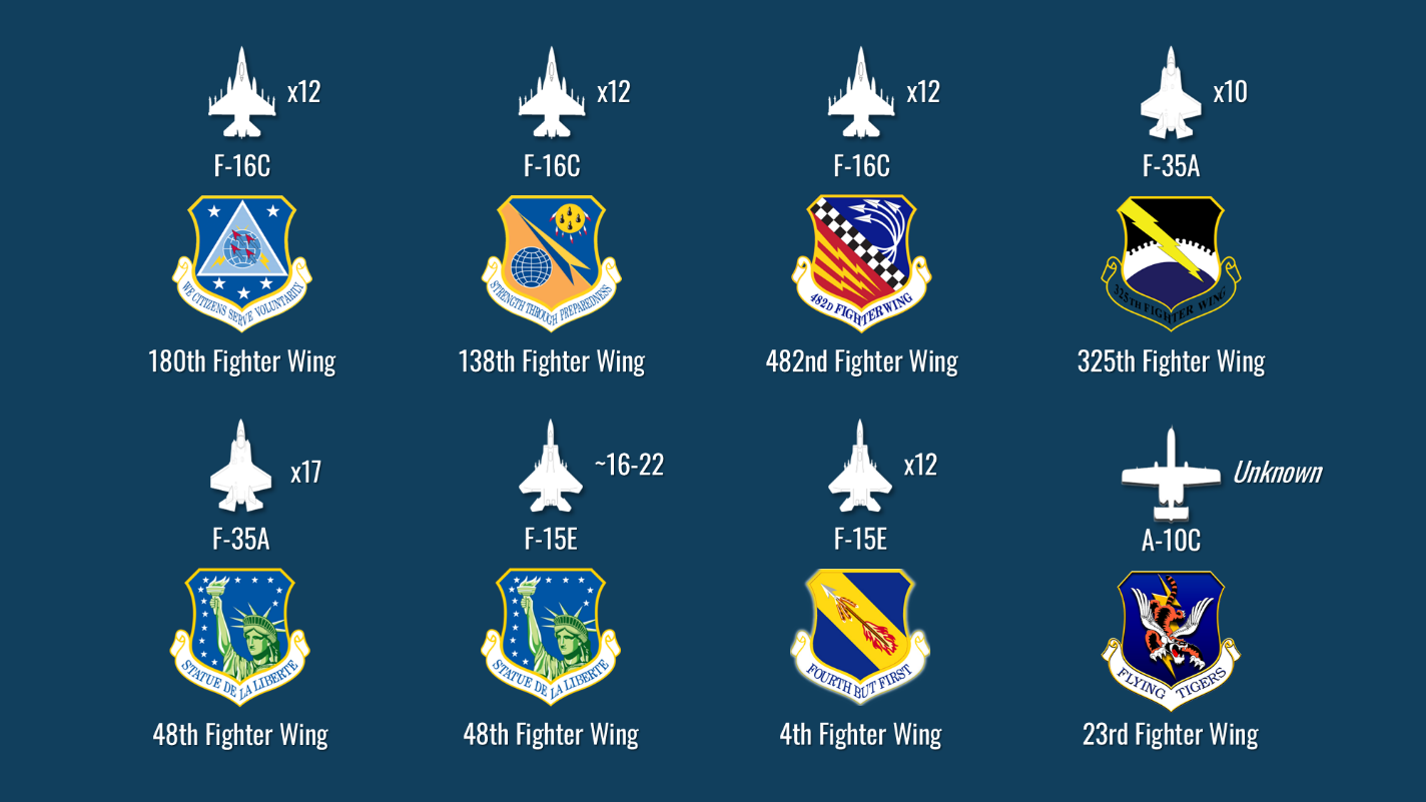
Figure 5: US Air Force fighter aircraft in theater, by wing and number of aircraft
The week’s main air movement took place in Europe, but not toward the theater. From November 9, the US Air Force dispersed aircraft from RAF Mildenhall, mostly KC-135s of the 100th Air Refueling Wing, to Germany, Spain and Scotland, and relocated three CV-22s to RAF Lakenheath. Both bases went to FPCON CHARLIE, the second-highest level in the US Department of War’s force protection condition system, following a reported Iranian threat. On November 13, security forces responded to suspected drone activity over Lakenheath; no damage was reported and the origin is unknown, and reports of FPCON DELTA are unconfirmed.
The aerial refueling network required to support another large-scale operation remains in place: about 200 KC-135 and KC-46 tankers are distributed across the CENTCOM and European theaters. This network extends the range and endurance of fighters and bombers, allows aircraft from widely dispersed bases to mass in a single operation, and keeps strike packages airborne long enough to reach distant targets and recover. One tracker counted 203–205 tankers on November 11, the highest number since June. The Mildenhall dispersal redistributed tankers among European bases and did not reduce the total.
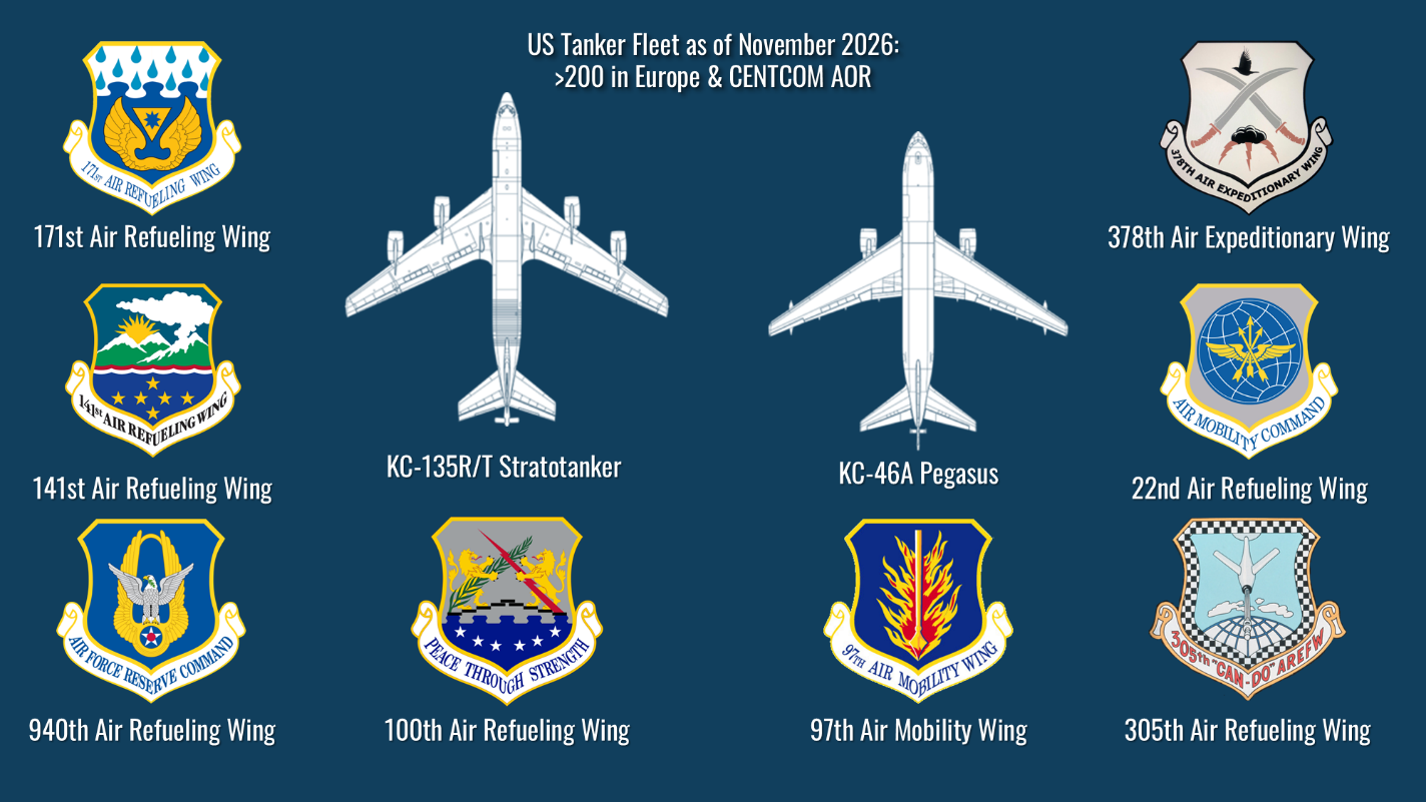
Figure 6: KC-135 and KC-46 tankers in Europe and the CENTCOM area, and the wings that operate them
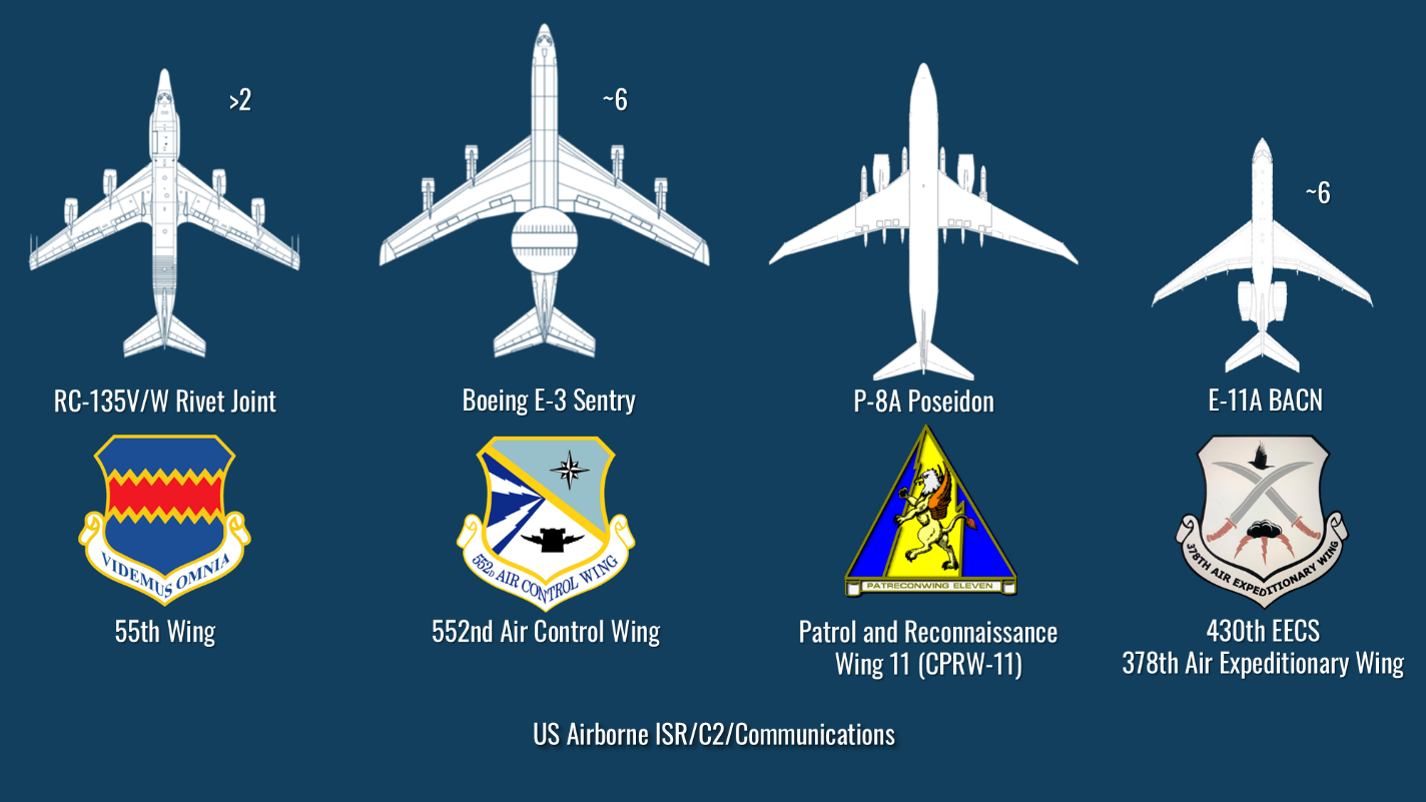
Figure 7: US airborne intelligence, command-and-control and communications aircraft in theater, by type and unit
Airlift, Air Defense and Unmanned Systems
No new flights into Ovda Airbase were identified between November 8 and 15. A steady flow of C-17 and KC-135 aircraft through Europe into the theater was reported on November 7–10. In addition, a US RQ-4B Global Hawk returned to NAS Sigonella on November 9, its first appearance there since February.
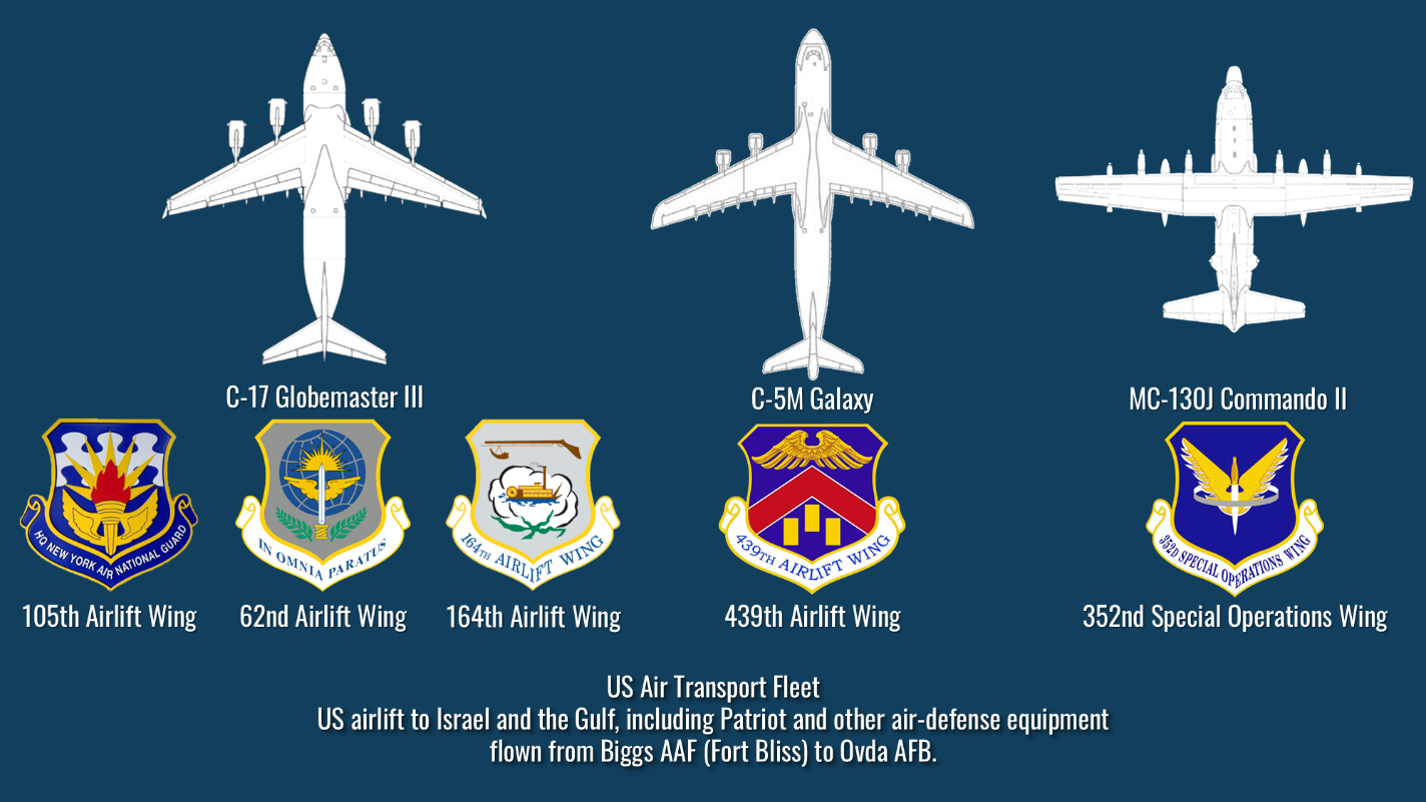
Figure 8: C-17 and C-5M transport aircraft and the wings that operate them, used in the airlift to Israel and the Gulf, and MC-130J aircraft for special missions
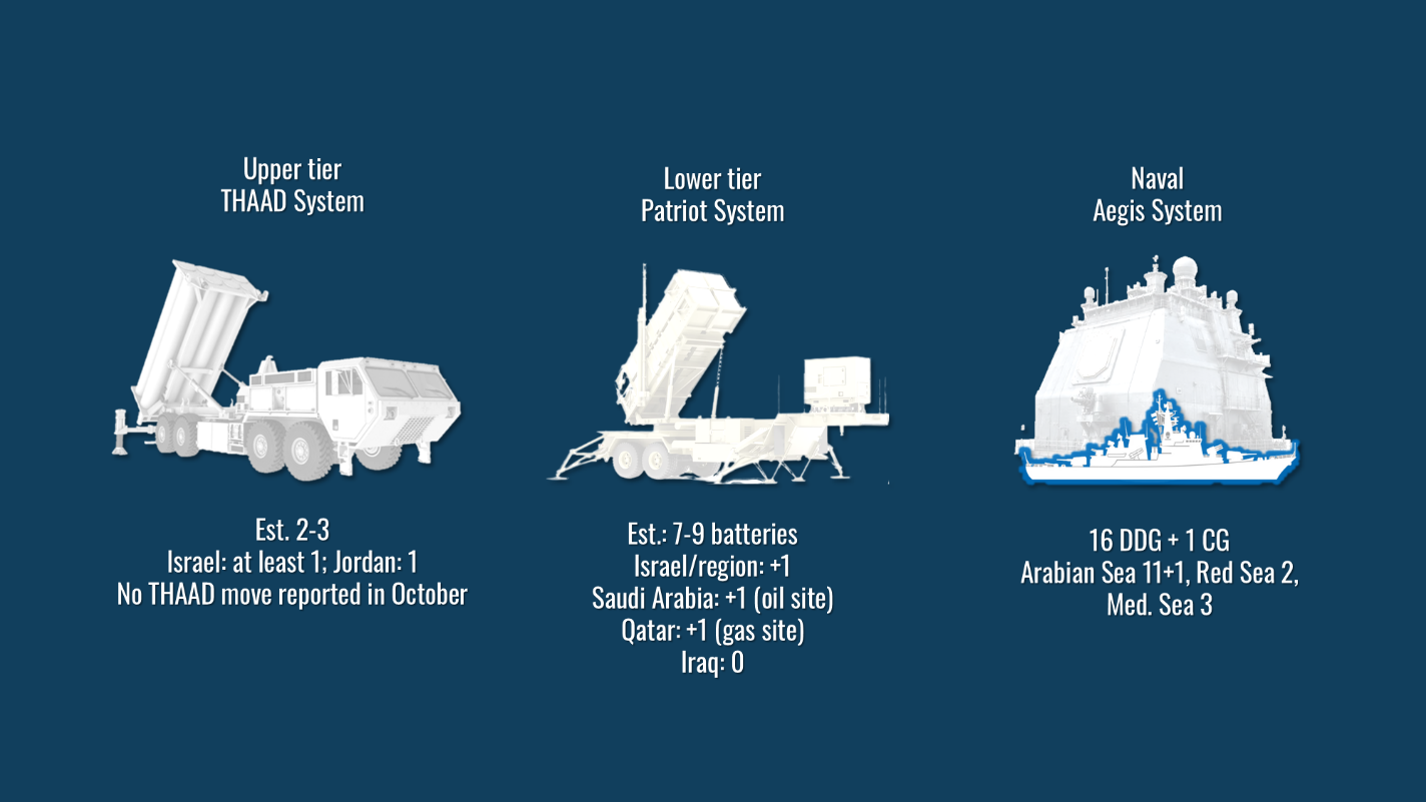
Figure 9: Missile defense systems in the region - THAAD (upper tier), Patriot (lower tier) and Aegis (naval) - and their deployment by country and area
Allied Naval Presence in the Eastern Mediterranean
Allied naval cover in the Eastern Mediterranean remains lapsed, with no change between November 8 and 15. In March, a French carrier strike group, a Royal Navy air-defense destroyer and about seven European frigates operated in the area; no allied carrier or destroyer is currently confirmed there, and in early November Britain’s two carriers were in Norwegian waters and off Gibraltar. Allied activity was limited to maritime patrol aircraft: two RAF P-8As arrived at Sigonella, and an Italian P-72A deployed to Cyprus on November 11 for the eight-nation exercise NEMESIS-26.
Comparison with March 2026
Naval strength stands at roughly its March level and could exceed it if the Theodore Roosevelt reinforces, rather than relieves, the carriers already in theater, while land-based air power and the allied presence in the Mediterranean remain smaller. According to the INSS Data Center’s assessment, an air campaign on the scale of March would require the redeployment of bombers and fighters to the theater.
Sources
Based on open-source intelligence (OSINT) assessments and media reporting. To view the regularly updated interactive map, click here.
For additional details, please contact Stéphane Cohen at stephanec@inss.org.il