


Publications
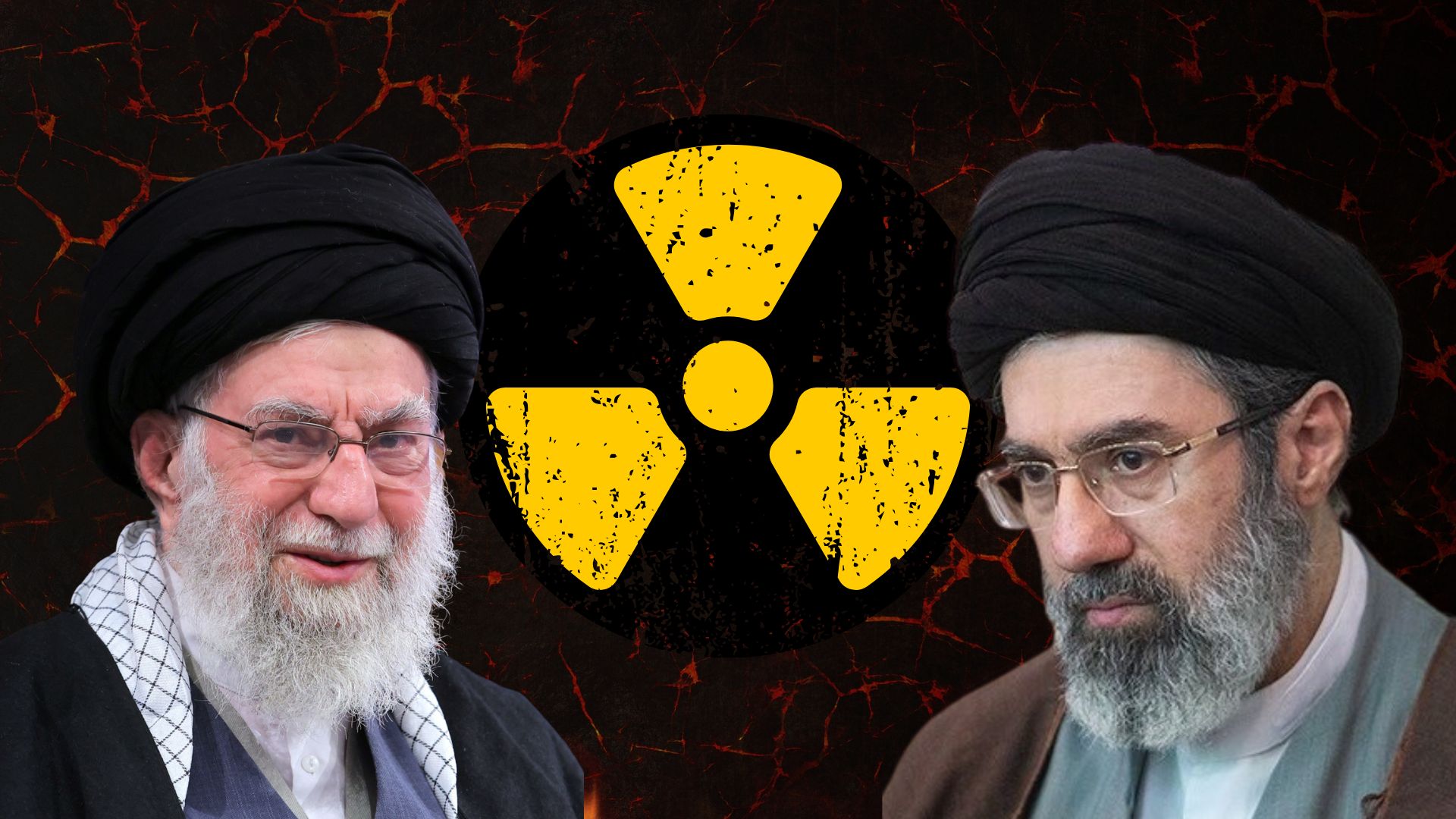
The debate within Iran’s leadership over the possibility of a nuclear breakout, and its implications for the Islamic Republic’s nuclear policy following two military campaigns
Special Publication, August 13, 2026
Follow us on GoogleOver the past year, an extensive debate has been underway in Iran regarding its nuclear doctrine and its validity. For decades, the Islamic Republic strove to achieve nuclear threshold capability while refraining from actually developing nuclear weapons, based on the view that such a capability provides deterrence without exposing Iran to the costs associated with a nuclear breakout. However, developments since October 2023, particularly the two American-Israeli strikes on Iran over the past year, have shaken the Iranian security concept and strengthened calls to reassess its nuclear doctrine. This article examines the debate underway in Iran over this issue and its potential implications for its nuclear policy, based on the assumption that understanding the internal discourse in Tehran is essential for assessing the future trajectory of the nuclear program and for shaping Israel’s policy for confronting it.
Proponents of policy change argue that the erosion of the “Axis of Resistance,” the limitations of missile deterrence, and the damage inflicted on its nuclear program have proven that only nuclear weapons can guarantee regime survival and prevent future attacks. By contrast, other voices challenge the assumption that nuclear weapons would in fact provide Iran with the immunity it seeks and warn of the risks associated with a breakout to nuclear weapons. Nevertheless, following “Roaring Lion”—the offensive launched against Iran in late February 2026—a perception has developed in Tehran that the country’s main strategic asset is not necessarily the nuclear option, but rather its control over the Strait of Hormuz. This enables Iran, alongside its conventional military capabilities in the missile and UAV domains, to influence the global energy market and generate geopolitical deterrence of strategic significance.
Despite the growing strength of the camp that supports a nuclear breakout, the debate over this issue does not yet appear to have been resolved, due to the tension between the need to strengthen deterrence and recognition of the risks involved in changing Iran’s nuclear doctrine and breaking out to nuclear weapons. This reality offers Israel and the United States an opportunity to influence decision-making in Tehran.
In the absence of a military or diplomatic solution that would block Iran’s path to nuclear weapons by dismantling its remaining nuclear capabilities, Israel and the United States must reinforce the understanding among decision-makers in Tehran that an Iranian breakout to nuclear weapons will not be tolerated, and that an Iranian decision to move in this direction could transform the nuclear program from an asset into a liability—to the point of posing a significant threat to the very survival of the regime.
This article constitutes the first component of a broader research project aimed at formulating guidelines and recommendations for Israel’s strategy for confronting the Iranian nuclear threat, in light of the lessons of “Rising Lion” and “Roaring Lion.” These recommendations will be formulated and presented at a later stage, based on an analysis of the impact of the campaigns against Iran on Iranian security concept, including its nuclear doctrine, Iran’s strategic capabilities, and regime stability.
In October 2025, Ali Shamkhani, advisor to Iran’s Supreme Leader and former Minister of Defense, stated in an interview on Iranian television that if he could go back to the 1990s, when he served as Minister of Defense in President Mohammad Khatami's administration, he would have supported the development of a nuclear bomb. According to Shamkhani, the 12-Day War between Iran and Israel in June 2025 demonstrated that Iran should have acquired nuclear weapons. His remarks provided further evidence of the emerging reevaluation taking place in Iran in recent years regarding a potential shift in its nuclear doctrine.
Like most components of Iran's strategic power, its nuclear program also began during the Shah's era. Following the Islamic Revolution, the program was suspended on the orders of the revolution's leader, Ruhollah Khomeini, as it ran counter to his perception of the spirit of Islam. However, the Iran-Iraq War (1980–1988) prompted the Iranian regime to revive its nuclear efforts in the mid-1980s, against the backdrop of the heavy toll the war had exacted on Iran and the Iraqi regime’s use of chemical weapons and missiles against it. In the late 1980s, several Iranian leaders made a series of statements suggesting that, under certain conditions, Iran might develop nuclear weapons, or at the very least did not rule out such a possibility. In September 2006, former President Akbar Hashemi Rafsanjani revealed in his memoirs a letter that Khomeini had sent to senior Iranian military officials in July 1987, in which the founder of the revolution explained the circumstances behind his decision to agree to a ceasefire between Iran and Iraq at the end of the war. Khomeini quoted from a letter sent to him on June 23, 1987, by then-commander of the Islamic Revolutionary Guard Corps (IRGC), Mohsen Rezaei, in which he acknowledged that Iran would be unable to achieve victory within the next five years unless the IRGC were provided with the necessary resources, including, among other things, "the capability to produce a significant quantity of laser and nuclear weapons."
Thereafter, public statements suggesting an Iranian intention to develop nuclear weapons almost entirely disappeared, likely due to an understanding among the Iranian leadership that such statements could intensify international pressure on the regime. The nuclear program was officially framed as intended for nuclear energy production, and senior Iranian officials repeatedly declared over the years that their country was not developing nuclear weapons and would never attempt to do so, both because it did not believe in their utility and because Iran’s Supreme Leader, Ali Khamenei, considered nuclear weapons religiously forbidden under Islamic law. In an interview with the website Iranian Nuclear Hope in October 2015, Rafsanjani was asked to explain the Iranian doctrine of “nuclear energy for all and nuclear weapons for none.” He replied that, when Iran initiated the renewal of the nuclear program during the Iran–Iraq War, "We wanted to have such an option for the day when our enemies might seek to use nuclear weapons. That was the mindset, but the issue never became serious... the fundamental principle of our doctrine was the peaceful use of nuclear energy, although we never dismissed the idea that if one day a certain danger threatened us and circumstances made it necessary, we would have the option of moving to the other side [i.e., the use of nuclear weapons]. But we had no plan make that move, and we never deviated [from civilian use]."
However, Khamenei never changed his position that a military nuclear threshold capability would provide Iran with effective deterrence against its enemies and would therefore serve as an essential insurance policy for the regime’s continued survival. This view has taken on additional significance given Iran’s regional environment, which includes states with nuclear capabilities, among them its neighbor Pakistan and, according to foreign reports, Israel. Nor did Khamenei retreat from his stance that the nuclear program serves primarily as a pretext for the West to exert pressure on Iran, isolate it, and weaken it, in order to pave the way toward achieving its primary strategic objective: changing the Islamic regime. In a speech marking the 35th anniversary of the revolution, Khamenei claimed that the United States persists in its efforts to promote regime change in Iran. “American politicians tell Iranian officials that they have no intention of changing the regime in Iran,” Khamenei said, “but they are lying. They would not hesitate for even a single minute if they could destroy the foundations of the Islamic Republic.”
At the height of the nuclear negotiations between Iran and the West in early 2014, the Supreme Leader’s official website published an infographic titled “The Nuclear Issue is an Excuse.” The infographic depicted nine matchsticks representing claims raised by the West against Iran on a range of issues, including its attitude toward Israel, its support for the "Axis of Resistance" in the region, Iran’s missile program, and human rights violations. According to the Iranian regime, these claims would continue to serve Western countries as justification for their hostile policy toward the Islamic Republic, even if the nuclear issue were to be resolved.
The agreement of former Libyan leader Muammar Gaddafi to dismantle his country’s nuclear program in 2003, a move that ultimately failed to prevent his overthrow with the help of Western states, served, according to Khamenei, as proof of that Iran had been right to refuse to surrender to Western demands in exchange for Western concessions, which he likened to "a lollipop for children." Similarly, the contrast between the immunity enjoyed by nuclear-armed North Korea and the fate of Saddam Hussein, who possessed no such weapons, is viewed by Iran as evidence of the vital necessity of nuclear arms.
Ukraine’s experience provided another lesson. Following Russia’s invasion of Ukraine in February 2022, Iran’s conservative press portrayed the limitations of Ukraine’s power in the face of the Russian invasion as evidence of the need to preserve strategic assets, including nuclear capabilities, that provide a country with protection and deterrence against its enemies. An editorial published by the newspaper Kayhan following the Russian invasion, claimed that Ukraine’s inability to defend itself against Russia stemmed from its reliance on the West and its decision to depend on Western promises of protection, rather than investing in developing independent defense capabilities. The paper even quoted Ukraine’s ambassador to the United Kingdom, who stated that his country would be in a better position today had it not relied on the assurances of the United States, Russia, and the United Kingdom and relinquished its military capabilities—a reference to Ukraine’s agreement, under the Budapest Memorandum of December 1994, to give up its nuclear weapons in return for commitments by the United States, Russia, and the United Kingdom to respect its independence and refrain from threatening it or using military force against it.
The Discourse Surrounding the Need to Change the Nuclear Doctrine
Developments in the region since October 7, 2023, have confronted the Islamic Republic with growing security challenges and raised doubts about the validity of its security concept, particularly regarding the effectiveness of two of its principal components of deterrence: its proxy network and its strategic military capabilities (ballistic missiles and UAVs). The collapse of the proxy network and Iran's failure to deter Israel through its strategic missile array intensified doubts regarding its ability to provide an effective response to Israel's military superiority and deter it from continuing its operations against Iran. Consequently, a growing number of voices in Iran have argued that deterrence must also be strengthened by changing the nuclear doctrine and considering the possibility of a breakout to nuclear weapons, which would provide the ultimate “insurance policy” against Israel and the United States. Against the backdrop of Iran's continued efforts to advance and establish itself as a nuclear threshold state, and perhaps even to take steps aimed at shortening its nuclear breakout time, senior Iranian officials have called for a reassessment of the country’s nuclear strategy rather than continuing to settle for threshold status.
Thus, for example, in February 2024, former foreign minister and former head of the Atomic Energy Organization of Iran, Ali-Akbar Salehi, claimed that the regime possesses all the components necessary to produce a nuclear weapon, but that they have not yet been assembled. In October 2024, dozens of members of parliament sent an official letter to the Supreme National Security Council calling for a change in the Islamic Republic’s defense doctrine regarding its nuclear program. On October 26, 2024, Kamal Kharrazi, head of the Strategic Council on Foreign Relations, declared that a change in the nuclear doctrine remained on the table in the event that Iran faces an existential threat. He stressed that the technical capabilities to produce a nuclear weapon exist and that the Supreme Leader's stance is the only factor preventing their realization.
On the eve of the 12-Day War—Operation “Rising Lion”—in June 2025, Iran was a nuclear threshold state. It could have enriched its uranium stockpile to 90 percent, or weapons grade, in less than two weeks from a decision to do so and was likely only a few months away from achieving an initial military nuclear capability. Nevertheless, Iran's leader refrained from ordering a nuclear breakout, likely out of fear of being dragged into a military campaign with Israel, and even worse, with the United States. Iran had preferred gradual, safer progress along the nuclear track as opposed to the fastest possible route.
Operation "Rising Lion" set the Iranian nuclear program back significantly. However, even after "Rising Lion" and "Roaring Lion," Iran retains residual capabilities that could serve its efforts to rehabilitate the program and break out to a nuclear weapon. These include a stockpile of approximately 440 kilograms of uranium enriched to 60 percent, which was in its possession prior to the war; significant additional quantities of uranium enriched to lower levels; at least several hundred advanced centrifuges; as well as know-how, scientific personnel, enrichment infrastructure, and possibly capabilities for conversion to and processing of uranium metal. Furthermore, in the months following "Rising Lion," Iran worked to restore part of its uranium enrichment capabilities at two key sites: the Fordow facility, which was not completely destroyed, and the "Pickaxe Mountain" site, whose construction was accelerated following the war.
Following "Rising Lion," voices supporting a breakout to nuclear weapons grew stronger as a lesson drawn from the Israeli-American attack. In September 2025, 71 Majlis members called for the development of nuclear weapons. In a letter sent to Iran's president and the Supreme National Security Council, the Majlis members argued that Iran's defense doctrine must be re-examined, and that the development and possession of nuclear weapons have become necessary in light of the attack.
Ahmad Naderi, a member of the Majlis presidium, claimed that the only way to safeguard Iran's territorial integrity and national security is by acquiring nuclear weapons. According to Naderi, withdrawal from the Treaty on the Non-Proliferation of Nuclear Weapons (NPT), adoption of a policy of ambiguity, and ultimately conducting a nuclear test are the only options that can spare Iran the fate of Iraq and Libya.
An article published on the Iranian Diplomacy website (which has since been removed) likewise argued that the only way to prevent another strike is to rapidly demonstrate possession of a nuclear weapon. The article stated that global experience has proven the deterrent power of nuclear weapons. Among other things, it cited remarks made by President Donald Trump during a meeting with Russian President Vladimir Putin in August 2025, according to which the United States would not go to war with a country equipped with nuclear weapons. It also quoted a distinction previously presented by former US Secretary of State Mike Pompeo between the US approach toward North Korea and its approach toward Iran, based on the fact that North Korea possesses nuclear weapons capable of striking the United States. According to the website, Iran never fully grasped the importance of nuclear deterrence, and continuation of its current policy could lead to further and even more severe attacks.
At the same time, commentaries advocating nuclear deterrence were also published. For example, following the first Iranian attack on Israel in April 2024, researcher Arezoo Askari published an article arguing that, after the operation demonstrated Iran’s status as a significant military power in the region, it is necessary to examine the political benefits that nuclear weapons confer on states that possess them, as well as their ability to prevent intervention by other states. Given the dangerous security environment in which Iran finds itself and the hostility it faces in the international arena, Askari argued that Iran must acquire nuclear weapons to establish a balance of power with its adversaries. Its two main enemies, the United States and Israel, possess nuclear weapons, while Iran is also surrounded by nuclear-armed states—India, Pakistan, and Russia, and potentially Saudi Arabia in the future. She further noted that, although the utility of nuclear weapons lies in refraining from their use, they serve to significantly improve deterrence capability against other states. In her view, in an international system in which every state is a "wolf" to every other state, only two mechanisms can be proposed for restraining war: deterrence and the balance of power. No force or instrument is capable of realizing both principles simultaneously, other than nuclear weapons. Therefore, Iran needs nuclear weapons in order to safeguard its national security. Had Iran adopted nuclear deterrence as part of its defense doctrine, she suggested, the commander of the Quds Force would not have been assassinated (Qasem Soleimani, 2020), the attack on the Iranian consulate in Damascus (April 2024) might not have occurred, and the assassination of the Hamas leader in Tehran (Ismail Haniyeh, July 2024) might not have placed the region at risk of a new war. In light of the growing threats from the United States and Israel, and given current trends in the region, Iran must achieve nuclear deterrence.
Doubts Regarding Reliance on Nuclear Weapons for Deterrence
Alongside calls to change Iran’s nuclear doctrine in favor of developing nuclear weapons, voices have also emerged in Iran expressing doubt regarding the ability of a military nuclear option to provide immunity for the Islamic Republic. The possibility cannot be ruled out that some of these voices—particularly those of Iranian officials—are intended to conceal an Iranian intention to covertly advance toward a nuclear weapon. Nevertheless, at least some appear to reflect a genuine internal discourse taking place in Tehran, revealing doubts regarding the advisability of developing a military nuclear option, even if not necessarily a willingness to forgo the very existence of the nuclear program.
Those who express reservations about relying on nuclear weapons as an insurance policy for the immunity of the Islamic Republic base their position on several key arguments. First, the experience of recent years demonstrates that even states possessing nuclear weapons are not immune to military attack, even if such an attack does not necessarily threaten their survival.
For example, in an article published by Mostafa Naseri in the newspaper Vatan-e Emrooz in October 2024, against the backdrop of the debate over the possibility of advancing toward the production of nuclear weapons in Iran, the author argued that the experience of nuclear-armed states demonstrates that possession of such weapons alone is insufficient to create effective deterrence. Genuine deterrence requires a combination of conventional military capabilities, asymmetric capabilities, diplomatic power, and economic and political stability. According to the author, several countries have failed to achieve complete deterrence, despite possessing nuclear weapons. Pakistan and India, although both nuclear-armed, have not been able to prevent military flare-ups between them and continue to engage in military confrontations. Pakistan also faces domestic terrorist threats and insecurity along its borders, which nuclear weapons have done little to curb. South Africa, as well, secretly produced nuclear weapons during the apartheid era but ultimately decided in 1989, under international pressure and amid domestic problems, to dismantle its arsenal. These experiences illustrate that nuclear weapons alone cannot immunize a state against external threats and pressures, and that additional factors, including domestic stability and regional policy, play a central role in guaranteeing its security.
Israel, too, despite possessing nuclear weapons, has failed to establish effective deterrence against military threats. Furthermore, the nuclear weapons in its possession were of no use in creating deterrence against Iran, which is perceived as its most significant security and existential threat. Manifestations of this, according to the argument, were the two Iranian attacks on Israel in April and October 2024, during which military targets inside Israeli territory were successfully struck.
Nuclear deterrence is primarily effective against state threats, in which states avoid large-scale conflicts for fear of a nuclear response. However, present-day threats often stem from non-state actors, such as terrorist organizations or cyberattacks, neither of which can be restrained through nuclear threat. For example, groups like ISIS operate in a decentralized manner and through unconventional methods, placing them outside the realm of nuclear deterrence. In addition, because of their immense destructive power and severe environmental consequences, nuclear weapons can be used only in extremely rare and exceptional circumstances. Limited conflicts, proxy attacks, or diplomatic and economic pressures are situations in which the use of nuclear weapons is neither possible nor rational. Even if such weapons were to be used, severe international reactions and extensive sanctions could lead to further isolation of the state, representing a particularly significant challenge for states that are already subject to global pressures.
Doubts regarding the possible use of nuclear weapons for deterrence purposes were also raised following the 12-Day War. In November 2025, several news websites affiliated with the conservative-radical wing published an article authored by Mohammad-Reza Naqdi, senior advisor to the Commander of the Islamic Revolutionary Guard Corps and former commander of the Basij. In the article titled "Why Does Iran Have Absolutely No Need for a Nuclear Bomb?" the senior Iranian official expressed reservations about the voices heard in his country favoring the development of nuclear weapons following the war. Naqdi noted that the religious decree (fatwa) issued by Iran’s Supreme Leader, Ali Khamenei, prohibiting the development of nuclear weapons, was insufficient to counter such voices, as there are those for whom this does not suffice. According to him, there are two principal reasons for acquiring nuclear weapons: solely for deterrence purposes, or for use in destroying the enemy. Naqdi argued that historical experience demonstrates that nuclear weapons do not constitute an effective deterrent and that even states possessing nuclear weapons have been attacked. He presented ten historical examples of cases in which nuclear-armed states were attacked, including the United States, whose forces were attacked by Vietnam, Yemen, and Iran; Israel, which was attacked by the Palestinians; Russia, which was attacked by Ukraine; and Pakistan and India, which have attacked one another.
The validity of the examples cited by Naqdi is open to debate. For instance, the attacks on the United States were not carried out on its sovereign territory. Furthermore, it can be argued that even if nuclear weapons do not grant complete immunity from a military attack, they may provide deterrence against damage capable of threatening the very survival of the regime in the targeted state. Nevertheless, Naqdi is not alone in citing examples, including recent ones, that ostensibly challenge the assumption that nuclear weapons provide sufficient deterrence to a state that possesses them.
The Pakistani case, as an example of nuclear weapons not necessarily creating deterrence, was raised in an interview given by two former Iranian diplomats who served in Pakistan. The interview was published following the letter signed by Majlis members calling for a reassessment of Iran's nuclear doctrine. In an interview with the newspaper Esfahan-e Ziba, Iran's former ambassador to Pakistan, Mashallah Shakeri, and former Iranian diplomat, Mohsen Rouhi-Sefat, claimed that nuclear weapons neither provide security nor grant immunity and that their costs outweigh their benefits. According to Shakeri, the nuclear weapons possessed by Pakistan and India served primarily as a means of deterrence rather than as a practical instrument of war, and neither state has used nuclear weapons despite the numerous military confrontations between them. He added that, even in the war between Russia and Ukraine, although one side holds a nuclear arsenal, these weapons have not been used. Shakeri expressed his view that genuine power derives from economic development and from harnessing the capabilities of nuclear technology for peaceful purposes. In his view, if Iran focuses its scientific and industrial capabilities in this field, it can attain a level of power no less significant than that of a nuclear-armed state.
Former diplomat Rouhi-Sefat likewise rejected the notion that deterrence derives simply from possessing nuclear weapons. In his view, the assumption that the mere existence of nuclear weapons is sufficient in itself to create deterrence is incorrect. He noted that nuclear deterrence applies primarily to countries like the United States and Russia, which possess very large nuclear arsenals, whereas for states with more limited capabilities, the operational effectiveness of nuclear weapons is not guaranteed. Referring to Pakistan’s experience, Rouhi-Sefat argued that some had believed that possession of nuclear weapons would make it possible to reduce investment in conventional military capabilities. In practice, however, Pakistan was forced to invest substantial resources in advanced conventional capabilities, including its air force, radar systems, and air defenses, in order to maintain a balance with India. He added that when the opposing side has the capability to destroy its adversary’s entire arsenal, the deterrence mechanism becomes even more complex. Therefore, for states with a relatively limited arsenal, such as Pakistan, this mechanism does not produce the same strategic effect as perceived by the public. The Iranian diplomat further emphasized that this is a complex technical and professional issue, and that decision-making in the nuclear sphere cannot be carried out on the basis of political slogans. Rather, it must rest on scientific, military, and strategic analysis by experts, and only then be translated into policy.
A further expression of this view can be found in an article published in September 2025 on the conservative Rasa News Agency website. The article argued that possession of nuclear weapons does not prevent an enemy attack, just as Israel—despite the nuclear weapons in its possession—failed to prevent the attacks by the "Axis of Resistance" and was not immune to the Iranian attacks in April and October 2024. It further argued that Israel is well aware that the use of a nuclear bomb could lead to its total destruction and that, as such, possession of an atomic bomb does not provide it with security.
In an article published on the Asr-e Iran website in August 2023 titled “Iran and Nuclear Weapons: Yes or No?” international relations scholar Jalil Bayat discussed the advantages and disadvantages of acquiring nuclear weapons. According to the author, the main—and perhaps only—advantage of nuclear weapons lies in deterrence, namely, the likelihood that a state possessing such weapons will be protected against a comprehensive attack on its territory by other states. This, however, does not necessarily guarantee internal stability. The experience of the former Soviet Union, which possessed an even greater number of nuclear warheads than the United States, demonstrates that in the absence of success in other spheres, such as the economy and culture, a state may collapse even without a military attack.
Furthermore, there is a risk of a nuclear arms race developing, in which two rival states allocate ever-increasing resources to gain military superiority over one another. Such a situation can lead to budgetary shortfalls and undermine development and public welfare programs, as occurred in the Soviet Union. Likewise, if a state suffers from political and economic instability and widespread government corruption, acquiring nuclear weapons could become an additional burden, since substantial sums would have to be allocated each year to maintaining and upgrading the arsenal. In this context, Bayat noted Pakistan, which spent approximately $1 billion on nuclear armament in 2019, while repeatedly seeking loans in recent years from the International Monetary Fund and from countries including Saudi Arabia, China, and the United Arab Emirates.
Another argument against acquiring nuclear weapons is that producing such weapons could increase the risk of an Israeli—and even American—attack against Iran, which could undermine the very stability of the regime. Ensuring the regime’s survival in the face of domestic and external threats is a paramount objective of the Islamic Republic and a central factor shaping its security doctrine. In the view of Iran's Supreme Leader, Israel's strikes against symbols of the regime during Operation "Rising Lion" in June 2025 provided further proof that Israel seeks not only to damage Iran's nuclear program or the missile array, and not merely to overthrow the regime, but to dismantle Iran and create chaos. According to Khamenei, Iran's enemies estimated that by eliminating several commanders and senior officials, and with the help of their agents, it would be possible to stir up riots in the country, particularly in Tehran, bring citizens out into the streets, and trigger an uprising against the Islamic Republic. This, he argued, was their objective, and they had even planned in advance what would follow the regime's collapse.
Moreover, the war provided clear evidence not only of the depth of Western intelligence penetration of Iran's nuclear program, but also of the willingness of the United States and Israel to take military action to prevent Iran from becoming a state with military nuclear capability. The Israeli attack on June 13, 2025, and the United States’ entry into the campaign several days later came as a surprise to Tehran. For years, Iran had estimated that Israel possessed the desire to attack its nuclear facilities but lacked the capability to achieve the necessary objectives of such an attack, while the United States possessed the operational capability but lacked the willingness to become entangled in another military conflict in the Middle East. Therefore, any Iranian decision to break out to a nuclear weapon must take into account that, even if Iran chooses a covert path to advance toward such a weapon, it is possible that the decision will be detected by Western intelligence services and lead to another attack that would prevent the realization of that goal. Even prior to the Israeli-American attack, Bayat claimed that although Iran’s acquisition of nuclear weapons could help protect the regime against external aggression, it would not provide complete immunity, since the very process of advancing toward the development of nuclear weapons presents a genuine risk of military attack by Israel and the United States.
An additional claim is that the costs associated with developing nuclear weapons outweigh their benefits. For example, the website Rasa News posited that Iran's deterrence capability is based on a combination of scientific, military, and popular capabilities, and does not require the development of nuclear weapons. Furthermore, producing such weapons does not serve the interests of the country, the regime, or national interests, as Iran's enemies could exploit such a move as evidence of Iranian deception and as a pretext for an attack against it. Additionally, such a move could damage Iran's image in global public opinion. According to the website, Iran's development of nuclear weapons is in fact a desirable outcome in the eyes of Israel and the West, which seek to damage Iran's image in the international arena and generate legitimacy and a global consensus for confronting and even attacking it.
The issue of international legitimacy was also raised by Naqdi, who argued that even if the purpose of developing nuclear weapons was not merely deterrence but their actual use to destroy the enemy, this would provide no benefit and could actually cause significant harm. First, unlike during World War II, the world today does not tolerate the use of nuclear weapons while disregarding global public opinion. The use of nuclear weapons would cause the state employing them greater harm than any benefit it might derive, as it would lose its base of international support and legitimacy. Second, even if several nuclear bombs were launched, such an action would provide the enemy, which possesses thousands of nuclear weapons, with legitimacy to use them against Iran. Furthermore, if a state that lacks broad international legitimacy acquires nuclear weapons, this could ultimately deepen its isolation. Bayat cited North Korea as an example, noting that it is subject to severe sanctions imposed by the UN Security Council as well as unilateral US sanctions.
A further consideration raised by those with reservations about developing nuclear weapons is that even if Iran succeeds in acquiring a military nuclear capability, it still lacks an array of precision missiles that could be operationally deployed to carry nuclear warheads. Therefore, it is unclear whether developing a nuclear explosive device, or even conducting a nuclear test, would be sufficient to provide immunity. For example, Ariabarzan Mohammadi, a professor of regional studies at University of Tehran, claimed in an interview with the news website Entekhab that nuclear deterrence requires, among other things, holding at least thirty nuclear bombs and conducting a "hot test" with ten of them, at least half of which would take the form of warheads mounted on ballistic missiles, launched from a specific location and striking the heart of a desert. According to Mohammadi, testing on this scale would be necessary to demonstrate not only that Iran possesses the technology required to produce nuclear weapons, but also that it has the capability to carry out nuclear detonations repeatedly.
Commentator Davud Heshmati also warned against the assumption that producing a nuclear bomb would provide deterrence for Iran. In an article he published on the Rouydad24 news website, he argued that possessing a sufficient stockpile of enriched uranium is not enough and that building a bomb also requires nuclear testing. Such tests would inevitably be detected through geological seismic measurements and therefore could not be conducted in secret. Moreover, ensuring mutual destruction—the basis of nuclear deterrence—requires a “second-strike” capability. For this purpose, a limited number of bombs is insufficient; rather, a variety of delivery systems is required, particularly nuclear-powered submarines armed with nuclear weapons capable of guaranteeing a second strike under any condition. According to this analysis, the Islamic Republic of Iran lacks a second-strike capability and would therefore be unable to establish effective nuclear deterrence.
Those opposed to a military nuclear option further contend that Iran has no need whatsoever for nuclear weapons, as it can effectively threaten its enemies, first and foremost Israel, using the conventional capabilities currently at its disposal. According to Naqdi, even if Iran could eliminate approximately 500,000 Zionists using five nuclear bombs, were it to possess them, there is no need to do so. This is because, in his view, through the steadfastness of the "Axis of Resistance," and without suffering any adverse consequences itself, Iran had forced Prime Minister Benjamin Netanyahu to cause more than 830,000 Zionists to flee the “occupied territories.” Naqdi also claimed that the launch of Iran's advanced missiles toward Israel erased 46 years of propaganda aimed at portraying the Islamic Republic as weak and backward, and that in light of the rising popularity of the "Axis of Resistance" and what he described as the retreat of the Zionist presence from Palestine, he maintained that there was no logic in Iran creating problems for itself by developing nuclear weapons. In his view, the 1979 Islamic Revolution is the true "nuclear bomb" destroying Western hegemony, one that cannot be neutralized. Unlike the nuclear bombs held by Western nations, the Iranian bomb is intelligent, it neither kills nor harms people, but rather revives nations and destroys only tyrants and oppressors. The future, he argued, belongs to the Islamic Republic even without the need for a nuclear bomb or weapons of mass destruction.
The view that Iran possesses sufficient deterrence even without developing nuclear weapons was also advanced by the IRGC-affiliated Tasnim News Agency. A commentary published in April 2023, claimed that Iran had strengthened its deterrent power over the years through the development of missile arrays, the expansion of its regional influence, and the deepening of cooperation with its allies. Although Iran adopted a policy rejecting the production of nuclear weapons, the mere use of nuclear energy plays an important role in its deterrent capability. Given the reinforcement of deterrence in the fields of missiles, UAVs, and the regional arena, alongside the withdrawal of US forces from the region and the emergence of a new world order, Iran has no need to establish deterrence by developing a nuclear bomb, as other states have done.
The Rasa News website similarly posited that Iran's military capabilities—chiefly its missile and UAV arrays—are sufficient to destroy the "aggressive Zionist regime" and any other aggressive adversary. Given Iran's strength across multiple domains, ranging from robust popular support and soft power to offensive and defensive capabilities, it has no need for weapons of mass destruction. Iran's success in forcing Israel and the United States to agree to a ceasefire in the 12-Day War of June 2025 serves as proof that it already possesses sufficient deterrence.
Even the alternative of nuclear ambiguity sparked reservations following the June 2025 war. In the aftermath of the war, a public debate emerged in Iran over the possibility of adopting a policy of nuclear ambiguity while refraining from transmitting official information about its nuclear capabilities. As with other controversial issues, this topic also triggered disagreement between conservative circles and more pragmatic ones.
In an article published on the Iranian Diplomacy website, commentator Hamid-Reza Esmaeili Najjar argued that the recent war demonstrated that the time had come for Iran to withdraw from the Treaty on the Non-Proliferation of Nuclear Weapons (NPT) and adopt a policy of nuclear ambiguity. In his view, the restrictions Iran accepted under the 2015 nuclear agreement neither resolved the crisis nor prevented an attack against it in violation of international law. Therefore, Iran must act without fear and in accordance with its national interests, withdraw from the treaty, and adopt a policy of ambiguity that will serve both as a bargaining chip and a leverage point in future negotiations with the Trump administration.
By contrast, voices in the pragmatic camp warned of the dangers inherent in adopting a policy of nuclear ambiguity. The reformist daily Shargh cautioned that such a move, intended to force the West and Israel to refrain from additional attacks and make concessions in negotiations, could produce the opposite result. The newspaper pointed to two case studies: Iraq and Libya. Iraq, which adopted a policy of ambiguity regarding its unconventional capabilities after the 1991 Gulf War and refused to cooperate with inspectors from the International Atomic Energy Agency, aroused suspicions among the United States and its allies that ultimately led to the US invasion in 2003. Libya, for its part, denied the existence of a nuclear program while hinting at it and advancing it covertly, and was ultimately forced to acknowledge its existence and agree to dismantle it eight months after the US invasion of Iraq. The newspaper warned that in the Iranian case as well, a policy of ambiguity could lead to instability, a prolonged, low-intensity military conflict, and even the resumption of full-scale war. Unlike North Korea, which was able to maintain a policy of ambiguity until conducting its nuclear test in 2006, Iran operates in the heart of a volatile region, is engaged in a direct conflict with Israel, and lacks significant counterintelligence capabilities that would enable it to maintain such ambiguity over time.
The Discourse Surrounding the Nuclear Doctrine Following "Roaring Lion"
Operation "Roaring Lion" sharpened the discourse within Iran regarding the need to reassess its nuclear doctrine. Tehran's continued failure to deter its enemies from attacking amplified voices calling for a re-evaluation of the doctrine, whether as a guarantee for the regime's survival or as a means of deterring future attacks. Since the temporary ceasefire between Iran and the United States (April 2026), calls have intensified from senior Iranian officials as well as regime-affiliated media for achieving nuclear deterrence through the production of nuclear weapons.
A member of the Majlis Commission on National Security and Foreign Policy, Ahmad Bakhshayesh Ardestani, expressed his view that the time has come for Iran to produce a nuclear bomb, since it had already paid the price and borne the costs of the conflicts associated with such a move. Therefore, he argued, Iran should complete the construction of the bomb. Majlis member Hossein-Ali Haji-Deligani also raised the possibility that Iran might decide to conduct a nuclear weapon test in the future. In a press interview, he stated that the lack of nuclear deterrence was clearly evident during the war, arguing that, had religious law permitted it and had Iran possessed nuclear weapons, they would naturally have provided a degree of deterrence. He added that a solution to this issue might be found in the future. When asked whether a nuclear test might indeed be conducted in the future, Haji-Deligani replied in the affirmative, estimating that Iran would decide to withdraw from the NPT in the future, at which point it would no longer be necessary to abide by the international rules to which it is currently bound.
Similarly, Ebrahim Rezaei, spokesperson for the Majlis Commission on National Security and Foreign Policy, asserted in a post on his X account that threats by Defense Minister Israel Katz to eliminate Iran's leader, Mojtaba Khamenei, constitute sufficient grounds for reassessing Iran’s nuclear doctrine. Iranian commentator Mostafa Najafi, who is considered close to regime circles and the Islamic Revolutionary Guard Corps, also gave voice to this view when he claimed that a state cannot achieve nuclear deterrence without actual possession of nuclear weapons. According to Najafi, the capability to produce nuclear weapons cannot be regarded as equivalent to nuclear deterrence, nor can a state that does not possess nuclear weapons be said to enjoy nuclear deterrence. Moreover, remaining a nuclear threshold state without actually producing nuclear weapons may in fact heighten security threats and expose the country to the risk of military attack, as indeed happened with Iran.
An article published by the IRGC-affiliated Fars News Agency stated that, in an era of transition toward a new world order, Iran has no choice but to achieve nuclear deterrence in order to take the military option of occupying and dismantling the country off the table. To attain the peace of mind it requires, Iran must achieve nuclear deterrence, since only such deterrence can ensure that all remaining disputes are resolved through diplomacy. Only under these circumstances can negotiations be conducted from a proper position of strength.
Hardline cleric Mohammad Bagher Kharazi, known for his controversial statements, went even further, saying that the only way to save the country was to produce an atomic bomb and detonate it in the Atlantic Ocean in order to generate a tsunami that would reach the shores of the United States. According to Kharazi, the greatest problem with President Masoud Pezeshkian and others like him was their opposition to producing a nuclear bomb. He added that anyone who opposed building a nuclear bomb would face severe consequences in the afterlife, and that anyone who had issued a fatwa prohibiting its production would likewise have to answer for it.
In contrast to this approach, voices in Iran continued to claim following "Roaring Lion" that not only was there no reason to change the nuclear doctrine, but that the war had demonstrated Iran’s ability to maintain effective deterrence even without nuclear weapons. This, they argued, could be achieved through the other strategic cards at its disposal, foremost among them its control of the Strait of Hormuz and its conventional capabilities, including missiles and UAVs. For example, Mohsen Rezaei, advisor to Iran’s Supreme Leader and former commander of the Islamic Revolutionary Guard Corps, argued that the importance of the Strait of Hormuz exceeded even that of “dozens of atomic bombs.” Majlis member Mohammad-Taqi Naqdali likewise claimed that the Strait of Hormuz constitutes a central component of Iran’s bargaining power and is more important to it than an atomic bomb.
An article published by an Iranian news agency in May 2026 likewise argued that the importance of the Strait of Hormuz surpasses that of the Iranian nuclear program. The article titled "What is the Deterrent Factor for the Islamic Republic of Iran: The Strait of Hormuz or Nuclear Energy?" stated that the most important strategic weapon employed by Iran during the war with the United States and Israel was its geographic location, particularly the Strait of Hormuz, which became a vital strategic asset and a significant deterrent against external threats. The article further noted that the geographic characteristics of the strait make it not merely a transit route for oil tankers and a gateway enabling the oil-producing states of the Persian Gulf to export their resources to international markets, but also an asset that provides Iran’s armed forces with freedom of action and operational flexibility in the face of potential threats. Iran's ability to close the strait as part of its asymmetric warfare strategy transformed it into a deterrence power. While many military experts regard the nuclear program as the cornerstone of Iranian deterrence, in practice, Iran's security doctrine is based primarily on asymmetric capabilities, including the Strait of Hormuz.
International relations expert Mohammad Reza Dehshiri also expressed this view in an interview with the state-run newspaper Iran. He noted that deterrence is not a static concept but an evolving one, and that the instruments of deterrence change as threats evolve. According to Dehshiri, the war reflects a shift in Iran’s deterrence logic from classic military deterrence to energy-based geopolitical deterrence. He added that the war demonstrated that the cost of direct conflict is extremely high and that the global economy has become an integral part of the calculus of war. Consequently, deterrence has come to rely increasingly on non-military yet strategic instruments. The Iranian message within these new terms of deterrence is no longer "If you attack us, we will respond militarily," but rather "If you create a security crisis, the global economy will also suffer, and the global energy market will sustain a shock." In this framework, deterrence shifts from the ability to inflict military damage to the ability to impose a global cost. Nevertheless, he stressed that Iran must also maintain its traditional deterrence through missiles, UAVs, and military capabilities, and that the Strait of Hormuz constitutes a complementary component of Iran's deterrence concept, alongside nuclear capability, which provides potential deterrence; missile capability, which serves as a counter-strike capacity; and the "Axis of Resistance," which provides Iran with strategic depth and regional deterrence capability.
Summary and Implications
In a lecture delivered at the annual conference of the Iranian Studies Unit at the Arab Center for Research and Policy Studies (ACRPS), held in Doha, Qatar, in September 2025, Abdolrasool Divsallar, a researcher at the United Nations Institute for Disarmament Research (UNIDIR), assessed that the Islamic Republic is unlikely to change its nuclear doctrine. He argued that Iran’s nuclear threshold policy had failed, as it did not prevent the Israeli attack in June 2025.
According to Divsallar, there are five core conditions required for a successful and effective strategy of nuclear deterrence: resolve and a structural capacity for rapid decision-making; a certain level of conventional deterrence capable of “buying the time” needed to assemble a first bomb in the event of escalation; willingness to bear the economic and international consequences of breaking out to nuclear weapons; an alliance system that shields the country from international pressure, coupled with a regional environment in which there is no determined adversary prepared to cross “red lines” and take immediate military action; and strategic intelligence that enables the state to know precisely which actions might prompt its adversary to attack.
Divsallar argued that these conditions do not exist in Iran’s case, and that Tehran is therefore incapable of maintaining effective nuclear deterrence. Its decentralized decision-making system makes it difficult to forge a rapid consensus and project the resolve required to convey a credible deterrent message; its conventional forces are not strong enough to prevent a strike before it has time to assemble a bomb; its command and control systems do not permit a sufficiently rapid response in a nuclear war scenario; Iranian missiles are not adequately reliable to prevent damage to neighboring countries or even inside Iranian territory itself; and Iran suffers from international isolation, with Russia, China, and its regional proxies having failed to prove themselves as allies willing to assist militarily when needed.
Israel, by contrast, is a determined actor with the military and political capacity to decide on a rapid strike. Finally, Iran lacks sufficient strategic intelligence regarding Israel’s intentions. Moreover, Iran suffers from significant gaps in its conventional capabilities, particularly in passive defense and command-and-control systems, which are essential to preserving its ability to break out rapidly to nuclear weapons should it choose to do so. According to Divsallar, without effective communications, command-and-control systems, and an arsenal of precision missiles, Iran would be unable to establish effective deterrence even if it possessed a small number of nuclear warheads. He concluded that Iran’s military elite is well aware of these limitations and that it is therefore unlikely that Iran will alter its nuclear doctrine in favor of developing nuclear weapons.
This thesis likely does not reflect a consensus among Iran's political and security echelon. There is no doubt that the erosion of Iran's proxy doctrine since October 2023, coupled with its failure to deter Israel through its strategic conventional capabilities, foremost among them its ballistic missile array, has strengthened voices in Iran calling for a shift in its nuclear doctrine from maintaining a nuclear threshold capability to breaking out to nuclear weapons. Furthermore, the assassination of Ali Khamenei and his replacement by his son, Mojtaba, who is not necessarily committed to his father's view that Iran should settle for nuclear threshold capability, may reinforce support within the new Iranian leadership for developing nuclear weapons as a means of establishing more effective deterrence.
At this stage, the current Iranian leadership, in which the Islamic Revolutionary Guard Corps plays a significant role, appears to be characterized by a high degree of radicalism, a willingness to take risks vis-à-vis the United States, and a growing sense of self-confidence in light of the Islamic Republic's success in not only surviving the campaign against the United States and Israel, but also in making gains, including taking control of the Strait of Hormuz and demonstrating its ability to inflict damage on its neighbors.
Nevertheless, it is evident that Iran is also well aware of the risks and limitations associated with a breakout to nuclear weapons. The public discourse unfolding in Iran on this issue may indicate that disagreements exist on this matter among the country’s leadership as well. This internal divide opens a window of opportunity for Israel and the United States to reinforce the realization among decision-makers in Tehran that an Iranian nuclear breakout will not be tolerated and that, in such a scenario, the force brought to bear during the "Roaring Lion" would also be directed against the regime's critical assets and infrastructure. Posing a significant threat to the very survival of the regime could strengthen the perspective that developing nuclear arms would transform the nuclear program from an asset into a liability, thereby deterring the Islamic Republic from taking steps to advance in this direction.