


Publications
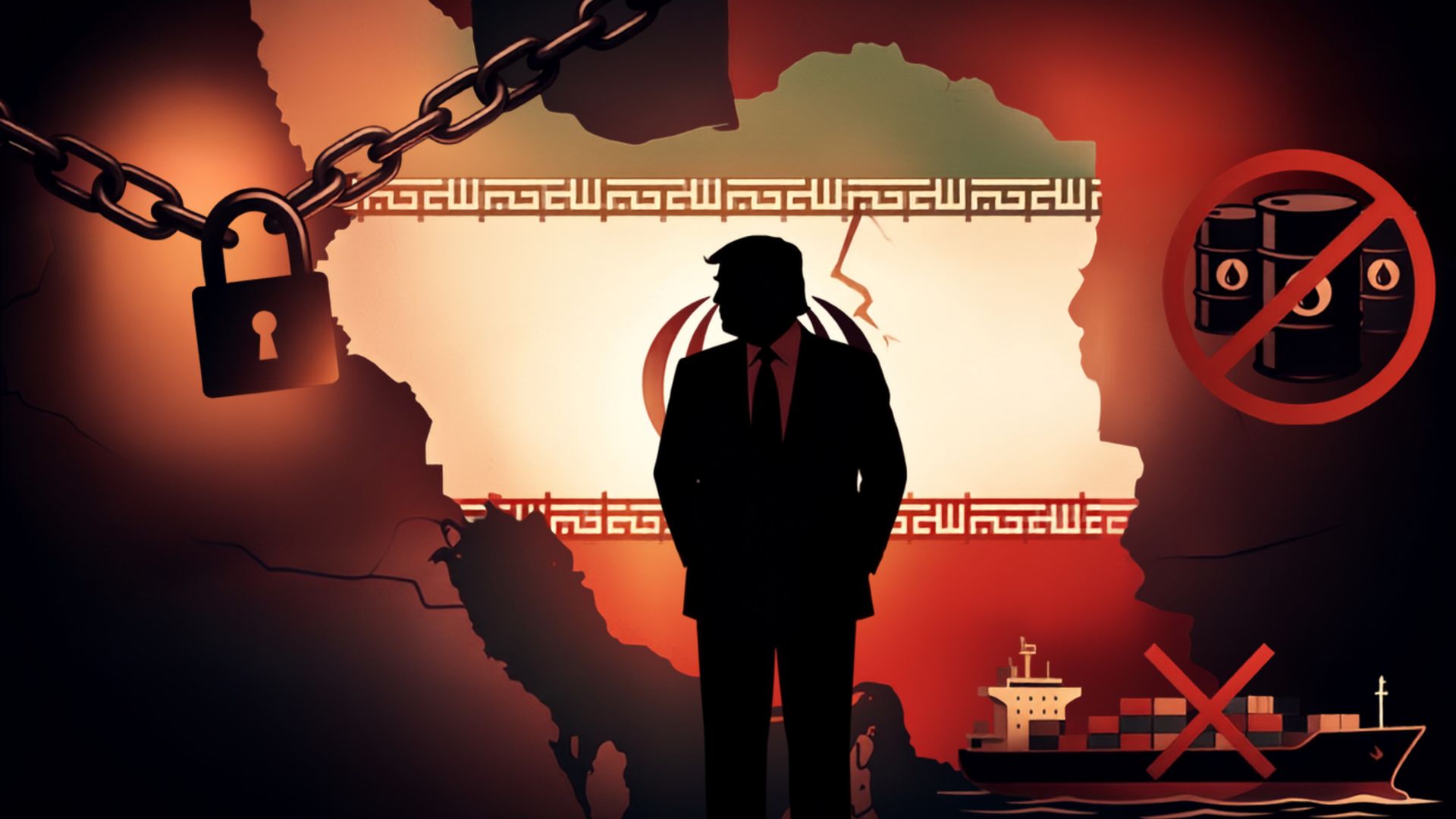
The complete guide to the Trump administration’s economic campaign against Iran—and the implications for Israel
INSS Insight No. 2191, August 27, 2026
Follow us on GoogleThe Trump administration’s announcement of “Operation Economic Outcast” marks a transition to a new phase in the campaign against Iran. After roughly six months of fighting, during which Tehran suffered severe damage, the full picture of the campaign remains incomplete: maritime traffic in the Strait of Hormuz has not returned to normal, and the nuclear issue remains unresolved. In light of this, Washington is seeking to shift the center of gravity: relying less on further expansion of the military campaign and leaning more toward an attempt to translate the gains already accumulated into a sustained mechanism of economic and financial pressure. The plan expands secondary sanctions and targets third countries, banks, and companies that assist Iran in bypassing isolation. However, the specific details of enforcement, the identities of upcoming targets, and the timetable remain largely ambiguous, leaving the administration considerable room for maneuver to intensify or adjust the pressure in response to developments. Tehran’s response combines messages of resilience, threats to escalate pressure in Hormuz, and efforts to preserve a diplomatic channel. Consequently, the success of this policy depends not only on Washington’s ability to enforce the measures against third countries—chief among them China, Turkey, and others—but also on whether the United States can prevent Iran from shifting the focus back to the military domain through escalation. From Israel’s perspective, the central question is whether the clock of pressure on the regime will move faster than Iran’s clock for rebuilding its capabilities, consolidating its position, and resuming progress on the nuclear front.
Nearly six months after the onset of the war against Iran, the Trump administration is shifting the campaign’s center of gravity. On August 24, Treasury Secretary Scott Bessent launched "Operation Economic Outcast"—a campaign designed to significantly expand Iran's economic and financial isolation while threatening secondary sanctions against entities worldwide that continue to do business with Tehran.
Yet despite the administration’s harsh rhetoric about an “Economic D-Day,” including at the press conference where Bessent unveiled the plan, the initial steps indicate that the administration has, for now, chosen a phased approach. It has substantially expanded its enforcement capabilities and clarified the new rules of the game, yet continues to hold back from deploying its heaviest tools, foremost among them measures targeting major Chinese banks.
This represents a significant shift, but it is neither a move from coercion to diplomacy nor an abandonment of military force. Following months in which the military campaign inflicted severe damage on Iran without yielding a settlement, restoring full activity in the Strait of Hormuz, or resolving the nuclear issue, the administration now seeks to leverage the military gains already achieved to amplify the impact of economic pressure. The emphasis is thus moving away from further expansion of the war to an effort to translate the force already employed into pressure that will compel Tehran to recalculate and return to negotiations from a weaker position.
Not a Knockout Blow, but a Mechanism of Cumulative Pressure
In the initial phase, the Treasury Department imposed sanctions on roughly 60 individuals, entities, and vessels, while expanding the scope of activities that could expose foreign actors to secondary sanctions across five sectors: digital assets, gold, technology, aviation, and shipping. Treasury Secretary Scott Bessent warned that countries and companies continuing to assist Iran in selling oil and generating revenue risk losing access to the U.S. dollar-based financial system.
However, the administration has so far refrained from taking sweeping measures against countries that continue to trade with Iran. Bessent explained that he intends to grant them a brief adjustment period to change their conduct before deploying the full force of sanctions. He declined to specify which targets would be next, or when punitive measures would be imposed against them.
Consequently, despite the dramatic headlines, it is more accurate to view the plan not as a one-off economic "D-Day," but as a mechanism of cumulative coercion. The administration is allowing companies and countries a brief window to sever their ties with Iran, while retaining the operational flexibility to determine targets, timing, and enforcement intensity—and even to condition the deployment of sanctions on Iranian behavior and other U.S. policy objectives. This implies that secondary sanctions may be applied selectively and unevenly.
This dynamic also explains why the initial market reaction was relatively muted. Oil prices even edged lower following the announcement, partly because the concrete measures were perceived as less immediate than the pre-announcement rhetoric had suggested.
The Tools Are Clear; the End State Less So
In the immediate term, the campaign’s objectives are relatively clear: reduce Iran’s revenues, impair its ability to evade sanctions, make it more difficult for the regime to rebuild its missile and UAV arrays or fund the Islamic Revolutionary Guard Corps (IRGC) and its proxy network, while simultaneously weakening its leverage in the Strait of Hormuz.
The broader objective is apparently to bring Tehran back to the negotiating table on terms more favorable to the United States. While the administration has clarified the nature of the pressure and the mechanisms at its disposal, it has maintained strategic ambiguity regarding both the timing and manner of their deployment, as well as the specific conditions under which it would be willing to begin lifting them. Secretary Bessent presented Iran with a choice between severe isolation and a potential future path to reintegration into the global economy, but did not specify the practical conditions for doing so. It remains uncertain whether fully reopening the Strait of Hormuz would suffice to begin easing the pressure, what demands will be levied on the nuclear front, how the missile capabilities and proxy networks will be addressed, or whether the U.S. is open to a phased rollback of sanctions rather than demanding a comprehensive initial agreement covering all outstanding issues.
This ambiguity is far from trivial. Economic pressure serves as effective leverage in negotiations only if the party under pressure believes there is a genuine path to receiving tangible dividends in exchange for changing its behavior. If Tehran concludes that Washington’s ultimate objective is the destabilization and collapse of the regime itself, even major concessions may be viewed as futile, thereby increasing, rather than diminishing, its incentive to escalate.
The Strait of Hormuz – An Integral Part of the Strategy
The economic campaign does not stand on its own. It relies on the U.S. blockade and on efforts to curtail Iran's ability to use the Strait of Hormuz as a point of leverage. For months, Tehran managed to significantly disrupt traffic through the strait, raising the cost of the confrontation for both the United States and the Gulf states. Now, Washington is seeking to change the equation: to reduce Iran’s own revenues while increasing the ability of the Gulf states to continue bringing oil to market.
In this context, particular importance should be attached to the operation the U.S. military has been conducting in recent weeks to escort tankers through the southern route of the strait, near Oman. According to U.S. officials, this is a dedicated operation in which roughly 15 to 20 tankers pass nightly during coordinated time windows under U.S. protection. The effort encompasses not only escorting loaded tankers out of the Gulf, but also bringing empty tankers into the Gulf so they can load oil and depart. According to the officials, the operation became possible following a series of U.S. strikes that damaged Iranian radar and maritime surveillance capabilities.
The administration portrays the operation as a significant achievement. Secretary of Energy Chris Wright stated that oil export volumes through the strait averaged more than 8 million barrels per day, reaching roughly 15 million barrels on a particular day. If these figures are accurate, they reflect a significant recovery from the lows recorded after the war broke out, even if traffic has yet to return to pre-war levels. Commercial data do not currently make it possible to verify the administration’s claims. Kpler’s figure regarding the 60-day MoU period—an average of approximately 6.1 million barrels per day—refers to a broader timeframe and therefore does not, in itself, contradict U.S. claims of a sharp increase over the past two weeks. Nevertheless, tracking companies have yet to identify volumes on a scale that clearly corroborates the high figures cited by the administration.
The discrepancy between U.S. figures and tracking estimates remains unresolved. Part of it may stem from the nature of the operation itself: an increasing number of tankers are transiting at night with their detection systems turned off, rendering them unidentifiable in real time. Tracking firm Kpler notes that during the final week of the MoU, roughly 66 percent of the oil detected outside the Gulf could not be directly linked to its transit route, while the proportion of transits classified as "dark" or unidentified rose sharply. In addition, The Wall Street Journal notes that loading data in the Gulf and import figures at final destinations have yet to fully confirm the high numbers presented by the administration.
In light of this, it would be premature at this stage to conclude that the United States has succeeded in stripping Iran of its leverage in the Strait of Hormuz. The administration asserts that the covert operation allows for substantially larger volumes to transit than can be detected by tracking systems; independent data indicates a partial recovery, but one that remains far removed from full freedom of navigation.
Iran, for its part, is attempting to demonstrate that U.S. control is hardly complete. It continues to dictate its own rules governing passage through the strait and has recently blacklisted dozens of tankers and threatened fines, detention, and cargo seizures. From Tehran's perspective, the mere ability to instill fear among shipping companies and insurers regarding the passage may be no less vital than the physical capacity to intercept every single tanker.
This underlines one of the principal risks facing U.S. policy. If Tehran assesses that the U.S. operation remains fragile, Iranian leaders might conclude that striking a small number of tankers or deliberately escalating the threat would be enough to halt the recovery, forcing Trump back into the military dilemma he seeks to avoid. Conversely, if Iran concludes that the operation is indeed succeeding in covertly moving large volumes and that its control over Hormuz is eroding, the incentive to escalate could increase in that scenario as well—this time to prevent its leverage over the strait from losing its value as a bargaining chip. It should be emphasized that President Trump's previous threats to escalate the campaign to a large-scale U.S. strike against targets in Iran, which ultimately did not materialize, only reinforced the Iranian perception of the administration's reluctance to employ force.
Consequently, the struggle over Hormuz is no longer merely about the number of ships or barrels of oil passing through the strait each day. It is a struggle over who actually sets the rules of the game in the strait, and whether the United States can gradually increase energy flows without being drawn back into a broader war. The answer to this will serve as one of the key benchmarks for the success of the new economic strategy.
Third Countries – The Plan’s Enforcement Test
The success of the administration’s strategy hinges not only on the extent of the direct damage inflicted on Iran, but to a large degree on Washington’s ability to change the behavior of banks, companies, and governments in third countries. This, in fact, is the central rationale behind the expansion of secondary sanctions.
However, even if the administration demonstrates resolve to deploy secondary sanctions, enforcing them is far more complicated than announcing them. The more dependent a company or bank is on the dollar, Western financing, and the U.S. market, the greater Washington’s deterrent power. Yet Iran has spent years cultivating networks specifically designed to minimize such exposure: shell companies, exchange houses, a "shadow fleet," cargo origin masking, digital assets, and payment systems that do not rely entirely on the dollar. Over recent months, the Treasury Department itself has described such networks extending from China and Hong Kong to Turkey and the UAE. While these operations can be targeted to sharply inflate their operational costs, sealing them off completely remains exceptionally difficult.
China represents the ultimate test, though certainly not the only one. Beijing remains the main buyer of Iranian oil. Shipments have declined significantly as a result of the war and the blockade, but independent refineries continue to purchase oil through intermediaries and payment systems that are more difficult to expose to U.S. pressure. Since March 2025, the U.S. Treasury Department has imposed sanctions on independent refineries in China, in an effort to intensify pressure on Iran and reduce Chinese purchases of Iranian oil.
From Washington’s perspective, it is relatively easy to blacklist an independent refinery, shell company, or vessel; threatening a major Chinese bank or a central player in the trading system is far more complicated, since such a move could have broad repercussions for economic relations between the two powers. Accordingly, Secretary Bessent refrained from targeting major Chinese banks in the first round, noting he had no desire to cause disruption to the global financial system. The challenge is compounded by the administration’s simultaneous desire to stabilize relations with Beijing and avoid turning existing disputes into a broader confrontation. Thus, the effectiveness of the sanctions will depend not just on the damage they inflict on Iran, but on the willingness of the United States, over time, to absorb the economic and diplomatic costs of enforcing them against key trading partners.
This carries particular weight ahead of the scheduled September 24 meeting in Washington between Trump and Chinese President Xi Jinping. On the one hand, Trump wants to prevent China from continuing to provide Iran with one of its few remaining sources of revenue; on the other, he seeks to manage a much broader relationship with Beijing encompassing trade, technology, raw materials, and strategic issues. The test, therefore, is not simply whether China continues to purchase Iranian oil, but how far Trump will be willing to escalate enforcement once the cost threatens to take the form of a crisis with Beijing itself.
The challenge is not limited to China. Turkey, Iraq, the Gulf states, and European firms all form, in various capacities, part of the trade, financing, logistics, and technology architecture that Iran leverages to bypass pressure. The UAE announced about a week ago a complete suspension of economic ties with Iran. This represents a major blow to the Islamic Republic, given that the UAE is Iran's second-largest trading partner globally, after China. However, as Washington transitions from penalizing peripheral shell companies to targeting core banks, energy firms, and central entities in countries whose cooperation it requires, the diplomatic cost of enforcement also rises. In the cases of Turkey and Iraq, for instance, severe economic pressure conflicts with broader regional interests and risks undermining U.S. objectives in Syria as well as efforts to reinforce state institutions against pro-Iranian actors. With Europe, the challenge lies in preserving a broad coalition of pressure against Iran without allowing the sanctions themselves to become a source of discord within the Western alliance.
This explains why the plan's phased approach is so critical. Bessent did not attempt on day one to sever all of Iran's trading partners at once. Instead, he established an escalation ladder: expanded authority, a warning, a period in which to change behavior, and only then the possibility of intensified enforcement. The real test will come when companies and countries refuse to comply, revealing just how much friction in relationships with key partners the administration is prepared to endure in enforcing Iran’s isolation.
Ultimately, the plan's true strength lies in combining financial sanctions with the physical blockade. Sanctions alone cannot fully seal off the Iranian economy, but when paired with Iran's physical struggle to export oil and goods to market, Tehran’s capacity to adapt is severely restricted.
The Iranian Response
Iranian Minister of Economy, Ali Madanizadeh, articulated the main position of the regime's professional establishment by emphasizing that there is nothing new in the U.S. initiative, given that the United States has been attempting for years to sever Iran's economic lifelines, and that Iran has prepared itself with a plan and countermeasures. However, he also admitted that the pressures and measures taken since last year have caused considerable harm to the public and fueled inflation, thereby contradicting the claim that sanctions have no impact.
By contrast, conservative media affiliated with the IRGC portrays the new sanctions as an acknowledgment of the military option's failure. Against this backdrop, it also clarifies that Iran would prefer escalation over surrender. Concurrently, overt and implicit threats are resurfacing to disrupt the flow of oil from the Gulf, expand Iranian oversight of maritime navigation, and punish countries that cooperate with the U.S. campaign.
Iran’s initial responses can thus be characterized as efforts to reassure the domestic public, threats against cooperating countries, and the possibility of intensifying pressure in the Strait of Hormuz. These are accompanied by continued efforts to develop alternative channels for trade, payments, and financing, with an emphasis on Iran’s neighbors, as well as China, Russia, and others.
Available indicators point to intensifying pressure on the Iranian economy. Although its precise extent remains difficult to quantify, amid mounting pressure in the run-up to the U.S. announcement, the dollar had already crossed the threshold of 2 million rials on the open market, gold and coin prices reached new highs, and economic commentators have pointed to a further rise in inflation expectations and demand for dollars and gold as hedges.
Even before the announcement, senior economic officials acknowledged that the economy was already under severe strain. Particularly notable in this context were the harsh remarks by President Pezeshkian on August 5, who stated that "The situation we face today is the most difficult since the revolution. Existing sanctions were intensified, followed by sanctions on our banks and financial system; then they launched a war and, not content with that, they imposed a blockade upon us. Under the worst possible conditions, they are trying to bring us to our knees." Central Bank Governor Abdolnaser Hemmati offered the most alarming assessment, stating in a televised interview on August 19 that “our oil exports have nearly come to a halt.”
Evaluating the true extent of the damage to the Iranian economy is no simple task: some official data is published with a lag, discrepancies exist between government figures and open-market realities, and the war and blockade make it even more difficult to assess economic activity in real time. Nevertheless, the exchange rate, rising gold prices, and the admissions of senior regime figures all point to mounting pressure.
The Main Risk: Iran May Attempt to Return to War
The U.S. administration chooses to deepen the economic campaign partly because President Trump seeks to avoid a return to a broader military conflict. Treasury Secretary Scott Bessent noted prior to his announcement that the economic focus could reduce the need for renewed large-scale military action. However, if Tehran also concludes that Trump is reluctant to re-enter a sustained military campaign, it may view this not merely as an American constraint, but as a point of vulnerability to be exploited. The prevailing assessment is that, as the United States successfully erodes Iran's capacity to dictate maritime rules and slashes its revenues, the Iranian incentive may grow to execute an action that restores a sense of crisis: a high-impact strike on a tanker, expanded use of missiles and drones, an attack against U.S. forces or a Gulf state, or an intensified deployment of the Houthis and proxy militias.
At the same time, however, both sides continue to keep the diplomatic door open. Mediators who remain in contact with the parties report progress, albeit without offering specific details. Initial reports in the Saudi media stated that the Pakistani Chief of Staff, who recently concluded a mediation visit to Tehran, demanded an end to the attacks by Iran-aligned militias (likely referring to the Houthis targeting Saudi Arabia, which shares a defense agreement with Pakistan), alongside a return to the framework of the declaration of intent signed in Islamabad.
Implications for Israel
Israel has an interest in giving the new policy a chance. If the United States succeeds in reducing the regime's revenues, damaging its procurement and rehabilitation networks, and weakening its leverage in the Strait of Hormuz without returning to a broad military campaign, the move could lock in a significant share of the military gains already achieved.
At the same time, Israel’s dialogue with Washington should focus on three issues. First, the pressure campaign should be tied to a clearly defined end state, including which Iranian steps would permit a gradual easing of pressure. Second, it is essential to ensure that the urgency of reopening the Strait of Hormuz and lowering energy prices does not push the nuclear issue and the discussion of the principal military threats posed by Iran to the margins. Third, Israel and the administration should formulate a graduated set of responses to potential Iranian escalation scenarios, so that Tehran cannot exploit Trump’s desire to avoid another war to drive a wedge between Israel and the United States.
By the same token, Israel must be careful not to push Washington toward an expansion of the war precisely when the administration is seeking to demonstrate that it can achieve its objectives without returning to a broad military campaign. Any proposal for further military action should be assessed not only in terms of the extent of the damage it could inflict on Iran, but also according to its ability to bring the conflict closer to an end state, reduce the long-term threat, and lessen the need for a prolonged U.S. commitment.
Summary
Operation Economic Outcast marks a new phase, though not a complete departure, in Trump's policy. Military force is not being replaced by economic pressure; rather, it serves as the backdrop enabling the administration to leverage its economic and financial dominance without further expanding the war at present. Still, this reliance on sanctions highlights the fundamental vulnerability in U.S. policy throughout the war. Sanctions remain a tool to achieve political goals, but they are not an end in themselves. Consequently, the ambiguity surrounding the plan presented by Bessent fails to address core challenges and offers no clear mechanism for ending the war. Moreover, the new strategy requires patience, consistency, and a willingness to sustain pressure over time—qualities that do not always align with Trump’s tendency to seek rapid achievements and adjust the intensity of pressure in response to developments and other considerations.
The announcement itself reflects greater caution than the preceding rhetoric suggested. Washington has established a broad enforcement framework and issued serious warnings to countries and companies, but has retained the flexibility to intensify it gradually and, in particular, has thus far avoided a direct confrontation with China.
Hence, the test will be multi-faceted: whether the administration will in fact be willing to enforce its threats against China and other key economic partners; whether it can continue to erode Iran’s leverage in the Strait of Hormuz; and whether it can do so without allowing Tehran to bring the military dimension back to the forefront through escalation.
This represents the strategy's central paradox. The more successful economic pressure and efforts to diminish Iranian control over the Strait of Hormuz become, the greater Tehran’s incentive may be to deploy its remaining leverage—military escalation. If Trump can deter such a move while preserving a viable diplomatic path, time may work in America's favor; if not, Iran will seek to demonstrate that Trump's reluctance to engage in another war remains the central vulnerability in U.S. strategy.