


Publications
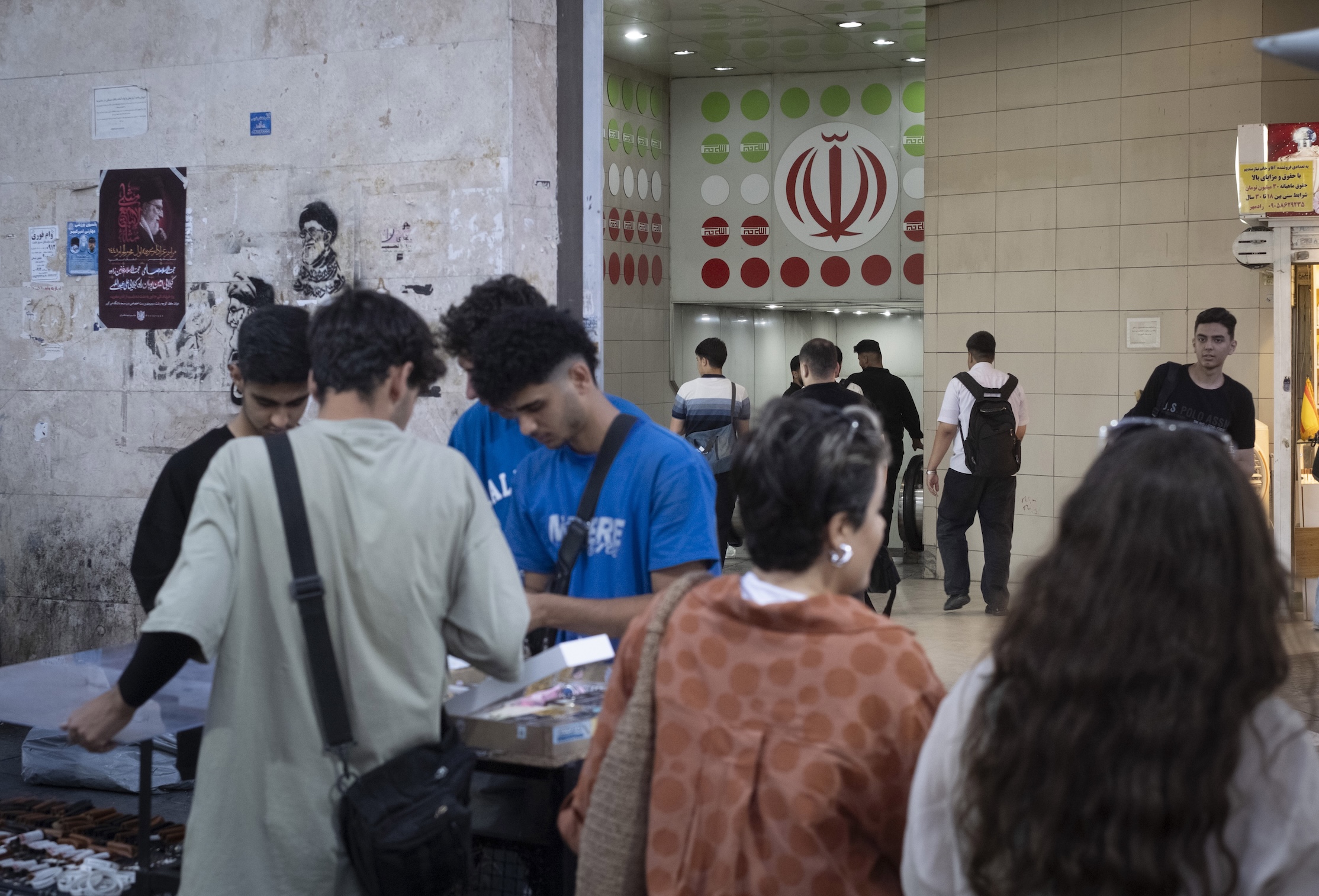
How have the war and the subsequent worsening economic crisis accelerated the ongoing erosion of Iran's middle class — and what are the social and political implications of this process?
INSS Insight No. 2160, June 24, 2026
Follow us on GoogleThe war in Iran and the subsequent worsening economic crisis have accelerated the ongoing erosion of the country’s middle class, which has been particularly hard hit by high inflation, the impact of sanctions, declining purchasing power, and a growing employment crisis. In recent months, Iranian scholars and commentators have warned of the downward mobility of large segments of the middle class into lower socioeconomic strata and of their increasing dependence on government assistance, undermining their ability to sustain the patterns of life, economic security, and sense of future that have traditionally characterized this class. This erosion has implications that extend beyond the economic sphere: it encourages the emigration of educated young people and professionals, weakening social capital and public trust, and may undermine social and political stability while fueling additional waves of protest. At the same time, the deepening hardship is forcing many members of the middle class to focus on day-to-day survival. As a result, the erosion of the middle class may impair its ability to fulfill its historical role as a central agent of political and social change in Iran.
Against the backdrop of the deepening economic crisis following the war in Iran, warnings are mounting regarding the gradual and ongoing erosion of the country’s middle class. Preliminary assessments published in Iran indicate war-related damages of at least $270 billion. While Iran will derive economic benefits from the unfreezing of Iranian assets held abroad and from sanctions relief under its agreement with the United States, these measures are not necessarily expected to bring about a dramatic improvement in the country’s economic situation, which is rooted, inter alia, in structural problems such as poor governance, corruption, and the extensive control of the economy by the Islamic Revolutionary Guard Corps (IRGC).
An article published in the reformist newspaper Shargh on June 6, 2026, under the headline “The Transformation of the Middle Class,” pointed to the continued erosion of the middle class and its downward mobility toward lower income deciles that depend on sustained welfare support to survive. The article noted that in recent years, a profound structural shift has occurred in the Iranian lifestyle, characterized by the transformation of poverty from a temporary phenomenon into a persistent and enduring condition. Many households no longer expect economic development but instead focus on coping with immediate subsistence needs. Data from the National Statistical Center indicate that the number of citizens — among them women and children — relying on government welfare institutions has increased significantly in recent years.
As a result of the ongoing rise in the cost of living, many families are forced to cut spending on education and healthcare in order to meet basic consumption needs. Millions of workers remain employed full-time yet continue to live in poverty, and welfare payments primarily serve to ensure basic subsistence rather than to improve living standards. This growing gap between actual income and the cost of living is driving the collapse of the middle class.
Dr. of Chamran University in Ahvaz has also warned of the decline of Iran’s middle class. In an article published in the economic daily World of Economy, he described the “gradual and silent erosion of the middle class.” He argued that the middle class is not defined solely by income level, but also by access to quality education, cultural consumption, a sense of economic security, hope for the future, and the ability to save. According to the article, this is a class that plans five years ahead rather than worrying about tomorrow’s meal, sends its children to music lessons, buys books on weekends, saves for travel, and at times seeks to study the arts. It is also perceived as a key engine of societal development.
If the poor constitute the foundation of society and the wealthy its ceiling, the author argues, the middle class is the pillar that holds the entire structure together. Therefore, its weakening is not merely an economic problem. As this class declines, so too does social hope. Members of the middle class no longer plan for the future but instead devote all their energies to daily survival. A society whose resources are entirely devoted to survival leaves no room for creativity, innovation, cultural production, or moral conduct. This central pillar of society is now cracking under the weight of inflation and economic instability.
The researcher further argued that the government appears to be “chasing a train on a bicycle,” while the train is accelerating every hour: in an economy characterized by structural and persistent inflation that erodes the value of the national currency, vouchers and allowances rapidly lose their value, while the prices of basic goods rise even before citizens receive a text notification of their benefits. Government policies, which have effectively abandoned citizens to the mechanisms of the free market, have led to the rapid decline of the middle class below the poverty line — after years during which it fulfilled a long-standing role in shaping culture, driving economic activity, and maintaining social stability. The researcher also warned that the collapse of the middle class is not expressed solely in declining living standards. This class has traditionally served as a shock absorber for social tensions and has advanced its demands through civic and legal channels. As it shrinks, both social capital and public trust erode accordingly.
Sociologist has also warned that Iran’s middle class is facing a crisis of economic and social instability, and that the inability of its members to engage in education, sports, leisure, and cultural activities not only undermines their standard of living but also threatens their class identity, social aspirations, and psychological well-being. Individuals who still consider themselves part of the middle class lack the means necessary to sustain the lifestyle patterns associated with it. According to Jorsheri, the process of proletarianization of the middle class in Iran, and its transformation into an unstable working class, will erode its capacity to function as a stabilizing social force, a role it has played in recent decades as an intermediary between the state and society. It is also likely to lead to rising dissatisfaction, erosion of social trust, and a decline in social solidarity.
These assessments reflect a widely shared view among Iranian scholars and commentators that the erosion of the middle class has evolved from an economic challenge into a phenomenon with broad social and political implications. Although the effects of the economic crisis are evident across the population, the middle class has borne the brunt of the damage. While upper classes have generally been able to cope with the impact of the crisis, and lower classes have received partial compensation from the government in the form of stipends and subsidies for basic goods, the middle class has been forced to shoulder much of the economic burden while contending with declining real incomes and employment instability.
Iran’s middle class has been shrinking for years under the weight of inflation approaching an annual rate of approximately 60 percent, rising housing costs, and declining purchasing power. Families that once served as a key driver of consumption and culture are experiencing economic decline and are no longer able to maintain their previous standard of living. Some have been forced to relocate to more affordable areas or smaller housing units and to forgo travel, leisure activities, cultural consumption, and even private vehicle ownership in order to reduce expenses. In July 2024, economists Mohammad-Reza Farzanegan and Nader Habibi published a study examining the impact of economic sanctions on the size of Iran’s middle class. According to their findings, the middle class contracted sharply between 2012 and 2019 by 88 percent (an average of 11 percent annually), as a result of Western sanctions that reduced economic growth, led to the collapse of many private companies, and drove a sharp increase in inflation, resulting in an approximately 28 percent decline in average real annual income in Iran.
The erosion of the middle class also carries implications beyond the economic sphere. Alongside economic decline, it is reflected in the increasing emigration of educated young people and professionals seeking to realize their aspirations outside Iran. Politically, the worsening economic hardship may fuel additional waves of public protest in the Islamic Republic. Historically, the middle class has played a central role in many protest waves in Iran, including the “Green Movement” of 2009 and the Mahsa Amini protests of 2022–2023. However, the deepening economic crisis is forcing citizens, including members of the middle class, traditionally viewed as a key agent of political and social change, to focus on day-to-day survival at the expense of struggles for civil and political freedoms. At the same time, the contraction of the middle class and the downward mobility of segments of it toward lower socioeconomic strata may increase social dissatisfaction, erode overall public trust, and consequently undermine social and political stability.
In sum, the advancement of political change processes in Iran requires the formation of a broad, cross-sectoral, nationwide social coalition. The erosion of the middle class may indeed reinforce its dissatisfaction and encourage protest. Moreover, a growing sense of shared fate is emerging between the middle class and the working class, centered on a common sense of insecurity.
However, the deepening despair regarding the prospects for change in Iran — driven in part by the regime’s demonstrated ability, at least for the time being, to preserve both its capacity and determination to suppress any threat to its stability — may push the middle class, increasingly focused on its own survival, away from participation in protest movements. This dynamic may further undermine the prospects for advancing political change, which depend to a large extent on the ability of the middle class to overcome its weaknesses and to align with other social forces, including the working class.