


Publications
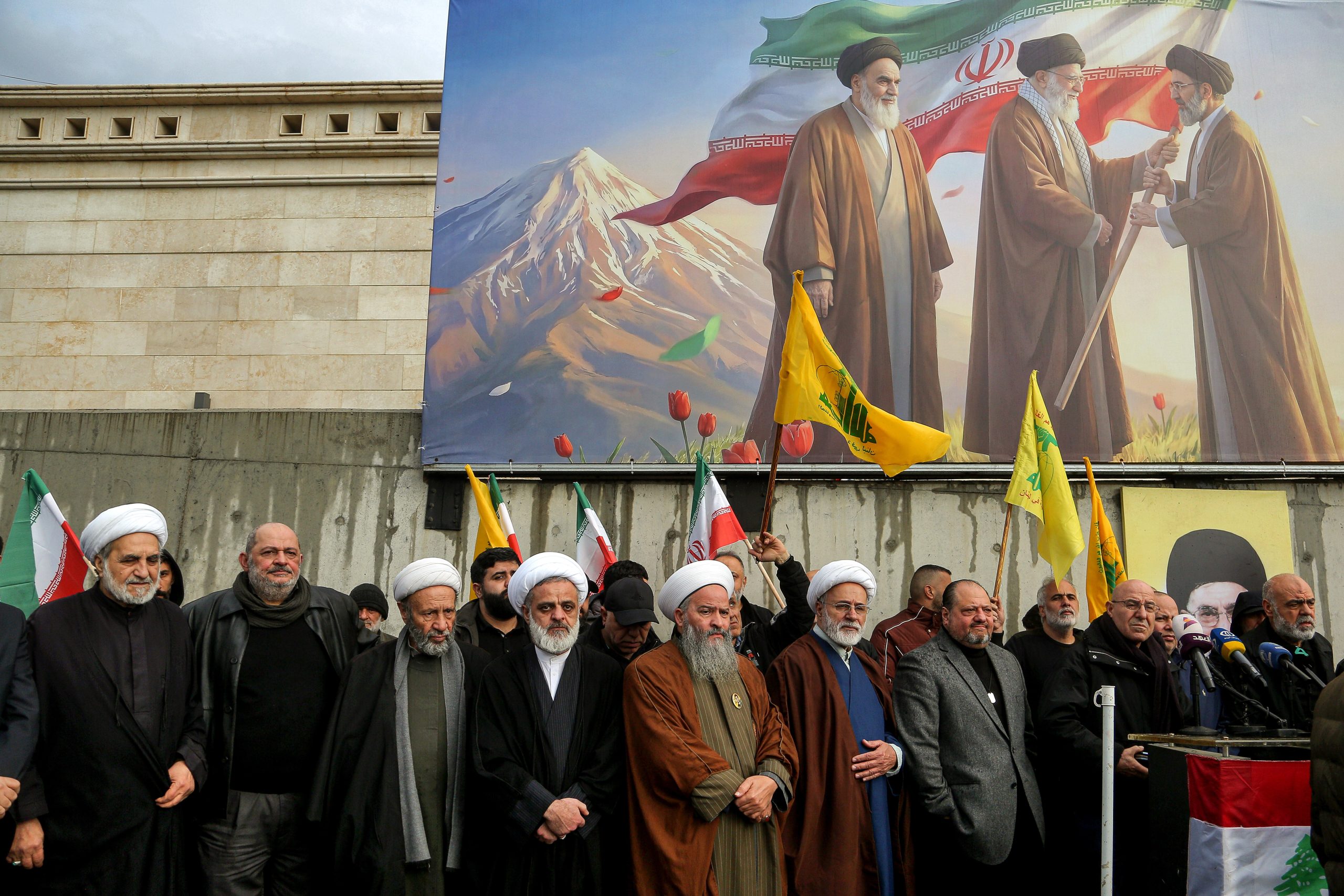
Against the backdrop of the recent escalation, which culminated in Israel's strike on a Hezbollah stronghold: How the linkage between Tehran and the Shiite terrorist organization was reshaped in the wake of Operation "Roaring Lion"
INSS Insight No. 2151, June 9, 2026
Follow us on GoogleSince the outbreak of Operation “Roaring Lion,” and even more so against the backdrop of the escalation in Lebanon in recent weeks, the perception emphasizing Hezbollah’s importance as a strategic component of Iran’s security doctrine has grown stronger in Tehran. Hezbollah’s decision to join the campaign alongside Iran was perceived in Tehran as an expression of its commitment to the pro-Iranian axis in the region and of the continued relevance of Iran’s proxy strategy—which appeared to be eroding following the weakening of the Axis and the reluctance of Iran’s allies, including Hezbollah, to join the campaign in June 2025. Iran’s commitment to Hezbollah has been reflected in its insistence on binding any permanent ceasefire agreement with the United States to a ceasefire in Lebanon. This commitment reached its peak in Iran’s strikes against Israel on June 7, following Israeli attacks in Beirut. Nevertheless, Iran continues to face significant challenges in implementing its proxy concept in the post-war period. These include the continuation of Israeli operations against Hezbollah; Israeli-Lebanese negotiations; growing criticism of Hezbollah and Iran within Lebanon; and worsening economic constraints inside Iran. Despite these challenges, it appears that, at this stage, the linkage between Iran and Hezbollah cannot be severed, partly due to the lack of any viable alternative to Iranian support for the organization. However, Israel can leverage the challenges and opportunities that have emerged in Lebanon to advance long-term processes that will help weaken the linkage between Iran and Lebanon.
The Importance of Hezbollah to Iran
An article published in early June 2026 by the online newspaper Voice of Iran, issued by the office of Iran’s Supreme Leader, emphasized Hezbollah's significance to Iranian national security in the aftermath of Operation "Roaring Lion." Titled "The New Security Equation: From Hormuz to Beirut," the article argued that Iran would not return to the prewar period—not with regard to the Strait of Hormuz, the American military presence in the region, or the “Axis of Resistance.” The war provided Iran with a strategic advantage, allowing it to advance a new regional order. Consequently, its relationship with the components of the pro-Iranian axis in the region, including Hezbollah, will no longer resemble what it was prior to the war, but will instead be determined by the reality that emerged in its wake. Iran's relationship with the "Resistance" in Lebanon is expected to grow even stronger, because Hezbollah’s entry into the campaign not only reinforced its role as a central component of Iran’s security doctrine, but also positioned it as part of the security balance of regional actors who refuse to submit to the United States and Israel.
A second article, published in the same newspaper on May 9, 2026, argued that Hezbollah is not merely a Lebanese actor but one of the pillars of the regional deterrence architecture. In the postwar reality, any threat to Hezbollah is viewed by Iran as a threat to the regional balance of power, making support for the organization a strategic necessity. The article maintained that Iranian support for Hezbollah must continue across political, media, and diplomatic spheres, and be defined as part of a broader conception of regional security, particularly in light of attempts to separate the various regional arenas from one another. Ultimately, the article claimed, developments in Lebanon are not just a local crisis but part of a broader struggle over the shaping of the future regional order in West Asia. Therefore, Iran’s relations with the organization must be viewed as an enduring strategic alliance that will constitute one of the pillars of the regional balance of power in the years ahead.
These articles can be seen as an expression of the growing perception in Tehran that, in the wake of Operation "Roaring Lion," greater importance must be placed on preserving Iran's ties with the components of the "Axis of Resistance," foremost among them Hezbollah in Lebanon. Hezbollah is regarded as Iran’s flagship regional proxy and a strategic asset that enables Tehran to attrit Israel and deter it from acting against Iran itself. It is also viewed as the organization most deeply committed to the Islamic Republic. The dynamic relations between Iran and the components of the "Axis of Resistance," including Hezbollah, as well as the constant tension between their ideological and political commitment to Tehran and their own distinct agendas and interests, have significantly shaped the character of Iran’s proxy network. From the outset, this network—which also includes the pro-Shiite militias in Iraq and the Houthis in Yemen—did not operate as a hierarchical structure subject to direct Iranian command and control. Rather, it functioned as a loose network of actors bound together by a web of shared interests alongside a common ideological vision.
In recent years, particularly following the assassination of Quds Force Commander Qasem Soleimani in January 2020, the network has undergone increasing decentralization. Soleimani’s assassination posed a significant challenge to the proxy network, compelling Iran to manage it in a more decentralized manner than in the past. Iran continued to maintain considerable influence across the network, though not necessarily through full and permanent control over each of its components. At the same time, Hezbollah's former secretary-general, Hassan Nasrallah, assumed a more prominent role in managing the network's affairs, both by virtue of his experience and long-standing familiarity with Israel, and due to his pivotal status and influence in Tehran, which grew stronger following Soleimani’s assassination.
The Erosion of the Proxy Concept
Hezbollah’s defeat by Israel in the summer of 2024 and the collapse of the Assad regime in Syria in December 2024 exacerbated the limitations of Iran's power in operating the regional network it had spent years cultivating. These limitations became particularly evident during Operation "Rising Lion," which further illustrated the erosion of the proxy concept. Iran's "Forward Defense" Doctrine, designed to intercept threats to its national security as far from its borders as possible through the use of proxy forces, ultimately failed to prevent Israel and the United States from launching direct attacks against it.
One of the primary objectives in constructing the "Axis of Resistance" was to deter Israel from striking Iran's nuclear facilities and to provide Tehran with an immediate retaliatory capability should such an attack occur. Yet, when put to the test, Iran’s proxies did little to assist it during the war. The launch of Israel's military campaign against Iran in June 2025 caught the organizations of the pro-Iranian axis in deep crisis. Hezbollah, which had been intended to play a pivotal role in the Axis's "ring of fire" strategy and to assist Iran in the event of an Israeli attack, did not join the war because it was still unprepared to do so, limiting its involvement to declarations of support for Tehran.
As a result, the war intensified doubts that had already begun to emerge in Tehran regarding the effectiveness of Iran’s proxy strategy. Nevertheless, it was clear that Iran had no intention of abandoning its allies in favor of a new regional strategy. Senior Iranian officials, led by Supreme Leader Ali Khamenei, continued to express support for the "Axis of Resistance" and confidence in its ability to confront Israel successfully. Amid growing pressure on Hezbollah to disarm, Iran stressed that the "Resistance" remains the only guarantee of Lebanon’s security. Moreover, Iran renewed its weapons and funding supply routes to Hezbollah, including through Syrian territory. It also deepened its direct involvement in managing Hezbollah’s affairs, as evidenced by the deployment of hundreds of officers from the Islamic Revolutionary Guard Corps who participated in Hezbollah’s reconstruction and rearmament efforts.
Commitment to the Pro-Iranian Axis
Hezbollah’s decision to join the campaign alongside Iran on March 2, 2026, following the assassination of Ali Khamenei at the outset of Operation "Roaring Lion" sparked a renewed debate over the effectiveness of the pro-Iranian regional Axis as a central component of Iran’s deterrence strategy. Although it took Iran nearly two days to convince Hezbollah to enter the war, the death of the Supreme Leader ultimately persuaded the organization’s secretary-general, Naim Qassem, to join the campaign in support of Iran. In Tehran, the decision by Iran’s regional proxies to rally to its side was viewed as a demonstration of their commitment to the Axis. From Iran's perspective, this served to prove the enduring importance of this strategic concept. Senior Iranian officials emphasized the significance of the "Axis of Resistance" for Tehran, presenting it as a manifestation of its ability to maintain the concept of the "Unity of the Arenas" against Israel. For instance, in his first address to the Iranian people immediately following his election as Supreme Leader, Mojtaba Khamenei emphasized that Iran views the "Axis of Resistance" as an integral component of the values of the Islamic Revolution. Similarly, the Commander of the IRGC Quds Force, Esmail Qaani, underscored the importance of the Axis, declaring that it is now clear that "the 'Unity of the Arenas' constitutes a source of strength for the Islamic Nation and a nightmare for global arrogance [the West] and international Zionism."
Iran's commitment to Hezbollah was clearly evident in its insistence on linking any permanent ceasefire agreement between Iran and the United States to a ceasefire in Lebanon. Moreover, the renewed escalation in Lebanon in May 2026 provided Tehran with another opportunity to reinforce this linkage. Following the expansion of IDF operations in Lebanon, Iran intensified its threats against Israel. On June 1, Iranian Foreign Minister Abbas Araghchi warned that a violation of the ceasefire between Iran and the United States on any single front, including Lebanon, would be considered a violation of the agreement across all of them. On that same day, Iranian threats culminated in an announcement by the commander of Iran's emergency headquarters, Ali Abdollahi, stating that Iran would respond to an Israeli strike on the Dahiyeh district in southern Beirut by striking northern Israel.
In an interview with the Lebanese television network Al-Mayadeen on June 3, Araghchi warned that Iran would not tolerate an attack on Beirut, and that if Israel struck the Lebanese capital, Iran would respond by resuming the war. The pressure exerted by President Trump on Prime Minister Netanyahu to prevent Israel from carrying out its threats to strike Beirut was perceived in Tehran as further evidence of its success in enforcing the linkage it established between the Lebanese and Iranian arenas. From Iran’s perspective, this achievement complements other gains from Operation "Roaring Lion," including the closure of the Strait of Hormuz and the damage inflicted on neighboring Arab Gulf states through missile and drone attacks. Together, these developments have further bolstered Tehran’s sense of accomplishment and self-confidence in the wake of the recent war.
Concurrently, coordination between senior Hezbollah and Amal officials and their Iranian counterparts continued throughout the war, with both sides taking care to give these interactions public visibility. On June 2, the Speaker of the Iranian Parliament, Mohammad Bagher Ghalibaf, spoke with his Lebanese counterpart, Nabih Berri, emphasizing to him that if Israel continued its attacks in Lebanon, Iran will not only suspend negotiations with the United States but will also confront Israel directly. He stressed that Iran is determined to bring about a ceasefire across all of Lebanon, particularly in the country's south, and that if an agreement to end the war between Iran and the United States is reached, it will encompass the cessation of attacks in Lebanon as well. Prior to this, Mohammad Mokhber, advisor to the Supreme Leader of Iran, met in Tehran with Hezbollah's representative in the country, Abdullah Safi al-Din. He underscored the unity of the "Axis of Resistance" and noted that any ceasefire agreement with Iran that failed to include Lebanon would be meaningless.
On June 7, Iran acted on its threats and launched a direct attack against Israel, responding to the Israeli strike in Beirut’s Dahiyeh district by firing several barrages of missiles at northern Israel. Tehran’s decision to respond directly despite the limited nature of the Israeli strike reflects the Iranian leadership’s willingness to risk renewed escalation with both Israel and the United States in order to uphold its commitment to Hezbollah. Iran’s emphasis on support for Hezbollah and its efforts to link the Iranian and Lebanese arenas reflect not only a sense of obligation toward the organization but also a strategic approach that prioritizes its preservation and reinforcement. At the same time, they underscore the new Iranian leadership’s continued adherence to the doctrine of “Resistance.” This leadership, headed by Mojtaba Khamenei and the Revolutionary Guard Corps (IRGC), is hardline, unrestrained, deeply committed to Hezbollah and the "Resistance" doctrine, and self-confident. It is expected to maintain a rigid and defiant ideological posture, at least comparable to that which characterized the rule of Ali Khamenei.
Statements by senior Iranian officials regarding the United States, Israel, and support for the “Axis of Resistance” leave no room for doubt regarding their refusal to retreat from the foundational tenets of the Islamic Republic. For instance, in a message published for Muslim pilgrims in May 2026, Mojtaba noted that the weapon of "Allahu Akbar" has strengthened the unity of the Islamic nation and young fighters of the "Axis of Resistance." He added that Iran's armed forces, alongside the fighters of the Resistance, especially in Lebanon, have achieved impressive victories against the Israeli and American militaries. Furthermore, Iran views the strengthening of the connection to the Lebanese issue as an additional means to leverage its achievements in the campaign, including its asymmetric military capabilities and its control over the Strait of Hormuz, with the ultimate goal of establishing a new regional order that recognizes its status and power. Tehran sees itself as being in a position to seize the initiative and impose new rules of the game on Israel and the United States that, in its view, reflect a balance of power tilted in its favor. This is particularly true given Tehran’s assessment that President Donald Trump has no interest in renewing the war with Iran.
Challenges Facing the Axis and the Implications for Israel
Nevertheless, this does not mean that Iran is free of significant challenges in implementing its proxy strategy in the postwar period. These challenges include Israel’s continued efforts to expand enforcement operations against Hezbollah's military buildup; the Israeli-Lebanese negotiations; the restrictions imposed by the Lebanese government on Iranian activity within its territory; the shared interest of the Lebanese leadership, Israel, and the United States to liberate Lebanon from Iranian influence; Hezbollah’s relative weakness; the growing criticism against it within Lebanon—including among the Shiite public; and the Syrian regime's ongoing commitment to restrict the transfer of weapons from Iran to Lebanon through Syria.
In addition, questions remain regarding Iran’s ability to continue investing billions of dollars in rebuilding the capabilities of the "Axis of Resistance" and supporting its regional allies, given its fragile economic condition and its national priorities following the war. This is true even though Iran has repeatedly demonstrated a willingness to prioritize support for its proxies at the expense of the needs of the Iranian people. A further question concerns the viability of continuous investment in proxy forces compared to investing in Iran's other principal deterrence assets, foremost among them its missile program, its nuclear program, and its demonstrated ability to inflict severe damage on the global economy by closing the Strait of Hormuz. Moreover, Iran’s efforts to prevent Israeli strikes on Beirut further exposed the limitations of the proxy concept: rather than the proxies defending Iran, Iran finds itself forced to protect Hezbollah.
What is clear, however, is that the linkage between Iran and Hezbollah cannot be severed at this stage. This is not only because Iran is unwilling to do so, but also due to the absence of any viable alternative to Iranian assistance for Hezbollah, and through it, to the Shiite population in Lebanon. Furthermore, this linkage cannot be dismantled given the apparent recognition of its importance by the U.S. administration itself, as reflected in its efforts to maintain the ceasefire with Iran and advance a possible agreement with Tehran. Nevertheless, Israel can capitalize on the challenges facing Iran and Hezbollah, alongside the new opportunities that have emerged in Lebanon, to disrupt Iran's proxy strategy. By doing so, Israel can advance long-term processes aimed at strengthening the Lebanese state while weakening both the Islamic Republic and Hezbollah—efforts that could ultimately help weaken the linkage between Iran and Lebanon.