


Publications
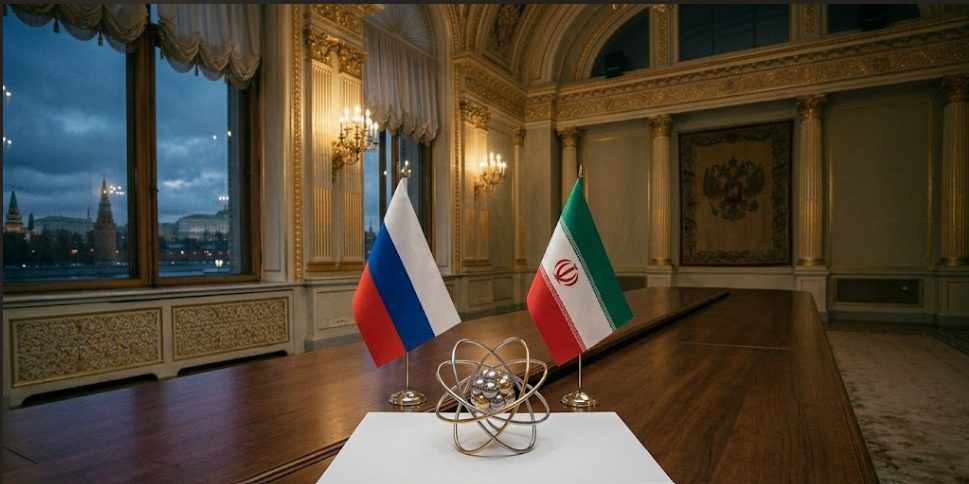
How is Moscow's position on Iran's nuclear program manifesting amid recent dramatic developments in the arena?
INSS Insight No. 2157, June 18, 2026
Follow us on GoogleThis article examines Russia’s position toward the Iranian nuclear program, as reflected in its official responses to strikes against Iran in June 2025 and March 2026, as well as during the discussions at the Review Conference of the Treaty on the Non-Proliferation of Nuclear Weapons (NPT) in April–May. Under the current circumstances between the United States and Iran, Russia has no need to introduce drastic changes to its policy regarding the Iranian nuclear issue and can continue to maintain the position it has formulated in recent years, since the collapse of the Iran nuclear deal (JCPOA) and the onset of Russia’s invasion of Ukraine. This policy reflects a calculated balancing strategy on Russia’s part: rhetorical condemnation of military escalation, particularly strikes against nuclear facilities; the provision of limited assistance that does not affect the balance of power between the parties to the conflict; and the offering of mediation services, while seeking to improve its relations with the United States. Moscow presents its position not only as support for Iran, but also as a defense of the nuclear non-proliferation mechanism. However, from a broader perspective, Russia interprets the international pressure directed at Iran’s nuclear program through the prism of geopolitical confrontation and increasing Western coercion, rather than as an issue pertaining solely to nuclear non-proliferation.
From Restraint to Legitimization: The Shift in Russia’s Position on the Iranian Nuclear Program
Moscow has viewed Iran’s civilian nuclear program — including uranium enrichment under the supervision of the International Atomic Energy Agency (IAEA) — as a component consistent with the norms of the Treaty on the Non-Proliferation of Nuclear Weapons (NPT). Russian officials and representatives of Rosatom, Russia’s state nuclear corporation, have consistently emphasized the distinction between Iran’s civilian nuclear activities and any potential military dimension, while highlighting Russia’s unique role in the development of Iran’s civilian nuclear sector.
However, the evolution of Russia’s position must be examined within the broader context of changes in the international security architecture. From the beginning of negotiations over the Iran nuclear deal (JCPOA) in 2011 until the United States’ withdrawal from the deal under President Trump in 2018, Russia could be seen as a player acting alongside the other signatories within the P5+1 framework to restrain Iran’s nuclear program and ensure its exclusively civilian nature under a strict international monitoring mechanism.
At this stage, Russian policymakers were guided by several interrelated considerations: first, Iran’s adherence to nuclear non-proliferation norms aligned with Russia’s own non-proliferation policy and supported its commercial interests in Iran; second, Moscow viewed the JCPOA as a means to reduce tensions in the Middle East and stabilize the regional security environment, as the agreement reduced incentives for nuclear proliferation in the region and lowered the risks of military escalation; finally, Russia saw its participation in shaping the JCPOA as a factor enhancing its international diplomatic standing, without conflicting with its broader geopolitical interests.
The war in Ukraine transformed Iran’s status from a regional partner into a strategically significant ally for Moscow, leading to a substantial deepening of political and military-technological cooperation between the two countries. In Russian discourse, Iran has increasingly come to be perceived not only as a partner, but also as a state sharing with Russia a common experience of enduring sustained Western pressure and prolonged sanctions regimes.
Iran’s response to the collapse of the JCPOA included accelerating the accumulation of highly enriched uranium (HEU) and a continued sabotage of the implementation of IAEA monitoring and verification mechanisms. These steps led to increased diplomatic pressure from Western countries and their allies, reflected in a series of resolutions by the IAEA Board of Governors expressing concern over — and in some cases condemning — Iran’s actions.
In contrast to its more balanced approach in the past, Russia did not support these resolutions and instead provided Iran with comprehensive diplomatic cover in all relevant forums, including within the IAEA and in discussions at the United Nations regarding the potential activation of the “Snapback” mechanism, which allows for the automatic reimposition of sanctions on Iran in the event of a significant breach of the agreement.
While Russia has continued to encourage Iran to remain within the framework of the nuclear non-proliferation regime, it has simultaneously shifted responsibility for Iran’s conduct — and even for a hypothetical Iranian nuclear breakout — onto the European signatories to the JCPOA. At the same time, Moscow has gradually reduced its criticism of the United States, and at times avoided it altogether, in an effort not to undermine its attempts to improve relations with the Trump administration.
More broadly, Russia has come to interpret international pressure targeting Iran’s nuclear program through the wider prism of geopolitical confrontation and increasing Western coercion, rather than as an issue pertaining solely to nuclear non-proliferation. At present, Russia is not required to introduce the kind of drastic changes to its position on Iran’s nuclear program that would be necessitated by either a decisive American victory or an Iranian nuclear breakout. Instead, it can continue to maintain the position it has formulated and consolidated in recent years, since the collapse of the JCPOA and the onset of Russia’s invasion of Ukraine — a move that received Iran’s support.
Russia’s Response to the War Against Iran: Balancing Rhetorical Support and Avoidance of Binding Commitments
The war between Iran and the United States and Israel in 2025–2026 posed a strategic dilemma for Russia. Moscow was required simultaneously to preserve its partnership with Tehran, in line with the strategic partnership agreement signed between them in January 2025; to avoid a deterioration in its relations with Washington and even attempt to improve them; and at the same time to maintain functional relations with Arab states.
From the outset of the war, Moscow voiced sharp criticism of American and Israeli strikes against Iran’s nuclear infrastructure. In its statement during the recent NPT Review Conference, the Russian delegation argued that “the nuclear non-proliferation regime has suffered a severe blow as a result of the unprovoked, unjustified and unlawful aggression by the United States and Israel against Iran […] under the pretext of nuclear non-proliferation by Israel, which flagrantly disregards the Treaty, and by the United States, a depositary of the NPT. This stands as a flagrant example of the Treaty being used as a pretext for the unauthorized use of military force against sovereign states.”
The NPT Review Conference took place from April 27 to May 22 in New York. This conference constitutes the principal mechanism through which member states collectively review the implementation of its three “pillars”: nuclear non-proliferation, nuclear disarmament, and the peaceful use of nuclear energy. The conference is typically convened every five years (although the last two sessions were delayed due to disruptions caused by the COVID-19 pandemic), and it serves as a framework for discussion of all nuclear-related issues among key stakeholders. Reaching agreement on a final document is generally considered the primary measure of the conference’s success.
This time, disagreements between the United States and Iran, backed by their respective allies, were the central reason for the conference’s failure — its third consecutive one — to reach agreement on such a document. The discussions held this year at the conference provided substantial evidence of the positions of Iran and Russia regarding the Iranian nuclear program, and confirmed the continuity of these positions despite the upheaval caused by the strikes against Iran’s nuclear facilities in June 2025 and March 2026.
For its part, the Russian Ministry of Foreign Affairs stated that “the motives of Washington and Tel Aviv bear no relation to the objectives of the non-proliferation regime. They cannot but recognize that, by plunging the Middle East into the abyss of uncontrolled escalation, they are effectively prompting countries across the globe – and the Middle East in particular – to pursue ever more grave means of countering emerging threats.” In doing so, Moscow implicitly hinted at a possible justification for an Iranian nuclear breakout scenario.
At the same time, alongside its harsh rhetoric, Russia refrained from direct military involvement in the conflict. It also avoided supplying Iran with weapons systems that could have significantly altered the military balance of power or fundamentally affected the course and outcome of the war. Russia’s strongest reaction was recorded in response to strikes that threatened the safety of the Bushehr Nuclear Power Plant (NPP), where Russia built the first operational reactor in Iran and is currently constructing two additional reactors.
The Russian Ministry of Foreign Affairs declared that it was “deeply outraged” by what it described as a “reckless and irresponsible manifestation of a destructive course,” and warned that “Washington and West Jerusalem should be under no illusion: any strike on the Bushehr NPP would inevitably lead to irreversible humanitarian and environmental consequences.”
Beyond the fact that Bushehr constitutes a central hub of Rosatom’s commercial interests in Iran, where a significant number of Russian personnel are stationed, the facility also holds considerable symbolic importance for Moscow. It represents the most tangible and prominent project implemented by Rosatom in Iran and is regarded as the flagship of civilian nuclear cooperation between the two countries.
Diplomatic Protection for Iran
Russia continued to provide Iran with diplomatic backing within the framework of the International Atomic Energy Agency, as well as during the discussions held this year at the NPT Review Conference.
Russia’s permanent representative to the agency, Mikhail Ulyanov, initiated a special meeting of its Board of Governors on February 28, immediately after the beginning of the American and Israeli strikes on Iran. In his statement during the discussion, Ulyanov condemned “strongly and categorically” what he called American-Israeli aggression, accused the E3 countries leading the international pressure against Iran (Britain, France, and Germany) of “servicing” Washington’s anti-Iranian line, and argued that the strikes had damaged the broader architecture of the nonproliferation regime because they demonstrated that military force could be used as a means of influence even at an advanced stage of a diplomatic process.
As noted, at this year’s NPT Review Conference, the discussion of Iran’s nuclear program became a central arena of confrontation and ultimately the main factor behind the failure of attempts to reach agreement on a final document. The United States and its allies worked to advance stronger language condemning Iran’s failure to meet its obligations. Russia and China, by contrast, offered unequivocal support for Iran’s position.
Among other things, Russia proposed replacing the language condemning Iran with alternative wording stating that “the Conference reaffirms inviolability of peaceful nuclear activities and that any attack or threat of attack against peaceful nuclear facilities, operational or under construction, poses a great danger to human life and environment and constitutes a grave violation of international law.”
In addition, Russia proposed including in the final document a provision stating that “the conference expresses deep concerns about the attacks by Israel and the United States on Iranian nuclear facilities in June 2025 and February to March 2026, and calls upon all states to refrain from such attacks.”
Russia Between Trump and Iran
Russia signed its strategic partnership agreement with Iran in January 2025, just three days before Donald Trump was inaugurated as president of the United States. Immediately afterward, Moscow began courting the new U.S. administration and offered its services to help advance a solution to the Iranian nuclear issue. Russia continued conveying messages in this spirit to Washington after the strikes against Iran in June 2025 and March 2026, as well as during the crisis surrounding the possibility of restoring sanctions on Iran through the Snapback mechanism in September 2025.
In March 2026, Vladimir Putin and Trump held a telephone conversation during which, according to media reports, the Russian president called for renewed negotiations over the JCPOA and stressed the need to prevent further escalation. As part of the solution he proposed, Putin raised with Trump the possibility of transferring to Russia Iran’s stockpile of uranium enriched to 60 percent.
The Russian proposal to transfer the uranium to Russia was based on previous experience gained during the implementation of the JCPOA, when quantities of enriched uranium exceeding the threshold permitted to Iran under the agreement were transferred to Russian territory. From Moscow’s perspective, this proposal serves several objectives simultaneously. First, it enables Russia to use its technological advantage and nuclear expertise to strengthen its diplomatic standing, thereby establishing itself as a valuable mediator and a responsible actor capable of serving as the trustee and custodian of the most sensitive asset in Iran’s nuclear program. Second, the proposal provides Iran with a more politically acceptable alternative than transferring the nuclear material to the United States or another Western country, a step that could have been perceived in Tehran as a strategic political concession and submission to Western pressure.
Trump rejected the proposal and told reporters that the most useful Russian contribution would be to end the war in Ukraine. According to reports, Iran had rejected a similar proposal during the contacts preceding the war and preferred to dilute the enriched uranium on its own territory and under supervision.
From Iran’s perspective, the enriched uranium is not merely a technological asset. It is also a resource that may be of decisive importance to the regime’s long-term survival, as well as a political and symbolic asset connected to national sovereignty, the deeply rooted policy of relying on independent capabilities, and its “inalienable right to use nuclear energy for peaceful purposes in all its aspects including an inherent right to a full national nuclear fuel cycle,” as Iran’s ambassador to the UN stated in April. From Tehran’s point of view, transferring the uranium outside the country could have been interpreted domestically as an unacceptable political concession, especially under conditions of mounting military pressure and a deteriorating security environment.
Russian Foreign Minister Sergey Lavrov raised the proposal again during his visit to Beijing on April 15, but in more flexible terms. He presented several options, including producing nuclear fuel for reactors from Iran’s highly enriched uranium, or alternatively transferring “specific volumes” of the material to Russia for storage. At the same time, Lavrov stressed that any future arrangement must respect Iran’s “inalienable right” to enrich uranium for peaceful purposes.
Another Russian attempt to maneuver between the United States and Iran is not directly connected to Iran’s nuclear program, but it provides another indication of Moscow’s practical approach toward Iran and its willingness to use its relations with Tehran as a bargaining chip in its contacts with Washington. According to various reports, Russia offered the United States a quid pro quo arrangement under which Moscow would stop sharing intelligence with Iran, including information assisting Iran in directing its activities against U.S. military assets in the region, if the United States stopped providing Ukraine with intelligence concerning Russia. This proposal, however, was also rejected by the United States.
Russia’s Strategic Ambiguity Regarding the Possibility of a Nuclear Iran
Perhaps the most revealing aspect of Russia’s policy toward Iran concerns its position on the possibility that Iran may ultimately acquire nuclear weapons.
Officially, Moscow continues to oppose such a scenario. At the end of March 2026, Ulyanov stated that Russia preferred Iran to remain committed to the NPT framework. Putin has repeatedly declared that Russia has no evidence of the existence of an Iranian military nuclear program and has consistently emphasized the importance of keeping Iran within the global nuclear nonproliferation regime.
At the same time, many Russian figures, including former Russian president and current Deputy Chairman of the Security Council Dmitry Medvedev, have argued that the actions of the United States and Israel may actually accelerate Iran’s progress toward nuclear threshold status. Moreover, the tone of these statements has often reflected a satisfied and even mocking anticipation of such a development rather than concern about it. At the same time, Russian officials and commentators have increasingly advanced the argument that continued Western pressure is itself a factor that increases the appeal of nuclear deterrence for regional powers and states seeking to guarantee their security.
This ambiguity appears deliberate. On the one hand, the Kremlin seeks to reiterate its formal commitment to the principles of nonproliferation and to avoid legitimizing the spread of nuclear weapons. On the other hand, Russian messaging indirectly raises the political cost of continued pressure on Tehran.
In practice, Moscow seeks to convey a clear message: if Iran moves toward a military nuclear capability in the future, responsibility for that outcome will not be placed on Iran alone, but first and foremost on the West, which, through its policy of pressure, sanctions and military action, contributed, according to the Russian narrative, to creating the conditions that led to this development.