


Publications
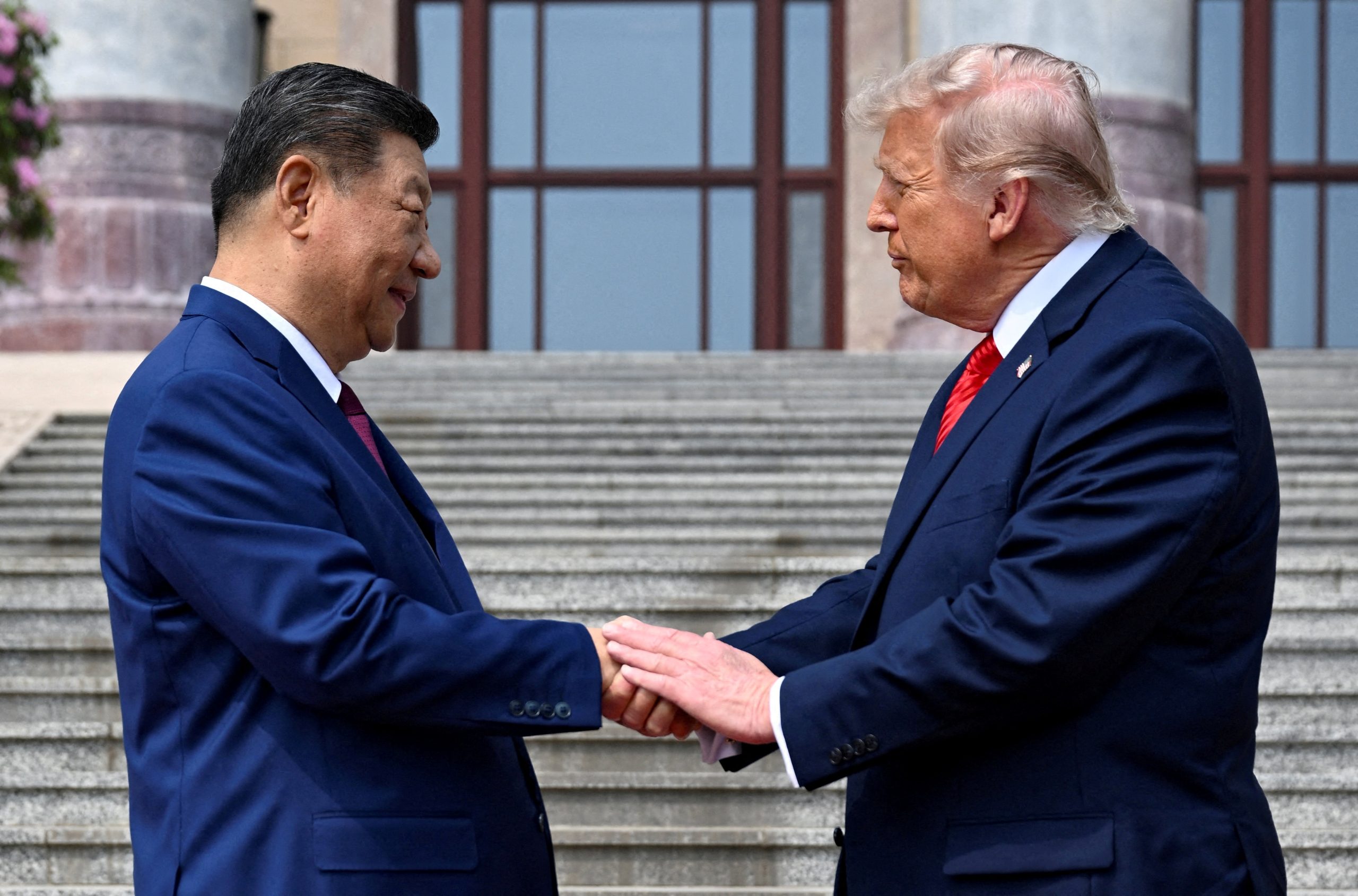
What were each side’s objectives heading into the historic meeting between the two presidents—and were they achieved?
INSS Insight No. 2141, May 24, 2026
Follow us on GoogleThe visit of United States President Donald Trump to Beijing took place against the backdrop of intensifying great-power competition and the war in Iran. Trump sought to present concrete diplomatic and economic achievements and to demonstrate that the United States continues to manage its competition with China from a position of initiative. For its part, Beijing aimed to stabilize relations with Washington and shape a framework that would reflect recognition of its status as an equal great power, while setting clear boundaries around what it views as its core interests. Despite the optimistic declarations and the publicly positive atmosphere, the summit did not produce significant breakthroughs on trade, technology, Taiwan, or Iran. At this stage, the summit appears to have primarily preserved channels of communication between the two sides and reduced the risk of uncontrolled escalation.
As part of the first visit by a U.S. president to China in nine years, Donald Trump traveled to Beijing this month and met with Chinese President Xi Jinping. Amid steadily intensifying tensions in recent years, one could have hoped that a meeting between the leaders of the world’s two largest powers would lead to agreements on the bilateral issues at hand, including trade, the struggle over advanced technologies, the Taiwan question, and China’s relationship with Iran. In practice, however, progress in the talks appears to have been minimal, if any, and, at least from the American perspective, no significant breakthroughs seem to have been achieved.
U.S. Objectives
From Trump's perspective, the visit to Beijing was intended to serve several objectives simultaneously. First, he sought to demonstrate that, even amid the ongoing crisis with Iran, the United States remains capable of managing what it views as its most important strategic arena—competition with China—from a proactive rather than a reactive position. The visit had originally been planned for an earlier date but was postponed due to the war in Iran. Holding it now allowed Trump to signal control over the agenda, rather than appearing as though the Middle East is consuming all presidential attention and dictating the administration’s actions. Concurrently, Trump appeared to seek visible achievements from the visit regarding China, the American economy, and the domestic public, against the backdrop of the costs of the Iranian crisis and amid efforts to present tangible economic gains ahead of the midterm elections.
It was no coincidence that Trump chose to frame the visit in distinctly business-oriented terms. He arrived in Beijing accompanied not only by senior administration officials, including Secretary of State Marco Rubio, but also by a large delegation of American executives and businesspeople. This gesture reflected Trump's view that foreign relations are measured, among other things, by the ability to translate diplomacy into deals, orders, investments, and market access. In this sense, Trump sought to turn the visit into a display of "America First" in its economic iteration: not the management of an ideological rivalry with China, but rather an effort to extract concrete benefits for the United States.
The manner in which Trump was received in Beijing also served this logic. The Chinese accorded him an elaborate state welcome, and Trump responded by praising Xi, describing the visit as a success. In an especially personal remark, Trump told Xi, “It is an honor to be your friend,” adding that relations between China and the United States “will be better than ever.” From Beijing's perspective, the pomp and circumstance were designed to showcase a meeting between equal powers. From Trump's perspective, they provided a convenient backdrop for presenting himself as a leader who was received with great respect by the leader of a rival yet central power.
China's Objectives
From the Chinese side, expectations for the meeting were less concrete. The very fact that it took place in Beijing was presented as an achievement, and the summit itself was perceived as a form of cooperation between two equal powers, or "partners," as President Xi described the relationship between the two countries in his opening remarks. Before Trump arrived in Beijing, China's ambassador to Washington published China's four red lines: the Taiwan question, democracy and human rights, the political system, and China's right to development. President Xi himself addressed the issue of Taiwan in his opening statement: "The Taiwan question is the most important issue in China-U.S. relations... if it is handled properly, bilateral relations will enjoy overall stability."
This amounted not only to setting a condition for progress on other issues the United States seeks to advance, but also to an implicit threat. Indeed, Secretary of State Marco Rubio was quick to clarify after the presidents' meeting that U.S. policy toward Taiwan has not changed. However, Trump's own remarks following the visit painted a more complex picture. In an interview with Fox News, Trump emphasized that "nothing has changed" in U.S. policy, but added that he was interested in avoiding two scenarios: a Taiwanese move toward independence, and the United States being dragged into a distant war over the island. He also left open the decision on whether to approve a significant arms package for Taiwan, even though the issue was discussed with President Xi during the meeting.
From China’s perspective, one of the meeting’s objectives was to stabilize relations with the United States for the remainder of Donald Trump’s term and to define what China considers the acceptable boundaries of the relationship. In the words of President Xi, the goal was to "steer the giant ship of China-U.S. relations forward, steadily and in the right direction." It is in this context that Xi’s declaration of the establishment of a "constructive China-U.S. relationship with strategic stability" for the next three years should be understood. Through this new definition, Beijing hopes to manage its competitive relations with Washington in a stable and moderate manner. No American reference to this new definition was released, and it is doubtful whether Washington attaches the same meaning to it that Beijing seeks to convey. However, the Chinese side presented these matters as an understanding reached between the two presidents.
The Gaps Between the Powers
From the American perspective, this point is particularly sensitive. The Trump administration does not necessarily seek a constant confrontation with China, but neither does it strive to establish a "partnership" in the Chinese sense of the term. Its policy emphasizes economic, technological, and strategic competition, while seeking to avoid uncontrolled military escalation. Therefore, if Beijing attempts to present "constructive strategic stability" as an American endorsement of a new relationship framework based on equality between the two powers, disputes may later emerge not only over the implementation of the understandings but also over the more fundamental question of whether any principled agreement on the nature of the relationship was reached in the first place.
At the same time, Trump made a series of statements regarding China's commitments across various areas. On trade, for example, he claimed that China had agreed to expand access for American companies operating in China and increase Chinese investment in the United States. No details were provided regarding specific deals, and one can only wonder in which sectors Washington intends to permit Chinese firms to invest in the United States. It was also claimed that China agreed to curb the flow of illicit fentanyl into the United States and to increase purchases of agricultural products. On both of these issues, China has made commitments in the past, yet promises are one thing and reality is another.
From the American perspective, the gap between the public declarations and the actual scope of achievements is at the heart of the matter. Trump arrived in Beijing aiming to demonstrate that the pressure he exerted on China since the start of his second term—in the areas of trade, technology, and supply chains—is yielding results. Yet by the end of the visit, no breakthrough had been achieved on the structural issues troubling Washington: the opening of the Chinese market, restrictions on the export of rare minerals, China's semiconductor policies, and the need to ensure more equitable conditions for American companies. Announcements regarding procurement, investments, and expanded economic activity also remained generalized or did not receive full public confirmation from the Chinese side. In this sense, Trump emerged with material for domestic political messaging, but not necessarily with the strategic achievements he had sought.
Another point that appeared in the Chinese statements but was absent from the American ones concerns Beijing’s expectation that communication channels be used across the political, diplomatic, and military spheres. For China, this is an attempt to institutionalize dialogue mechanisms that would reduce the risk of uncontrolled escalation, while also creating a permanent framework to discuss sensitive issues—chiefly Taiwan, military activity in the western Pacific, and technological restrictions— in a manner that, from Beijing’s standpoint, limits unilateral American actions. For the United States, the very existence of communication channels, particularly military ones, is clearly in its interest, as they may help prevent crises and accidents. However, unless Washington clarifies how it defines the boundaries of this framework, Beijing may interpret the renewal of these channels as a practical acknowledgment of its demand to preemptively limit American actions it deems "provocative," particularly under the newly introduced definition of a "stable relationship."
Gaps were also evident in the parties’ statements regarding the war with Iran. Trump announced that President Xi supported keeping the Strait of Hormuz open and opposed both the militarization of the Strait and the imposition of transit fees. He further claimed that the two sides agreed that Iran must not possess nuclear weapons. Yet these are not new understandings. China has repeatedly called for allowing "normal passage" through the Strait and has, on numerous occasions, expressed opposition to nuclear weapons in Iranian hands.
For Trump, the Iranian issue was likely one of the primary drivers for proceeding with the visit despite the ongoing war. Washington assesses that China possesses a certain degree of leverage over Iran, partly due to Tehran's economic dependence on Beijing and China's own clear interest in maintaining the flow of oil through the Strait of Hormuz. From the administration’s perspective, there was therefore logic in attempting to translate China’s need for energy stability into a willingness to pressure Iran—at the very least to avoid further escalation of the crisis, and perhaps to help advance a settlement.
In this context, Trump’s remark after leaving Beijing is also noteworthy. He stated that he had discussed with Xi the possibility of easing U.S. sanctions imposed on Chinese companies purchasing Iranian oil and that he would decide on the matter in the coming days. These remarks indicate that, from the administration’s perspective, discussions with Beijing regarding Iran are not limited to efforts to rally Chinese pressure on Tehran. Instead, they may form part of a broader deal linking energy stability and Iranian restraint with economic or regulatory concessions for China. Yet the gap between the American narrative and China’s actual commitments remains substantial. Support in principle for keeping the Strait of Hormuz open is not equivalent to alignment with the American position in the war, and Chinese statements included no concrete commitments to exert real pressure on Tehran or to reduce cooperation with it.
Implications
In conclusion, the United States appears to have arrived at the visit with a list of desired deals but departed primarily with general promises. Even Trump’s announcement regarding a Chinese commitment to purchase 200 Boeing aircraft— with the possibility of later expanding the deal to as many as 750 planes—was presented by Boeing as merely a preliminary commitment that has not yet matured into a final order. Once again, it remains to be seen if and how this declaration will be translated into a binding agreement. Unlike the United States, Beijing approached the meeting with the objective of defining the boundaries of its relationship with Washington and establishing its status as a responsible power on equal footing with the United States. As of this writing, Beijing appears to have achieved the goal it set for itself.
For the Trump administration, the mere fact that the meeting took place—and the ability to present it as proof of its capacity to "do business" even with a major rival—is not without significance. However, if the broad understandings reached are not translated into practical Chinese steps in the areas of trade, technology, the restraint of Iran, and the management of escalation risks in East Asia, the summit may be viewed primarily as another stage in efforts to stabilize relations and preserve open channels of communication between the two powers, rather than as a genuine turning point. Against this backdrop, the next summit meeting between the two leaders in September is expected to be an important test of their ability to demonstrate concrete progress beyond diplomatic gestures.