


Publications
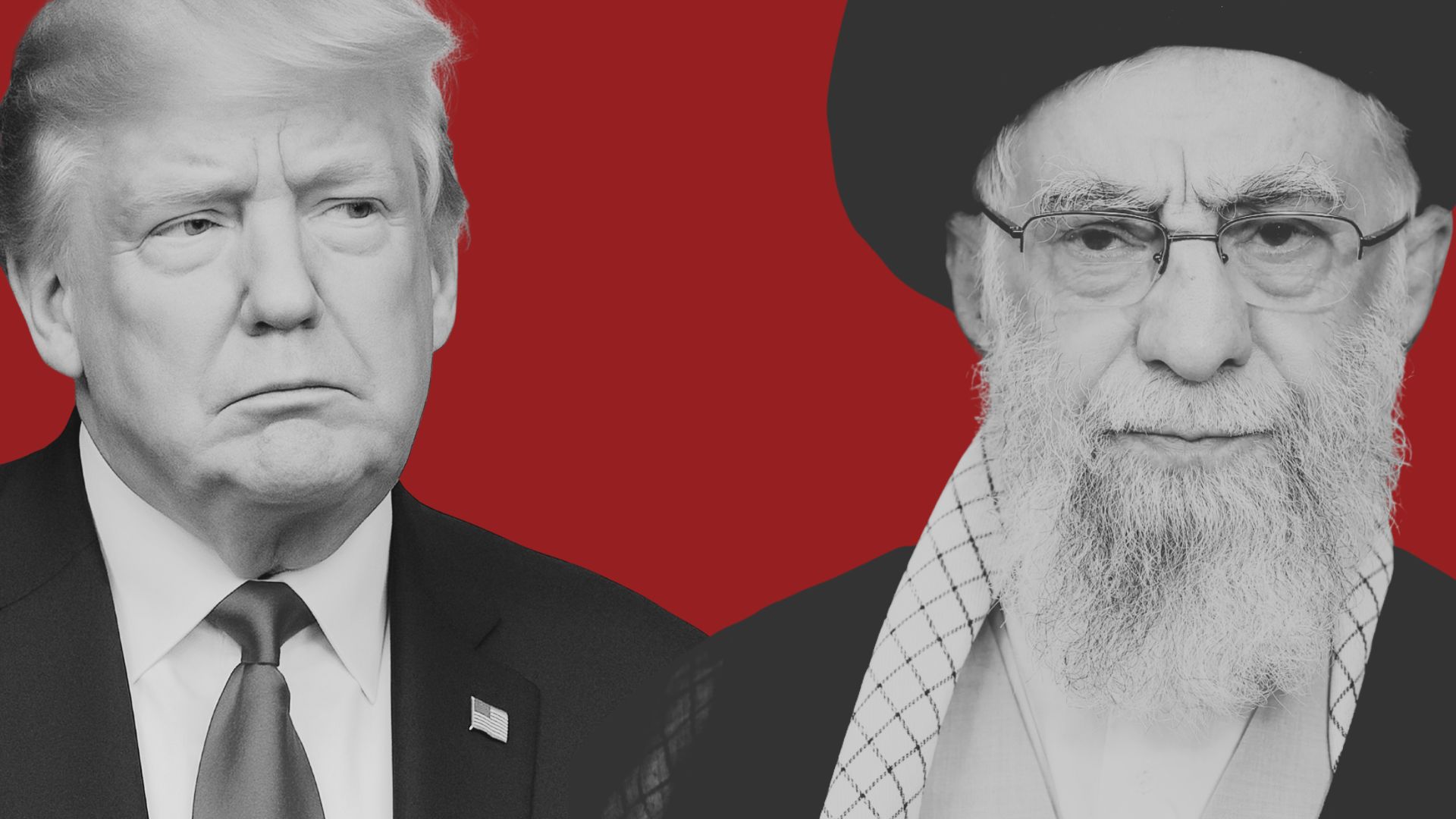
The options available to the US administration in dealing with Tehran, Iran’s possible responses to these measures—and the implications for Israel
INSS Insight No. 2086, January 19, 2026
Three weeks after the outbreak of a wave of unrest across Iran—which has claimed thousands of lives and led to the arrest of thousands more—the US administration faces a series of operational decisions in light of threats issued by President Trump toward the regime in Tehran. The president’s threats began with a public statement that the United States would come “to rescue” the protesters if the regime continued to employ lethal violence against them. This escalated with an additional tweet on January 13 in which he wrote that “help is on the way,” encouraged protesters to seize state institutions, and called for documenting those involved in repression—who, according to him, “will pay a heavy price.”
This document examines the range of alternatives available to the US administration, Iran’s possible responses to these steps, and the resulting implications for Israel.
The unrest in Iran has caught the regime at a moment of peak weakness and represents the most severe internal challenge it has faced since the establishment of the Islamic Republic. The economic situation is among the most difficult the regime has confronted: a dramatic erosion in the value of the Iranian currency, the rial; high inflation; a sharp decline in citizens’ purchasing power; rising unemployment; and increasing costs of living. This is compounded by the regime’s difficulty in providing basic services due to shortages of energy and water. The protest, which began among bazaar merchants in Tehran in late December, has now spread to all 31 provinces of Iran. The regime’s internal challenges are further intensified by the strategic rupture it has faced due to the disintegration of the so-called “Axis of Resistance” during the Swords of Iron War and the severe blow it sustained in June during the 12-Day War with Israel.
Moreover, the regime now finds itself in direct confrontation with President Trump, who has already demonstrated his willingness to act militarily against Iran through the assassination of Qassem Soleimani, commander of the Quds Force of the Islamic Revolutionary Guards Corps (IRGC), during his first term, and more recently through strikes on nuclear facilities in June 2025. In a broader context, Trump has shown that he does not see himself as constrained by accepted norms governing the use of force in the international arena against state leaders, as reflected in the abduction of Venezuelan President Nicolás Maduro in early 2026.
The possibility that the United States will choose to intervene directly in Iran’s internal arena has been advanced primarily by President Trump himself. In the early stages of the protests, on January 2, Trump tweeted that “if Iran shots [sic] and violently kills peaceful protestors, which is their custom, the United States of America will come to their rescue. We are locked and loaded and ready to go.” The success of the US operation to abduct and prosecute Venezuelan President Nicolás Maduro the day after the statement regarding Iran sharpened the perception that the United States might indeed act in Iran. This impression was reinforced in subsequent days as Trump reiterated that he would act against the Iranian regime if it did not reduce the violence toward the protesters, along with encouragement from Republican officials, led by Senator Lindsey Graham, who called for direct action against senior regime figures responsible for the repression. On a practical level, President Trump announced the imposition of a 25% tariff on countries trading with Iran due to the repression and declared that planned US–Iran negotiations had been suspended. It was also reported that the president has been considering military options to strike the Iranian regime.
Faced with the emerging threat of US action, the Iranian regime finds itself with an almost empty “toolbox”: what remains is both limited and carries significant risk to the regime’s survival. If attacked, Iran threatens a range of responses, including retaliation against US bases in the region, attacks against Israel, and the closure of the Strait of Hormuz—each of which would trigger a severe strike against Iran and pose an even greater risk to the regime than the protesters themselves. Accordingly, the regime has sought to suppress the protests as quickly as possible, before the US threat materializes. This decision led to an especially high level of violence, the killing of thousands, and the arrest of tens of thousands (figures that are difficult to estimate precisely given the regime’s internet shutdown, intended to prevent internal and external communication).
Alongside these responses, the regime has sought to advance a diplomatic channel. Iranian Foreign Minister Araghchi recently conveyed to the US Special Envoy to the Middle East, Steve Witkoff, a proposal to renew negotiations on the nuclear program. These talks were halted with the outbreak of the war in June 2025, and Iran had thus far refused to resume them under Washington’s conditions, particularly the demand to cease uranium enrichment in Iran.
Trump’s announcement about freezing direct contacts reduces—but does not entirely eliminate—the likelihood that negotiations will begin before the United States carries out some form of attack. At the same time, Washington may view a strike as a means of pushing Iran toward concessions it has thus far been unwilling to make, not only on uranium enrichment on Iranian soil but also regarding the development of ballistic missiles.
In practice, the red line set by Trump for the regime, which the Iranian leadership has now crossed, makes it difficult for the president to conclude the episode without resorting to military force against Iran. This is particularly true given his desire to distinguish himself from former President Obama, who refrained from kinetic action during the “Green Movement” protests in Iran in 2009. Conversely, the American dilemma—and the president’s personal one—centers on choosing a course of action that will produce a clear outcome while avoiding entanglement in a prolonged war that contradicts his basic worldview. Moreover, at the operational level, since the ceasefire in Gaza came into effect, the United States has reduced its forces in the Middle East, limiting its ability to prepare for a long campaign. This constraint applies primarily to air and missile defense capabilities and, to a lesser extent, to offensive capabilities.
Scenarios for US Action
As long as the protests continue, along with the regime’s violent repression, the United States faces several possible courses of action:
- Symbolic strike—This strike would target a limited number of sites or individuals but not on a scale intended to disable entire systems in Iran. The aim would be to signal the seriousness of the US threats, ensure that Trump is not seen as reluctant to use force, and bring Iran to the negotiating table on foreign policy and the nuclear issue under improved conditions. Such a strike might satisfy the need to implement the US threat but would not be perceived as fulfilling Trump’s message to Iranian protesters that he would act to protect them.
- Strike aimed at undermining the regime—This kind of strike would be directed against the IRGC, the Basij, and possibly senior figures in the regime. This option aligns clearly with Trump’s threats and the support he seeks to provide to protesters and could hinder the effectiveness of forces responsible for suppressing the protests. In addition, the United States might attempt to strike senior regime figures at higher levels, as it demonstrated a willingness to do in Venezuela earlier this month.
- Intensive strikes not directed at mechanisms of repression—Alongside, or instead of, a strike targeting the regime’s mechanisms of repression, the administration might focus on military targets whose destruction constitutes a US interest independent of regime stability. Such targets could include Iran’s ballistic missile arsenal and other military assets. This damage could make it harder for Iran to respond to US moves and increase the costs for Iran of resisting American pressure.
The longer US action is delayed—and assuming the regime fails over time to suppress the protests—the United States could redeploy to the Middle East its military assets that were diverted from the region when the intensity of the Swords of Iron War was reduced. This would reduce risks to US forces and regional allies and enable broader action. In practice, such reinforcement of forces has already begun.
If the protests subside, Iran could declare that it is complying with Trump’s demand to halt the repression and punishment of protesters, enabling the president to state that he has achieved his objective without using force. This move could lead to foregoing a strike or opting for a symbolic alternative to “check the box.” Initial indications suggest that Trump may be leaning in this direction. The duration and scope of US action will depend, among other factors, on the Iranian regime’s willingness to offer concessions in areas deemed critical by the United States, particularly the nuclear program.
It is not possible to determine the probability of the different courses of action beyond stating that, in our assessment, the overall likelihood of a US kinetic strike has increased in recent days, while the probability that events will conclude without any US use of force has declined.
Iranian Response Scenarios to a US Strike
Iran’s current economic distress, alongside the significant degradation of its proxy network—intended in part to protect it from Israeli or American attacks—significantly constrains its room for maneuver. This situation leaves four operational options that the Islamic Republic must consider in its strategic calculations:
- Attack on US bases and military infrastructure in the Persian Gulf—Iran still possesses significant stockpiles of short-range ballistic missiles and loitering munitions, making a potential attack on US targets relatively feasible. However, Iran may fear that significant damage and loss of life—especially American lives—could lead to an even harsher US response and greater determination on Trump’s part to exact a heavy price, including the pursuit of regime change. At the same time, as noted above, the United States currently has a relative shortage of forces in the region and particularly lacks a carrier strike group. The time required to deploy additional air and missile defense assets against an Iranian missile attack could influence Iran’s choice of a relatively severe response.
Conversely, if Iran seeks to return to the negotiating table, a symbolic and limited Iranian response is possible—similar to its attack on the al-Udeid Air Base in Qatar (the largest US military facility in the Middle East) on June 23, 2025, following the US bombing of Iranian nuclear facilities the previous day.
- Iranian attack against Israel—A ballistic missile and UAV attack on Israel remains an option for the Islamic Republic, particularly if Tehran seeks to avoid escalating hostilities with the United States while simultaneously exacting a price for a potential US strike. However, such an Iranian attack would likely trigger an Israeli response and further escalation that could draw in the remnants of Hezbollah in Lebanon. Over the past year, senior Iranian officials transferred hundreds of millions of dollars to rebuild Hezbollah’s capabilities and prepare it for renewed action against Israel. An Iranian attack would also likely prompt an Israeli response that could align with US efforts, including strikes on regime facilities and critical infrastructure.
- Closure of the Strait of Hormuz—Iranian efforts to close this strategic chokepoint, through which more than 20% of the world’s liquefied natural gas and 25% of maritime oil trade pass, could internationalize the conflict and cause a major shock to the global economy, disrupting supply chains and industrial output, and driving a spike in energy prices. The Iranian consideration in taking such a step would likely be a last resort in the face of intense efforts to topple the regime, carrying low chances of success while entailing a high likelihood of additional US and international intervention.
- Diplomatic initiative—In response to a US strike, Iran may choose the diplomatic track as a means of preserving its honor and protecting the regime by agreeing to a deal with the United States that includes relinquishing uranium enrichment on Iranian soil and imposing limits on ballistic missile production. However, this scenario would have long-term implications for the regime’s structure and ideological self-perception, amounting to a de facto abandonment of the Islamic Republic’s image as a revolutionary and ideological state.
It is doubtful that Khamenei would agree to such far-reaching concessions. Accordingly, a diplomatic exit from the current crisis would likely depend on a change of leadership. This could also occur through an internal coup in which the leader is persuaded by the IRGC to step aside, enabling an agreement on one hand and allowing Trump, on the other, to declare that he led to regime change in Iran. Inspiration for this can be seen in the current “Venezuela model,” in which President Nicolás Maduro was replaced by his vice president while Washington dictates the course of events in the country. Such a scenario would effectively marginalize the Iranian opposition.
Conclusions and Implications
- The sequence of events in recent weeks illustrates the acute weakness in which the Iranian regime finds itself, confronting only bad options. Domestically, it must choose between violent repression that will only deepen public resentment and releasing pressure in a manner that would place the regime under immediate threat. Internationally, it must choose between capitulating to external pressure and standing firm in a way that could lead to direct and severe damage to its assets.
- Nevertheless, even in its weakness, the regime retains significant disruptive capabilities that may enable it to weather the current crisis, weakened and shaken but intact.
- Trump’s threats and the delay in implementing them illustrate his distinctive willingness to use force in service of what he perceives as US interests and his personal influence. At the same time, he too is constrained by existing US military capabilities and the desire to avoid becoming mired in a new Middle Eastern war. The redeployment of forces away from the region in recent months, which facilitated the military operation in Venezuela, sharpens the dilemma regarding the appropriate course of action against Iran.
- Israel should continue to strive to avoid direct and overt involvement in the current crisis, especially since it is unclear how Israeli military action would help undermine the regime.
- If and when the current crisis leads to diplomatic contacts, Israel should insist that any easing of pressure on the Iranian regime be contingent upon the dismantling of enrichment capabilities on Iranian soil and the limitation of its missile program.