


Publications
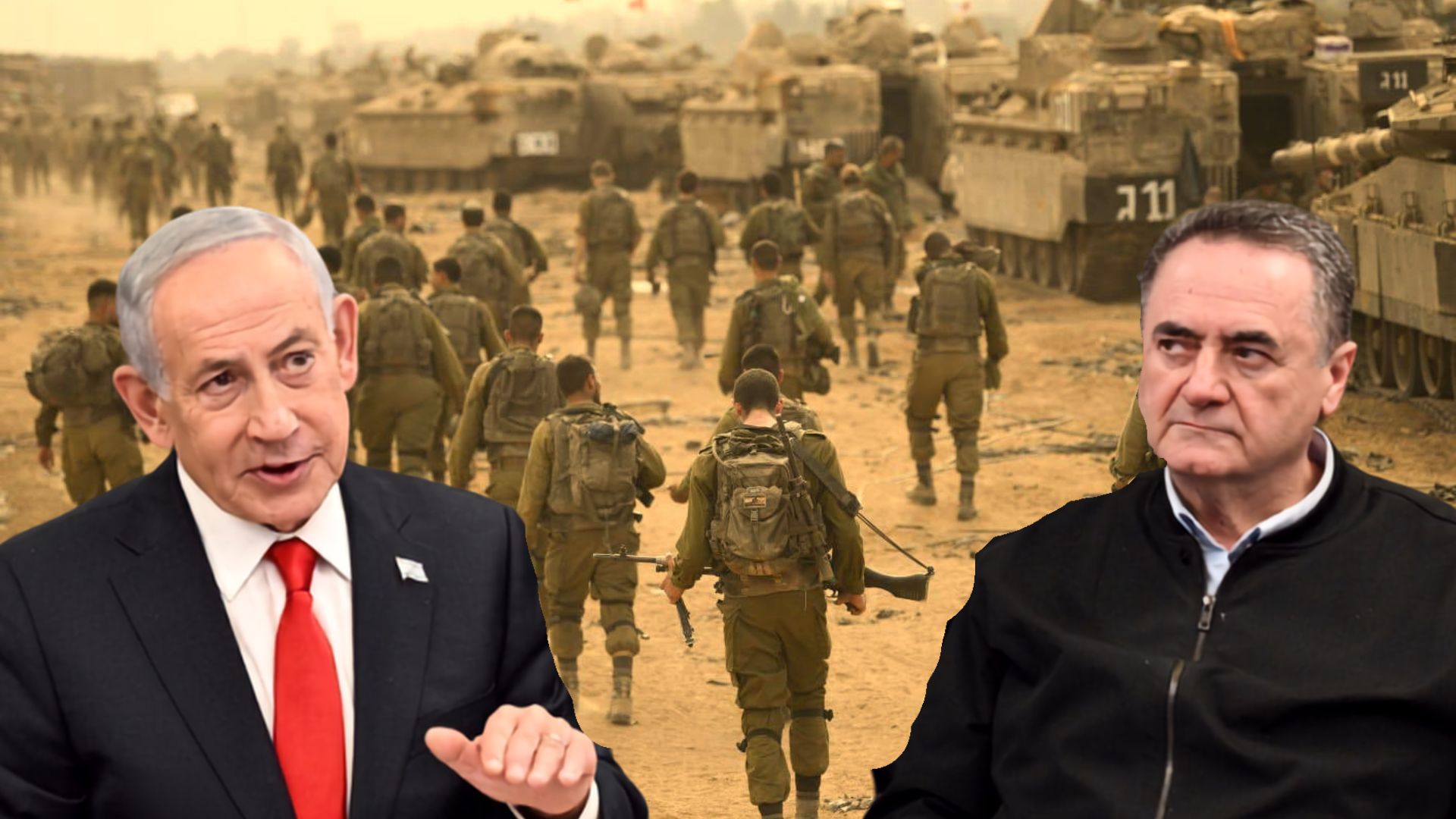
What does the new security strategy entail, as reflected in statements by Israel’s political leadership and actions on the ground, and why does it pose a threat to Israel's character and national security?
INSS Insight No. 2180, August 18, 2026
Follow us on GoogleSince October 7, a lively debate has been underway in professional circles regarding the need to update or revise Israel’s national security strategy. As is well known to those engaged in the field, Israel does not have, and has never had, a national security strategy in the full sense of the term—one that is written, approved by the political leadership, and made public. In practice, the term “security strategy” is used in Israel as a tool that those who invoke it define as they see fit and employ for their own purposes. Yet in the wake of the trauma of October 7, and with the encouragement of entities seeking to alter the character of Israel as shaped by David Ben-Gurion (including his security policy), what might be termed a “new security strategy” is increasingly taking shape on the ground.
The discussion surrounding the security strategy is ostensibly “objective,” with conclusions derived from the threats facing Israel and the optimal way to address them. Yet security is never “objective.” The appropriate response necessarily derives from the fundamental question of “who we are”—what the sources of our strength are, and which values and interests we seek to protect.
Examining the “new security strategy” from this perspective, as reflected in statements by the political and operational leadership and in Israel’s actions on the ground, leads to the conclusion that it poses a grave danger to Israel’s character and, above all, to national security in its broader sense. “Super-Sparta” (as termed by Prime Minister Benjamin Netanyahu) is an Israel whose military is stretched to the limit in a perpetual war and whose borders are continuously expanding; the burden stemming from this strategy threatens its economy, internal cohesion, the “people’s army” model, and the willingness of many to live here. Furthermore, it operates in a manner that threatens the IDF’s combat values, casts doubt on its advantages over its enemies, and draws it closer to dangerous global isolation.
The Purpose of the Security Strategy
Without delving into a formal analysis or genealogy of Israel's security strategy, or into the distinctions among the terms "national security strategy," "military security strategy," and "security policy"—when examining a far-reaching change in Israeli security policy, as currently reflected in the actions of the IDF and other security agencies, in the resources allocated to them, and in the rhetoric of the political and security leadership, it is important to point to several basic assumptions.
A National Security Strategy Is Not an "Objective" Document Derived from Threat Analysis, but Is Inextricably Linked to the Question of "Who We Are"
In the "National Security Strategy Law," passed by the outgoing Knesset on the initiative of Knesset Members Gadi Eisenkot and Yuli Edelstein, it is stated that the political-security strategy document, which every government will be legally mandated to approve following its formation, shall detail "the threats and challenges and their ranking, as well as the means and methods to address them, including the presentation of alternatives to said detail." It will include "mapping the threats to the political-security situation, from an annual and multi-year perspective, and analyzing the political and security arenas."[1]
This wording aligns with the view that a security strategy is derived from an objective analysis of threats, from which the required response emerges. Based on my personal experience of six years as a member of the Knesset Foreign Affairs and Defense Committee and chair of the Subcommittee on Security Strategy and Force Buildup, I can attest that this is also the standard order of discussions when budgeting or force buildup are debated: Military Intelligence reviews the threats, and the required response is ostensibly derived from this review.
In practice, however, decisions regarding resources have almost nothing to do with the threat map. The threat map serves primarily to perpetuate a mindset according to which security needs are virtually limitless, shortages persist even if resource allocations are doubled or tripled, and no geopolitical change alters this reality. A peace treaty has been signed with Egypt, whose army was the largest and most threatening force in the first circle? We must be prepared for the possibility that the regime will change and the treaty will be breached. The regime in Syria, which was a central link in the "axis of evil" surrounding Israel, has fallen? The threat remains unchanged, since the new regime could prove hostile, and so forth.
Yet the world and the Middle East are changing at an accelerated pace, rendering futile any attempt to map them as a basis for decision-making. Moreover, the "response-to-threats" approach ignores the immense impact that Israel's own actions have on the regional picture. An Israel that engages in political processes, forges regional and global alliances, and enjoys broad international legitimacy directly influences the security map around it—as does an Israel that employs force.
In fact, at the origin point of the national security strategy lies not the objective threat, but self-perception regarding the essence and character of the State of Israel, as well as the source of its advantages, which will form the basis of its security—whatever the enemy and threat may be. The debate over a security strategy is not a debate over "how we can better respond to threats," but over "who we are."
To a large extent, this is the nature of the National Security Strategy documents published by each new administration in the United States, following a lengthy process known as the "Policy Review." The first section of the Biden administration's National Security Strategy document is "Our Enduring Vision," and the second is "Our Enduring Role."[2] These sections set out the elected administration’s definitions, ideological in essence, of the nature of the United States and its role in the world. From these definitions stem positions with clear practical implications, such as the view that the United States’ foremost strategic asset is its coalitions and alliances with like-minded actors around the world.[3] This stands in contrast to the stance of the George W. Bush or Donald Trump administrations, which spoke of (and engaged in) unilateral actions by the United States to realize its interests. The basis for "what we will do" is first and foremost "who we are."
National Security Strategy is Broader Than Military Strategy, but Military Strategy Cannot Contradict It
In the United States, where an orderly process for shaping strategy documents takes place upon the inauguration of a new administration, the "National Security Strategy" document, signed by the President, is published first. Subsequently, the Pentagon publishes the "National Defense Strategy," detailing the role of the armed forces in realizing national security, as a derivative of the President's document.
By contrast, Israel has no orderly process or official doctrinal documents, and the IDF occupies such a central place in the Israeli consciousness that it is almost completely identified with “national security.” This is often the source of conceptual and practical confusion among the various products referred to as "security strategy." Almost every temporary change in firing policy is dubbed a "change in strategy," while, conversely, there is no discussion regarding the principle that military action must not contradict the foundations of national security.
Ostensibly, it is clear that “national security” does not concern military action alone and must encompass, among other things, Israel’s foreign relations and its social and economic resilience. Yet military strategy documents, as well as the various products of committees that have examined Israel’s security strategy, have addressed aspects beyond security in its narrow sense only in general terms. The Meridor Committee, which operated in 2005–2006, constituted the most orderly and comprehensive attempt to formulate a national security strategy; yet, in Meridor's own words: "In the space between national security in its broad sense and the narrower security domain, the committee’s work focused, as a rule, on the security domain and did not encompass all components of national security in their broader sense."[4]
The result is that the fairly extensive debate (in professional circles, not in the public sphere) surrounding the security strategy focuses primarily on military action, frequently detaching itself from its implications for other components of national security—international and domestic legitimacy, social and economic resilience, and more. This flaw becomes particularly significant when discussing the "new security strategy."
The Importance of the Security Strategy Lies Not in the Final Document, but in the Discussion Leading to It—Which Must Be Open and Diverse
Dwight D. Eisenhower, commander of the Allied forces in Europe and later president of the United States, is credited with the saying, “Plans are nothing; planning is everything.” By this he meant that the process of discussion and formulation, involving policymakers, staff, and operational personnel and encompassing broad and open dialogue among the various ranks, is more important for internalizing the conclusions and putting them into practice than the written document itself. The document is almost an “excuse" for the process, rather than the other way around. This is all the more true of a foundational document such as a national security strategy.
In Israel, where security matters are shrouded in secrecy (partially unnecessary), this dialogue is sterile and impaired. It does not take place at all among the general public. This preserves power among the "holders of knowledge," significantly increasing the risk of a lack of diversity, groupthink, and maintaining the status quo.
The law initiated by Eisenkot and Edelstein suffers from the same mindset of "guarding the secret" regarding documents that should contain no secrets at all, as they do not detail capabilities or operational plans. It states that “the diplomatic-security strategy shall be classified and its publication prohibited; however, the National Security Council shall publish a summary of the strategy in the official gazette and on the government website."[5] This is a misguided approach that undermines the desirable intent behind the law's requirement to draft foundational documents.
A striking example of the consequences of the absence of coordinated, open, and multi-faceted dialogue occurred in 2017–2018, when Prime Minister Benjamin Netanyahu worked on shaping a document titled "Security Strategy 2030." The resulting document was deemed so highly classified that when it was presented to the Intelligence Subcommittee—of which I was a member—copies were collected from the members at the end of the discussion. I will not, of course, testify as to its contents, but I will say that it contained nothing whose publication would have posed any danger whatsoever. What was published was a "shopping list," at the end of which were: "strengthening strike capability; superpower-grade cyber capabilities; upgrading missile defense; continuing to fortify the home front, and completing security fences."[6] What all these capabilities had in common was a “stand-off” strategy—defense and long-range attack. The generals of the IDF General Staff even commented on this when the list was presented to them by the prime minister.
This is, of course, a legitimate strategy. However, at the exact same time Netanyahu was formulating it, the IDF was busy implementing the "Gideon" multi-year plan led by Chief of Staff Gadi Eisenkot. Its entire purpose was renewing the military's "stand-in" maneuver and combat capabilities in order to conduct “an offensive aimed at transferring the war to enemy territory as quickly as possible… a maneuver effort with decisive capabilities,” with the aim of shortening the duration of the fighting, which is “a constant imperative requiring the IDF to strive to shorten the campaign and minimize harm to the state as much as possible."[7]
Yet a rapid and decisive "stand-in" maneuver to shorten the duration of fighting represents an entirely different strategy, entailing an emphasis in force buildup rather than the development of capabilities for “stand-off” warfare, which by nature is prolonged. In the absence of dialogue, the prime minister and the military reached contradictory conclusions at precisely the same time, resulting in a waste of resources and the development of separate capabilities, neither of which, and certainly not both together, could attain sufficient critical mass.
At this point, it is worth emphasizing the key purpose of the debate surrounding a security strategy and the resulting document: it is not intended to serve as a "user manual" that is pulled off the shelf for an answer whenever a security incident occurs. Rather, the entire process is intended to set the boundaries of security discourse and create a body of knowledge and a point of reference for concrete discussions regarding force buildup and its employment. Naturally, discussions during a given situation are influenced by prevailing circumstances—a security incident that has just occurred, diplomatic or political constraints, and so forth. The objective of formulating a security strategy is to debate Israel's objectives and how to reach them without being swayed by immediate circumstances. This does not mean that, in “real time,” a decision must never be made that runs counter to what is written in the strategy; but it does mean that such a decision must contend with the fact that, under conditions of sober deliberation, a different decision was reached.
Did the "Classic" Security Strategy Contribute to the October 7 Failure?
A prevalent argument in favor of establishing a new security strategy is that the previous strategy was among the main factors behind the October 7 failure. According to this approach, the essence of the strategy in the years preceding October 7 was "containment," "restraint," and avoidance of aggressive military action against the enemy’s force buildup, coupled with excessive reliance on technology, intelligence, and long-range action. This allowed Hamas to build the capabilities for the wide-scale raid into Israeli territory and the subsequent massacre.
This claim has no basis when examined against the principles of the traditional strategy or the facts. The classic strategy (inadequately summarized by the well-known triad "Deterrence – Early Warning – Decisive Victory") did not speak at all of containment or restraint, and it had nothing to do with the failure to provide warning of war or with the Southern Command’s inadequate defensive preparations. In fact, it can be said that the October 7 failure stemmed more from a failure to execute the classic strategy in practice than from flaws in the strategy itself.[8]
A preemptive or preventive strike was an integral part of Ben-Gurion’s strategy, and he explicitly discussed such strikes in his presentation to the government in October 1953. Israel refrained from launching a preventive strike against Hamas not because of a flawed strategy, but because of a deliberate policy that viewed the organization as an address for achieving quiet in the Gaza Strip and an asset for weakening the Palestinian Authority. Moreover, it was not a lack of defensive depth that prevented the thwarting of the Hamas attack itself—just as the unprecedented depth on the Egyptian and Syrian fronts did not prevent the success of the attack in the Yom Kippur War. What caused the defense to collapse was operational hubris and a lack of professionalism: insufficient forces in the face of a known threat and dysfunctional performance once the attack began. As in October 1973, the failure stemmed not from the strategy, but from flaws in its execution.
Even before the war, some argued that “prevention” should constitute an additional pillar of the security strategy. Yet Israel has always engaged in prevention, and all the more so in the years preceding October 7. The IDF Strategy document cites the “prevention and influence approach” as one of the two principal ways to employ military power, while the objectives of the campaign between the wars (CBW)—the primary mode of action in the prevention effort—include "to reduce existing and emerging threats; to distance the next war and create better conditions for victory... to preserve deterrence and strengthen it."[9]
Here, too, the problem lay not in the strategy but in its execution: an emphasis on CBW to prevent Hezbollah's force buildup with "game-changing" capabilities, while Israel refrained from responding to border violations (the tent incident on Mount Dov, for example) or to attacks within its territory, combined with an addiction to CBW achievements in intelligence and precision firepower, while dismissing warnings against "ignoring the impact of investing in CBW on readiness for war, both in terms of force readiness and in terms of the enemy's perception of Israel's reluctance for confrontation."[10]
On the issue of decisive victory, conceptual confusion manifests alongside no less significant ideological gaps stemming from the issue discussed above: a security strategy is, first and foremost, an answer to the question of "who we are."
The conceptual confusion stems from the conflation of military decision on the battlefield—a clear victory that leaves the enemy unable or unwilling to continue fighting—with an overall resolution of the conflict and the subordination of the ensuing regional architecture to Israel’s will. Ben-Gurion emphasized the vital need for decisive military victory precisely because, as he maintained, the fundamental reality was that Israel could not, by military means alone, resolve the conflict as a whole in its favor and compel the Arab world to submit to its wishes. And since, in his view, Israel's strength depended not only on its military but on its social, economic, and cultural resilience, as well as its international standing, it was necessary to strive for a swift decisive victory in war. This would yield the longest possible period of calm, during which Israel could prosper and build its strength in every respect, which would hopefully postpone the next war.
Thus, in Ben-Gurion’s view, a rapid decisive military victory had to be accompanied by a political arrangement—not necessarily an agreement, but an architecture that enjoyed international support and legitimacy within Israel. His answer to the question “who we are” was: a strong and just Israel (“Israel’s fate depends on two things: its strength and its righteousness"), whose actions and values are regarded as legitimate both by its citizens and by the international community, whose support is one of the foundations of national security.
Among those seeking to change this strategy today are those who view "decisive victory" as something entirely different: using force to compel the enemy to accept Israel’s terms not for ending a specific campaign, but for ending the conflict in its entirety. Minister Bezalel Smotrich described this clearly in the "Decisive Plan" he published in 2017: "This decisive victory is achieved through declarations as well—in an unequivocal Israeli statement to the Arabs and the entire world that a Palestinian state will not be established—but primarily through actions: applying full Israeli sovereignty over the regions of the homeland in Judea and Samaria, and achieving a decisive outcome through settlement . . . This will make clear to the Arabs and the entire world that the reality in Judea and Samaria is irreversible, that the State of Israel is here to stay, and that the Arab dream of establishing a state in Judea and Samaria has vanished once and for all."[11]
Smotrich’s strategy of decisive victory is indeed based on an ideological conception of the question of “who we are,” and in this respect it meets the proper prerequisite for formulating a security strategy. (Smotrich himself writes in the text that "the document is a realistic plan—but it also fits well with my faith-based worldview").[12] In contrast to the Ben-Gurion vision of a state that strives for peace (even while recognizing that peace may not be attainable at a given point in time), legitimacy and diplomatic strength, economic growth and social cohesion, it posits "Sparta," a state engaged in perpetual war, recurring cycles of occupation and settlement, and the dedication of all resources to continued warfare until the enemy is decisively defeated psychologically and politically.
The debate over the different definitions of "who we are" and the security strategies derived from them is essential, particularly at the present time. However, care must be taken to avoid a situation in which, without genuine debate and on the basis of traumas analyzed in haste, a policy takes shape that changes the very definition of national security under the guise of an "objective" security imperative, without addressing fundamental questions and while ignoring its impact on national security in the broader sense.
"The New Security Strategy"
According to various reports, Prime Minister Netanyahu has instructed that a new security strategy be drafted. While this strategy has not been finalized and certainly has not been published, its contours can be discerned, first and foremost, from Israel's security actions since October 7, and from various declarations and articles that have appeared since the outbreak of the war.
The Whole World Is Against Us—Israel’s Diplomatic Isolation as a Permanent Fact
"We are in a different world, a very challenging one. Western Europe allowed the immigration of a vocal Muslim minority, and this is bending governments to its will. It is affecting weapons supplies to us, and there are also early signs of economic sanctions. An influence campaign is being waged against us, which joins forces with Islamic minorities and sways policy. The world is organizing into blocs, and we do not belong to any bloc, so we are absorbing attacks from all sides, and this is pushing us into a kind of isolation."
— Prime Minister Benjamin Netanyahu, speech at the Accountant General's Conference, December 18, 2025.
According to the strategy reflected in this statement, Israel's diplomatic isolation does not depend on its actions, but rather on factors beyond its control: demographic changes in countries that were once friendly, an influence campaign that sways public opinion and political leaders, and the claim that Israel does not belong to any identifiable bloc in the struggle for global hegemony and therefore “takes fire from all sides.” In practice, this amounts to a rejection of several of the basic assumptions and enduring imperatives of the classic security strategy:
- Israel will act with the maximum consensus and support of the great powers—The concept expressed by Netanyahu of "a people that dwells alone" also dictates the second half of the verse: "and shall not be reckoned among the nations." This holds true even though, in practice, during President Trump's tenure, Israel has reached an unprecedented state in which the President of the United States personally halts IDF strikes.
- The proper end of a campaign is a diplomatic arrangement—If Israel's isolation is a permanent state, a diplomatic arrangement is neither possible nor desirable, as it inevitably entails concessions that make it harder to continue the fighting uninterrupted.
- Israel's actions largely determine its international standing and the map of threats and opportunities it faces—According to Netanyahu, the threat is total and constant, and no Israeli action will alter it.
- Israel's advantage lies in its moral standing—If the world is hostile, biased, and hypocritical, no "moral" argument will help. This element is manifested particularly starkly in the way the IDF currently operates in the various theaters of conflict, which is greatly exacerbating Israel’s international isolation.
Complete Self-Reliance in the Production and Supply of War Needs, at an Almost Unlimited Economic Burden
"We will have to develop the capacity to produce arms here in quantities across all weapon tiers. We are Athens and Sparta, but we are going to be Athens and super-Sparta. We have no choice, at least in the coming years."
— Prime Minister Benjamin Netanyahu, speech at the Accountant General's Conference, December 18, 2025.
From this statement by Netanyahu—and from the planned permanent increase in the defense budget to more than double its pre-war share, even if the war ends—emerges a strategy according to which the guiding principle is to supply all military needs with "blue and white" domestic production, without considerations of economic efficiency.
Early Warning Is Impossible and Therefore Cannot Be Relied Upon: Israel Will Act Continuously in Warfare Action, Viewing Every Enemy Capability as a Threat and Acting to Thwart It "Above the Threshold of War"
"Israel's reliance on deterrence, early warning, and a policy of containment/restraint has proven to be a failure. Israel must expand its standing army and reserve forces, and adopt a proactive strategy that includes preemptive strikes and a reinforced defensive posture."
— Prof. Efraim Inbar, "The Main Changes Needed in Israel's Security Strategy," Jerusalem Institute, March 17, 2025.
"Netanyahu is changing the security strategy that has prevailed since the days of Ben-Gurion. He is saying, 'I fight continuously. I don’t wait to see whether or not someone intends to destroy me. I don’t allow anyone around me to build any capability that they could, in some way, use against us.'"
— Maj. Gen. (res.) Yiftah Ron Tal, interview with Yaakov Bardugo and Moshe Cohen-Eliya, Radio Galey Israel, March 3, 2026.
The classic strategy viewed war as a necessity for removing a concrete and immediate threat. Yet if both the danger and diplomatic isolation are permanent and equally severe at all times, and if early warning is destined to fail, then under the new strategy the state of war becomes permanent. No longer a "defensive security strategy aimed at ensuring Israel's existence, creating effective deterrence, reducing threats as necessary, and postponing conflicts,"[13] and no longer the three states of routine, emergency, and war, but perpetual war. No longer the removal of a concrete threat derived from the enemy’s intentions and capabilities, but rather preventing any enemy from developing any capability whatsoever. What was once reserved for an enemy’s development of weapons-of-mass-destruction capabilities (the “Begin Strategy”) will henceforth be applied not only to capabilities on a far smaller scale, but to any capability, or even an intention to develop one.
Instead of Border Defense, "Buffer Zones" Beyond the Border
"The IDF is implementing a new security strategy: the enemy is struck and decisively defeated. Threats are removed in advance. The military shields the civilians along our borders. In enemy territory, we create demilitarized zones. This is the security strategy that we are changing. This is a conceptual strategic change that has been translated into a range of tactical changes."
— IDF Chief of Staff Lt. Gen. Eyal Zamir, address to graduates of the National Security College, July 9, 2026.
Israel is no longer confined to its political borders. In every arena, a “buffer zone” is being created that is not merely demilitarized (as the chief of staff stated) but also contains an IDF presence—as is currently the case in the Gaza Strip, Lebanon, and Syria.
Added to this, at least among some influential actors, is a complementary conception according to which settlement provides security, and therefore Israel will ultimately establish settlements in these “buffer zones” as well—which, under the new strategy, will inevitably lead to the expansion of the areas in which “the military shields the civilians,” and so on in a recurring cycle.
Israel Must Use Its Military Power — Not Only to Prevent Threats, but to Impose Its Interests on the Region
This characteristic of the new strategy is articulated in particular detail in a recent article by Brig. Gen. Dr. Eyal Fecht, the previous commander of the Dado Center—the IDF body tasked with developing operational thinking—and the military deputy commander of the Strategy and Training Branch, Lt. Col. Dr. Itay Haiminis. Both authors are members of the military establishment with substantial access to the prevailing thinking among the IDF’s senior leadership.[14]
Fecht and Haiminis write:
"War has returned to the heart of our national life and accelerated a process of change in the role of military force in Israel's national security. The essence of this change is a transition from the role of a local defensive force focused on the first circle, to that of a regional defensive force capable of prolonged, continuous action throughout the Middle East... The change in the IDF's patterns of operation is part of a broader shift in Israel’s security posture—an offensive posture that seeks to achieve ambitious objectives, even if they have not been officially defined as such, of altering the fundamental security conditions in Israel’s environment.”
They call upon Israel to shape the political map of the region unilaterally and through force, in order to preserve its superiority:
“Israel must employ the full range of national instruments of power at its disposal, military and otherwise, to destroy and build economic, political, social, security, and other institutions necessary to ensure long-term and sustainable improvement in its environment.”
They conclude: "For Israeli society, which for many decades until October 7, 2023, enjoyed a sense of normalcy in the form of an absence of prolonged periods of war, the message embodied in our proposal here is difficult to stomach... [yet] we must recognize that living in the shadow of war and alongside it is a permanent feature of international relations, and that such a life is not necessarily one not worth living."
In their article, Fecht and Haiminis provide the clearest expression of the answer formulated by the “new security strategy” to the question “who are we?” Israel is a super-Sparta whose desired state is one of perpetual war, with all its resources mobilized toward that end, acting not only to eliminate a concrete or even emerging threat, but to shape its environment through force.
"The New Strategy"—Flawed Logic and a Threat to National Security
This section examines the logic underlying the components of the “new security strategy” and their inherent dangers. In reading it, it should be borne in mind that criticism of the “new strategy” is also necessarily formulated through the lens of a particular worldview regarding the sources of Israel’s strength. Furthermore, political leadership, much like other institutional bodies—including the IDF—has internal and external interests that influence its statements and actions. These elements will not be analyzed in this framework.
“The Whole World Is Against Us—Israel’s Diplomatic Isolation as a Permanent Fact”
There is a basis for the argument that the hostility displayed by various circles in the West toward Israel is tainted by ignorance, a simplistic view of the Israeli–Palestinian conflict, and even antisemitism. Certain positions can also be interpreted as being influenced by domestic political pressures. Yet this worldview completely disregards Israel’s own role in shaping the world’s attitudes toward it and absolves it of responsibility for acting in ways that address these phenomena. It is impossible to argue that Israel possesses great-power capabilities (the conception underlying the call to shift toward “shaping the region”) while at the same time portraying it as having no influence over its own image or over the behavior and policies toward it of its adversaries in the region and around the world.
Israel's actions have largely contributed to the dangerous consensus that has formed in the United States, Israel's foremost strategic anchor, between the overwhelming majority of the Democratic Party (which is also supported by the majority of American Jews) and the "base" of the powerful MAGA movement within the Republican Party. Both of these opposing camps accuse Israel of dragging the United States into a war of deception in Iran, and of refusing to take steps that align with overall American interests in the Middle East. If nearly half of the Democratic representatives in Congress are calling to terminate aid to Israel, while at the same time Steve Bannon, the man who led Trump to victory in the 2016 elections, says that "If you are playing the old politics of tax cuts and wars everywhere and doing the bidding of Israel, let me be blunt - you're finished,"[15] then Israel has a serious problem, and one of its own making.
The fact that Israel is the only democratic country in the world that holds occupied territory and has subjects who do not enjoy civil rights comparable to those of its citizens influences public opinion in the West no less than antisemitism or a malicious “influence campaign.” The same is true of the killing of tens of thousands of civilians, many of them children, in the fighting in the Gaza Strip; the displacement of millions from their homes with no prospect of return; the systematic destruction of structures in the Gaza Strip and Lebanon (a war crime under the definitions of international law); and the actions of settlers in Judea and Samaria, with the explicit encouragement of the Israeli government. The scenes that citizens of Western countries see every day deepen Israel’s international isolation more than Muslim immigration to those countries.
In our region, Israel's actions will largely determine policy adopted toward it. Is Syrian President al-Sharaa a jihadist in disguise, or someone who has changed his ways and is drawing closer to the West? There is no authoritative answer to this question. However, it is clear that a permanent occupation of parts of Syria by Israel, alongside intervention and threats to intervene in what al-Sharaa regards as internal Syrian affairs—steps that stem directly from the "new security strategy"—push him toward a hostile stance toward Israel. And this is just one example among many.
“Complete Self-Reliance in the Production and Supply of War Needs, at an Almost Unlimited Economic Burden”
Beyond the fact that domestic production of everything required by Israel for an unlimited war is impossible, and is not practiced by any country in the world, this new "super-Sparta" ignores the implications for the Israeli economy, which serves as the foundation for the very military strength upon which the architects of the "new strategy" rely.
In May 2026, the Aaron Institute for Economic Policy presented an economic forecast for the coming years, which concluded that in order to return to a growth trajectory of 3.5% GDP annually (which is practically standing still in terms of GDP per capita), Israel must, even assuming "two rounds of fighting against Iran over the coming decade," reduce defense spending to a permanent level of 5.5% of GDP.[16] (According to the Bank of Israel, defense spending in 2025 stood at approximately 7.3% of GDP, and is expected to exceed 8% in 2026). This target will only be achieved if growth-supporting reforms, which have yet to be implemented, are carried out.
The trajectory stemming from the prime minister's directives and the IDF's demands is inconsistent with this analysis, as is the trajectory presented by the Nagel Committee on the defense budget. All this is without mentioning the severe economic effects of a prolonged war on employment and growth, or the risk that U.S. aid, $3.8 billion per year under the current agreement, will be halted or reduced due to opposition in Washington to Israel's policies. In other words, the "super-Sparta" dictated by the new strategy has no economic foundation on which to rest.
Early Warning Is Impossible, Deterrence Does Not Work, and Therefore Perpetual Warfare and “Buffer Zones” Should Be Adopted
The assertion that “early warning is impossible” rests primarily on two catastrophic failures of warning: October 6, 1973, and October 7, 2023. Yet, as noted above, in both cases it was not the strategy that failed, but its execution.
In the Yom Kippur War, there was no shortage of early warnings regarding the approaching war. They encountered a wall of arrogance and unprofessionalism, which resulted in unrealistic defensive plans (100 tanks facing 600 Syrian tanks on the Golan Heights, much like the 8:1 ratio between attacking and defending forces along the Gaza Strip border in 2023). The failure to provide warning on October 7 stemmed to a considerable extent precisely from the emphasis on operational intelligence and "perpetual war." In the preceding decade, the entire intelligence community was drawn into CBW tasks and "mowing the lawn" across various fronts, losing both its command-level focus and the skills required to properly diagnose and analyze changes in the enemy.
As for deterrence: taken at face value ("we will hit the enemy so hard that it will be afraid to mess with us"), it has never worked. The shortest interval between campaigns occurred precisely after Israel's most decisive military victory: less than a year after the Six-Day War, Israel was engaged in a War of Attrition on two fronts, Egypt and the Jordanian border. The correct conclusion from Israel's security history is that a battlefield decision is inherently temporary and limited in nature, and must be followed as quickly as possible by a diplomatic arrangement that anchors the military achievement—not necessarily an agreement, such as the successful ceasefire and disengagement agreements with Egypt and Syria in 1974, but also arrangements with actors that will reinforce the enemy's system of restraints.
In November 2024, following the successful decisive victory achieved by the IDF against Hezbollah, such an arrangement was reached through understandings with the United States and the Lebanese government. The system of pressures restraining Hezbollah— the blows it had sustained, the Lebanese government’s opposition to its aggression, the fall of the Assad regime in Syria, and the weakening of Iran’s regional standing—created a situation in which Israel was able to operate against it freely for almost a year and a half, without any response.
What disrupted this balance was the war that Israel and the United States launched against Iran on February 28, 2026. The organization's feeble response to the killing of Khamenei was met by Israel with the response: "Hezbollah fell into the trap, and now we will strike it." What followed was a futile campaign in southern Lebanon, which only deepened the tensions that had developed with the United States, since it ran counter to President Trump's efforts to end the campaign against Iran.
Moreover, perpetual war is fundamentally opposed to the IDF's personnel and resource model, as well as to the nature of Israeli society, which is inextricably linked to the West, both culturally and economically. [17] This issue is illustrated by focusing on just a single link in the chain—the reserve forces, which constitute the core strength of the IDF.
The reserves, which were built according to the classic strategy, were one of the most efficient military forces in the world: at an economic and social cost of one month of training per year, Israel maintained a skilled force that, when called upon, multiplied the IDF’s order of battle several times over and was the decisive factor in Israel’s major wars. However, when reserve duty becomes a permanent burden of 100 reserve days per year, as it has been for the past three years and, under the strategy of perpetual war and buffer zones, will continue to be in the years ahead, not only are the lives of tens of thousands of Israelis, their families, and their businesses completely upended, but this becomes the most expensive and inefficient force available. The direct financial cost of a reservist is more than five times that of an active soldier, while the indirect cost (loss of output due to absence from work) increases this rate several times over. This state of affairs, which even an expansion of the conscription base will not change in the near future, has led some advocates of “perpetual war” to propose absurd ideas such as establishing a “foreign legion” in Israel.[18]
“Israel Must Use Its Military Power Not Only to Prevent Threats, but to Impose Its Interests on the Region”
Fecht and Haiminis began writing their article prior to the Israeli–American attack on Iran, and it was published about a month after it started. It may have been influenced by the prevailing sentiments they heard in the corridors of the IDF General Staff at the time. Since then, what should have been known in advance has been proven: the undeclared but clearly evident objective of the operation—toppling the regime in Iran through the decapitation of its leadership, a psychological campaign, and Kurdish militias, while installing Mahmoud Ahmadinejad at the head of an alternative government—was a dangerous delusion devoid of any basis in reality.[19]
This component of the “new strategy” is marred by ignorance, hubris, and disregard for Israel’s international position and the lessons of the past. Israel has had two well-known previous cases—the attempt to create a "new order" in Lebanon (1982), and the operation to assassinate Saddam Hussein by Sayeret Matkal, which was aborted following the Tze'elim II disaster (1992)— in which the ambition to bring about regime change in a regional country caused considerable damage. States more powerful than Israel have failed in similar attempts.
The inevitable result of such failure is the strengthening of the existing regime, the rise of more hardline elements within it (which, in Iran’s case, could push for the acquisition of nuclear weapons), and a rift in relations between Israel and the United States. In the absence of prior debate that would establish the boundaries of the discourse, and propelled by the tailwind of a “new strategy,” a decision was made whose diplomatic and security damage are beyond measure.
Who We Are
Ultimately, the debate surrounding the security strategy returns to the fundamental question. Unlike Smotrich, who does not conceal the clear connection between his proposed security policy and his conception of the essence of the Israeli entity, alongside his faith in divine promise by virtue of which we must hold and settle every territory, some of those articulating and implementing the “new security strategy” present it in terms of “pure” security. But security is never truly objective, for if it were, any discussion of it would lose all meaning.
Just as all economic theory rests on the "problem of scarcity" (there will never be enough of everything for everyone all the time, and therefore costs and benefits must be weighed and alternatives considered), security is likewise never absolute. The various alternatives derive from what is known in economics as a "preference system"—who we are, what our preferences are, and what we are willing to concede.
In his 1953 survey, Ben-Gurion noted four advantages that Israel possessed over its enemies: the geographical advantage of "internal lines" and the ability to concentrate forces rapidly; a "unified nation"; a technological advantage; and a spiritual advantage. [20]
The "super-Sparta" of the "new security strategy" is a different Israel. Its military is stretched to the limit in a perpetual war with continually expanding borders, in a manner that, according to IDF Chief of Staff Eyal Zamir, threatens to “cause the IDF to collapse in on itself"[21]; the nation is being torn apart by struggles over identity and politics that threaten the people’s army model and domestic legitimacy; and it is waging war in a manner that raises grave concerns about the ability to preserve the IDF’s combat values, casts doubt on its spiritual advantage over its enemies, and draws it closer to dangerous global isolation.
Many Israeli citizens do not want such an Israel. Some may not want to live in it, as reflected in the negative migration balance in recent years. This poses a clear danger to national security.
_________________
[1]National Security Strategy Law, 5785–2025, Section 2
https://www.nevo.co.il/law_html/law00/235698.htm
[2] The White House, National Security Strategy, Oct. 2022, pp. 6–7
[3] Ibid., p. 11
[4] Dan Meridor and Ron Eldadi, Israel's Security Doctrine - Israel’s National Security Doctrine: The Report of the Committee on the Formulation of the National Security Doctrine (Meridor Committee), Ten Years Later, Institute for National Security Studies, Memorandum 182, 2018, p. 12
https://www.inss.org.il/he/wp-content/uploads/sites/2/2018/10/memo182.pdf
[5] National Security Strategy Law, 5785–2025, Section 8
[6] Government of Israel, "Prime Minister Netanyahu Presented 'Security Doctrine 2030' to the Cabinet," Spokesperson Announcement, August 15, 2018
https://www.gov.il/he/pages/spoke_security150818
[7] Office of the Chief of Staff, IDF Strategy, April 2018, pp. 21–22
https://www.idf.il/media/3cdhcgro/strategy.pdf
[8] See also on this topic: Gur Lish, "Is the Long War in Gaza an Expression of a New Security Doctrine or a Flawed Execution of an Existing Doctrine?", Between the Poles, Sept. 14, 2025
https://www.idf.il/media/kjnm1i14/4-%D7%94%D7%90%D7%9D-%D7%94%D7%9E%D7%9C%D7%97%D7%9E%D7%94.pdf
[9] IDF Strategy 2018, pp. 19, 24
[10] Ofer Shelah and Carmit Valensi, The Campaign Between Wars at a Crossroads – CBW, 2013-2023: What Lies Ahead?, Institute for National Security Studies, Memorandum 225, July 2023, p. 26
https://www.inss.org.il/publication/the-war-between-the-wars/
[11] Bezalel Smotrich, "The Decisive Plan: The Key to Peace Lies on the Right," HaShiloach 6, 2017
[12] Ibid.
[13] IDF Strategy 2018, p. 13
[14] Brig. Gen. Dr. Eyal Fecht and Lt. Col. Dr. Itai Haiminis, "Queen of the Jungle? On the Role of Israel's Military Force in Establishing a New Regional Order in the Middle East," Between the Poles, March 26, 2026
https://www.idf.il/media/3pvlllcv/%D7%9E%D7%9C%D7%9B%D7%AA-%D7%94%D7%92%D7%95%D7%A0%D7%92%D7%9C.pdf
[15] Megan Messerly, “The old politics are gone': Steve Bannon on the democratic socialist wave,” Politico, 2/7/2026
[16] Aaron Institute for Economic Policy, "Growth-Supporting Policy for 2027–2038 against the Backdrop of a Prolonged War," May 2026
[17] See also in this context: Ofer Shelah and Gal Perl, "The Meaning of War Contrary to Doctrine and Resources," Between the Poles, Oct. 6, 2024
[18] Prof. Efraim Inbar and Brig. Gen. (res.) Dr. Sasson Haddad, "A Foreign Legion for the IDF? A Possible Solution to the Manpower Crisis After October 7," Jerusalem Institute for Strategy and Security, Feb. 22, 2026
https://jiss.org.il/inbar-haddad-foreign-legion-for-the-idf/
[19] For a detailed description, see Michael Hauser Tov, "Our Man in Tehran," Haaretz Magazine, July 17, 2026
[20] David Ben-Gurion, "Army and State," Ma'arachot, June 1981, pp. 4–5
[21] Elisha Ben Kimon, Itamar Eichner, and Einav Halabi, *"The Chief of Staff's Warning to the Cabinet: 'I am Raising 10 Red Flags - the IDF Will Collapse in on Itself,'" YNET, March 26, 2026