


Publications
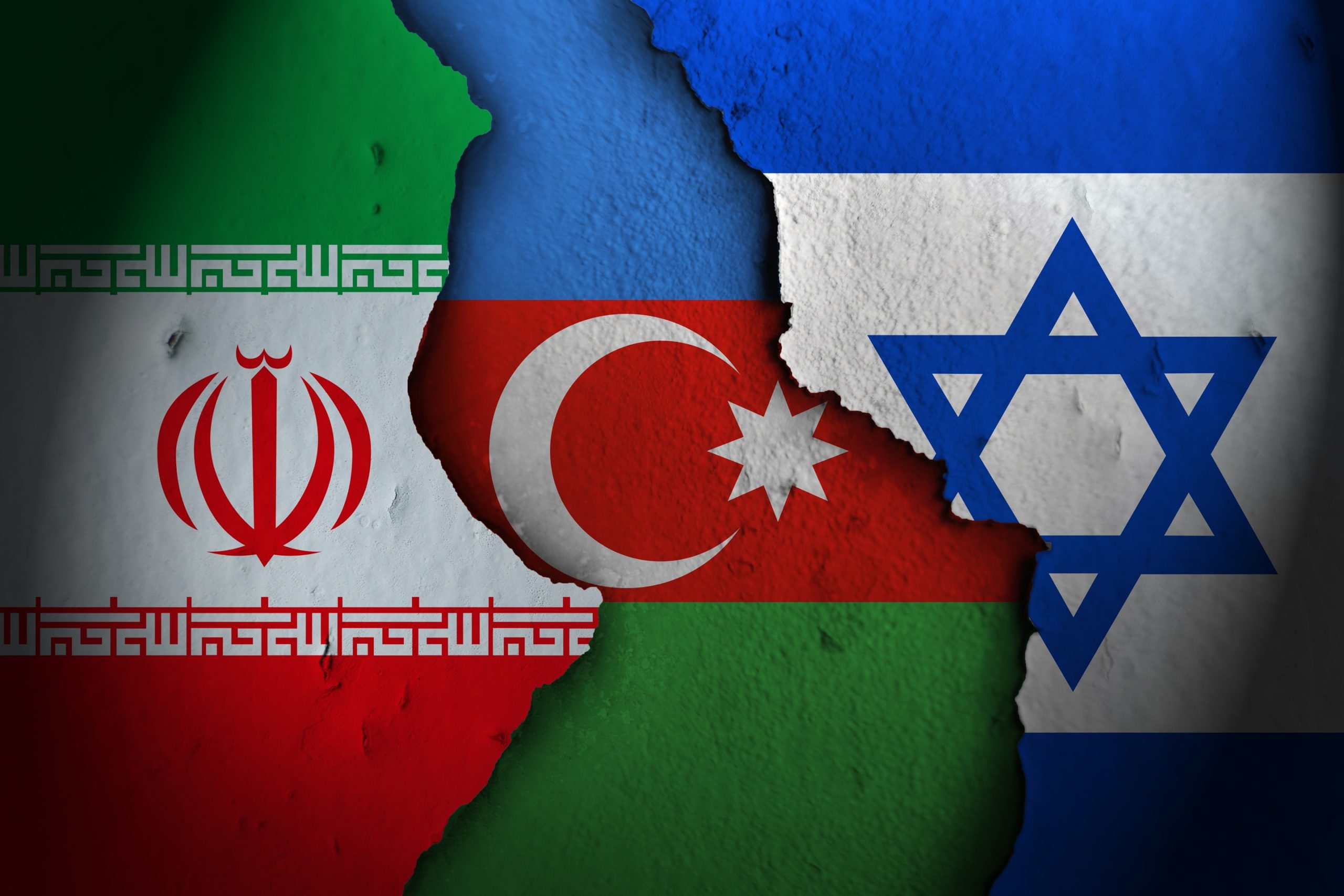
How did the strategy of Azerbaijan, Israel's close partner, manifest during the war in its neighboring country?
INSS Insight No. 2166, July 7, 2026
Follow us on GoogleAzerbaijan’s conduct in the 2026 Iran war is better described as alignment tempered by restraint than as neutrality. Beneath an official insistence that it stood outside the conflict, Baku remained a close energy, arms and intelligence partner of Israel and a state whose strengthening ties to Washington — embodied in the U.S.-brokered Trump Route for International Peace and Prosperity (TRIPP), which Tehran openly opposes — placed it on the side Iran was fighting. That alignment made Azerbaijan a target, as demonstrated in the Iranian drone strikes on March 5 and subsequent foiled plots. What protected it was not neutrality but a combination of credible military power, a demonstrated readiness to retaliate, and a deliberate refusal to be provoked into the war – paired with the pragmatic maintenance of working relations with Tehran and a steady flow of humanitarian goodwill. With Armenia’s June election returning a government committed to TRIPP, Baku’s westward trajectory has, for now, held its course. However, it may soon confront the difficulty of changing the Armenian constitution in a way that fits President Aliyev’s requirement for a peace agreement in the South Caucasus.
Strategic Alignment Behind a Posture of Neutrality
Baku is Tehran’s most uncomfortable northern neighbor: a secular, Turkic, Shia-majority state bound to Israel by oil, arms and intelligence, and to Washington by a steadily deepening strategic partnership. Israel has supplied a large share of Azerbaijan’s weapons, and Iran has accused it of permitting Israel to use Azerbaijani territory against it. Tehran has also long accused Baku of stirring separatism among Iran’s large ethnic Azeri minority. Baku, for its part, has accused Iran of running plots on its soil and of acting against its interests, as seen with the 2023 attack on Azerbaijan’s embassy in Tehran. These were the structural conditions when, on 28 February 2026, the United States and Israel launched Operation Epic Fury, whose opening salvo killed Supreme Leader Ali Khamenei.
Once the war began, the government in Baku moved to project neutrality, presenting itself as one of the region’s last poles of stability and denying — as it had during the June 2025 Twelve-Day War — that its territory or airspace had been or would be used for operations against the Islamic Republic. On March 4, President Ilham Aliyev visited the Iranian embassy in Baku to sign a book of condolence for Khamenei. The posture served concrete interests: with conflict raging across the Middle East and the war in Ukraine unresolved, the South Caucasus had become the only secure corridor for energy and freight between Europe and Asia, and demand for the trans-Caspian route surged.
Yet neutrality of rhetoric should not be mistaken for effective distance of alignment. In June, CNN reported that Israel had deployed special forces and intelligence units inside Azerbaijan. According to the report, these forces installed monitoring equipment along the Iranian border in the weeks before the war, as part of a wider regional network. Baku rejected the account as “entirely baseless.” Whether or not every detail of that report holds, the allegation is consistent with a security relationship that long predates it, and it captures a reality that the official line has obscured: in practice, Azerbaijan stood with the side that was fighting Iran.
The Nakhichevan Strikes and Their Aftermath
On March 5, barely a day after that condolence visit, drones launched from Iranian territory struck Nakhichevan, Azerbaijan’s exclave on the Iranian border. Azerbaijan’s Ministry of Defense stated that four Iranian drones had taken part in the attack. One was neutralized by Azerbaijani air defenses, while the others reached civilian targets. One of those struck the terminal of Nakhichevan International Airport, another landed near a school in the village of Shakarabad, and the last one reportedly hit a “civilian infrastructure”. Four civilians were reported injured.
Tehran denied responsibility, with Foreign Minister Abbas Araghchi and others suggesting that the strikes may have been an Israeli “false flag” meant to drag Azerbaijan into the war and sow discord among Muslim states. Two readings of Iranian responsibility have circulated. The first treats the strikes as the unsanctioned act of a local Revolutionary Guard unit whose chain of command had been shattered in the opening days of the war. The second treats it as a deliberate signal from Tehran to threaten Baku over its wartime cooperation with Jerusalem, or to test its resolve. The available evidence does not settle the matter, and the “rogue officer” hypothesis cannot be excluded, but it seems more likely that Tehran used the strikes as a message to Azerbaijan. This message aimed to expose that the Iranians were aware of the cooperation between Baku and Israel, since a Telegram channel affiliated with the IRGC cast the strike as a warning over a site from which, in its telling, operations against Iran were being prepared by Israeli and American officers.Aliyev’s public response was sharp. He condemned the strikes as an act of terror, summoned the Iranian ambassador, recalled Azerbaijan’s envoy, ordered the army to the southern border and warned that any hostile force would meet Azerbaijan’s “iron fist.”. The phrase was not incidental: “Iron Fist” (Dəmir Yumruq) was the codename Azerbaijan gave to its 2020 offensive in the Second Karabakh War, and its use here was a deliberate evocation of that victory. Meanwhile, the Organization of Turkic States condemned the strikes launched “from the territory of Iran” – not just “Iran”; wording that signaled solidarity and support while stopping short of clearly designating Iran as the author to leave Baku and Tehran a way out.
De-escalation and Humanitarian Gestures
De-escalation followed within days. Iran, fighting the United States and Israel on several fronts and with no interest in opening a northern one against a modern army, denied involvement and promised an investigation; Azerbaijan, equally unwilling to be drawn into a war that would jeopardize its newly gained stability and its corridor economy, took the opening. On March 8, Presidents Aliyev and Pezeshkian held a phone call to defuse the situation. Azerbaijan reopened its border crossings after a closure of only four days, and Nakhichevan airport resumed operations. It seems neither side actually wanted the second front that the strikes had briefly threatened to open.
Diplomacy was accompanied by humanitarian gestures. After the March 8 call Azerbaijan sent to Iran a first convoy of roughly thirty tons through the Astara crossing — flour, rice, sugar, water, tea and some two tons of medicine — followed on March 18 by a larger shipment of about eighty-two tons, including seventy-six tons of food, medicine and medical supplies, as well as gifts for the Nowruz holiday. Baku also permitted the transit of Russian medical aid to Iran across its territory. The stated purpose was to meet the needs of “the friendly Iranian people,” but the aid served several intertwined ends. Routed through Astara into Iran’s heavily Azeri-populated northwest, it answered to an Azerbaijani public that feels kinship with the ethnic Azeris across the border. It also functioned as a goodwill gesture cementing the de-escalation; and, prominently publicized by the state, it furnished Baku with a humanitarian narrative at the very moment its security ties to Israel may draw scrutiny. Against the needs of a blockaded country of some ninety million, the tonnages were modest, but the gesture was symbolic to satisfy public opinion while emphasizing the de-escalation.
Contacts resumed thereafter at ministerial level, with Foreign Minister Jeyhun Bayramov pressing his Iranian counterpart to complete the promised investigation regarding the Nakhichevan strikes, and on April 12 Azerbaijan reopened its embassy in Tehran with a reduced staff. No findings of the inquiry have been made public, and successive ministerial calls underscored how fragile the détente remained.
Azerbaijan’s Strategic Balance Sheet
Aside from the strikes of March 5, the war’s most consequential episode in Azerbaijan’s neighborhood may have been Israel’s strikes on Iran’s Caspian fleet. On the night of March 18, Israeli aircraft hit the northern naval base at Bandar Anzali for the first time in the war, destroying an Iranian corvette, four missile boats and naval infrastructure. The vessels posed no direct threat to Israel from the Caspian; their destruction nonetheless degraded the force best placed to menace Azerbaijan’s offshore energy platforms — those that produce the oil Israel imports — while reinforcing the Azeri Navy’s power on the Caspian Sea.
What, then, did the war mean for Azerbaijan? In the short term it brought real gains — higher energy revenues, a more central role as a transit state, and added diplomatic weight. But these sat atop a sharpened sense of exposure. The drone strikes, and the foiling of Revolutionary Guard plots against the BTC pipeline, the Israeli embassy in Baku and the city’s main synagogue showed that Baku’s alignment with Israel and Washington had made it a target, and that the longer the war ran the deeper the conflict might reach into Azerbaijan, like it did for the other neighbors of Iran. In addition to that, Azerbaijan shares a 611-kilometre border with Iran and abuts a large ethnic Azeri minority, estimated at a sixth to a quarter of Iran’s population. The collapse of the Iranian state — particularly if it were to be brought by a Kurdish offensive, as was once considered — would expose Baku to instability, refugee flows and possible interethnic violence along that frontier. Baku’s leverage over the Azeri minority in Iran is, moreover, limited; Azeris by most accounts remain integrated into the Iranian state rather than looking to Baku.
The TRIPP Corridor and the Armenian Hinge
One of the few advantages that Baku nevertheless derives from the survival of the Iranian regime is the fact that, for the Americans, the TRIPP retains an importance and relevance that would likely have been weakened in the event of a pro-Western transition in Tehran. This trade and transportation corridor, which connects Asia and Europe through Azerbaijan and Armenia without passing through Iran or Russia, has become even more crucial as it is now the only stable transit point in the region.
However, this stability and the continued development of the TRIPP and its economic spinoffs depend on the peace process between Baku and Yerevan. In a piece of good news for Baku, the Armenian parliamentary elections of June 7 saw the "Civil Contract" party of the current pro-Western and pro-peace Prime Minister Nikol Pashinyan remain in power, taking just under fifty percent of the vote against a pro-Russian nationalist opposition opposed to the peace process. According to the final tally confirmed by the Central Electoral Commission on June 14, "Civil Contract" should therefore be allocated roughly sixty-four of the National Assembly’s 105 seats. This is a comfortable governing majority, but one that falls a handful of seats short of the two-thirds supermajority needed to launch a constitutional referendum. Yet, Azerbaijan demands such a reform before proceeding with the final signature of a peace treaty. Indeed, Baku objects to the preamble of Armenia’s 1995 Constitution, which references the 1990 Declaration of Independence, which in turn cites a 1989 unification act adopted by the legislative bodies of Soviet Armenia and Nagorno-Karabakh. This is perceived as an unacceptable territorial claim preventing the normalization of the relations between the two countries.
Pashinyan had promised to resolve this issue by referendum in the event of a victory. However, with only a three-fifths majority, he cannot initiate this process, since the opposition’s forty-odd seats grant it an effective veto over this specific issue. It seems unlikely that Pashinyan will find a legal way around this blockade, even though "Civil Contract" maintains that it has prepared an amended text to submit to a referendum. Even if this text was miraculously presented to the Armenian people, it is far from certain that they would accept it. Indeed, many Armenians, even if they support Pashinyan, believe that this Azerbaijani demand exceeds the limits of what they are willing to concede. Faced with this situation, Aliyev has so far remained pointedly silent. Milestone steps in the peace process continue to be achieved, and projects linked to the TRIPP continue developing. It remains to be seen, therefore, whether the peace process will crash against this legal hurdle, or if Pashinyan manages to force through an unconstitutional and unpopular reform, or yet if Baku will ultimately agree to back down on its demand in order to lock in the South Caucasus once and for all as the region’s sole point of stability.
Thus, the election results in Armenia do not help mitigate Aliyev’s dilemma toward the regime of Tehran; he finds himself caught between the disorder a collapse would unleash and the durable threat that the hardened regime represents. The scenario that has materialized — a wounded but surviving Islamic Republic, less deterrable than before after having repelled a joint American-Israeli attack — is far from the one Azerbaijan would have chosen.