


Publications
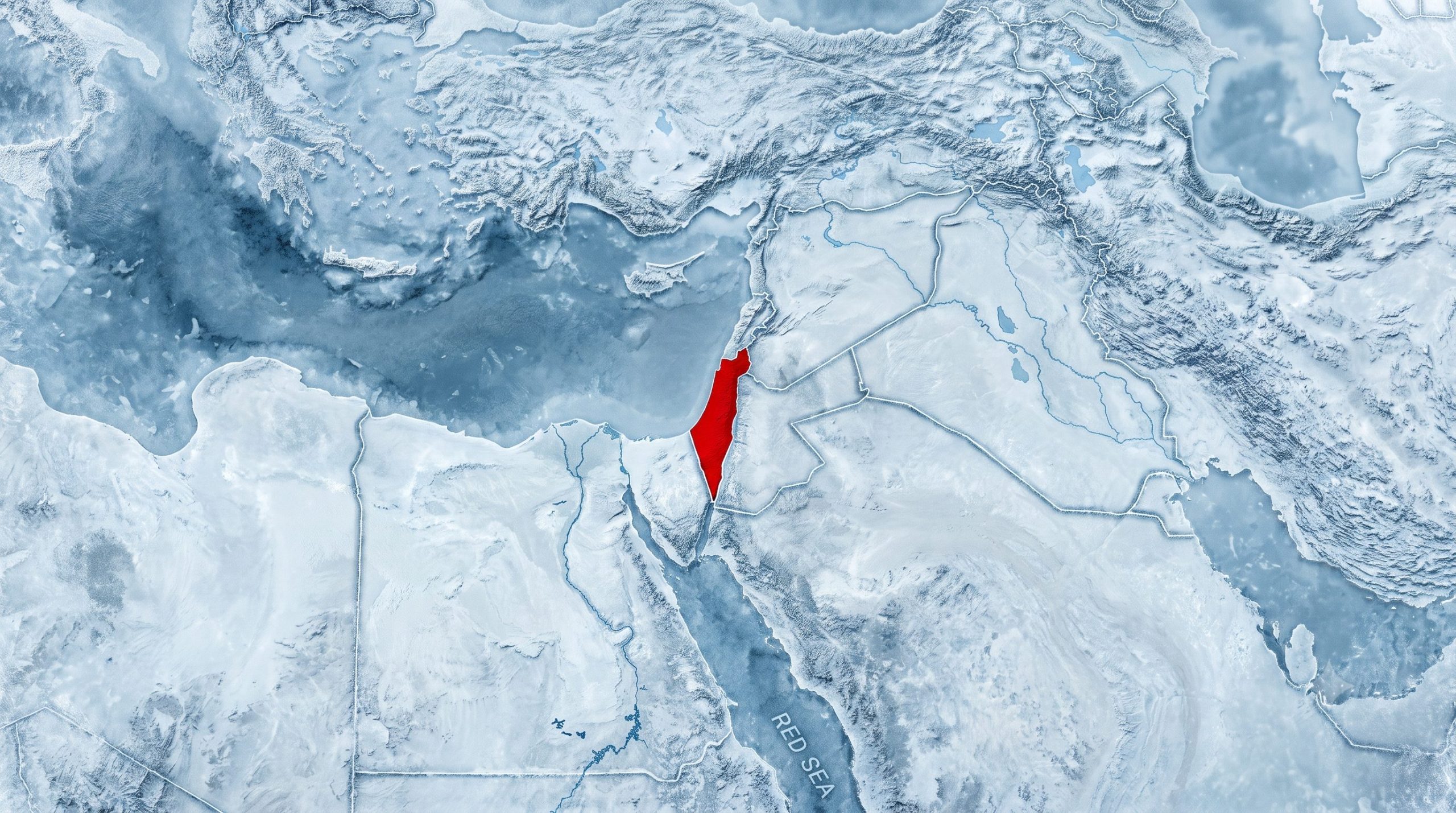
Israel finds itself in a continuous stagnation, wherein impressive tactical military achievements are not translating into political and strategic victory. How can this 'limbo' be resolved across the various fronts?
INSS Insight No. 2163, July 5, 2026
Follow us on GoogleIn 2026, Israel is militarily stronger than it was in 2023. Yet despite its military achievements, as well as its economic resilience and the endurance demonstrated by the home front in the face of security threats, it finds itself at one of the lowest strategic points in its history. Israel is caught in what can be described as a “strategic limbo” — a prolonged state of stagnation in which impressive tactical military achievements, along with unprecedented military cooperation with the United States, are not translated into a sustainable political and security victory.
This raises a fundamental question: What must, and can, Israel do to break out of this limbo, defeat its enemies across multiple arenas, and generate the strategic reversal required to ensure its future security? The answer does not lie in increasing military power alone, but in understanding the objectives of the enemy and formulating a counterstrategy that dismantles the logic that drove the October 7 attack. Such a strategy should also help renew momentum toward regional normalization with Israel and improvement of its international standing. At the core of this approach is the formulation of a “functional roadmap” for the Palestinian arena, to be implemented with American backing and subject to stringent security conditions in the Gaza Strip and Judea and Samaria, alongside efforts to reach agreements with Lebanon and Syria.
More than two years after the October 7 attack, Israel remains engaged in multiple open and bleeding fronts of conflict. In the Gaza Strip, a fragmented war of attrition continues; along the northern border, tens of thousands of residents remain displaced from their homes amid daily exchanges of fire with Hezbollah, while Israel is restrained and limited in its responses due to American pressure linked to the advancement of the Memorandum of Understanding with Iran and the negotiations between Washington and Tehran; and in Judea and Samaria, the situation remains volatile, requiring the continuous allocation of resources.
At the same time, Israel is not advancing a security dialogue with Syria, and the resulting stalemate is enabling Turkey to expand its influence over the country and within its territory. It also appears that engagement with the Lebanese government — and even the important framework agreement signed between the two sides in Washington under American mediation on June 26, 2026 — will not substitute for a necessary complementary move to the military campaign against Hezbollah.
In addition, Israel is experiencing an unprecedented erosion in its international standing — from diplomatic isolation in international institutions to threats of embargoes and a loss of legitimacy in Western countries.
A particularly severe and troubling blow has been recorded in the most vital axis for national security: Israel–U.S. relations. The deepening crisis with the American administration, characterized by public disagreements over the “day after” and a manifest lack of trust, is undermining Israel’s deterrence and constraining Jerusalem’s military and diplomatic freedom of action.
Israel is operating from a defensive posture, reacting to the enemy’s moves and managing the multi-front crisis with a short-term perspective. In effect, it is playing “checkers” — a linear game of tactical piece-taking — while its enemies, led by Iran, are playing a multidimensional, long-term geopolitical “chess” game, linking the Iranian arena to Lebanon, and to some extent also to the Gaza Strip, and potentially in the future to the Houthis. Israel is operating in the tactical space, while its enemies maneuver in the strategic domain.
Undermining Normalization with Israel and the Required Strategic Reversal
To prevail in the regional chess game, it is first necessary to understand the enemy’s campaign design. Yahya Sinwar’s decision to launch the October 7 attack stemmed from several factors, one of the most significant being the effort to derail the normalization process between Israel and Saudi Arabia.
From the strategic perspective of the “Axis of Resistance,” led by Tehran, the attack constituted a critical preemptive move aimed at blocking a diplomatic breakthrough between Israel and Saudi Arabia. On the eve of the attack, the American–Saudi–Israeli track was advancing rapidly toward a normalization agreement, which — according to this view — would have integrated Israel as a central actor in a new regional architecture. Such an outcome would have weakened Iran and pushed the Palestinian issue to the margins of the international agenda. The October 7 attack was therefore intended to bury the Abraham Accords, reignite the Arab–Israeli conflict, and trap Israel within a permanent “ring of fire.”
Accordingly, Israel’s definition of “total victory” must change. The destruction of Hamas battalions or the elimination of senior operatives are necessary but insufficient conditions. The true strategic victory — a reversal of the equation (the “boomerang effect”) — will be achieved only when the enemy’s original objectives are transformed into a resounding failure.
The completion of normalization with Saudi Arabia, the expansion of the Abraham Accords, the detachment of Lebanon from the Axis of Resistance, and the denial of Iran’s ability to project influence in Syria — all of these would constitute the most decisive defeat for Hamas, Hezbollah, and Iran. This is the move that would demonstrate to Tehran that its aggressive strategy has produced the opposite outcome from what it intended.
Replacing the “Two-State Vision” with a “Functional Roadmap”
Managing negotiations with the U.S. administration on this issue requires a profound shift: moving from an ideological defensive posture (“why the American model is dangerous,” particularly with regard to the Gaza Strip and the emerging risk of problematic flexibility in implementing the twenty-point plan) to a security-driven, functional initiative — focused on how to create stability on the ground and how to establish the conditions necessary for reconstruction and progress in the Gaza Strip and in the Palestinian Authority territories.
As it approaches negotiations with the United States, Israel must cease to be perceived as a chronic “peace refuser” that reflexively rejects diplomatic initiatives. At the same time, it should adopt an approach of security-conditioned realism. In closed-door meetings and formal policy papers, the Israeli delegation should shift the diplomatic center of gravity away from abstract political visions of a “two-state solution” — a paradigm whose credibility had already eroded among the Israeli public even before October 7, and which in the post–October 7 reality is widely perceived in Israel as a clear reward for terrorism — toward concrete parameters of risk management.
To this end, Israel should clarify to Washington that it does not oppose the principle of Palestinian self-governance, nor the return of the Palestinian Authority to the Gaza Strip, but rather the utopian timelines and the implementation of Palestinian sovereignty absent effective governance capacity on the ground.
The central argument vis-à-vis the White House must be results-based: unrestrained Palestinian sovereignty without a robust security architecture would lead to the immediate collapse of the Palestinian Authority, the rise of Hamas in Judea and Samaria, and the transformation of the entire area into a forward Iranian base — a scenario that would undermine core American interests in the Middle East, including the Israeli–Saudi normalization architecture.
Non-Negotiable Threshold Conditions
In order to disconnect romanticized visions from the harsh realities of the region, Israel must present the U.S. administration with a firm set of operational, non-negotiable threshold conditions for any diplomatic progress. These conditions should be formulated and conveyed to the Pentagon and the U.S. intelligence community in a professional security language:
- Full operational freedom of action for the IDF and the ISA (Shin Bet) across the entire area between the Jordan River and the Mediterranean Sea, similar to the current model in Judea and Samaria, without time limitation.
- Complete and permanent demilitarization of the Palestinian territory from indirect-fire capabilities, anti-tank weapons, and advanced weapon systems, including full and non-contestable Israeli control over the external perimeter (the Jordan Valley, the Philadelphi Corridor, and the maritime and air domains).
- Structural transformation of the Palestinian Authority’s mechanisms, from ending payments to terrorists (“pay-for-slay”), through deep reform of the education system and the removal of incitement, to the establishment of a new Palestinian security apparatus. Such an apparatus will be subject to close U.S.–Gulf training and oversight, and capable of actively dismantling terrorist infrastructure in northern Samaria and the southern Gaza Strip.
Israel should make clear to the U.S. administration that it is prepared to advance a political plan and lead a fundamental transformation in the Gaza Strip and the broader Palestinian arena; however, the pace of progress on the ground will be determined solely by compliance with these operational benchmarks (a performance-based approach).
The Saudi Lever and Shifting Pressure toward Washington and Riyadh
The weak point in U.S. policy lies in the administration’s longstanding ambition to secure a landmark defense agreement with Saudi Arabia before the next change of administration. Israel should leverage this sense of urgency as a form of reverse pressure. Instead of adopting a defensive posture vis-à-vis U.S. demands for a “Palestinian horizon,” it should present its own viable diplomatic framework while simultaneously building a discreet functional channel with Riyadh.
Mohammed bin Salman requires the ability to demonstrate progress on the Palestinian issue in order to justify normalization to the Arab and Islamic world. In closed discussions, however, he is no less concerned than Israel about the emergence of a radical terrorist state associated with the Muslim Brotherhood or Iran. He has also reportedly urged the United States to complete the effort against Iran, which he views as a historic opportunity to reshape the Middle East.
Israel should therefore propose to Washington a formula that satisfies the Saudi need for a political declaration — one whose clear and unequivocal meaning is public, principled support for a political horizon based on mutual agreement, contingent upon demilitarization and other stringent security criteria.
In doing so, Israel would shift the burden to the American and Saudi arenas: if Washington seeks to advance such a framework, it will need to pressure Ramallah to meet the conditions of demilitarization and effective governance, and to refrain from pressing Israel to accept an arrangement grounded in a utopian vision — one that, in practice, would be suicidal from a security perspective.
The Opening Move: A Breakthrough with the Palestinian Authority
The path to Riyadh — as well as to restoring relations with Washington — does not lie in bypassing the Palestinian issue, but in managing it prudently. To initiate the regional chess move, Israel must generate a breakthrough in its conduct vis-à-vis the Palestinian Authority. Saudi Arabia has made unequivocally clear that normalization will not be possible without a “political horizon” or an irreversible pathway toward resolving the Palestinian issue.
Maintaining the status quo — centered on Israel’s refusal to articulate a political horizon, alongside policies that risk weakening the Palestinian Authority to the point of collapse — plays directly into the hands of Hamas, which seeks to take over Judea and Samaria and replace the Palestinian Authority in the post–Abbas era. At the same time, Israel, Saudi Arabia, and the United States retain a degree of flexibility in defining both the horizon and the pathway, particularly in shaping a roadmap for gradual progress.
Therefore, Israel should initiate a proactive move: not unilateral concessions that would signal irresponsibility, but rather the formulation of a framework for a “revitalized” Palestinian Authority — one that undergoes deep reform in its education system (ending incitement), its payment mechanisms to terrorists, and its policing effectiveness, without the creation of a military force under or alongside it. Should such a force exist, Israel should insist on its dismantlement.
In return for these reforms, and in coordination with the United Arab Emirates and Saudi Arabia, Israel would agree to the gradual integration of the Palestinian Authority into the civilian administration of the Gaza Strip in the “day after” (following the dismantling of Hamas, the demilitarization of Gaza, and the implementation of the twenty-point plan). Any further progress toward reconnecting Gaza with Judea and Samaria, as well as toward defining a future Palestinian state framework (not necessarily according to the Palestinian demands or definition), would be conditioned on the Palestinian Authority’s performance and the implementation of its reform process (performance-based).
Such a breakthrough would provide the United States and Saudi Arabia with the necessary political justification to advance the broader deal, isolate Hamas within the Palestinian arena, and mitigate the “perpetual occupation” narrative that continues to erode Israel’s international standing.
The Saudi Axis: Leveraging Shifts in Saudi Policy
An analysis of the Saudi arena requires Israel to break free from outdated assumptions. Saudi Arabia under the leadership of Mohammed bin Salman is no longer a compliant American “client state.” In recent years, Riyadh has pursued a calibrated shift away from exclusive reliance on U.S. patronage, replacing it with a foreign policy aimed at advancing strategic autonomy.
A central manifestation of this shift is Saudi Arabia’s effort to forge a broad Sunni alignment, encompassing Egypt, Turkey, and Pakistan. This alignment is intended to enable Riyadh to hedge risks and establish a counterweight both vis-à-vis the global powers (the United States, China, and Russia) and against the Iranian Shiite threat, while positioning itself as a regional power without relying solely on Washington’s increasingly uncertain security umbrella.
In this new reality, Israel should position itself not as a proxy for American interests in the region, but as an independent, essential, and powerful partner for Saudi Arabia — and potentially, through it, forge a gateway to Pakistan. Israel’s considerable advantages — from advanced missile and UAV defense technologies (proven in confrontations with Iran), through high-quality intelligence, to technological and energy capabilities — should constitute a strategic asset for Saudi Arabia, and potentially for Pakistan as well. In this context, normalization is not merely a “reward” for Israel, but a clear Saudi strategic interest.
The Syrian Front: Renewing Security Negotiations
A multidimensional chess perspective also necessitates a dramatic shift along the northeastern front, through the renewal and acceleration of security negotiations with the al-Sharaa regime in Syria. A breakthrough along this channel would serve four critical Israeli and regional interests:
- Alignment with President Trump’s strategic vision: This move would directly align with President Trump’s aspiration to expand the Abraham Accords and integrate Syria into them. The Trump administration also views Syria’s reintegration into the moderate Arab sphere as a key lever for weakening Iran, and Israel can serve as the operational and security engine enabling this broader diplomatic effort.
- Containing and pushing back Turkish influence: Syria constitutes a central arena for Ankara’s hegemonic ambitions. Accelerating a security dialogue with Damascus, backed by Gulf states, would directly weaken Turkish influence in Syria and across the broader Middle East.
- Stabilization and preventing Iranian entrenchment: Providing the Syrian regime with an “exit pathway” from the Iranian axis, through economic incentives and security guarantees, would enable it to further restrict the operational freedom of the Islamic Revolutionary Guard Corps and Hezbollah on its territory. Weakening the terrorist foothold in Syria would create a continuous physical buffer, disrupting Iranian supply lines to Beirut.
- Reducing military deployment and freeing resources: The current security reality compels the IDF to maintain large, permanent forces in the Golan Heights and along the northern front. Even a temporary or limited security arrangement with a sovereign regime in Damascus could enable long-term stabilization while allowing for a necessary reduction in military deployment. Releasing these resources and forces is essential to enable the IDF to regenerate its capabilities and focus on other direct threats.
- Improving Israel’s international standing: The very acceleration of negotiations — and certainly their progress and success, including a return to deployment along the pre-war disengagement lines — would strengthen Israel’s image as a state committed to agreements, stability, and free of territorial ambitions.
The Lebanese Front: Accelerating Negotiations with Lebanon as Leverage to Dismantle the Axis
Alongside the Syrian track, the diplomatic effort must include a sharp shift on the northern front. Weakening Hezbollah cannot rely solely on air force strikes and ground maneuvering deep inside Lebanese territory, but must also involve accelerating diplomatic negotiations with the legitimate Lebanese government, backed by broad international and Arab support.
The framework agreement signed on June 26 constitutes an important breakthrough in this regard — albeit only the beginning of a longer process. Its success will require significant American and Saudi support for the Lebanese government and its army, as well as effective U.S. involvement in overseeing the Lebanese Armed Forces’ activities in the two enclaves to be transferred to its responsibility under the agreement. This is a necessary foundation for advancing the process and for the redeployment of both the IDF and the Lebanese army in the area, while preventing Hezbollah from rebuilding its capabilities.
Israel should place on the table a clear proposal to resolve all disputed points along the land border (including the Shebaa Farms and Ghajar) and to establish international guarantees for the implementation of an improved UN resolution (in the spirit of Resolution 1701). This diplomatic effort should be coordinated with Gulf states — Saudi Arabia and the United Arab Emirates — which would offer economic incentives for the reconstruction of the collapsing Lebanese state and its army, strictly conditioned on Hezbollah’s withdrawal north of the Litani River and the dismantling of its military capabilities.
This strategy would place Hezbollah in a dilemma. Should it reject the arrangement and continue fighting, it would be perceived by the Lebanese public — including segments of the Shiite community — as acting on behalf of Tehran, destroying Lebanon, and obstructing the delivery of billions of dollars in aid. Transforming Lebanon from a theater of exclusive Hezbollah military activity into a diplomatic arena centered on the Lebanese government would erode the organization’s internal legitimacy and create an effective lever for detaching Beirut from the Axis of Resistance.
Beyond the security dimension, the economic dimension is the cornerstone without which the diplomatic framework vis-à-vis Lebanon will collapse. Hezbollah is not only a terrorist organization; it also functions as a socio-economic safety net for the Shiite community and as a coercive mechanism vis-à-vis the Lebanese state. To push it back, Israel should promote a security–economic architecture in which Gulf incentives are broader and more attractive than Iran’s financial pipeline, while being explicitly conditioned on the systematic (even if gradual) containment of the organization.
The direct damage from recent rounds of fighting in Lebanon is estimated in the billions of dollars, and since March 2026 the country has experienced a dramatic decline in public revenues. This creates a window of opportunity to establish an economic lever through a series of major projects, including: advancing the development of Lebanon’s gas resources to help alleviate its massive debt burden; rehabilitating critical infrastructure through the World Bank–approved financing framework (the LEAP project), under strict oversight to prevent the diversion of funds to terrorism and to bypass Hezbollah’s mechanisms; and stabilizing the banking system and currency with the support of Saudi Arabia and the United Arab Emirates.
Within the context of Israel’s strategy in Lebanon, Israel should encourage the United States and France to support the Gulf initiative of “money in exchange for effective sovereignty.”
The Turkish Obstacle: A Regional Brake and “Spoiler” to a New Regional Architecture Involving Israel
One of the central challenges to the implementation of the proposed ambitious strategy is Turkey’s conduct under Recep Tayyip Erdoğan. Ankara, which views itself as a leader of the Sunni world and a patron of the Muslim Brotherhood (including Hamas), perceives broad Israeli–Saudi normalization as a direct threat to its regional ambitions. Erdoğan may act as a dangerous “spoiler.” He could seek to drive a wedge within the emerging Sunni alignment, incite Riyadh against rapprochement with Israel, undermine any attempt to move closer to Pakistan, should such a move materialize, intensify economic and diplomatic measures against Israel, and provide political and financial refuge to senior Hamas figures currently based in Qatar. Senior operatives are already active from Turkish territory, with full approval, and possibly encouragement, in developing Hamas terrorist infrastructure in Judea and Samaria and in organizing attacks against Israel.
To neutralize the Turkish obstacle and curb Ankara’s hegemonic ambitions, Israel should pursue a series of simultaneous moves across parallel arenas:
- Leveraging the Syrian channel: Accelerating a security–political track with Damascus would help restore the sovereignty and legitimacy of the al-Sharaa regime across Syria’s territory, undermine Turkey’s justification for expanding its military presence beyond the country’s north, and — supported by Gulf resources — reduce its economic and political foothold there.
- Mobilizing the Egyptian–Saudi axis: Israel should consolidate and deepen its cooperation with Egypt and Saudi Arabia, while enabling them to exercise influence and, at times, even leadership, with the aim of broadening the foundation for reshaping the regional order on the basis of their vital interests in a manner that would moderate Turkish influence within it. Egypt and Saudi Arabia have moved closer to Turkey in part because of a loss of confidence in the United States. It would therefore be in Israel’s interest to work with the U.S. administration in an effort to persuade it to rebuild trust with them, in a way that would also serve President Trump’s vision of a new regional architecture based on the expansion of the Abraham Accords.
- Preventing significant Turkish involvement in the Palestinian arena, particularly in the Gaza Strip.
- Deepening the Hellenic alliance: Expanding and deepening regional cooperation including in cybersecurity, intelligence, and the maritime domain with Cyprus and Greece, while laying the groundwork for a future bridge between Asia and Europe through frameworks such as IMEC.
- Activating U.S. economic and diplomatic leverage: Turkey’s economy, while large, suffers from inflation and is in need of stability. It is reasonable to assume that Erdoğan understands that active opposition to initiatives backed by Washington and Riyadh would carry a heavy price. Through discreet dialogue, the Trump administration should be encouraged to make clear to Ankara that undermining the emerging regional architecture would carry economic costs.
Domestic Constraints: The Limits of Israel’s Political Space
The greatest challenge to implementing this “chess strategy” lies not in Arab capitals, but in Jerusalem. Israel’s current political landscape is characterized by deep fragmentation and unprecedented polarization. The structure of the current coalition and its dependence on far-right elements create a form of conceptual paralysis, in which any reference to “reform of the Palestinian Authority” or a “political horizon” is perceived as capitulation or an unacceptable concession.
This is Israel’s central paradox: the most urgent strategic-security imperatives — aligning with the Sunni axis, stabilizing the northern front, opening a channel with Syria, and restoring relations with the United States —directly clash with the short-term political survival constraints of the current governing coalition.
A forward-looking Israeli leadership will be required to make difficult decisions: to recognize that the necessary “currency” (particularly a principled willingness to pursue a controlled political track with the Palestinians) is a modest price relative to the substantial strategic gain of dismantling the Iranian axis. Continuing to play on the domestic “checkers” board to satisfy political constituencies will leave Israel isolated, exhausted, and ultimately disadvantaged in the broader strategic contest.
Conclusion and Operational Recommendations: From Checkers to Chess
The strategic limbo in which Israel currently finds itself is not inevitable, but rather the result of managing the conflict through a linear and short-sighted approach — one that fails to effectively integrate the political and military dimensions and does not translate significant military achievements into diplomatic initiatives aimed at achieving overarching strategic objectives.
To defeat its enemies, Israel must lift its gaze from the tunnels of Gaza and Hezbollah’s positions to the broader chessboard of the Middle East. It must cease playing checkers; the time has come to play chess.
A strategic reversal will only be achieved through a coordinated, simultaneous, and well-timed move that translates the military achievements of the past three years into a lasting geopolitical shift: a breakthrough with a revitalized Palestinian Authority that opens the path to Riyadh; completion of normalization with Saudi Arabia and Israel’s integration into the expanding Sunni axis; the opening of a security channel with Syria to weaken Iran and Turkey while enabling force reductions; and the acceleration of a diplomatic–economic track with the Lebanese government to erode Hezbollah’s legitimacy.
Implementation Roadmap: Operational Recommendations for the Political Leadership
- Establish an interagency task force under the Prime Minister’s leadership (National Security Council, Ministry of Foreign Affairs, IDF, and ISA, alongside former senior officials from relevant state institutions) to formulate a document outlining the “functional threshold conditions” for formal presentation to the U.S. administration, drafted in a professional, performance-based language.
- Initiate a discreet channel with Riyadh and Ramallah to define the framework for a revitalized Palestinian Authority (education reform, cessation of payments to terrorists, structural reforms, and security sector reform), with the aim of providing Saudi Arabia with a pathway toward advancing a comprehensive normalization agreement — conditioned on the demilitarization of Gaza and continued Israeli security control, alongside deep reforms within the Palestinian Authority.
- Launch an accelerated security channel with Damascus, backed by the United States, to leverage the Trump administration’s interest in integrating Syria into the Abraham Accords. The objective: to reach initial understandings on the removal of hostile forces from southern Syria, curb Turkey’s hegemonic ambitions, and stabilize the border in a manner that would enable a reduction in IDF deployment. In parallel, build a containment coalition vis-à-vis Turkey — engaging Egypt, Saudi Arabia, and the United States to apply coordinated diplomatic and financial pressure on Ankara, preventing it from acting as a spoiler or providing refuge to Hamas in the “day after.” At the same time, deepen the Hellenic partnership with Cyprus and Greece.
- Promote a “money in exchange for effective sovereignty” plan with the United States and France for the Lebanese front: conditioning Gulf funding and investments (in Block 8, infrastructure rehabilitation, and currency stabilization) on Hezbollah’s withdrawal north of the Litani River and the transfer of sovereign authority to the Lebanese Armed Forces, which would act to systematically dismantle Hezbollah’s military capabilities.
When this new regional architecture takes shape, the “ring of fire” that Iran sought to build around Israel will instead become a chokehold around Tehran and its proxies. This will constitute the true “total victory” over Hamas and the entire Axis of Resistance: a reality that demonstrates to the enemy that the very decision to launch the October 7 attack and attempt to destroy Israel ultimately led to its own isolation and decisive political defeat.