


Publications
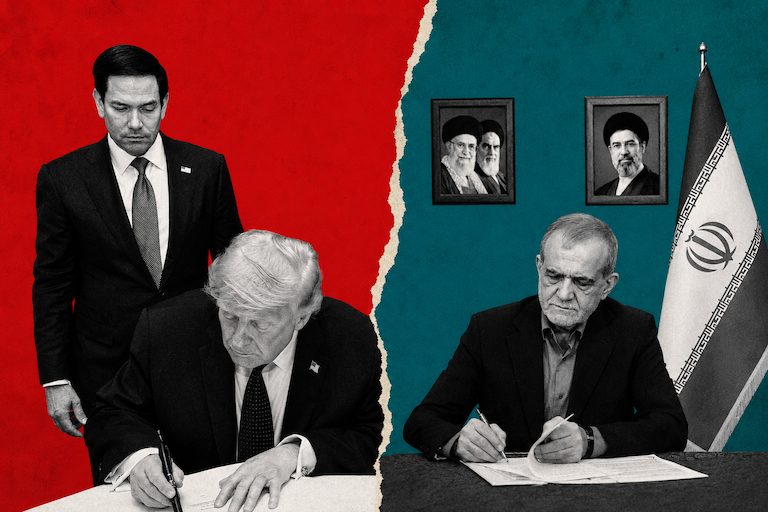
What does the MOU between the United States and Iran include, and what are its strategic implications for Israel?
INSS Insight No. 2158, June 22, 2026
Follow us on GoogleThe memorandum of understanding between the United States and Iran marks the end of the military campaign, but not the end of the challenge posed by the Iranian threat. The document is not a new nuclear agreement, but rather an interim framework designed to halt the fighting, reopen the Strait of Hormuz, lift the naval blockade, and enable negotiations on a final agreement within 60 days. Trump will be able to present the memorandum as an achievement: ending the war, stabilizing energy markets, and securing an Iranian commitment not to acquire or develop nuclear weapons, alongside discussions on diluting the enriched material on its territory. Iran, for its part, has succeeded in securing its two key demands: an end to the war and the blockade, along with economic relief in the form of unrestricted oil exports and the unfreezing of its financial assets. All this comes while the core questions of the nuclear issue — the future of enrichment and the fate of the enriched material — are deferred to a later stage, and issues related to the missile program and Iran’s proxies are not addressed at all. In addition, the Lebanese issue remains ambiguous: the memorandum calls for a ceasefire and respect for Lebanon’s territorial integrity and sovereignty, but does not clarify what Israel is permitted or prohibited from doing vis-à-vis Hezbollah. This ambiguity could turn the Lebanese arena into a flashpoint that may jeopardize both the implementation of the memorandum and the progress of U.S.–Iran negotiations. From Israel’s perspective, the overall picture is negative and primarily entails risks. The immediate damage relates to Israel’s image and its relations with the United States. This is compounded by the implicit legitimization of Iran’s role in shaping developments in Lebanon. The signing of the memorandum opens a new and highly uncertain chapter, and the real test will lie in the final agreement — if one is reached.
Table of Contents:
Current Situation
The memorandum of understanding signed last week between the United States and Iran is not a new nuclear agreement, but rather an interim framework primarily intended to halt a war that President Trump no longer wished to pursue, reopen the Strait of Hormuz, and enable negotiations on a final agreement focused on the nuclear issue within 60 days, with the possibility of extension by mutual consent. The memorandum also includes an Iranian commitment not to acquire or develop nuclear weapons, as well as a preliminary agreement to dilute its stockpile of enriched material under the supervision of the International Atomic Energy Agency (IAEA). Even if the memorandum is presented as a significant diplomatic achievement that effectively ends the phase of direct military confrontation, it postpones the difficult decisions to the next stage.
The U.S. administration portrays the reopening of Hormuz and the cessation of hostilities as an achievement that, alongside a decline in oil prices and the removal of the global economic threat, will enable future progress on the nuclear issue. Iran, for its part, presents the memorandum as a ceasefire rather than a capitulation. Tehran can point to a series of achievements: the lifting of the naval blockade, the immediate resumption of oil and petrochemical exports, access to frozen funds and assets, the reopening of Hormuz under conditions that grant it a central role, and the intention to formulate an economic reconstruction and development plan valued at not less than $300 billion.
The memorandum does not close the Iranian issue but instead shifts the core issues — chief among them the future of Iran’s nuclear program and the sanctions regime — into a framework of ongoing crisis management. It provides Trump with a narrative of victory while also granting Iran economic and diplomatic breathing space, before full, detailed, and verifiable concessions have been secured.
The Lebanese issue remains particularly ambiguous. The memorandum stipulates that the ceasefire will also apply to Lebanon and emphasizes the need to preserve Lebanon’s territorial integrity and sovereignty, but does not clarify what Israel is permitted or prohibited from doing vis-à-vis Hezbollah. This ambiguity opens the door to stricter interpretations by Iran, Hezbollah, and Lebanon, according to which the Israeli presence in southern Lebanon — and certainly any Israeli action against Hezbollah’s rehabilitation — could be considered a violation of the spirit of the memorandum. Consequently, the Lebanese arena may become a focal point that could jeopardize both the implementation of the memorandum and the progress of U.S.–Iran negotiations. Moreover, Iran may seek to leverage this linkage between the Lebanese arena and the negotiations over a final agreement as a pressure tool, in an effort to impose constraints on Israeli operations in Lebanon that are inconsistent with Israel’s security approach.
What the Memorandum Includes — and What It Does Not
The memorandum includes a mutual commitment by Iran and the United States to cease hostilities, refrain from renewing them, and avoid taking any military action against one another. It also includes a reciprocal commitment to respect each other’s sovereignty and territorial integrity and to refrain from interference in one another’s internal affairs — an undertaking that, in practice, contradicts Trump’s pledge last January to support Iranian protesters.
The memorandum further provides for the establishment of a mechanism to implement its provisions and to ensure compliance with a future final agreement. However, the details of this mechanism, to be agreed upon during negotiations, remain vague. At present, it is unclear who will comprise it, what role the International Atomic Energy Agency (IAEA) will play within it, what its authorities will be, how disputes will be resolved, what will constitute a violation, and what sanctions will be imposed in response. Consequently, at this stage, there is no certainty that the monitoring mechanism will serve as a meaningful enforcement tool rather than merely a framework for managing disputes.
The Economic Dimension
- In the immediate term, and until sanctions are lifted at the conclusion of negotiations, the U.S. Treasury will issue waivers allowing Iran to export crude oil, petroleum products and their derivatives, as well as to access all related services for banking transactions, insurance, and transportation. In addition, the memorandum opens the door to the use of frozen Iranian funds and assets; according to various reports, this currently amounts to approximately $24–25 billion, although the total volume of contested assets is broader. In this respect, the memorandum differs from the 2015 nuclear agreement: some economic relief begins already at the interim stage, before key issues — such as dilution, enrichment, monitoring, and enforcement — have been fully resolved.
- In the future, and subject to a final agreement, all sanctions imposed on Iran will be lifted, including those of the UN Security Council, the IAEA, and all primary and secondary U.S. sanctions. It should be noted that this clause ostensibly cancels sanctions imposed on Iran for terrorism, repression of dissent, and human rights violations, even though the final agreement includes no Iranian commitments in these areas.
- The United States commits, together with regional partners, to establish a fund with a minimum value of $300 billion for Iran’s economic reconstruction and development. Background briefings clarified that, should the fund be established, it would not be financed by governments but rather by private actors. This mirrors proposals previously advanced by the United States in the Gaza context and responds to Iran’s demand for compensation for the damage it has sustained.
The Nuclear Issue
- As part of the memorandum’s declaration of intent, Iran reiterates its longstanding commitments not to acquire or develop nuclear weapons.
- The parties agree to address the fate of the enriched material stockpile, with dilution under IAEA supervision as the minimum baseline. On enrichment and other issues related to Iran’s nuclear requirements, it was agreed that these would be discussed in the negotiations toward a final agreement. The inclusion of this issue in the memorandum is significant, even though Iran had already expressed willingness to dilute enriched material during the Geneva talks held prior to the war. However, key questions — such as the scope of dilution, timelines, verification mechanisms, the future of enrichment, and the linkage between nuclear steps and sanctions relief — remain unresolved.
- The wording of the nuclear clause also refers to Iran’s “nuclear needs.” This important point may allow Tehran to argue in the future for its right to maintain a civilian nuclear program, and possibly even some level of enrichment capability. Thus, even if the U.S. administration presents the next phase as one aimed at imposing strict limitations, the memorandum itself does not establish them, instead deferring the discussion to the next stage.
- As long as negotiations continue, it is stipulated that the status quo will be maintained: Iran will preserve its nuclear program as it currently stands, while the United States will refrain from imposing additional sanctions.
It should be taken into account — even in the absence of confirmation — that the published memorandum may not reflect the full scope of understandings between Washington and Tehran. It is possible that additional, informal understandings were reached during the negotiations on the nuclear issue, which could be reflected in the final agreement, although there is no certainty that Iran would implement them in practice. At the same time, the United States may also have agreed to further steps toward Iran that are not reflected in the document.
Iran’s Gains in the Initial Phase
- Absence of the missile issue — Iran’s missile program, which constituted an integral part of the strategic threat to Israel and regional states, is not mentioned in the memorandum. Moreover, Trump’s remarks that Iran can possess missiles, just as other countries — including Saudi Arabia — do, make clear that the administration does not view this issue as part of the final agreement.
- Management of transit through the Strait of Hormuz — The memorandum obligates Iran not to charge transit fees in the Strait of Hormuz for only 60 days. It also stipulates that Iran will engage in dialogue with Oman and other littoral states regarding future arrangements for managing maritime and administrative services in the strait. In doing so, the memorandum leaves Iran with a central role in restoring traffic and shaping future arrangements in the strait, including the implied possibility of imposing some form of safety levy or other charges not formally defined as transit fees.
- Oil exports — Iran will be able to export crude oil, as well as petrochemical products and their derivatives, which constitute a central source of revenue for the Iranian economy.
- Release of frozen funds and assets — The memorandum does not necessarily restrict the use of these funds to humanitarian purposes and even allows the Iranian central bank to determine the ultimate beneficiaries.
- Economic reconstruction fund — This fund, amounting to at least $300 billion, provides Tehran with a significant economic horizon and helps the regime present the memorandum domestically as an achievement. Even if it does not involve direct U.S. government funding, the mere inclusion of such a plan strengthens the regime. If realized, it would effectively constitute compensation for the damage Iran has sustained, as Tehran had demanded.
- Linkage between Lebanon and the agreement with Iran — The memorandum allows Tehran to argue that continued fighting in the Lebanese arena directly affects the implementation of the understandings and the progress of negotiations on the Iranian track. In doing so, Iran gains a new diplomatic lever vis-à-vis Israel and the United States.
The bottom line is that the very deferral of detailed discussions on the nuclear issue to the final agreement constitutes an achievement for Iran, as it allows Tehran to conduct the next round of negotiations from a more advantageous position, after the United States has already begun to relinquish some of its key leverage. This comes as Iran immediately receives significant economic and military gains, without being required to take concrete steps beyond reopening the Strait of Hormuz — something it itself needs.
The 60-Day Window: A Path to Agreement or a Mechanism for Delay?
The 60-day negotiation window does not guarantee a breakthrough. On the contrary, it may become a mechanism for delay, stalling, and prolonged discussions without resolution. Iran is likely to seek to preserve the relief it has already obtained, avoid further concessions, and dilute U.S. demands regarding stockpile reduction, continued enrichment, monitoring, and sanctions.
Clause 13 of the memorandum reinforces this concern. It stipulates that negotiations toward a final agreement will begin only after the initial implementation of key provisions: cessation of hostilities, lifting of the blockade, restoration of traffic through the Strait of Hormuz, issuance of waivers for oil and petrochemical exports, and the release of frozen funds and assets. In other words, Iran enters the final-stage negotiations only after securing the initial realization of significant benefits.
This structure serves Tehran’s interests. It allows Iran to obtain economic and political relief at an early stage, reduces the leverage of the U.S. administration, and leaves the critical issues from the perspective of Israel and the United States unresolved. Trump, having already declared success, will find it difficult — and may have little incentive — to return to a full-scale war that could jeopardize the political achievement he is presenting to the American public. The prevailing assessment is that Trump’s agreement to a relatively lenient framework toward Iran likely stems from a combination of economic, political, and strategic considerations: the desire to stabilize energy markets, to end a war that had become a burden, and to present a clear achievement ahead of the November 2026 midterm elections. Accordingly, even if disputes arise over the implementation of the memorandum, the administration will have a clear incentive to avoid a rapid return to large-scale conflict, at least until after the elections.
In light of this, even if negotiations fail to mature into an agreement, the more likely scenario is not an immediate return to large-scale war but rather an extension of talks, interim arrangements, conflicting interpretations, and the continued management of an unresolved situation. To the extent that economic relief advances more rapidly than verifiable nuclear steps, the leverage of Washington and Jerusalem will erode ahead of a final agreement.
Recent developments in Lebanon illustrate that the 60-day window does not depend solely on progress in resolving nuclear and sanctions-related disputes. As long as the Lebanon clause in the memorandum remains ambiguous and is not translated into clear understandings among Israel, the United States, and Lebanon, a renewed confrontation between Israel and Hezbollah could disrupt efforts to implement the memorandum. The postponement of talks in Switzerland following the recent escalation in Lebanon this week underscores that the Lebanese arena is not a secondary appendix to the memorandum, but rather a central vulnerability that could threaten its implementation.
The Israeli Balance Sheet: Military Gains and Diplomatic Failures
From Israel’s perspective, the central problem lies not in the cessation of the war itself, but in the structure of the memorandum and the gaps it leaves. The document grants Iran early relief and a pathway toward sanctions removal, while the issues most critical to Israel — enriched material, the future of enrichment, monitoring, missiles, Iran’s proxies, and freedom of action in Lebanon — are deferred to the final agreement or not addressed at all. Consequently, the memorandum may reduce Israel’s leverage and operational freedom even before the core threats have been resolved.
This gap also reflects the difference between Israel’s objectives and those of Trump in the endgame. Israel sought to ensure that the achievements attained during the campaign would be translated into long-term change vis-à-vis Iran and Hezbollah: full treatment of the enriched material stockpile, prevention of the restoration of dangerous capabilities, and preservation of freedom of action. Trump, by contrast, sought to end the war, reopen Hormuz, ease economic pressure, and present a rapid political achievement.
No less important, the campaign underscored Israel’s exclusion from the discussions between Washington and Tehran on the terms of the endgame. Israel was a central partner in the military effort but not in shaping the diplomatic outcome. This gap is particularly striking given that the memorandum directly addresses issues vital to Israel — Lebanon and freedom of action vis-à-vis Hezbollah, enriched material, the future of enrichment, missiles, and monitoring mechanisms — yet was formulated in a U.S.–Iranian framework.
The memorandum also exposed a cumulative erosion in Israel’s standing within the American political arena. In recent years, Israel has invested much of its political capital in its relationship with Trump and the Republican camp, while its ties with significant segments of the Democratic Party, liberal constituencies, and parts of the American Jewish community have weakened. As a result, when a gap emerges with Trump, Israel lacks a sufficiently broad political safety net in Washington.
In the past, Israel could rely to a greater extent on bipartisan support in Congress and on deep ties with both camps. Today, if the White House is dissatisfied with Israel, and if parts of the Republican camp adopt a more isolationist line, Israel’s ability to activate alternative levers is more limited. This represents an important strategic shift: Israel depends on the United States more than ever in the campaign against Iran, yet its influence over the shaping of U.S. policy is more constrained than in the past.
The implication is that any Israeli action perceived as jeopardizing an achievement that Trump seeks to present to the American public — particularly moves in Lebanon — may once again encounter a sharp response from the White House. In a reality in which Trump is publicly committed to the memorandum, and the final agreement is expected to receive further anchoring in the UN Security Council, Israel’s room for maneuver may narrow even further.
Iran: Damaged, but Not Defeated
Iran sustained significant damage during the fighting, but it emerges from the campaign neither defeated nor facing regime collapse. On the contrary, the regime survived the confrontation, managed to withstand the militaries of the United States and Israel, and — by virtue of its resilience and willingness to absorb substantial losses — may even claim victory.
However, the regime’s underlying problems, which drove tens of thousands to protest earlier this year, remain unresolved and have in fact worsened. The Iranian regime has no quick solutions to the deep economic crisis facing the country, nor to its water shortages, electricity deficits, currency depreciation, inflation, and unemployment.
The memorandum of understanding provides the regime with hope that, through the unfreezing of assets and the resumption of oil exports — openly rather than covertly — it will be able to initiate preliminary recovery processes. This may serve as an incentive for continued engagement between the United States and Iran, and potentially even for concessions on the nuclear issue, enabling the regime to achieve its primary objective: the removal of sanctions and access to the additional economic benefits envisioned in the memorandum, should a final agreement be reached.
Israel — Conclusions and Recommendations
The memorandum of understanding highlights the gap between Israel’s military strength and its ability to influence the shaping of the diplomatic endgame. Israel demonstrated impressive military, intelligence, and technological capabilities, but failed to translate them into sufficient influence over the terms of the arrangement. As a result, it once again finds itself in a largely isolated position of criticism vis-à-vis a U.S.-led initiative formulated without its involvement and currently enjoying broad international support.
In light of this, Israel should:
- Renew coordination with the U.S. administration, against the backdrop of heightened suspicion that it may seek to undermine the negotiation process — whether through military actions in Lebanon or through moves in other arenas.
- Conduct an open dialogue with Washington on the Lebanese issue, which remains highly volatile. Israel should anchor clear understandings regarding its freedom of action in Lebanon against Hezbollah’s reconstitution and offer constructive proposals to advance dialogue with the Lebanese government, including a willingness to adopt confidence-building measures on the ground. At the same time, Israel must recognize that a containment policy that avoids risk in withdrawing from areas entered by the Lebanese Armed Forces could lead to friction with the U.S. administration.
- Engage in quiet diplomatic dialogue on the Iranian nuclear issue, focusing on three concrete demands: establishing a short and verifiable timeline for the dilution of enriched material; clearly defining limits on future enrichment; and designing a monitoring and enforcement mechanism with clear authorities, including consequences for violations.
- Undertake a fundamental effort to repair its standing in the United States, so as not to remain almost exclusively dependent on Trump and his political considerations.
In sum, the campaign underscores that military capability alone is insufficient. Israel requires diplomatic space, American legitimacy, and the ability to shape the terms of the endgame. Without these, even a successful operational campaign may culminate in a problematic strategic outcome.
The memorandum halts the war, but does not resolve the challenge posed by Iran. The central question now is whether the United States and Iran will reach a final agreement that entails the actual dismantlement of dangerous capabilities, or whether such an agreement will instead provide Iran with time, resources, and legitimacy to rebuild its power under the umbrella of a diplomatic arrangement.
For most of her career, Ms. Shine served in the Israeli Intelligence Community. Her last position was Head of the Research & Evaluation Division of the Mossad (2003-2007). In this capacity, she was in charge of the production of both daily and periodical evaluations on Middle Eastern and international issues, led security and intelligence dialogues with various counterparts in the international community, and was involved in political-military meetings with decision makers.