


Publications
What are the significance and implications of the historic visit to China by the leader of the Taiwanese opposition?
INSS Insight No. 2136, May 7, 2026
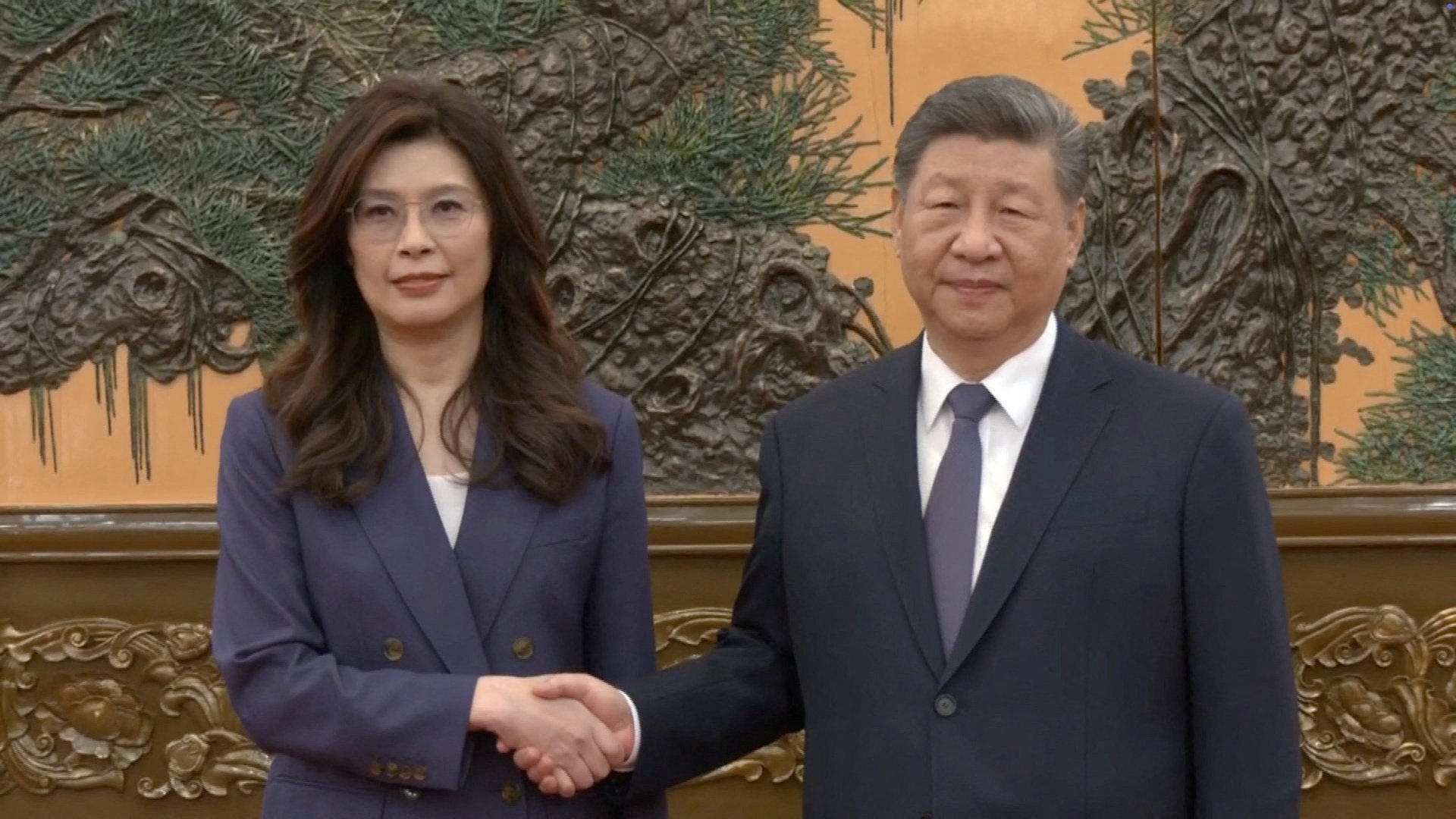
Follow us on GoogleIn April 2026, Cheng Li-wun, Chairwoman of the National People’s Party Kuomintang (KMT), and leader of Taiwan’s primary opposition, arrived in Shanghai. The pinnacle of the visit was a meeting with Chinese President Xi Jinping—the first meeting in nearly a decade between the leadership of these two historic parties. Cheng described the visit as a “journey of peace” and an attempt to ease tensions with China, while her critics in the Taiwanese government viewed the move as problematic, labeling it a “shameful surrender.” Beyond the debate over its definition, the visit raises a broader question: Can a move of this nature open a new era in China-Taiwan relations, or is the political and identity-based rift between the two sides of the Strait too deep for a single visit to change?
The Taiwanese political system has been characterized for years by a split between two fundamental worldviews. The Democratic Progressive Party (DPP)—a relatively young and popular party that primarily represents the younger generation and the emerging Taiwanese identity—currently holds power under President Lai Ching-te. It emphasizes a distinct Taiwanese identity and strives to strengthen the island's international status as a sovereign entity. Its approach is principled and ideological, and its stance toward Beijing is fundamentally rigid. Conversely, the Kuomintang (KMT) is an established, institutional party with roots planted deep in Chinese history. Its approach is pragmatic: focusing on the management of relations, trade, and dialogue rather than an ideology of independence. It recognizes the "1992 Consensus"—an ambiguous agreement according to which both sides accept the existence of "One China," albeit with different interpretations. This approach allows Beijing to maintain a dialogue with the KMT while it refuses any contact with the DPP-led government.
The rapid deterioration of relations between Taiwan and China began in 2016 with the DPP's rise to power and worsened significantly with the election of the current president, Lai Ching-te, in 2024. As part of this decline, China has frozen all official communication channels with Taipei, restricted visits, imposed trade sanctions, and increased its military maneuvers around the island—including extensive live-fire exercises—all while promoting increasingly bellicose rhetoric. President Xi has not hidden his intentions: resolving the "Taiwan issue" within his generation, without taking the military option off the table.
Background to the Visit: Taiwanese Pragmatism
Cheng’s move reflects a pragmatic perception of the strategic reality. From her perspective, Taiwanese independence is not an attainable goal in the foreseeable future, and promoting this idea could lead to escalation. She has stated that Taiwanese independence is an "absolutely impossible dead end," and those who continue to push for it do so at a cost that Taiwan simply cannot afford to pay.
Several practical considerations further support this position. First is the matter of American uncertainty: President Trump, who suggested discussing arms sales to Taiwan with Xi and exerted economic pressure on the semiconductor giant TSMC, is not viewed by the opposition leader as a reliable protector who would necessarily come to Taiwan's aid in a time of crisis. She has even warned that "Taiwan must not become a sacrifice or Trump’s bargaining chip," arguing for a cautious approach rather than relying exclusively on American protection. Second, Cheng points to the economic dimension: China represents a vast market for Taiwanese products, and the rising cost of living on the island is fueling public dissatisfaction with the government. Third is the logic of hedging: the idea that Taiwan does not have to choose a side, but rather must maintain its relationship with Washington while simultaneously developing dialogue channels with Beijing to hedge its risks between the two global powers. Furthermore, Cheng emphasizes a cultural affinity, viewing the Taiwanese people as part of Chinese civilization and seeing no reason to avoid dialogue based on this shared heritage.
However, Cheng’s approach is not without political risks. Over the past decade, Taiwanese society has undergone a process of strengthening a separate identity, and emphasizing a Chinese connection does not reflect the stance of the majority of the public. According to a 2025 Pew Research Center survey, approximately 67 percent of Taiwan's residents identify as Taiwanese rather than Chinese. Consequently, Cheng faces a significant challenge: convincing a skeptical public that dialogue with Beijing does not compromise national interests.
The Chinese Strategy: Dialogue as a Tool for Influence
From Beijing’s perspective, the visit represents a strategic opportunity. China consistently works to bypass the current Taiwanese government and establish alternative channels of influence through opposition figures. A meeting with a high-ranking KMT leader allows it to advance this goal. Through such engagement, Beijing reinforces the political divide on the island, deepens the rift between the KMT and the DPP, and establishes a framework for "party-to-party" relations that circumvents the elected government. Simultaneously, China presents itself—both to the Taiwanese public and to the international community—as a party interested in dialogue and stability.
Alongside the political dimension, the visit serves a broader narrative goal: it challenges the perception that stability in the Taiwan Strait relies primarily on military deterrence. Beijing seeks to promote an alternative model, where a resolution to the issue is achieved through internal political agreements, thereby reducing the legitimacy of external involvement, specifically from the United States. In this context, the timing of the visit carries particular weight. Cheng was originally scheduled to arrive after the planned summit between Xi and Trump. However, with Trump’s visit to China postponed due to the war in Iran, the Chinese took the opportunity to move her visit forward. This gave China a certain perceptual advantage: by the time Trump arrives in Beijing, Xi will be able to point to a new reality in which the two sides of the Strait have already engaged in dialogue, implying that stability is possible without direct American intervention. This allows him to emphasize that there are voices in Taiwan who view China as an economic partner rather than merely a threat. Furthermore, from China's perspective, the ideal scenario is that the successful visit by the KMT representative pushes the issue of cross-strait tensions off the agenda of a future Trump–Xi summit. By transforming the dialogue from a charged geopolitical confrontation into a meeting of a more commercial nature, China can deal with Trump as a businessman rather than a politician, focusing on the issues that it considers truly important.
The visit also arrived at an optimal political moment for Beijing. The Taiwanese parliament was, at that time, in the midst of a crisis regarding a special $40 billion defense budget. The KMT had not only repeatedly blocked the budget since December 2025, but also requested to postpone further discussions until after the visit to China. Consequently, China succeeded in using the visit as proof that dialogue with Taiwan can influence the pace of its rearmament—a message directed straight at Washington.
The Visit in Practice: Rhetoric, Symbols, and Incentives
Cheng opened her visit in Shanghai, continued to Nanjing, where she laid a wreath at the tomb of Sun Yat-sen, the leader of the Chinese Revolution revered on both sides of the Strait, and concluded in Beijing with a meeting with President Xi. The statements issued by both leaders appeared pre-coordinated, characterized by a calculated rhetorical caution.
Xi completely avoided the phrase "peaceful reunification"—a term he has used in the past which most Taiwanese interpret as forced annexation—and, in fact, did not mention the word "reunification" at all in his public address. Instead, he repeated the principle of "peaceful development" four times, a term that focuses on economic benefits and cooperation rather than the question of sovereignty. For her part, Cheng repeated the word "peace" time and again while avoiding any direct reference to the issue of reunification. When questioned on the matter, she deflected, stating that "issues should be handled one by one, moving forward wisely, step by step." This shared emphasis on "peace" served as a basis for public consensus, even as deep divisions remained behind the scenes.
At the conclusion of the visit, China announced a package of ten economic incentives, including infrastructure projects, the promotion of tourism, and the lifting of import bans on Taiwanese products, specifically fruits and fish. Not all of these measures will be implemented, as some are contingent on the approval of the Taiwanese government, which was not a party to the process. However, the announcement itself sent a clear message: China is treating Cheng as a de facto head of state, bypassing the authority of Taiwan's president. This represents a significant political achievement for Cheng, and Beijing.
Scenarios for the Future
The visit is part of a broader discourse on the future of China–Taiwan relations, which fluctuates between several possible scenarios. From Taiwan’s perspective, the debate centers primarily on a choice between a formal declaration of independence and the continuation of the status quo. However, independence is viewed as an improbable option in the foreseeable future, given the high likelihood that it would lead to a dangerous military confrontation. Conversely, while maintaining the status quo is a goal promoted by pragmatic elements in Taiwan—Cheng among them— it is no longer acceptable to Beijing. In repeated statements, including his 2026 New Year’s address, Xi Jinping has emphasized that reunification with Taiwan is "unstoppable," and from his perspective, the question is not if it will occur, but when.
From the Chinese perspective, two other scenarios take center stage: peaceful reunification or annexation by force. The military option, often linked to 2027 as a potential window of opportunity, could involve an invasion, a blockade, or isolation. However, this path entails immense military, economic, and political costs, and it remains unclear whether China is prepared to bear them at this stage. Consequently, Beijing’s preferred option is peaceful reunification, achieved through a combination of economic incentives and implicit threats. Cheng’s visit demonstrates how China is working to advance this scenario through political dialogue, framing it as the most beneficial and stable outcome for all parties involved.
Conclusion: Dialogue as an Additional Sphere in the Conflict
Cheng Li-wen’s visit to Beijing does not alter the foundations of the struggle over Taiwan’s future, but it does highlight its shifting nature. Alongside military deterrence, China is increasingly employing political, economic, and perceptual tools in an effort to shape the reality within the Strait. For Beijing, this visit was another move in a long-term strategy to advance reunification on its own terms. At the same time, the visit exposed the depth of Taiwan's internal divisions, the limitations of American strategy, and Beijing's ability to operate outside of official diplomatic channels. For the Taiwanese opposition leader, it represents an attempt to offer a pragmatic path toward de-escalation. The central question remains: not whether dialogue between the sides is possible, but who will dictate its terms and what its ultimate consequences will be for the future of Taiwan.