


Publications
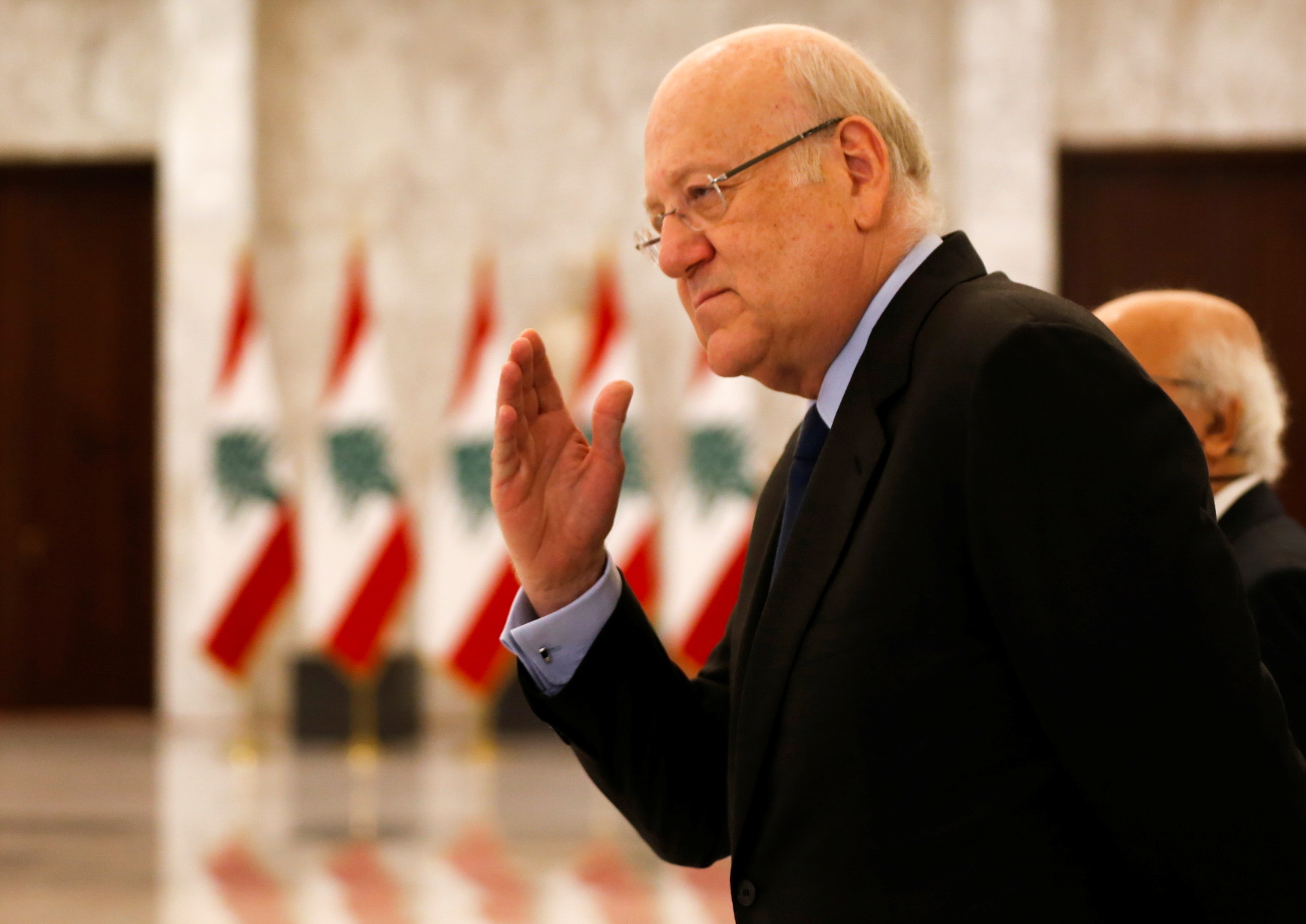
After more than a year of a political freeze, and with the most severe crisis ever to plague the Land of the Cedars in the background, billionaire Najib Mikati succeeded in forming a government. Nonetheless, little relief is expected for the citizens of Lebanon, and significant measures to ease their plight are not in the offing
INSS Insight, No. 1524, October 10, 2021
Follow us on GoogleAfter a delay of more than a year, a new government was formed in Lebanon, led by billionaire Najib Mikati. The government will be able to stem the collapse of Lebanon, which is in the midst of the worst crisis in the history of the country, only if it learns to advance the reforms demanded by the international community as a condition for the transfer of the billions of dollars that Lebanon desperately needs. But the composition of the government does not bode well for this objective, and it seems that the prospects for success are slim. The government was composed according to an old sectorial-based formula, and the ministers, most of whom lack experience in their fields of responsibility, were elected by the party leaders of the different sects and act on their behalf. For its part, Hezbollah has retained its power and ability to influence decision making. Thus far the new Prime Minister has not refrained from criticizing the organization (e.g., on the issue of fuel deliveries from Iran), but he will likely find it difficult to contain Hezbollah’s influence in the future, especially in the context of the struggle against Israel.
After more than a year, a new government was formed in Lebanon and then approved by parliament on September 20, 2021. Under the outgoing failed and paralyzed transitional government, distress and lack of governance in a bankrupt country intensified. The past two years in Lebanon have witnessed ongoing and rapid collapse, with the economic and social situation in Lebanon reaching its nadir: more than two-thirds of Lebanon’s population live below the poverty line in intolerable living conditions in the face of extreme shortages of electricity, food, medicine and healthcare, and basic consumer goods.
Billionaire Najib Mikati, one of Lebanon's economic elite (Forbes magazine estimates his fortune at about $3 billion) and the head of a small independent party, is the new/old Sunni Prime Minister (he served as Prime Minister twice previously). Mikati was able to reach an agreement on the composition of the government after the failure of two Prime Ministers appointed before him (Mustafa Adiv and Saad Hariri). His achievement is grounded in his willingness to be flexible and take into account the demands of the political leaders aligned with Hezbollah regarding the distribution of portfolios – the March 8 camp. These demands were presented by Maronite President Michel Aoun and the Christian party led by his son-in-law, Gebran Bassil (Free Patriotic Movement); and leaders of the Shiite community: Hassan Nasrallah, secretary general of Hezbollah, and Nabih Berri, head of parliament, who heads the Amal movement. These were supplemented by the understanding of the corrupt leadership of all the sects that the formation of the government can no longer be postponed, as a vital step in arresting the disintegration of Lebanon and the chaos enveloping the country.
The composition of the government, which reflects a compromise, does not signal anything new. This is purportedly a government of technocrats, primarily professionals with no political background, but this time too it was formed according to a previously determined sectorial-based formula (which does not necessarily reflect the current size of the communities in Lebanon), and the ministers are elected by the heads of the parties and act on their behalf. In the past, the formation of governments according to this method prevented decision making and led to political paralysis.
The government includes 24 ministers: 12 Christians and 12 others: five Sunnis, five Shiites, and two Druze (it includes only one woman, as opposed to the previous government, which included six). In determining the portfolios of most ministers, the experience and training in the fields in which they were appointed were not necessarily taken into account. Other considerations dominated, such as their commitment to their party and their ability to engage in dialogue with Western officials. For example, many of the ministers were educated in the West and have dual citizenship. With the announcement of the composition of the government, social media in Lebanon was rife with reactions of ridicule and skepticism as to the ability of this government to rescue Lebanon from its current dire predicament.
For its part, Hezbollah should be very pleased with the composition of the government established, even though it includes only two Hezbollah ministers. This is due to its success in maintaining its power and even strengthening its influence through the majority in the government of ministers allied with its camp – the Christian-Shiite alliance of March 8 – while weakening the rival March 14 camp, which includes the shrinking Sunni party of Saad Hariri and small Christian parties (led by Samir Geagea and Samy Gemayel), who are not represented in the government. Some Sunni ministers were appointed on behalf of Prime Minister Mikati, whose small independent Sunni party is not a member of the March 14 camp. Hezbollah's ally, President Michel Aoun, can be satisfied with the achievement – which he has insisted on throughout the past year – of guaranteeing his party a blocking third.
This time, too, the offices chosen by Hezbollah for its two ministers are those that serve the organization's interests. The Minister of Public Works and Transport, Ali Hamia, is supposed to ensure the organization's control over land, sea, and air ports. Already in his first statements, Hamia presented a tough stance on the issue of negotiations on the maritime border with Israel. The Minister of Agriculture, Abbas al-Hajj Hassan, will work to realize Nasrallah's vision to promote "agricultural jihad" in Lebanon (the development of the agricultural sector to reduce dependence on food imports). The two Hezbollah ministers were educated in France, and on the face of it both are completely inexperienced in the fields they oversee: Hamia holds a Ph.D. in electronics; and Hajj Hassan is a journalist who studied law and political science. Hezbollah also remains well-connected to the Treasury portfolio, entrusted to Yosef Khalil of the Amal Shiite movement. However, Khalil, who was educated in France, is one of the few ministers with experience in the field of his portfolio: he served as an economist at the Central Bank of Lebanon for many years.
The guidelines of the new government were presented briefly by Mikati in parliament when the government was approved (the electricity shortage is so severe that Mikati was forced to hurry due to the fear of a power outage during the session). They include a commitment to promote a national rescue plan and reforms – the Capital Control Act; reform in the banking sector while maintaining transparency and resuming negotiations with the International Monetary Fund (a team has already been set up to conduct negotiations); a promise to hold the parliamentary elections on the scheduled date in May 2022 (recently the possibility was raised of advancing them to March 2022); the intent to strengthen ties with Arab countries, who were asked to assist Lebanon; and a commitment to complete the investigation following the explosion at the port of Beirut. In the Israeli context, the government's principles include a commitment to implement Security Council Resolution 1701, but also a statement regarding the right of Lebanese citizens to oppose the Israeli occupation of Shabaa Farms (apparently a clause demanded by Hezbollah). At the same time, it intends to resume indirect negotiations with Israel on marking the maritime border “in order to protect Lebanon's borders and assets at sea.”
Hezbollah's import of Iranian fuel through Syria into Lebanon, beginning on September 16, was the first test for Mikati's government, which is interested in Western support and fears US sanctions. Mikati claimed that the move was a violation of Lebanese sovereignty (an implicit criticism of Hezbollah). In an interview with the CNN on September 17, he stressed that Lebanon should not be subject to US sanctions because it did not turn to Iran and did not agree to the fuel delivery, and that it is trying to solve the problem quietly. However, Mikati has not taken any action to stop the transfer of fuel from Iran, and it continues to arrive. Hezbollah, entrusted with the import and distribution of fuel, is strengthened as a result of this affair, and also presents its independent power of action as a "state within a state." In response to a question about Hezbollah's presence in his government, Mikati claimed that Hezbollah was a political party and could not be bypassed.
In conclusion, for the time being the formation of the new government does not mark a significant change in the main issues at hand. Halting Lebanon's deterioration is still conditional on the willingness of the elite of all the sects, which continue to hold power, to relegate the protection of their assets and status to a secondary position and allow the advancement of reforms demanded by the international community as a condition for transferring the billions of dollars in donations and loans desperately needed. Even if Mikaiti persuades the West and Arab states to help Lebanon (including by presenting a semblance of political stability, holding parliamentary elections soon, and promoting limited reforms), at best, it will be able to stop the deterioration. But it will certainly not bring about an immediate improvement in the Lebanese economy, which requires profound changes and huge long-term investments.
With regard to Israel, the new government has retained the ability of Hezbollah and its camp to influence decision making processes. It seems that Hezbollah will be able to continue operating without interruption to advance its agenda, headed by the continuation of the struggle against Israel and the strengthening of ties between Lebanon and Iran and the Shiite axis. While for the time being Prime Minister Mikati has not refrained from criticizing the organization – as evidenced with the issue of fuel imports from Iran – he will likely find it difficult to obstruct Hezbollah's progress and influence in the future, including on the question of negotiations with Israel on the maritime border, if and when they are renewed.