


Publications
How is Hezbollah's standing among the Shiite community being eroded, and what opportunities does this create?
INSS Insight No. 2152, June 10, 2026
Follow us on GoogleAs the war between Israel and Hezbollah drags on, mounting signs suggest that its severe impact on Lebanon’s Shiite population is beginning to erode support for the organization. This is particularly due to the heavy price being paid by the Shiite population — and Lebanon as a whole — as a result of Hezbollah’s war in service of Iranian interests. While Hezbollah still enjoys broad support within the Shiite sector, cracks in that support weigh heavily on the organization as it fights a war of survival under intense military, economic, and political pressure. The organization’s current distress appears to create an opportunity for the Lebanese state to assume its role as the primary authority responsible for the Shiites, though such a development remains a distant prospect. Advancing this would require a series of preconditions, including the further weakening of Hezbollah, the establishment of a stronger Lebanese army presence especially within the Shiite sphere, and the influx of billions of dollars in funding from the West and the Gulf States to enable the Lebanese government to support the Shiite population in place of Hezbollah.
The Shiite community, currently the largest sect in Lebanon, is widely regarded as the most cohesive sect in its support for the ideology of "resistance" championed by the two major Shiite movements: Hezbollah and Amal. This stands in contrast to the internal divisions and factionalism that characterize Lebanon's other major communities — Christians, Sunnis, and Druze. Of the two organizations, Hezbollah enjoys the more prominent and influential standing among the Shiite population (as opposed to Amal, which demonstrates political pragmatism and does not initiate hostilities against Israel). This is due not only to religious-ideological identification with the group, but also to its military, political, and economic power, as well as the extensive services it provides within the framework of the "state within a state" it has successfully established in Lebanon over the years.
The Shiites' dependence on Hezbollah's socio-economic support has been a key factor in securing its continued loyalty and backing. This support is further reinforced by the implicit threat against dissent; the organization routinely silences, disappears, and eliminates opposition figures from within its own community and beyond. Loyalty to the organization also aligns with the historical tradition of the Shiites as a persecuted minority, which drives them to rally behind their leadership and maintain norms of concealment and silence, operating on the principle of "not airing dirty laundry in public." As a result, until now, there has been virtually no room within the Shiite sector for open discourse or for the emergence of a significant opposition capable of challenging Hezbollah's leadership and decisions.
An apparent indication that broad Shiite support for Hezbollah remains largely intact was provided by a recent survey conducted by the Beirut-based Lebanese research and consulting firm, "Information International". Approximately 2,000 respondents from all sects participated in the survey, the results of which were published in late May 2026 by the Lebanese channel "Al-Jadeed" and other local media outlets. According to the survey, 87.5% of Shiite respondents opposed the disarmament of Hezbollah, while only 7.9% supported surrendering the organization's weapons (compared to 58.2% of respondents across all sects who supported disarmament). Regarding Israel and the possibility of changing Lebanon's relationship with it, over 90% of the Shiite respondents stated that they oppose any ties with Israel. These findings highlight the continued support of an overwhelming majority of the Shiite public for Hezbollah and its positions. At the same time, the minority of Shiite respondents who think otherwise cannot be ignored.
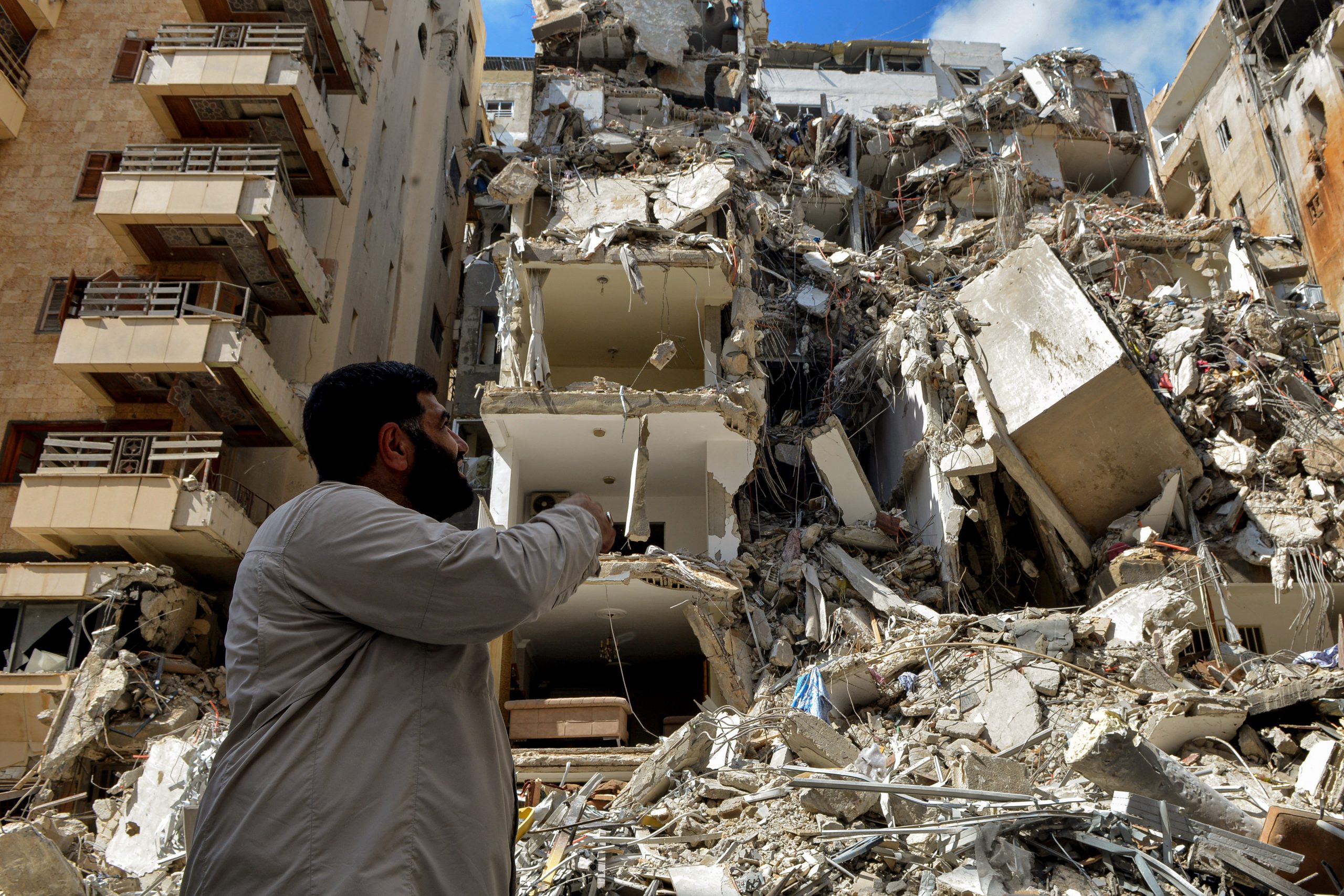
Indeed, in the wake of the current war between Israel and Hezbollah, which the organization initiated on March 2 in service of Iranian interests, mounting signs point to emerging cracks in Shiite support for Hezbollah among a population bearing the brunt of the conflict's consequences. Large segments of the Shiite community have abandoned their homes, becoming internally displaced and in need of alternative housing and daily sustenance. The Lebanese Ministry of Social Affairs has registered approximately one million displaced persons, a figure likely to increase should the IDF expand its operations deeper into Lebanese territory. About 15% of them reside in state-run shelters under severe, overcrowded conditions, while the vast majority have been forced to find other solutions. Some have rented apartments at exorbitant prices or moved in with relatives. Hundreds of thousands who have been unable to secure alternative housing have effectively become homeless, living in makeshift structures, unfinished buildings, or tents erected in public parks and along roadsides.
Due to the financial difficulties Hezbollah has faced in recent years, the organization has failed to provide meaningful assistance to this population, which — despite the organization's promises — has yet to be compensated for the damages incurred during its war of support for Hamas in 2023–2024. The Lebanese state, itself mired in a deep economic crisis that has only worsened as the war continues, has likewise been unable to meet their needs. Furthermore, UN agencies report that international fundraising efforts for the displaced have secured less than a quarter of the required amount, severely limiting the capacity to provide them with ongoing humanitarian aid.
Among the signs indicating the erosion of Shiite support for Hezbollah, the following are particularly noteworthy:
- Anti-Hezbollah sentiment on social media — Critical tweets and statements by Shiite voices on social media has become commonplace since the outbreak of what many describe as the "war in support of Iran," which has led to the "forced migration" of residents from southern Lebanon. Some view these expressions as a pressure-release valve for angry users: men who lost their livelihoods overnight, and families with children who, after being uprooted from their homes, now find themselves living on city streets while fearing permanent displacement similar to the Gaza model. Regarding this phenomenon, it could be argued that internal criticism reflects dissatisfaction with the community's deteriorating living conditions rather than a fundamental shift in ideological convictions or support for Hezbollah, and that those amplifying these views are vocal influencers who do not necessarily represent the broader Shiite public. Nevertheless, the sheer volume of such commentary — and its continued growth as the war drags on — cannot be ignored.
- The expansion of Shiite opposition movements daring to challenge the political monopoly of the traditional Shiite movements, Hezbollah and Amal — These young movements currently enjoy only limited support, but the war has emboldened them to raise their voices and publicly criticize Hezbollah and the damage it is inflicting on Lebanon. Their efforts represent attempts to establish an organized Shiite opposition — a phenomenon that first gained momentum ahead of Lebanon's May 2022 parliamentary elections, when activists sought to promote candidates independent of the two traditional Shiite parties. The most prominent groups include the "Taharour" (Self-liberation) Movement, established in October 2022, and the "Current for Change in the South." Since the outbreak of the war, additional organizations have emerged, including "Towards Salvation" (Nahwa al-Inqadh), founded in February 2025, as well as grassroots initiatives such as "Shiites Against the War" and "No to the Iranian Occupation." Activists associated with these movements express frustration and opposition to being drawn into what they view as a war that is not their own, fought in service of Iran and at a heavy cost to their community. These groups have also demonstrated a willingness to cooperate with members of Lebanon's other sectarian communities, united by a shared goal of strengthening Lebanese sovereignty and liberating the country from foreign Iranian influence. As the war continues, it is increasingly evident that Hezbollah, deprived of Hassan Nasrallah’s leadership and its impact on the Shiite population, is finding it more difficult than in the past to suppress these movements and silence their voices.
- Open opposition by Shiite tribal leaders in the Beqaa Valley to the war in service of Iran — Immediately following Hezbollah's entry into the war on March 2, the Council of Shiite Tribes in the Beqaa and Hermel regions — both longstanding Hezbollah strongholds — issued a public statement outlining its position. In this official declaration, the tribes emphasized that the Lebanese government and its legitimate institutions must serve as the sole authority in the country. They further stressed that national loyalty must belong strictly and exclusively to the Lebanese state, without partnership, subordination, or dependence on any external armed or political entity. While the tribal leaders did not explicitly call for the disarmament of Hezbollah, they expressed unprecedented support for the policies of President Joseph Aoun and Prime Minister Nawaf Salam, who are working to protect the state through Lebanon's official security institutions while subordinating all armed forces to the Lebanese Armed Forces (LAF). This represents a dramatic development, which Lebanese commentators have also highlighted as clear evidence of cracks in this population’s absolute support for Hezbollah.
- Low turnout at Hezbollah rallies marking the 26th anniversary of Israel's withdrawal from Lebanon in May 2000, referred to by Hezbollah as the "Resistance and Liberation Day" — To mark the occasion, Hezbollah Secretary-General Naim Qassem called on the Shiite public to take to the streets, oppose the ongoing talks between Israel and Lebanon, and bring down the Lebanese government. In line with this effort, Hezbollah organized a demonstration on May 26 outside government offices under the slogan "Last Warning" and urged mass participation. In practice, however, only a few hundred people attended the protest, despite the large Shiite population residing in Beirut and the thousands of displaced Shiites currently living there. An even smaller turnout was recorded at a second demonstration held in Beirut's Martyrs' Square on May 31, which attracted only a few dozen participants. In both cases, Hezbollah appeared to encounter widespread public apathy stemming from two principal factors: first, fatigue from the war initiated by the organization, which is perceived as serving Iranian interests; and second, growing opposition to Iranian involvement in Lebanon, even from within the Shiite community itself.
- The unprecedented call to declare Tyre and Nabatieh weapons-free cities — Following the IDF's capture of the Beaufort Ridge on May 31 and Israel's announced intention to press forward with its ground maneuver, dozens of elite Shiite figures from Tyre and Nabatieh called for their cities to be declared weapons-free zones. In effect, this was a public demand that Hezbollah remove its weapons and military infrastructure from these cities in order to prevent them from becoming targets of Israeli military operations. This initiative reflects growing dissatisfaction among the Shiite population in these cities with Hezbollah's use of their communities as human shields, its role in sealing their fate through its continued presence, and the heavy price it compels them to pay for objectives they do not necessarily share. These declarations deeply troubled Hezbollah, which moved quickly to pressure those behind them; however, only a limited number of individuals recanted, claiming they had either been mistaken or misled. This demand marks a significant escalation in the Shiite population's response to the war. Until now, residents had immediately complied with IDF evacuation warnings ahead of strikes, recognizing that Hezbollah was powerless to protect them. This behavior runs counter to Hezbollah's interests, which are better served when civilians remain in place and complicate IDF operations.
In conclusion, as the war between Israel and Hezbollah continues, criticism of the organization is becoming increasingly visible even within Lebanon's Shiite population, alongside accumulating signs of an erosion in their support. This is particularly evident given the exposure of Hezbollah's close ties to Iran during this war, and the fact that the Shiite public is paying a heavy price for the organization's war against Israel in service of Iranian interests — all without Hezbollah fulfilling its commitment to protect Lebanon. While the vast majority of the Shiite population still supports Hezbollah, the emerging cracks in that support among a community that has long constituted one of the organization's principal sources of power are, in our assessment, weighing heavily upon it. This poses a significant challenge for Hezbollah as it wages a war of survival under mounting pressure on multiple fronts: in its military confrontation with the IDF, on an economic level, from its many opponents across Lebanon's other sectarian communities, and from the Lebanese leadership, which is demonstrating growing determination to disarm the organization, curb Iranian influence in Lebanon, and pursue direct negotiations with Israel in total contradiction to Hezbollah's position.
Hezbollah’s current distress and its struggles vis-à-vis its base of supporters create a window of opportunity for the Lebanese state to assume the role that Hezbollah has long played as the primary provider and authority for the Shiite population, which up until now has been left to the organization's mercy. However, such a development remains a distant prospect, as achieving this goal requires a number of preconditions. These include the further military and economic weakening of Hezbollah; the establishment of the Lebanese Armed Forces (LAF) as the sovereign authority especially within the Shiite sphere; and the influx of billions of dollars from the West and the Gulf States into the hands of the Lebanese government. This funding would enable the government to rehabilitate the Shiite population and provide for all its needs, thereby distancing the community from Hezbollah and cementing its loyalty to the Lebanese state.