Israel’s Policy Toward the Gaza Strip: Strategic Alternatives | INSS
go to header go to content go to footer go to search
INSS logo The Institute for National Security Studies, Strategic, Innovative, Policy-Oriented Research, go to the home page
INSS
Tel Aviv University logo - beyond an external website, opens on a new page
  • Campus
  • Contact
  • עברית
  • Support Us
  • Research
    • Topics
      • Israel and the Global Powers
        • Israel-United States Relations
        • Glazer Israel-China Policy Center
        • Russia
        • Europe
        • Antisemitism and Delegitimization
      • Iran and the Shi'ite Axis
        • The Campaign Against Iran and the Shiite Axis
        • Iran
        • Lebanon and Hezbollah
        • Syria
        • Yemen and the Houthi Movement
        • Iraq and the Iraqi Shiite Militias
      • Conflict to Agreements
        • Israeli-Palestinian Relations
        • Hamas and the Gaza Strip
        • Peace Agreements and Normalization in the Middle East
        • Saudi Arabia and the Gulf States
        • Turkey
        • Egypt
        • Jordan
      • Israel’s National Security Policy
        • Military and Strategic Affairs
        • Societal Resilience and the Israeli Society
        • Jewish-Arab Relations in Israel
        • Climate, Infrastructure and Energy
        • Terrorism and Low Intensity Conflict
      • Cross-Arena Research
        • Data Analytics Center
        • Law and National Security
        • Advanced Technologies and National Security
        • Foreign Information Manipulation and Interference
        • Economics and National Security
    • Projects
      • Preventing the Slide into a One-State Reality
      • India-Middle East-Europe Economic Corridor (IMEC)
  • Publications
    • -
      • All Publications
      • INSS Insight
      • Policy Research and Papers
      • Special Publication
      • Strategic Assessment
      • Technology Platform
      • Memoranda
      • Posts
      • Books
      • Archive
  • Database
    • Surveys
    • Spotlight
    • Maps
    • Dashboards
  • Events
  • Team
  • About
    • Vision and Mission
    • History
    • Research Disciplines
    • Chairman of the Board
    • Board of Directors
    • Fellowship and Prizes
    • Annual Reports
    • Internships
  • Media
    • Communications
    • Video gallery
    • Press Releases
  • Podcast
  • Newsletter
  • Campus
Search in site
  • Research
    • Topics
    • Israel and the Global Powers
    • Israel-United States Relations
    • Glazer Israel-China Policy Center
    • Russia
    • Europe
    • Antisemitism and Delegitimization
    • Iran and the Shi'ite Axis
    • The Campaign Against Iran and the Shiite Axis
    • Iran
    • Lebanon and Hezbollah
    • Syria
    • Yemen and the Houthi Movement
    • Iraq and the Iraqi Shiite Militias
    • Conflict to Agreements
    • Israeli-Palestinian Relations
    • Hamas and the Gaza Strip
    • Peace Agreements and Normalization in the Middle East
    • Saudi Arabia and the Gulf States
    • Turkey
    • Egypt
    • Jordan
    • Israel’s National Security Policy
    • Military and Strategic Affairs
    • Societal Resilience and the Israeli Society
    • Jewish-Arab Relations in Israel
    • Climate, Infrastructure and Energy
    • Terrorism and Low Intensity Conflict
    • Cross-Arena Research
    • Data Analytics Center
    • Law and National Security
    • Advanced Technologies and National Security
    • Foreign Information Manipulation and Interference
    • Economics and National Security
    • Projects
    • Preventing the Slide into a One-State Reality
    • India-Middle East-Europe Economic Corridor (IMEC)
  • Publications
    • All Publications
    • INSS Insight
    • Policy Research and Papers
    • Special Publication
    • Strategic Assessment
    • Technology Platform
    • Memoranda
    • Posts
    • Books
    • Archive
  • Database
    • Surveys
    • Spotlight
    • Maps
    • Dashboards
  • Events
  • Team
  • About
    • Vision and Mission
    • History
    • Research Disciplines
    • Chairman of the Board
    • Board of Directors
    • Fellowship and Prizes
    • Internships
    • Annual Reports
    • Privacy Policy and Terms of Use
  • Media
    • Communications
    • Video gallery
    • Press Releases
  • Podcast
  • Newsletter
  • Campus
  • Contact
  • עברית
  • Support Us
bool(false)

Publications

Home Publications Memoranda Israel’s Policy Toward the Gaza Strip: Strategic Alternatives

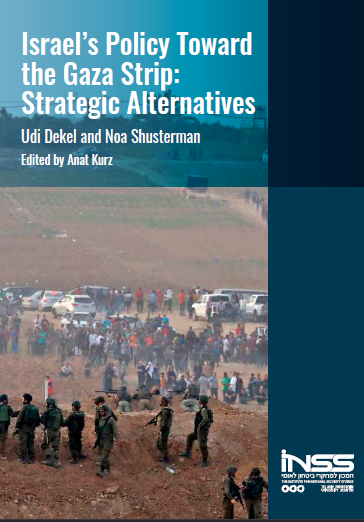
Israel’s Policy Toward the Gaza Strip: Strategic Alternatives

The Institute for National Security Studies, April 2020

Follow us on Google
עברית
Udi Dekel
Noa Shusterman

The Gaza Strip has been in an ongoing crisis since the Israeli disengagement from Gaza in 2005, especially since Hamas took over the territory by force. The situation in Gaza is characterized by economic, social, and infrastructural distress—verging on a humanitarian crisis—and influenced by the political rivalry and struggle for leadership of the Palestinian camp between Hamas on one hand, and Fatah and the Palestinian Authority on the other. Hamas’s inability to provide for the needs of Gaza’s population serves as a motivating factor for its belligerent tendencies and for military escalation between Israel and Hamas and the other terrorist groups active in Gaza. Hamas’s comprehensive and stable control of the territory, along with its proven ability to cause damage, has led to unofficial Israeli recognition of Hamas as the sole body responsible for the Gaza Strip.


Editor: Anat Kurz

Three rounds of fighting between Israel and Hamas (2009, 2012, and 2014) have caused wide-scale destruction of civilian infrastructure in Gaza, and socioeconomic collapse of Gaza has continued since then. Israel has imposed a closure on Gaza, which severely restricts the passage of goods and people in and out of the territory. In addition, in recent years, the Palestinian Authority has significantly reduced the transfer of money and has been unwilling to cooperate with the Hamas government.

The increasing distress in Gaza, the sense of being imprisoned, and its lack of a political horizon have made it easy for Hamas to direct the rage of the masses toward Israel; for the past two years, it has been expressed by the “Great March of Return” demonstrations organized along the fence and by constantly harassing the Israeli communities near Gaza with rocket fire, mortar shells, explosive balloons, incendiary kites, and attack drones. In addition, Hamas occasionally has initiated controlled escalation against Israel as a way of trying to force Israel to reduce the pressure on Gaza and to place the blame on Israel for Gaza’s distress.

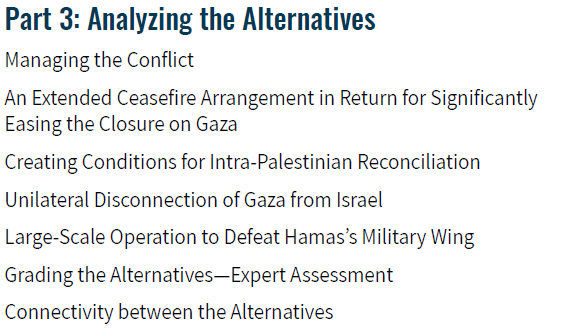
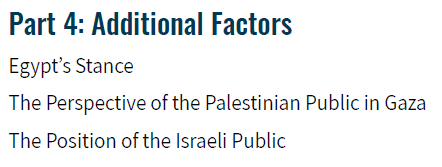
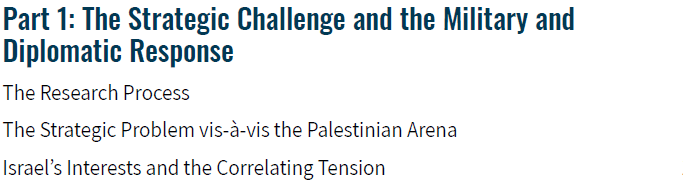
In order to address the challenge that the Gaza Strip poses—due to its dark future, the negative consequences for Israel’s security, as well as the deteriorating sense of personal safety in communities near the southern border and beyond—the Institute for National Security Studies (INSS) created a professional research group for the purpose of suggesting policy that meets the State of Israel’s diplomatic and defense objectives while relieving the severe problem of the Gaza Strip. During the process of analyzing and formulating recommendations, five main alternatives were examined—most of which have been raised in the public and military discourse—under the lens of how they serve and advance Israel’s interests. This document summarizes the deliberations and research process and imparts the main insights found.

On January 28, 2020, after this study was first published, President Donald Trump revealed his peace plan, also referred to as the “Deal of the Century.” According to Trump’s plan, the solution for Gaza requires that Hamas and the other terrorist organizations should be disarmed, Gaza should be demilitarized, and the Palestinian Authority should regain control over the territory. Over the past decade, multiple international bodies attempted to advance these objectives, offering economic and political incentives, yet none reached a breakthrough. In the foreseeable future, under the premise that a drastic political change in the Palestinian arena is unlikely to occur, fulfilling the objectives presented in the plan does not seem probable, while the problem of Gaza will not disappear or dwindle. The political division between the Gaza Strip and the West Bank and between Fatah and Hamas will not change in response to the “Deal of the Century.” For this reason, Israel should continue to pursue a deliberate strategy to tackle the challenge of the Gaza Strip, while taking into account the overall context of the Palestinian arena.

The researchers who participated in the research group specialize in topics related to the Palestinian and regional arenas and have many years of experience dealing with the Israeli-Palestinian conflict. Some of them were active participants in recent decades in the rounds of negotiations and various talks with the Palestinians. The members of the team were Dr. Kobi Michael, Col. (res.), Adv. Pnina Sharvit Baruch, Mr. Yohanan Tzoreff, Dr. Anat Kurz, Brig. Gen. (ret.) Shlomo Brom, Lt. Colonel (ret.) Orna Mizrahi, Ms. Ruth Pines, Ambassador Dr. Oded Eran, Col. (res.) Adv. Gilead Sher, Brig. Gen. (res.) Assaf Orion, Ms. Noa Shusterman, and Brig. Gen. (res.) Udi Dekel.



The opinions expressed in INSS publications are the authors’ alone.
Publication Series Memoranda
TopicsHamas and the Gaza StripIsraeli-Palestinian RelationsTrump Peace Plan
עברית

Events

All events
Israel’s National Security Conference
27 July, 2026
10:00 - 14:00

Related Publications

All publications
Live Dashboard: The Gaza Strip
This situation report presents data regarding security incidents in the Gaza Strip since the outbreak of the “Swords of Iron” War. The data includes the scope of launches and alerts carried out by Hamas, Israeli and foreign fatalities, data regarding the hostages, data following the IDF’s ground maneuver, humanitarian aid, the economic situation in Gaza, and more. The data is based on official sources and open-source intelligence (OSINT) collection and is updated on an ongoing basis.
13/08/26
Hamas Disarmament Agreement: Motives, Core Elements, and Obstacles
What does the agreement dubbed "historic" by the U.S. President include, what are the main obstacles to its implementation – and how should Israel act?
03/08/26
REUTERS / Mohammed Salem
The Gaza Strip: Possible Directions for Breaking the Stalemate
How should Israel implement the necessary effort to disarm Hamas?
14/06/26

Stay up to date

Registration was successful! Thanks.
  • Research

    • Topics
      • Israel and the Global Powers
      • Israel-United States Relations
      • Glazer Israel-China Policy Center
      • Russia
      • Europe
      • Antisemitism and Delegitimization
      • Iran and the Shi'ite Axis
      • The Campaign Against Iran and the Shiite Axis
      • Iran
      • Lebanon and Hezbollah
      • Syria
      • Yemen and the Houthi Movement
      • Iraq and the Iraqi Shiite Militias
      • Conflict to Agreements
      • Israeli-Palestinian Relations
      • Hamas and the Gaza Strip
      • Peace Agreements and Normalization in the Middle East
      • Saudi Arabia and the Gulf States
      • Turkey
      • Egypt
      • Jordan
      • Israel’s National Security Policy
      • Military and Strategic Affairs
      • Societal Resilience and the Israeli Society
      • Jewish-Arab Relations in Israel
      • Climate, Infrastructure and Energy
      • Terrorism and Low Intensity Conflict
      • Cross-Arena Research
      • Data Analytics Center
      • Law and National Security
      • Advanced Technologies and National Security
      • Foreign Information Manipulation and Interference
      • Economics and National Security
    • Projects
      • Preventing the Slide into a One-State Reality
      • India-Middle East-Europe Economic Corridor (IMEC)
  • Publications

    • All Publications
    • INSS Insight
    • Policy Research and Papers
    • Special Publication
    • Strategic Assessment
    • Technology Platform
    • Memoranda
    • Database
    • Posts
    • Books
    • Archive
  • About

    • Vision and Mission
    • History
    • Research Disciplines
    • Chairman of the Board
    • Board of Directors
    • Fellowship and Prizes
    • Internships
    • Annual Reports
    • Support
    • Privacy Policy and Terms of Use
  • Media

    • Communications
    • Video Gallery
    • Press Release
    • Podcast
  • Home

  • Events

  • Database

  • Team

  • Contact

  • Newsletter

  • עברית

INSS logo The Institute for National Security Studies, Strategic, Innovative, Policy-Oriented Research, go to the home page
40 Haim Levanon St. Tel Aviv, 6997556 Israel | Tel 03-640-0400 | Fax 03-744-7590 |
Developed by Daat ,Yael Group.
Accessibility Statement
This site is protected by reCAPTCHA and the Google Privacy Policy and Terms of Service apply.