


Israel, the United States, and the Struggle over the Settlement Construction Freeze, 2009-2010 | INSS
go to header go to content go to footer go to search
INSS logo The Institute for National Security Studies, Strategic, Innovative, Policy-Oriented Research, go to the home page
INSS
Tel Aviv University logo - beyond an external website, opens on a new page
  • Campus
  • Contact
  • עברית
  • Support Us
  • Research
    • Topics
      • Israel and the Global Powers
        • Israel-United States Relations
        • Glazer Israel-China Policy Center
        • Russia
        • Europe
        • Antisemitism and Delegitimization
      • Iran and the Shi'ite Axis
        • The Campaign Against Iran and the Shiite Axis
        • Iran
        • Lebanon and Hezbollah
        • Syria
        • Yemen and the Houthi Movement
        • Iraq and the Iraqi Shiite Militias
      • Conflict to Agreements
        • Israeli-Palestinian Relations
        • Hamas and the Gaza Strip
        • Peace Agreements and Normalization in the Middle East
        • Saudi Arabia and the Gulf States
        • Turkey
        • Egypt
        • Jordan
      • Israel’s National Security Policy
        • Military and Strategic Affairs
        • Societal Resilience and the Israeli Society
        • Jewish-Arab Relations in Israel
        • Climate, Infrastructure and Energy
        • Terrorism and Low Intensity Conflict
      • Cross-Arena Research
        • Data Analytics Center
        • Law and National Security
        • Advanced Technologies and National Security
        • Foreign Information Manipulation and Interference
        • Economics and National Security
    • Projects
      • Preventing the Slide into a One-State Reality
      • India-Middle East-Europe Economic Corridor (IMEC)
  • Publications
    • -
      • All Publications
      • INSS Insight
      • Policy Research and Papers
      • Special Publication
      • Strategic Assessment
      • Technology Platform
      • Memoranda
      • Posts
      • Books
      • Archive
  • Database
    • Surveys
    • Spotlight
    • Maps
    • Dashboards
  • Events
  • Team
  • About
    • Vision and Mission
    • History
    • Research Disciplines
    • Chairman of the Board
    • Board of Directors
    • Fellowship and Prizes
    • Annual Reports
    • Internships
  • Media
    • Communications
    • Video gallery
    • Press Releases
  • Podcast
  • Newsletter
  • Campus
Search in site
  • Research
    • Topics
    • Israel and the Global Powers
    • Israel-United States Relations
    • Glazer Israel-China Policy Center
    • Russia
    • Europe
    • Antisemitism and Delegitimization
    • Iran and the Shi'ite Axis
    • The Campaign Against Iran and the Shiite Axis
    • Iran
    • Lebanon and Hezbollah
    • Syria
    • Yemen and the Houthi Movement
    • Iraq and the Iraqi Shiite Militias
    • Conflict to Agreements
    • Israeli-Palestinian Relations
    • Hamas and the Gaza Strip
    • Peace Agreements and Normalization in the Middle East
    • Saudi Arabia and the Gulf States
    • Turkey
    • Egypt
    • Jordan
    • Israel’s National Security Policy
    • Military and Strategic Affairs
    • Societal Resilience and the Israeli Society
    • Jewish-Arab Relations in Israel
    • Climate, Infrastructure and Energy
    • Terrorism and Low Intensity Conflict
    • Cross-Arena Research
    • Data Analytics Center
    • Law and National Security
    • Advanced Technologies and National Security
    • Foreign Information Manipulation and Interference
    • Economics and National Security
    • Projects
    • Preventing the Slide into a One-State Reality
    • India-Middle East-Europe Economic Corridor (IMEC)
  • Publications
    • All Publications
    • INSS Insight
    • Policy Research and Papers
    • Special Publication
    • Strategic Assessment
    • Technology Platform
    • Memoranda
    • Posts
    • Books
    • Archive
  • Database
    • Surveys
    • Spotlight
    • Maps
    • Dashboards
  • Events
  • Team
  • About
    • Vision and Mission
    • History
    • Research Disciplines
    • Chairman of the Board
    • Board of Directors
    • Fellowship and Prizes
    • Internships
    • Annual Reports
    • Privacy Policy and Terms of Use
  • Media
    • Communications
    • Video gallery
    • Press Releases
  • Podcast
  • Newsletter
  • Campus
  • Contact
  • עברית
  • Support Us
bool(false)

Publications

Home Publications Books Israel, the United States, and the Struggle over the Settlement Construction Freeze, 2009-2010

Israel, the United States, and the Struggle over the Settlement Construction Freeze, 2009-2010

Tel Aviv: Institute for National Security Studies, 2017

Follow us on Google
עברית
Zaki Shalom
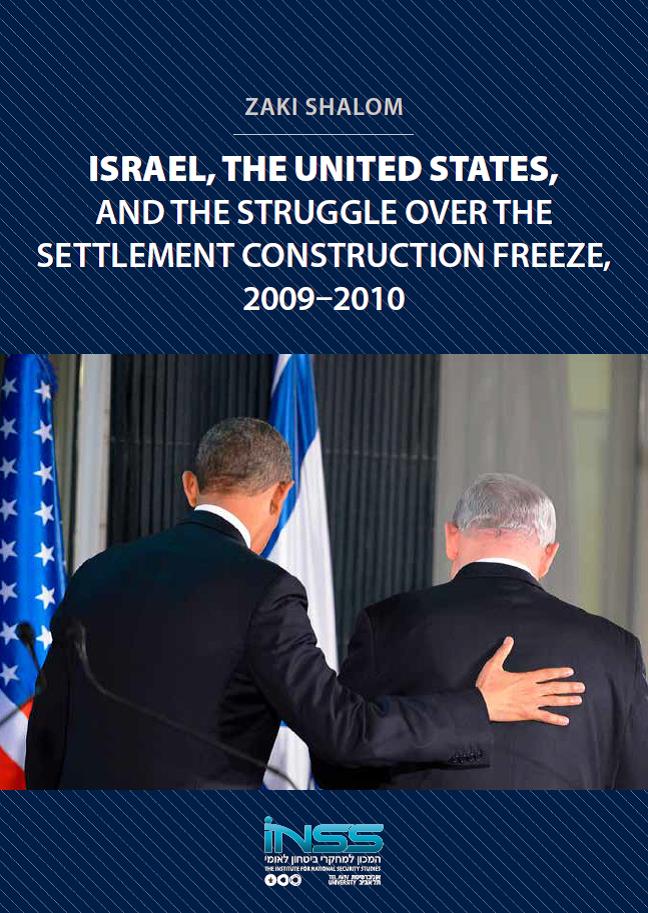
US President Barack Obama (L) speaks and Israeli Prime Minister Benjamin Netanyahu make their way from a joint press conference following a bilateral meeting at the Prime Minister's residence in Jerusalem on March 20, 2013. Obama said Israel and the United States are to

Israel, the United States, and the Struggle over the Settlement Construction Freeze, 2009-2010 sketches the long and winding road President Barack Obama took during his first two years in office to bring about an Israel-Palestinian agreement. Based on a wide range of sources and the testimony of senior members of the US administration and the Israeli government, the book describes how US-Israel relations deteriorated to the verge of a severe crisis. The author analyzes the reasons and constraints that kept an agreement from being advanced, contrary to the hopes of the new president.


When he assumed office, President Obama lent his weight and prestige to jumpstart a process that would lead to an Israeli-Palestinian agreement, shunning the advice of many within and outside his administration who argued that the gaps between the sides were too wide to allow a comprehensive agreement. Obama mistakenly believed that his international stature and pressure from the administration would force the sides to accept his outline. On the brink of a substantive rift between Israel and the United States, the president ultimately accepted a compromise on the issue of construction in the West Bank settlements. This opened the door to a limited thaw in United States-Israel relations.

With detailed precision, the book presents the events surrounding President Obama’s initiative for an Israeli-Palestinian agreement, including the Cairo speech, Prime Minister Netanyahu’s speech at Bar Ilan University, the crisis during Vice President Biden’s visit to Israel, and the eventual formulation of understandings on construction in the settlements. While President Obama’s efforts did not advance an Israeli-Palestinian agreement, the parties grew more deeply cognizant of their constraints and the limits of their power.

Click here for the full text

The opinions expressed in INSS publications are the authors’ alone.
Publication Series Books
TopicsIsrael-United States Relations
עברית

Events

All events
Israel’s National Security Conference
27 July, 2026
10:00 - 14:00

Related Publications

All publications
Generated with AI
Deepening the Divide: Majority among U.S. House Democrats Supports Halting Military Aid to Israel
A majority of House Democrats supported a proposal to immediately halt the $3.3 billion in annual funding for military procurement guaranteed to Israel. What are the implications of this troubling development ahead of the November midterm elections?
16/07/26
REUTERS and U.S. Air Force photo by Master Sgt. Donald R. Allen (modified by INSS)
The Engine and F-35 Aircraft Deal for Turkey: Implications for the Regional and Global Balance of Power
The current U.S. administration is advancing a major deal, valued at over $700 million, to sell F110 engines to Turkey for its KAAN aircraft project. Despite the administration’s attempts to bypass congressional barriers, this move is not an isolated event; rather, it is a strategic accelerator intended to pave the way for Ankara’s full return to the F-35 program. While Washington’s rationale seeks to preserve Turkey as an anchor within NATO, in practice, it creates a serious dilemma and presents a weighty, threefold strategic risk: Undermining NATO from within: Empowering an actor that is engaged in aggressive competition against Western allies (such as Greece) and is entrenching a defiant military presence in Cyprus. Fueling Regional Friction: Granting legitimacy to a competitive power that provides a safe haven for Hamas and supports the al-Sharaa regime in Syria. Creating a Systemic Risk to the Global F-35 Network: Deploying 5th-generation capabilities in proximity to Russian S-400 systems risks compromising and cracking the information security of the platform as a whole. This threat is not limited to the erosion of Israel’s qualitative edge or the exposure of its defense industries; it constitutes a direct threat to every country in the world equipped with the F-35, alongside concerns over the possible proliferation of KAAN aircraft to additional militaries across the Sunni sphere.
15/07/26
U.S.–Israel Alliance as a Litmus Test: The Democratic Primaries and the Struggle over the Party’s Future
The stance on Israel has emerged as a key test at the ballot box during the Democratic primaries. How does this manifest, how does it impact Washington-Jerusalem relations, and does Israel have any recourse?
13/07/26

Stay up to date

Registration was successful! Thanks.
  • Research

    • Topics
      • Israel and the Global Powers
      • Israel-United States Relations
      • Glazer Israel-China Policy Center
      • Russia
      • Europe
      • Antisemitism and Delegitimization
      • Iran and the Shi'ite Axis
      • The Campaign Against Iran and the Shiite Axis
      • Iran
      • Lebanon and Hezbollah
      • Syria
      • Yemen and the Houthi Movement
      • Iraq and the Iraqi Shiite Militias
      • Conflict to Agreements
      • Israeli-Palestinian Relations
      • Hamas and the Gaza Strip
      • Peace Agreements and Normalization in the Middle East
      • Saudi Arabia and the Gulf States
      • Turkey
      • Egypt
      • Jordan
      • Israel’s National Security Policy
      • Military and Strategic Affairs
      • Societal Resilience and the Israeli Society
      • Jewish-Arab Relations in Israel
      • Climate, Infrastructure and Energy
      • Terrorism and Low Intensity Conflict
      • Cross-Arena Research
      • Data Analytics Center
      • Law and National Security
      • Advanced Technologies and National Security
      • Foreign Information Manipulation and Interference
      • Economics and National Security
    • Projects
      • Preventing the Slide into a One-State Reality
      • India-Middle East-Europe Economic Corridor (IMEC)
  • Publications

    • All Publications
    • INSS Insight
    • Policy Research and Papers
    • Special Publication
    • Strategic Assessment
    • Technology Platform
    • Memoranda
    • Database
    • Posts
    • Books
    • Archive
  • About

    • Vision and Mission
    • History
    • Research Disciplines
    • Chairman of the Board
    • Board of Directors
    • Fellowship and Prizes
    • Internships
    • Annual Reports
    • Support
    • Privacy Policy and Terms of Use
  • Media

    • Communications
    • Video Gallery
    • Press Release
    • Podcast
  • Home

  • Events

  • Database

  • Team

  • Contact

  • Newsletter

  • עברית

INSS logo The Institute for National Security Studies, Strategic, Innovative, Policy-Oriented Research, go to the home page
40 Haim Levanon St. Tel Aviv, 6997556 Israel | Tel 03-640-0400 | Fax 03-744-7590 |
Developed by Daat ,Yael Group.
Accessibility Statement
This site is protected by reCAPTCHA and the Google Privacy Policy and Terms of Service apply.