


Publications
Between reducing military presence and preserving political influence: The emerging regional order and the test for Israel
INSS Insight No. 2206, October 29, 2026
Follow us on GoogleThe war with Iran has sharpened the tension between the objectives of U.S. policy in the Middle East. Washington seeks to reduce its permanent military presence in the region and transfer greater responsibility to its allies, yet finds itself compelled to commit substantial military resources to address the ramifications of the war and preserve regional stability. The campaign illustrates that reducing the permanent deployment of forces does not guarantee a reduction in the costs of U.S. involvement, particularly when crises require the prolonged commitment of large forces. Moreover, military superiority does not guarantee that political objectives will be achieved or that a regional order aligned with U.S. interests can be shaped. At the same time, Middle Eastern states, and particularly the Gulf states, continue a hedging strategy that began before the war: they are expanding cooperation among themselves and seeking to reduce their exclusive dependence on the United States, without relinquishing the security umbrella it provides. The outcome may well be a shift toward a leaner, more flexible model of U.S. engagement, alongside the emergence of a regional order in which Washington wields less influence over its partners’ decisions. For Israel, the emerging reality presents both an opportunity to expand its contribution to regional security, and the risk of being left out of new regional frameworks if it fails to translate its military strength into security and diplomatic cooperation.
The ongoing war with Iran is testing the concept of U.S. involvement in the Middle East. The Trump administration seeks to preserve the United States’ position as the region’s leading power, while reducing its permanent military presence, transferring security responsibilities to its partners, and freeing up resources for global competition, first and foremost vis-à-vis China. This aspiration continues a trend initiated under previous administrations, but the war underscores the difficulties involved in realizing it: even a reduced military deployment sometimes requires a substantial commitment of resources; military gains do not necessarily translate into stable political arrangements; and transferring responsibility to regional partners may strengthen their autonomy at the expense of Washington’s influence. The American test, then, will be whether it can reduce the scale and cost of its involvement while preserving deterrence, its commitment to its allies, and its ability to influence the shaping of the regional order.
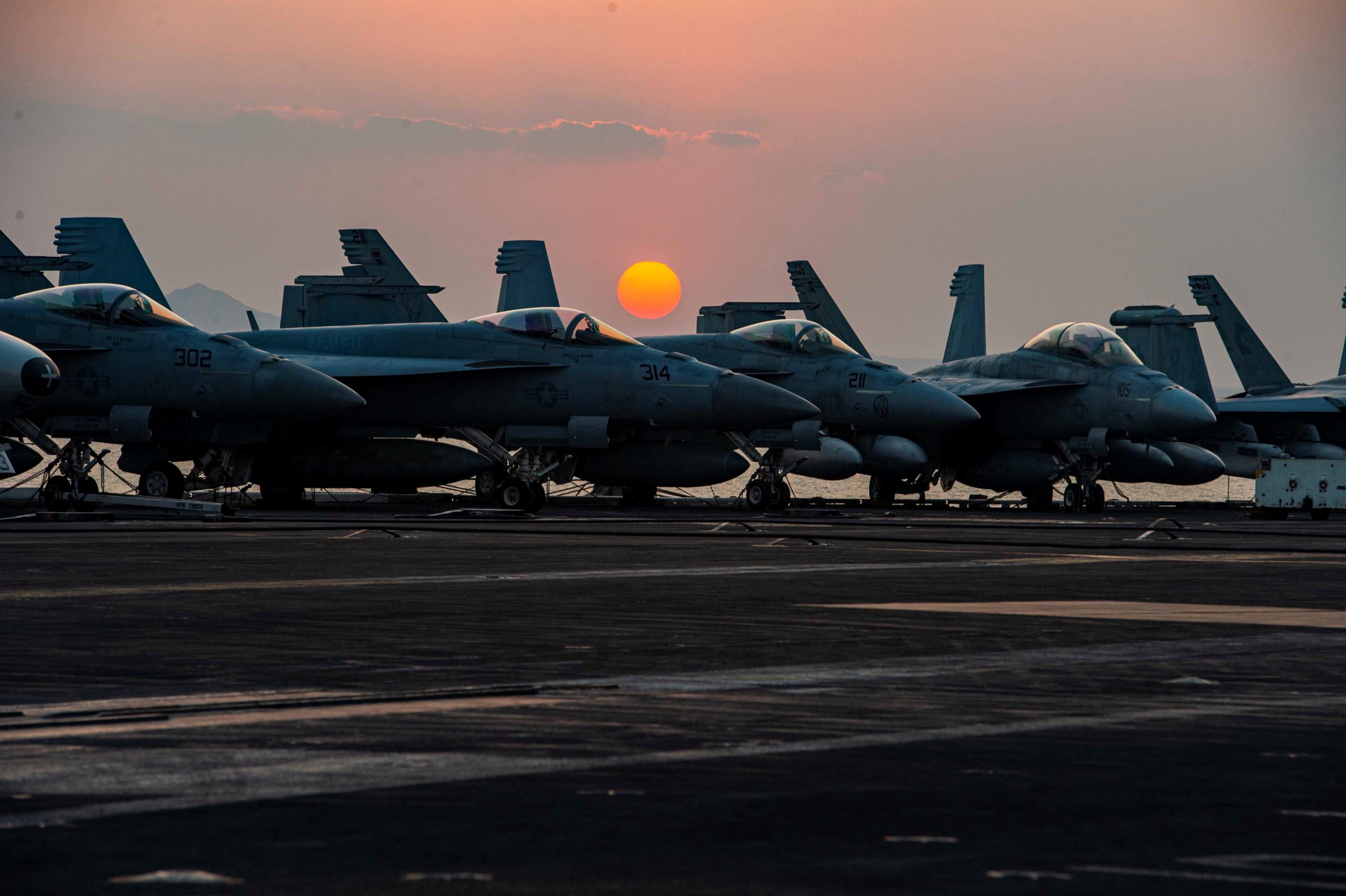
At first glance, the scale of U.S. military involvement in the war appears at odds with the trend toward reducing its permanent presence in the region. The United States finds itself compelled to deploy substantial naval and air assets across the Middle East, committing air- and missile-defense systems, munitions, intelligence, and logistical resources. The effort to ensure freedom of navigation in the Strait of Hormuz clearly illustrates both U.S. military strength and the cost of deploying it. Iran has recently stepped up attacks on maritime vessels in the strait and expanded its activity in adjacent areas. These developments indicate that, even with relatively limited means, Iran can continue to disrupt maritime commerce and make it more difficult to ensure freedom of navigation. Consequently, safeguarding regular transit over time requires the sustained allocation of military assets and defensive capabilities that are also needed in other theaters.
The campaign has also highlighted the gap between U.S. military gains and its ability to achieve its political objectives. Despite the severe blow dealt to Iran, the regime remains intact, and the threat it poses to regional states and freedom of navigation has not been eliminated; in some respects, it has even grown. The collapse of the memorandum of understanding reached in June with Pakistani mediation underscored the difficulty of translating military gains into a stable arrangement. Rather than enabling Washington to scale back its direct involvement, the breakdown of the arrangement forced it to ramp up its military operations in the Gulf once again. In doing so, it exposed a central limitation of the American model: in the absence of an effective political arrangement, responsibility for maintaining stability ultimately falls back on the United States.
From Direct Involvement to Burden-Sharing
At the same time as this major military effort, however, a seemingly contradictory trend is unfolding: the permanent military footprint of the United States in the region is actually contracting. In late September, the United States completed the withdrawal of its forces from the counter-ISIS coalition mission in Iraq, transferring primary responsibility for confronting the remnants of ISIS and pro-Iranian militias to the Iraqi government. The headquarters of the counter-ISIS task force was relocated to Jordan. In Syria, a process of reducing and consolidating forces had begun even earlier, and the al-Tanf base was evacuated in February.
Alongside political considerations, operational constraints are also shaping changes to the deployment of U.S. forces in the region. The war highlighted the vulnerability of major U.S. bases in the Gulf to Iranian missile and drone strikes. Even before the campaign began, forces and personnel were shifted and redeployed among bases, without a broad withdrawal of the U.S. presence. The Pentagon is currently considering whether to leave certain damaged installations unrepaired, while re-evaluating the broader base model and structural layout of U.S. deployment in the region. In this context, Admiral Daryl Caudle, the U.S. Navy’s chief of naval operations, said that, given the significant damage to the U.S. naval base in Bahrain, which serves as the headquarters of the Fifth Fleet, Navy personnel were not expected to return to the facility “anytime soon.”
This does not necessarily signal an American retreat from the Middle East. Rather, a different model may be taking shape: fewer large, permanent forces and bases, paired with greater dispersal, mobility, reliance on maritime and aerial power, and the capacity to rapidly deploy a large force into the arena when required. This new model is not necessarily less expensive: the ability to rapidly deploy forces, protect regional partners, and conduct a prolonged campaign demands significant investment in resources and military capabilities.
Recent remarks by U.S. envoy Tom Barrack, that the United States is not abandoning the Middle East but cannot continue to serve as the region’s sole security guarantor, reflect this view. Such a model can work only if it is underpinned by effective burden-sharing with allies. Burden-sharing is therefore becoming a strategic necessity, rather than merely a political slogan. The United States can continue providing capabilities that remain difficult to substitute—intelligence, command-and-control, logistics, air and missile defense, naval and air power, and surge reinforcement—while regional partners will be expected to assume greater responsibility for their own defense and for addressing local threats. Nonetheless, the Gulf states are neither capable of, nor, in some instances, willing to bear the full burden of defending themselves against Iran. Burden-sharing, therefore, cannot replace credible U.S. security guarantees.
The renewed campaign in Yemen may prove an important test of this approach. Yemeni forces backed by Saudi Arabia have launched a military operation against the Houthis, with Riyadh providing extensive air support, while the United States provides intelligence, planning assistance, targeting, and even logistical backing, but are so far refraining from direct participation in the strikes. If local forces and Saudi Arabia achieve their objectives with limited U.S. support, Washington may see this as proof that the model works. However, if the operation fails, or if the Houthis continue to threaten the Kingdom and the Bab el-Mandeb Strait, the United States will face a dilemma: whether to deepen its direct involvement once again, or accept an outcome that runs counter to its own interests and those of its allies. The severe damage inflicted on Saudi Arabia has already increased pressure on the administration to intervene and raised questions about the United States’ credibility as a defender of its partners.
At the same time, reports have emerged of an understanding between Saudi Arabia and the United Arab Emirates to renew cooperation in the campaign against the Houthis, and Egypt’s president has expressed willingness to help defend the kingdom if asked, subject to parliamentary approval. These developments point to an effort to broaden the regional response to the Houthi threat, yet it remains unclear to what extent states in the region will be able to address this threat without deeper U.S. involvement.
This is where the "burden-sharing trap" comes into sharp focus: if partners fail to counter threats on their own, Washington may have to return to the theater, sometimes at a steeper cost. Yet their success may likewise reduce their dependence on the United States and its ability to influence their decisions. Thus, a policy designed to lower the costs of U.S. engagement while preserving American influence risks undermining one of its own central objectives.
The dilemma is compounded by the fact that Washington is asking its partners to assume greater security responsibility just as their confidence in its willingness and ability to protect them in a crisis is weakening. For Gulf states, a reduced U.S. military presence raises concerns that Washington’s commitment to their security may be waning. This apprehension is amplified by the administration's rhetoric, frequent policy shifts, and inconsistent messaging from senior officials. Added to this are internal disagreements among the Gulf states themselves and the absence of a binding mutual security guarantee, both of which hinder the formation of a unified regional response to the Iranian threat.
Against this backdrop, the Gulf states’ prewar hedging policy continues and deepens: preserving their alliance with Washington, building independent military capabilities, expanding cooperation with Turkey and Pakistan, developing ties with China, and maintaining channels with Iran. The security arrangement between Saudi Arabia, Turkey, and Pakistan, alongside discussions regarding defensive assistance to Riyadh following Houthi attacks, illustrates this trend. For the Gulf states, dealing with an Iran that has been weakened but remains dangerous requires a combination of deterrence and careful management of relations with Tehran, in order to prevent a renewed escalation that could threaten their security and economies.
These new regional arrangements do not necessarily represent the realization of the American concept of burden-sharing. Unlike burden-sharing within a Washington-led regional architecture, some of these arrangements reflect a trend toward more autonomous regionalization. This trend stems, among other factors, from doubts regarding the U.S. commitment and the desire of regional states to expand their room for maneuver. This means that Washington’s partners may demand greater influence over shaping the regional agenda, forge security arrangements not led by the United States, and pursue an independent policy toward Iran, even when that policy does not align with U.S. preferences. A similar dilemma exists in U.S. relations with its European allies; however, in the Middle East, the absence of institutionalized regional security frameworks and the rifts among partners compound the challenge confronting the United States.
Israel: Between Military Asset and Diplomatic Constraints
Israel, too, is likely to face a new test within this shifting landscape. From Washington’s perspective, Israel is well suited to the burden-sharing model: it has significant intelligence, offensive, and defensive capabilities and can act independently against Iran and its proxies. As the United States seeks to rely more heavily on regional partners, Israel’s potential to serve as a force multiplier for U.S. policy will grow. However, Israel’s strengthened military standing in Washington’s eyes does not guarantee an improvement in its political standing in the region. Reservations among some Arab partners about the consequences of Israel’s military actions may instead make it harder to integrate Israel into regional security frameworks.
The war has sharpened concerns that regional states may bear the costs of military decisions in which they had no part. Criticism has also emerged in U.S.-Saudi relations that Riyadh was not a significant participant in the decisions that led to the war, despite its far-reaching security and economic consequences for Saudi Arabia.
For Israel, military strength alone is therefore not enough. It must translate that strength into a tangible contribution to regional security, including early warning, intelligence, missile and UAV defense, and maritime security. At the same time, it must convince Arab partners that cooperation with Israel improves their security rather than increasing the risks they face. Israel cannot replace the U.S. strategic umbrella, but it can become a significant part of a system that enables the United States to shoulder less of the burden itself.
Integrating Israel into a regional security architecture also requires favorable diplomatic conditions. This is especially vital given the prospect of advancing normalization with Saudi Arabia. Presenting a credible political horizon on the Palestinian issue could give Arab states the room to deepen cooperation with Israel. Without this component, Israel may remain a key U.S. security partner while finding itself sidelined from some of the emerging regional frameworks. Alongside deeper security cooperation, a diplomatic effort is therefore needed to enable Arab states to expand their ties with Israel without incurring excessively high political and security costs.
The Global Cost of U.S. Involvement
The cost of U.S. involvement in the Middle East extends beyond the number of forces stationed in the region. The campaign carries economic and political costs, puts pressure on energy prices and the defense budget, and requires the sustained allocation of military resources that are also needed in other theaters: air-defense systems and interceptors, aircraft carriers, aircraft, intelligence capabilities, and logistics. The depletion of air-defense stockpiles during the campaign has already raised questions regarding the United States' ability to sustain munitions-intensive operations across multiple theaters simultaneously.
The connection to China, then, is not indirect. This does not mean that every force directed to the Middle East is automatically taken away from the Indo-Pacific. But the longer the campaign continues, the more it competes for operational readiness, munitions, assets, and strategic attention. If preserving the regional order requires the repeated deployment of large U.S. forces, it will be harder for Washington to pursue the priority it has assigned to competition with China. At the same time, Beijing’s expanding economic and political ties with countries in the region may increase its influence, even if it cannot replace the United States as the primary security guarantor. Thus, the very reduction in U.S. involvement intended to allow Washington to focus on competition with China could expand China’s room for maneuver in the Middle East.
Conclusion
The result may be a more selective U.S. policy. Rather than choosing between “withdrawal” and a “return” to the Middle East, Washington may define more clearly the interests it is prepared to defend directly—freedom of navigation, the security of U.S. forces, the defense of allies against strategic threats, and preventing a radical shift in the regional balance—while shifting greater responsibility for other threats onto regional partners. Implementing this approach will require sufficient military power, consistent messaging, credible commitments, and the ability to persuade Washington’s partners that a reduced presence does not signal a weakening of its commitment to their security.
In the aftermath of the war, the United States’ ability to reduce its military presence and the cost of its involvement while preserving its influence over the shaping of the regional order will be put to the test. The challenge is that progress toward one goal—reducing the military burden, strengthening partners’ independence, or redirecting resources to competition with China—may make it harder to achieve the others.
For Israel, this means that its strengthened position as a U.S. security partner is no substitute for political integration into the region. Washington’s ability to manage these contradictions will have a significant impact on the pattern of its involvement in the Middle East in the years ahead, while Israel’s ability to integrate into the emerging regional order will determine its place in that order and its contribution to shaping it.