


Publications
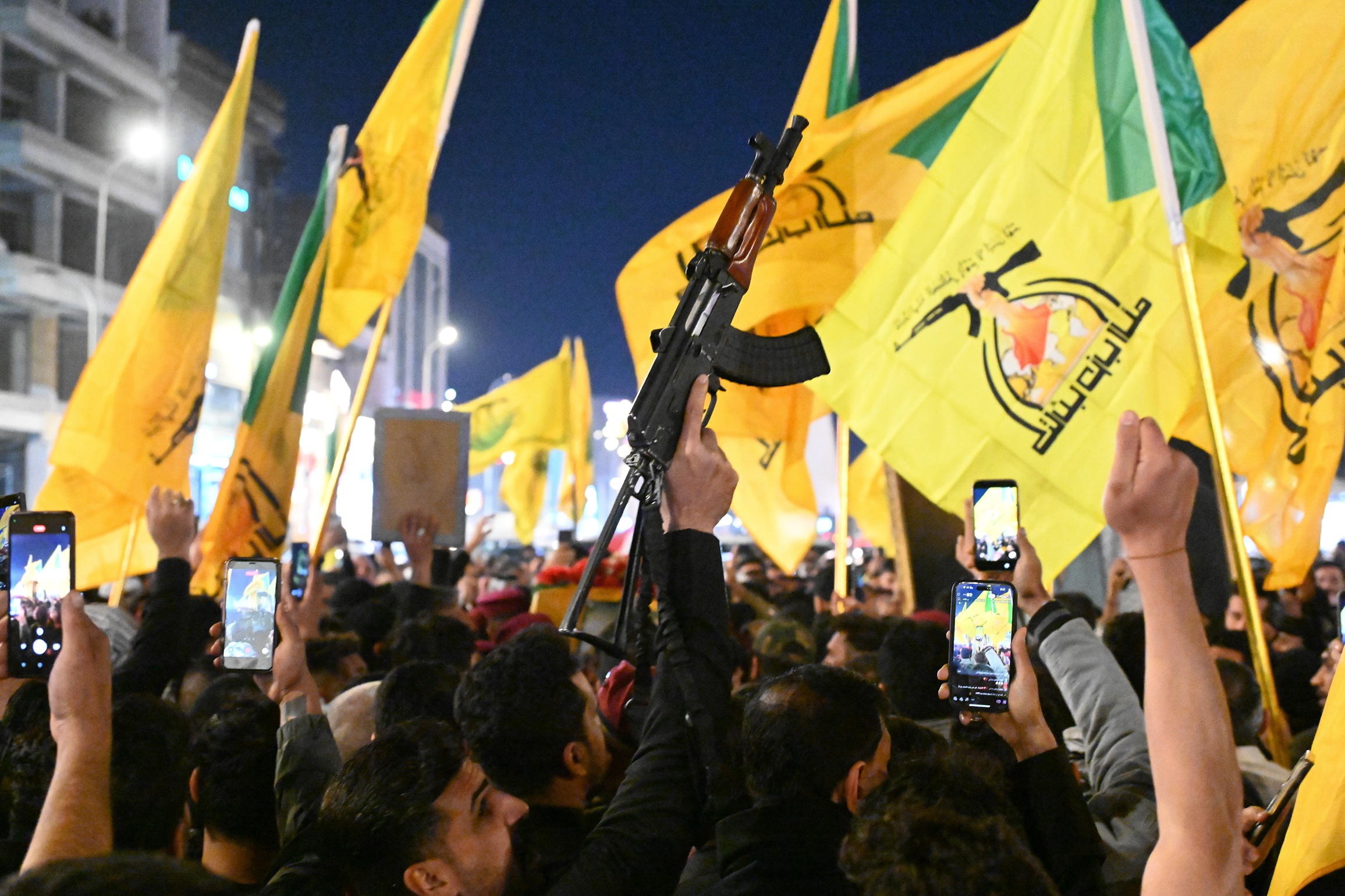
What are the implications of the strengthening of the Shiite militias in Iraq — and how can this troubling trend be addressed?
INSS Insight No. 2146, June 4, 2026
Follow us on GoogleSince the beginning of the war against Iran on February 28, the pro-Iranian Shiite militias in Iraq have claimed responsibility for hundreds of missile and drone attacks against local and regional targets, including Israel. These attacks are a clear indication of the severity of two security challenges: the growing political, economic, and military power of the militias in Iraq, and their operations in service of the Iranian regime, from which they continued to receive military support throughout the war. The new government established in Iraq in recent days, backed by the pro-Iranian bloc in parliament, reflects this trend, although in the background there is a noticeable and growing determination by the U.S. administration to pressure the Iraqi prime minister to disarm the militias and impose economic sanctions on individuals and institutions tied to their activities. For Israel and the regional countries that have been targeted by these militia attacks, this presents an opportunity to cooperate with the United States in formulating a clear strategy to disrupt the Iraqi militias’ buildup of power and their gradual takeover of the state’s resources and security assets.
Background: The Strengthening of Iranian Influence in Iraq
Recent months have brought Iraq two highly significant developments for assessing the country’s status and analyzing Iranian involvement within it. The first is the political process that began about six months ago and consisted of three stages: holding parliamentary elections held in November; the appointment of a new president, Nizar Amidi, in a parliamentary vote in April; and tasking Ali al-Zaidi—the candidate of the "Coordination Framework" (the pro-Iranian Shiite coalition, which is the largest bloc in parliament)—with forming a government, which subsequently received a parliamentary vote of confidence in May.
The second development is the war with Iran, in which, from the outset—according to their own statements and published documentation, and unlike during Operation "Rising Lion" in June 2025—the pro-Iranian Shiite militias took part by launching hundreds of missiles and drones at American forces in Iraq, as well as at Israel and neighboring Arab states. In response, the United States military carried out extensive strikes against the Iraqi militias in general, and their leaders in particular. Furthermore, it was recently reported in The Wall Street Journal that, during the war, Israel established a military base in the Iraqi desert region as a logistical hub intended to support military operations inside Iran, including enabling rescue and recovery missions.
These two developments, along with their various ramifications, reinforced existing assumptions regarding the political and military power accumulated by the pro-Iranian Shiite militias in Iraq in recent years, as well as their commitment to mobilize militarily in service of the Iranian regime during times of crisis. However, the American response to these military and political developments demonstrated the determination of the U.S. administration to weaken the militias. This is aimed, on one hand, at undermining Iran's influence in Baghdad, and on the other hand, at assisting Iraqi government institutions—particularly the army and internal security apparatuses—to act against the militias' takeover.
The Importance of the Iraqi Arena for Iran
The current war has brought Iran's exploitation of Iraqi territory to a peak as an arena for realizing the Iranian agenda, thereby underscoring Iraq’s status as a first-rate strategic and military asset for the Iranian regime. The direct ties between the Islamic Revolutionary Guard Corps and the Shiite militias aligned with the Iran-led axis were reflected—according to reports emerging from Iraq during the war—in weapons shipments transferred from Iran and the arrival of Quds Force officers on Iraqi soil to take part in military operations there.
Another aspect of cross-border activity linking the Iraqi front in the war to the central front in Iran is the Iranian effort to thwart potential attacks by anti-regime opposition groups based in Iraq, particularly organizations operating in the Kurdish region (which President Trump later confirmed had received weapons shipments). Against this backdrop, Iran and the Iraqi militias carried out massive attacks on targets in the Kurdish region during the war. In addition, convoys of militias from Iraq were observed inside Iranian territory, apparently also intended to prevent possible opposition activity against the regime or attempts to reignite the protests that preceded the war and were violently suppressed.
Even after the ceasefire came into effect, Iraq continued to serve as an important arena for Iran and the actors within the “Shiite axis.” This has been particularly true in light of the economic decline resulting from the domestic consequences of the war, the Strait of Hormuz crisis, and the American blockade on Iran. Under these circumstances, the Iranian regime remains determined to preserve Iraq as a corridor for economic activity that bypasses sanctions, as reflected in announcements by the U.S. administration regarding sanctions imposed on individuals, financial institutions, and even government officials in Iraq (in early May, the Deputy Minister of Oil, Maarij al-Bahadly, was added to the sanctions list).
Militia leaders, oil export companies, and government officials have been involved in the sale of Iranian oil through Iraq while circumventing the international sanctions mechanism imposed on Iran. This is in addition to the enrichment of the pro-Iranian militias themselves, which have taken control of state funds in two ways: first, through the umbrella organization of the pro-Iranian militias, the Popular Mobilization Forces (PMF), funded by Iraq following its incorporation into the state’s official security apparatus under legislation passed in 2016. Second, through budgets transferred directly to militia representatives serving in government ministries.
The extensive use of the Iraqi arena during the war via pro-Iranian militias, together with Iraq’s strategic and economic importance for the Iranian regime as a hub for weapons smuggling and sanctions evasion, further underscores Iran’s interest in keeping key centers of political power in the hands of the militias in particular, or regime loyalists in general (including Chief Justice Faiq Zaidan, who is also considered to be closely affiliated with the Revolutionary Guards). In light of this, recent weeks have seen an increase in visits to Baghdad by Esmail Qaani, commander of the IRGC Quds Force, and in his meetings with representatives of the “Coordination Framework,” amid reports of internal rivalries among its member leaders. Beyond military coordination, these visits carried political significance—namely, coordinating among the factions to ensure that the government in Baghdad remains in the hands of the pro-Iranian camp.
The United States' Response
Even before the war, amid growing awareness of the strengthening position of the pro-Iranian militias and their representatives within the Iraqi government, it was evident that President Trump and members of his administration had intensified their demands that the Iraqi government act against them. Former Prime Minister Mohammed Shia' al-Sudani (who himself is affiliated with the pro-Iranian “Coordination Framework”) was urged by Washington to work toward dismantling the militias and removing them from positions of power. Following the elections, Trump even vetoed the reappointment of Nouri al-Maliki as Prime Minister, who is known for his ties to the militias and the Iranian regime. The United States further threatened to impose economic sanctions on Iraq if al-Maliki were to be the chosen candidate.
In addition to Trump's intervention, al-Maliki's candidacy was also clouded by internal tensions between himself and the outgoing Prime Minister, al-Sudani. Ultimately, he was forced to withdraw from the prime ministerial race— though not before representatives of the “Coordination Framework” agreed on a compromise candidate, Ali al-Zaidi, who, in retrospect, also received Trump’s approval and support. Al-Zaidi, a Shiite businessman with no significant political background, is known for his ties to Iran loyalists. Prominent among the businesses he managed is an investment bank that came under American sanctions in 2024 for smuggling U.S. dollars into Iran. Al-Zaidi's ties to Iran and the militias are well known to the U.S. administration; yet Trump nevertheless appears interested in giving him a “bear hug.” This is seen as an initial step in an attempt to influence the policies of the new government in Baghdad, alongside a list of demands that includes practical measures such as removing the militias from the government, cutting off their funding, and reducing Iranian involvement within Iraq’s governing circles.
Implications and Recommendations
The true test of performance for al-Zaidi—who pledged upon taking office to strengthen the authority of the Iraqi state—is only just beginning. However, considering the immense political influence wielded by the "Coordination Framework" in both parliament and the government, alongside the military and economic power accumulated by the militias, it appears that Iraq’s leadership remains under the control of the same framework, merely “in a different guise”—the new faces in government.
This is a problematic, and even dangerous, outcome of the electoral and government-formation process. Its implication is the continued erosion by Iran and its proxies of the foundations of the regime that the United States designed in Iraq, alongside the weakening of the state's sovereign institutions. Over time, this process could lead to the complete destabilization of the political order that the United States helped establish after 2003, and under whose framework it continues to operate in Iraq and assist the Iraqi military, even after reducing its troop presence there. The clearest expression of the weakening of Iraqi state sovereignty emerged during the war, which was marked by the inability of the army and the security and intelligence apparatuses to control the situation in the face of relentless attacks by the pro-Iranian militias. In the absence of any meaningful restraints, the militias operated freely. They even demonstrated considerable boldness in carrying out repeated attacks against American facilities, bases and assets in the Kurdish region, as well as against the headquarters of the Iraqi National Intelligence Service in Baghdad.
The events of the war proved that beyond the dominance they have accumulated in Iraqi politics, parliament, and government, the militias are capable of operating freely throughout all of Iraqi territory, without boundaries or restraint from the official bodies responsible for law enforcement in the country. This is the most alarming sign that, in a security context, Iraq's sovereignty has been eroded almost completely in the face of the maneuvers of the militias and Iran. And yet, the Iraqi security institutions, led by the army, can still act in the face of this dangerous phenomenon. To do so, they can receive defensive and offensive assistance from the United States, which did not abandon its presence in Iraq even during the war and the targeted attacks on its bases and diplomatic facilities. The U.S. has demonstrated that it knows how to strike militia leaders and destroy their bases whenever a need arises to thwart threats against its forces. In a diplomatic context, it has become clear that the President of the United States is capable of vetoing the appointment of a Prime Minister known for his closeness to Iran and the militias, and achieving his desired outcome by threatening to impose sanctions that would damage the Iraqi economy.
However, beyond the sporadic use of military force, threat-based diplomacy, and economic sanctions aimed at weakening the militias and pushing them out of the centers of power, there is a need for a coherent American-led strategy or plan of action to reduce the influence of Iran and the pro-Iranian militias in Iraq. This is also a clear interest of Israel and Iraq’s Gulf neighbors, which were repeatedly attacked from Iraqi territory during the war. Assuming that the Iraqi army and its security apparatuses still struggle or hesitate to act decisively against the militias, the United States military can assist them on a daily basis—just as it supported combat efforts against ISIS and other terrorist organizations—while ensuring that the military and financial aid provided by the United States to Iraq is channeled toward strengthening its security and sovereignty.
In addition, the economic vulnerability of Iran and the militias in Iraq within the oil industry, which serves as a central source of revenue for them, can be exploited through targeted sanctions against the network of individuals and entities in Iraq’s oil sector tied to the financing of militia activity. Furthermore, sanctions can be imposed on individuals and companies involved in exporting Iranian oil from Iraq for the purpose of bypassing international sanctions.
Finally, there is importance in targeted counter-operations against the "hard core" of the militias, such as Kata'ib Hezbollah, which openly declare their refusal to discuss disarmament or surrendering their weapons to the state. Leading up to the formation of the current government, the United States offered a financial reward for anyone providing information on several of their leaders. Targeting these leaders, combined with a comprehensive set of military and economic efforts designed to weaken the militias' activities and restrict their movements, could be the key to reducing militia threats and Iranian involvement, as well as strengthening Iraqi sovereignty.