


Publications
INSS Insight No. 940, June 18, 2017
Follow us on Google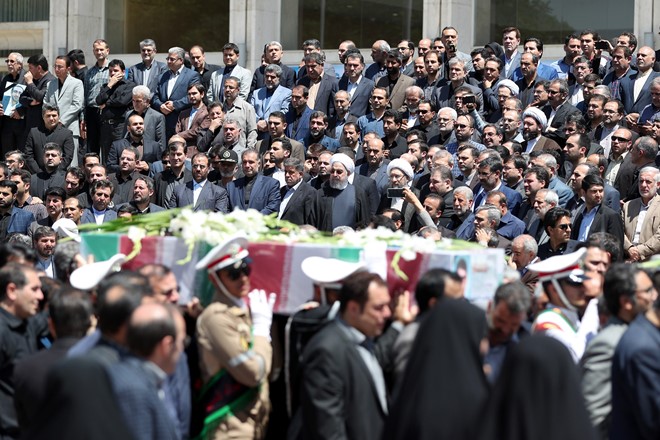
The terrorist attacks in the heart of Tehran pose a challenge to the Iranian regime, and require it to undertake a series of intelligence and operational measures in order to improve its ability to thwart further attacks. The Iranian leadership is trying to calm the public and reassure it of the regime’s ability to contain the events. While the Revolutionary Guards are expected to try to reinforce their capabilities (in part by obtaining an increased budget), it does not appear that this will be enough to alter the internal balance of power within Iran to any substantive degree, especially after the clear victory of Rouhani in the recent presidential elections. Iran will now likely attempt to utilize the terrorist attacks as a lever for advancing its interests in the region and in the international theater.
The coordinated terrorist attack on June 7, 2017, carried out against targets in Tehran by the Islamic State, was the first of its kind, and took the Iranian regime by surprise. The offensive included two shooting attacks at the Majlis, the Iranian parliament, and a suicide attack at the burial complex of Ayatollah Khomeini, leader of the Iranian Revolution. Seventeen people were killed in the attacks (including two security guards), and over 50 were wounded. The Islamic State took official responsibility for the attacks, and published a video clip on the social networks documenting the shooting attack at the parliamentary building. According to the authorities, the attackers were Iranian citizens who joined the organization. The regime published few particulars about the ensuing investigation, but the Iranian Minister of Intelligence announced that the planner of the attacks was identified and killed (apparently beyond Iran’s borders), and that 41 people had been arrested so far for involvement in the attacks. It was also reported that the five attackers had been recruited by the Islamic State, and after leaving Iran, were trained in Islamic State strongholds in Mosul and al-Raqqah.
The terrorists’ success in reaching and attacking major symbols of the regime has damaged the regime’s image and the sense that Iran is capable of preventing the Islamic State and other extremist organizations from conducting attacks in Iran. Iran has experienced periods of severe internal terrorism, mainly during the first decade following the revolution. The organization responsible at that time was the Mojahedin e-Khalq, (the People’s Mujahedin of Iran) which carried out damaging terrorist attacks, and in an attempted assassination in 1981, injured current Supreme Leader Ali Khamenei in his right hand, which he has difficulty in using to this day. In recent decades, however, Iran has enjoyed domestic tranquility, and until these attacks, did not face terrorism on its home territory by the Islamic State or by al-Qaeda. Following these events, the regime is expected to take a number of intelligence and operational measures aimed at improving its ability to thwart future attacks, which the Islamic State is likely to launch in Iran. The Revolutionary Guards will likely try to take advantage of these developments to reinforce their standing vis-à-vis the intelligence agencies, which are traditional rivals, and in order to demand a larger budget, in opposition to President Rouhani’s preferred policy. At the same time, it does not appear that this will be enough to upset the internal balance of power within Iran, especially after Rouhani’s resounding triumph in the recent presidential elections.
The Iranian leadership has sent reassuring messages to the public, emphasizing its ability to contain the event. Furthermore, following the period of division and tension between the Rouhani faction and the conservative faction, unity between the camps has prevailed, even if only temporarily. Rouhani’s assistant even called on the public to praise the security forces for their actions, in stark contrast to the severe criticism of the Revolutionary Guards by Rouhani during the election campaign.
The Iranian regime is clearly making an effort to exploit the events in order to promote its interests, with two prominent lines of propaganda in this context. One uses the terrorist events to justify Iran’s involvement in Iraq and Syria, and Supreme Leader Khamenei and his conservative followers are eager to incite the public in this way. In a June 7 speech following the attack, Khamenei declared, “Were we not involved in the regions of incitement [i.e., Syria and Iraq], we would have seen this type of incident a long time ago.” Precisely at this time, when the victory against the Islamic State in Iraq and Syria is approaching, Iran has a heightened interest, like all the parties, in continuing its involvement in the military campaign, and preparing to ensure its control and interests in those states. It is also likely that the terrorist attack in Tehran will constitute leverage for the regime and the Revolutionary Guards to step up their involvement in these countries.
The second argument accuses Saudi Arabia as the immediate party behind the terrorist attacks by portraying the attacks as the clear outcome of President Trump’s visit to Riyadh and the efforts by Saudi Arabia and the United States to highlight their success in forming a broad front against the Islamic State and against Iran. Thus, a June 7 announcement by the Revolutionary Guards claimed that Saudi Arabia was behind the terrorist attack in Tehran, and that “the attacks in Iran occurred one week after the US president’s meeting with one of the extreme parties in the region that supports Sunni terrorism.” In addition, Saudi Minister of Foreign Affairs Adel bin Ahmed al-Jubeir was quoted as saying several hours after the attacks, during his visit to Europe, “Iran should be punished.” The Saudi-American connection was also the focus of the comments by Supreme Leader Khamenei, who stated, “Crimes of this type result in greater hatred towards the administration in the United States and its agents in the region, such as Saudi Arabia.”
The accusations against Saudi Arabia were designed mainly to reinforce the kingdom’s image as a supporter of terrorism, while portraying Iran as the victim. At the same time, it does not appear that the interest of the Iranian regime at the present time lies in escalating the tension between the countries, and it is doubtful whether it will proceed with highly visible retaliatory actions against Saudi Arabia and its allies in the Gulf. In contrast to the voices in Iran, including the deputy head of the Revolutionary Guards, promising revenge against the Islamic State and its supporters, the Iranian Minister of Intelligence chose to douse the flames, stating, “It is premature to conclude that Saudi Arabia was involved in the events.” Iran exploited the rift between Saudi Arabia, Egypt, and additional countries in the Gulf and Qatar to demonstrate that Iran is the party in the region that is behaving responsibly. Furthermore, the crisis in the Gulf and actions designed to aid Qatar in easing the blockade against it are providing Iran with an opportunity to attempt to undermine the effort to create a united front against Iran.
Paradoxically, the terrorist attacks in Tehran are playing into Iran’s hands on the international front as well. The attacks cast the remarks by US Secretary of State Rex Tillerson, who accused Iran of failing to fight against the Islamic State, citing as proof the lack of attacks against Iran by the Islamic State as almost ridiculous. Furthermore, the terrorist attack places Iran together with France, the UK, and others among the countries targeted by the Islamic State, enabling Iran to claim that it shares a common fate with European countries, because they are all victims of terrorist extremism. Iran hopes to deepen its mutual identification with these countries, and is likely to take advantage of the situation to expand its cooperation with them in the struggle against the Islamic State.
The Iranian regime is thereby likely to highlight the already emerging differences between the European stances toward Iran and those of the Trump administration. The regime’s primary goal will be to make it difficult for the Europeans to cooperate with the United States in formulating a tough policy towards Iran, following the current reassessment by the US administration of its policy on Iran and the process of approving new sanctions that is making its way through Congress. For the administration, it does not appear that the terrorist attacks in Tehran will have any significant effect on its policy on the question of Iran.
Thus while the terrorist attacks in Tehran pose a challenge to the Iranian regime, in general, Iran and its security agencies have effective tools for dealing with events of this kind. It does not appear that the extent to which the attacks undermined the Iranian public’s sense of security will encourage exceptional expressions of protest against the regime. For Iran, the emphasis will now be on attempting to exploit the terrorist attacks as a means to promote its interests in the region and the international theater. In this context, the realization that the US administration is now considering ways of heightening the pressure on Iran, in part by adding to the regional pressure against it, are motivating the regime to demonstrate relative moderation – certainly in all matters pertaining to countermeasures in the framework of its activity in the region.