


Publications
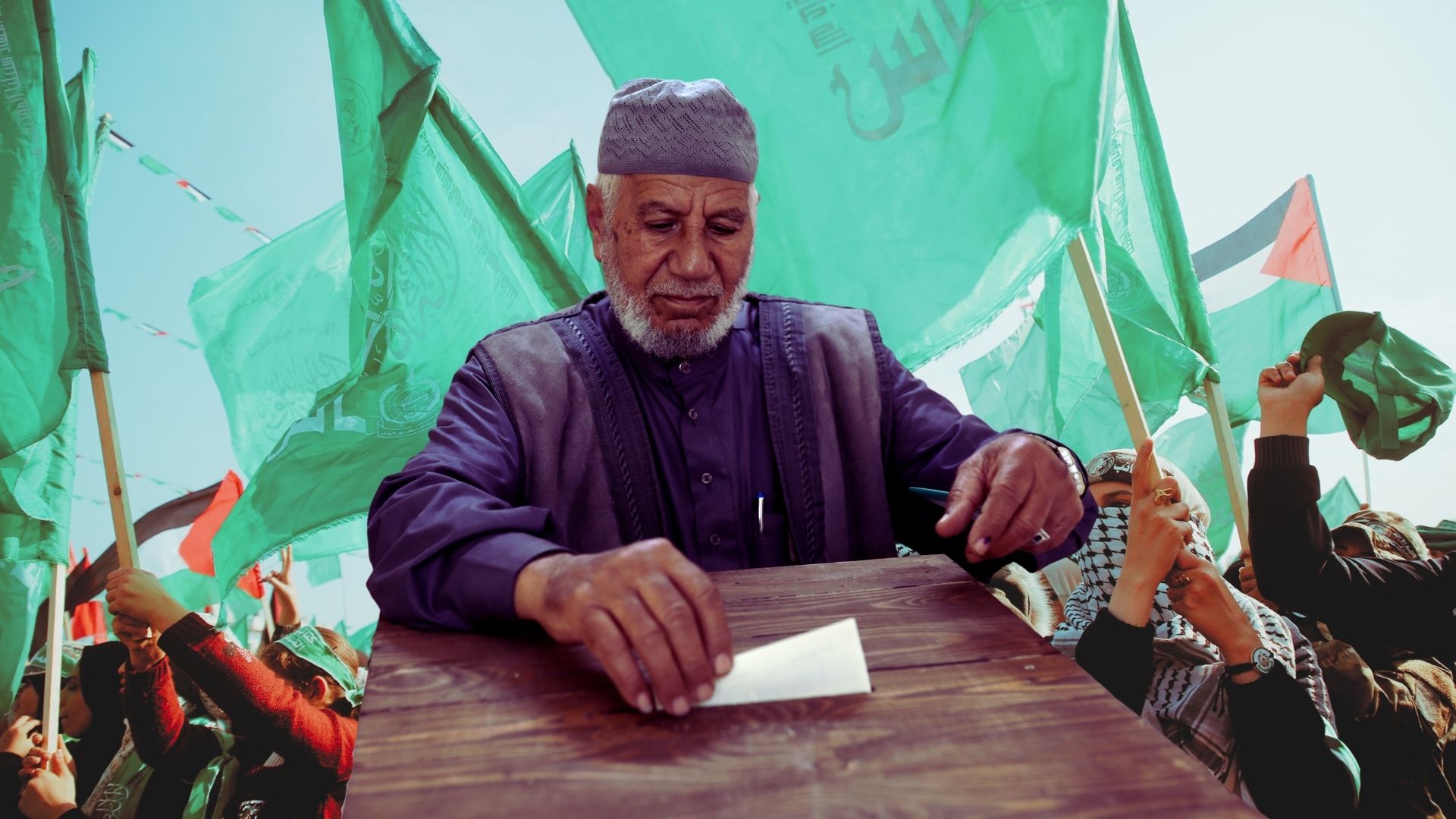
The path to normalizing Hamas through the ballot box—and how to prevent it
INSS Insight No. 2192, August 31, 2026
Follow us on GoogleIn recent weeks, talks have been underway in Cairo on the formation of an expanded national list ahead of the Palestinian Legislative Council elections scheduled for November. This list would include Fatah figures opposed to Abu Mazen alongside Hamas members, and possibly Palestinian Islamic Jihad as well. The composition of such a list would effectively allow Hamas to integrate into the Palestinian political system without being required to recognize the agreements signed between the PLO and Israel or place its weapons under the authority of the Palestinian Authority. Other expected ramifications include weakening the Palestinian Authority, potentially hollowing it out, causing its collapse, or even allowing Hamas to take it over.
Israel must oppose the normalization of Hamas through the ballot box and, in particular, the participation of Hamas candidates in the elections unless the organization first disarms and accepts the framework of agreements between the PLO and Israel. If necessary, Israel should even act to thwart the elections. This should be the case even at the cost of friction with the US administration, which appears to view Hamas’s inclusion in the elections as a concession to the terrorist organization that would facilitate advancing the Trump plan for the Gaza Strip.
Ahead of the Elections for the Palestinian Legislative Council: What is Taking Shape in Cairo?
Since mid-August, meetings and consultations have been taking place in Cairo among Hamas, Palestinian Islamic Jihad, the Democratic Reform Bloc of Fatah led by Mohammed Dahlan, the National Democratic Forum headed by Nasser al-Qudwa, and representatives of other factions. During a broad meeting held on August 20, participants discussed an “expanded national list” that would include factions, independent figures, and professionals. Al-Qudwa clarified that the proposal concerned an electoral list rather than an alliance against Fatah, and that no final decision had yet been made. The Popular Front and the Democratic Front have likewise yet to decide on the form of their participation.
Hamas seeks to participate in the elections through every possible avenue in order to cement its status and gain political legitimacy. According to reports citing senior Hamas officials, the organization is still weighing three possible formats: a party list, a broad coalition, or support for a list of individuals who are not officially affiliated with it. Much of the available information is based on anonymous sources and reports that cite one another, so the state of the talks and their prospects remain unclear at this stage. The first test will come with the registration of candidate lists, scheduled for September 26 through October 7.
How Does This Move Serve Hamas?
Abu Mazen has set the election date for November 28, 2026, the first election for the Palestinian Legislative Council since January 2006, when Hamas won 74 of 132 seats. Its success then stemmed in part from splits within Fatah and competing Fatah lists running separately.
According to the Central Elections Commission, 132 members will be elected in November under a system of full proportional representation using closed lists. The amendment to the election law adopted in August requires every candidate to pledge adherence to the Palestinian Basic Law, recognize the PLO as the sole legitimate representative of the Palestinian people, and commit to the PLO’s political and national program and the relevant resolutions of UN institutions (the law and its explanatory notes). This commitment is made by each candidate individually. This means that Hamas could field candidates who sign the pledge without the organization itself having to accept the PLO’s conditions.
Why Now?
For Dahlan, al-Qudwa, and other opponents of Abu Mazen within Fatah’s ranks, an expanded national list reduces the fragmentation of the opposition vote and enables them to compete more effectively against Fatah’s official apparatus. An August PCPSR poll found that Fatah and Hamas each enjoy the support of roughly a quarter of the public, with Fatah holding a slight advantage among those who have already decided to vote. The share of undecided voters remains high, meaning that the very existence of a broad list could shift the balance of power.
Furthermore, Dahlan's direct involvement in the political efforts to establish an expanded national list points to involvement by the United Arab Emirates. The UAE’s involvement, or at least its willingness to allow the initiative to proceed, may reflect a shared view with Dahlan that this represents a calculated risk that could help revitalize the Palestinian political system.
Hamas appears to see an opportunity to use the list's broad platform to rehabilitate its standing and gain recognition as a legitimate political actor. If Hamas were to run directly as a party or movement, it would have to meet the conditions set for participation in the elections: dismantle its military wing, relinquish control of the Gaza Strip, and integrate into a Palestinian governing framework that is not subordinate to it. These demands come amid a possible erosion of Hamas’s standing among the Palestinian public since October 7. Participating in the elections through an expanded national list could therefore allow Hamas to exchange direct control of the Gaza Strip and some of the military capabilities it would be required to relinquish for representation in Palestinian institutions and continued influence over decision-making. It could thus remain an influential actor within the system even without exercising direct control.
There are indications, albeit unconfirmed, that the US administration is aware of the initiative and views it as serving its plans for the Gaza Strip. In May, Nickolay Mladenov, the Board of Peace’s High Representative for Gaza, stated, “We are not asking Hamas to disappear as a political movement,” adding that “a political party that disavows armed activity can compete in national Palestinian elections.” Hamas sources have even claimed to have received approval from administration officials to continue political activity in accordance with Palestinian law. Given the approaching election date, it appears that Hamas may receive, or may already have received, permission to run even before meeting the requirements to disarm and transfer power to the National Committee for the Administration of Gaza (NCAG), the “technocratic government,” under the supervision of the Board of Peace.
Egypt is providing the venue for the talks. Its primary objective is to use the process to advance the Trump administration’s framework for stabilizing the Gaza Strip (the 20-point plan that entered into effect in October 2025), thereby helping bring an end to the war and its adverse repercussions for Egypt. While Egypt favors the return of the Palestinian Authority to the Gaza Strip and the creation of a political horizon in the Israeli-Palestinian arena, it is willing to accept Hamas's integration into the new Palestinian political system as long as its political and military power is constrained.
Qatar and Turkey have a dual interest in advancing this move: helping normalize Hamas and bolster its political standing, while simultaneously presenting themselves to the Trump administration as helping to bring Hamas on board with the processes the administration is seeking to advance in Gaza. Reports in Qatari media have highlighted the role of the two countries, both members of the Board of Peace, in promoting the move, while their leaderships have held frequent meetings with Hamas officials in recent weeks.
Implications
The principal risk inherent in this move recalls the dangerous precedent of Hamas’s participation in the 2006 Palestinian Legislative Council elections. Then too, the organization gained political power and legitimacy without being required to recognize the agreements between the PLO and Israel, place its weapons under the authority of the Palestinian Authority, or commit to refraining from terrorism. The comparison with 2006 is not exact, since the current electoral system is proportional and support for Hamas appears to be lower. Nevertheless, an expanded national list would have a strong chance of winning a free election and would, at the very least, be expected to make significant gains, while giving Hamas influence over the Palestinian political system and legitimacy at home and abroad.
As with the 2006 precedent, Hamas’s entry through the front door into the Palestinian institutional system could weaken the Palestinian Authority to the point of hollowing it out or even enabling Hamas to take it over. The Palestinian Authority is heading into these elections already mired in a severe fiscal crisis, reflected in salary cuts, mounting debts, and growing pressure on the banking system. An election outcome that grants substantial power to Hamas could create a rupture and confrontation between the presidency and the Legislative Council, exacerbate succession struggles within Fatah’s ranks, and divide the security services. At the same time, it could lead to stricter conditions on both the transfer of clearance revenues from Israel and international aid, while deterring donors and banks. This could create a self-reinforcing cycle: the weakening of the PA would expand Hamas’s room for maneuver; Hamas’s growing strength would justify further pressure on the PA; and such measures would further weaken its institutions.
The implications for Israel of Hamas’s normalization and growing political strength at the expense of the Palestinian Authority naturally depend on Israel’s strategic outlook. Proponents of an approach that seeks to prevent the establishment of a Palestinian state and present the Palestinian system as a single extremist bloc may view this development as an opportunity. Conversely, for those who see a functioning Palestinian Authority as a security and civilian buffer against the risk of sliding into a one-state reality, this represents a grave risk. Yet even according to the former view, it must be acknowledged that the emerging scenario will institutionalize Hamas’s legitimacy, undermine security coordination with Israel and the provision of civil services, and expand the room for maneuver available to Hamas and other armed actors in both the Gaza Strip and the West Bank.
The Israeli Dilemma
Israel once again appears to find itself being pulled along by political developments in the Palestinian arena. Having refrained throughout the years of war in the Gaza Strip from formulating a clear, proactive policy regarding the future of the Palestinian Authority or cultivating a moderate alternative to Hamas rule, Israel has left a vacuum that is now being filled by initiatives led by other actors, foremost among them Egypt, Turkey, Qatar, the United States, and Hamas itself.
At this stage, Israel should refrain from publicly declaring that it will not allow the elections to take place, certainly as long as the unified list has not been formally, publicly, and definitively announced and disagreements among its participants could still cause the initiative to collapse. Abu Mazen may also ultimately cancel the elections he announced out of fear of defeat, as he did in 2021. Overt Israeli opposition could itself provide an incentive to consolidate the national list and lead to unnecessary friction between the Israeli government and the US administration.
While these scenarios would take the problem off Israel’s hands, it would be a mistake to base its policy on the hope that they materialize. This is primarily because there are signs that this may not be merely an internal move by Palestinian actors, but rather part of a broader effort by Board of Peace member states (the United States, Qatar, Turkey, and the United Arab Emirates) aimed at normalizing Hamas as part of their wider plans for the Gaza Strip and the Palestinian arena, or, at the very least, a step that has received the administration's consent.
Under these circumstances, Israel should formulate a coherent policy on the issue as soon as possible, since its window for influencing developments will narrow considerably once registration of electoral lists begins on September 26. Despite the anticipated friction with the US administration, and regardless of how well Hamas is expected to perform in the elections, Israel must not acquiesce to the normalization of Hamas through the ballot box. Israel should adopt a position that combines firm opposition to Hamas’s participation in the Legislative Council elections with a proactive political initiative in the Gaza Strip that offers the US administration an alternative path for advancing the Trump plan without legitimizing Hamas.
On the electoral-political front, Israel should demand that Hamas be outlawed and that candidates acting on its behalf be barred from running in the Legislative Council elections, similar to measures taken against Muslim Brotherhood movements in Arab states. If Israel's demand is rejected, it should insist, at the very least, that Hamas accept the political agreements signed by the PLO, commit to nonviolence, and surrender its weapons before the elections as conditions for its candidates' participation. If this demand is also rejected, Israel should take steps to make it more difficult to hold the elections, including by preventing voting in East Jerusalem or restricting movement in the West Bank. Such measures would provide Abu Mazen with grounds to cancel the elections.
However, such a policy would further cast Israel in the role of the rejectionist, perpetuate the longstanding stagnation of a Palestinian political system desperately in need of renewal and a shake-up, hand Hamas a significant public-relations victory, and, as noted, likely generate friction with the US administration. It is therefore recommended that Israel simultaneously pursue an integrated political initiative on two fronts:
- In the Gaza Strip: Improve the current framework for implementing the 20-point plan, which has led the Trump administration to soften its position toward Hamas in order to secure the organization's consent to the introduction of Board of Peace mechanisms into the Gaza Strip. Within this framework, Israel could encourage the technocratic administration (NCAG) to enter the “Green Zone,” which has been cleared of Hamas, and accelerate civilian reconstruction there. At the same time, Israel would maintain a security presence on the ground while gradually reducing the area under Hamas control (by shifting territory from the “Red Zone” to the “Orange Zone”). This “differential” alternative is anchored in Article 17 of the original 20-point plan as a backup in the event of Hamas refusal (see the policy paper “Alternatives for the Gaza Strip Following the Campaign with Iran”).
- Israel should recognize the need to preserve a functioning Palestinian Authority that is independent of Hamas influence and be willing to assist in implementing the necessary reforms and strengthening the PA's institutional capabilities. It will not be possible to advance any future settlement process, including full implementation of the 20-point plan for the Gaza Strip, if Hamas gains access to centers of Palestinian decision-making with international backing. In this regard, Israel, the Palestinian Authority leadership, and most Arab states share a common interest. Israel should therefore coordinate with them to develop ways to curb the activities of the expanded national list, which seeks to bring an end to Abu Mazen's rule in particular and Fatah's rule in general.
Israel cannot content itself with merely blocking moves it deems undesirable; it must offer a viable political alternative that prevents the normalization of Hamas and helps establish a new and improved Palestinian political order with a leadership that can reach understandings with Israel. The longer Israel postpones such a decision, the more the reality in the Palestinian arena will continue to take shape without Israel.
______________
[1] The authors would like to thank Udi Dekel, Kobi Michael, Yohanan Tzoreff, Ofir Winter, and Meir Kraus for their comments.