


Publications
Special Publication, July 15, 2026
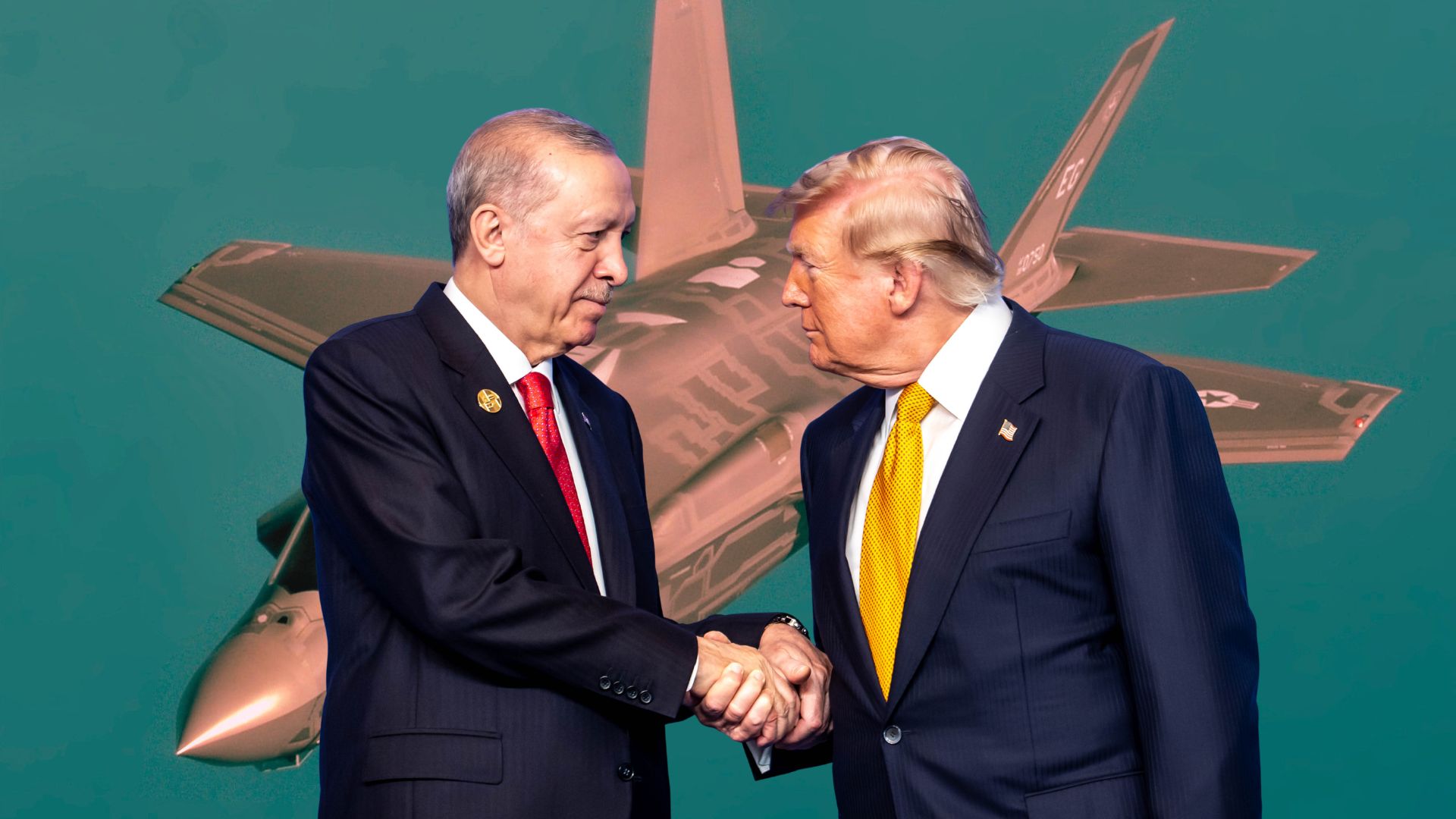
Follow us on GoogleThe current U.S. administration is advancing a major deal, valued at over $700 million, to sell F110 engines to Turkey for its KAAN aircraft project. Despite the administration’s attempts to bypass congressional barriers, this move is not an isolated event; rather, it is a strategic accelerator intended to pave the way for Ankara’s full return to the F-35 program. While Washington’s rationale seeks to preserve Turkey as an anchor within NATO, in practice, it creates a serious dilemma and presents a weighty, threefold strategic risk:
- Undermining NATO from within: Empowering an actor that is engaged in aggressive competition against Western allies (such as Greece) and is entrenching a defiant military presence in Cyprus.
- Fueling Regional Friction: Granting legitimacy to a competitive power that provides a safe haven for Hamas and supports the al-Sharaa regime in Syria.
- Creating a Systemic Risk to the Global F-35 Network: Deploying 5th-generation capabilities in proximity to Russian S-400 systems risks compromising and cracking the information security of the platform as a whole. This threat is not limited to the erosion of Israel’s qualitative edge or the exposure of its defense industries; it constitutes a direct threat to every country in the world equipped with the F-35, alongside concerns over the possible proliferation of KAAN aircraft to additional militaries across the Sunni sphere.
Relevant Timeline: The Evolution of Crisis and Trust
Ankara’s conduct over recent decades reflects a systematic erosion of trust in its relations with the West, alongside complex political maneuvering aimed at securing technological superiority:
- July 2002: Turkey formally joins the Joint Strike Fighter (JSF) program for the development of the F-35 aircraft.
- September 2017: President Erdoğan officially announces the $2.5 billion purchase of the S-400 defense system from Russia, despite repeated warnings from the United States and NATO that the system is incompatible with alliance infrastructure. This move is not an isolated misstep, but rather a pillar of Turkey's strategy to establish defense independence.
- July 2019: The first components of the S-400 system begin arriving in Turkey. In a decisive response, the United States officially expels Turkey from the F-35 program and halts the delivery of aircraft already manufactured for it.
- December 2020: The United States invokes the Countering America's Adversaries Through Sanctions Act (CAATSA), imposing official sanctions on the Turkish Defense Industry Agency (SSB).
- 2025-2026 – The Shift: Intense pressure and lobbying by Ankara yield signals from the Trump administration indicating a willingness to reevaluate technological integration with Turkey. Approval of the F110 engine deal for the KAAN aircraft serves as both a trial balloon and a catalyst for a shift in approach.
- Current Conditions and Workarounds (Summer 2026): While Ankara attempts to find a diplomatic framework to resolve or shelve the S-400 issue, the move encounters fierce bipartisan opposition in Congress. Senate Foreign Relations Committee Chairman Jim Risch publicly opposes the deal, making clear that no advanced arms sales will be approved as long as Ankara retains the Russian system. In response, the administration signals its intention to explore alternative constitutional pathways to bypass congressional opposition and move the deal forward.
Airpower, the Global F-35 Network, and Technological Exposure
- Circumventing the F-35 Impasse and Building a Diversified Force: The sale of F110 engines provides Ankara with a strategic interim solution, enabling it to acquire advanced capabilities without immediately relinquishing the Russian S-400 system. However, it is vital to emphasize that supplying the engines alone does not create a fully capable 5th-generation platform. They are, nonetheless, among the most critical enabling factors for advancing toward such a platform. Consequently, Turkey's ultimate strategic objective remains a full reentry into the F-35 program. Concurrently, Turkey is bolstering its capabilities in the short-term through the large-scale procurement of up to 56 Eurofighter Typhoon aircraft from the UK, Qatar, and Oman, while training its pilots in Qatar.
- The KAAN Effect and Breaking the Regional Monopoly: The successful development of the KAAN as a 5th-generation platform supported by U.S.-made engines would allow Turkey to become a game-changing arms exporter. Countries like Indonesia (which has already signed a deal), alongside Egypt and Saudi Arabia, both of which have shown strong interest, could potentially acquire the aircraft. For Israel, the proliferation of stealth capabilities among additional actors in the Sunni sphere poses an unprecedented strategic "headache."
- The Complexity of the QME Issue: The U.S. Qualitative Military Edge (QME) law, which legally mandates the preservation of Israel's military superiority, contains an inherent loophole: it has never officially applied to Turkey due to its status as a NATO member. Integrating Turkey into the 5th-generation ecosystem would erode this advantage in practice, granting an aggressive actor access to shared tactical data infrastructures (Connected Battlefield Nodes) and classified operational doctrines, without a straightforward U.S. legal mechanism for preventing it.
- The S-400 Threat and Information Security: Operating 5th-generation platforms in proximity to the Russian S-400 system in Turkey (equipped with the 91N6E radar, which has a detection range of 600 kilometers and has been successfully tested against F-16 aircraft) critically jeopardizes the aircraft's information security. In theory, it could enable the identification of vulnerabilities and the aircraft’s radar signature, resulting in a direct leak to Russian intelligence. Three core threats arise in this context:
- The Leakage Pathway to Eastern Powers: Intelligence exposure to Russian systems creates an immediate opening for the onward transfer of sensitive information. The distance from Moscow to Beijing is very short, and such a leak could also give China the ability to unravel the secrets of Western stealth technology.
- Neutralizing the Global Qualitative Advantage: A breach of information security and exposure of the aircraft’s radar signature would create a systemic risk capable of neutralizing the qualitative advantage of 5th-generation platforms—not only for the United States or Israel, but for every country worldwide that has acquired this platform.
- Exposure of Data Networks and Classified Combat Doctrines: Integrating Turkey into the 5th-generation ecosystem grants an actor with independent and aggressive ambitions direct access to shared tactical data infrastructures (Connected Battlefield Nodes). Such access could expose Ankara to the most highly classified operational doctrines, both vis-à-vis NATO countries and Middle Eastern states.
- Exposure of Deep Israeli Technology: Israeli defense industries are integrated into the core supply chain of the F-35, including wing production by Israel Aerospace Industries and the Helmet Mounted Display System (HMDS) produced by Elbit Systems. Turkey’s reintegration would expose highly sensitive Israeli intellectual property and technologies to potential leakage into hostile hands, in an environment in which Ankara is deepening anti-Western cooperation.
The Broader Geopolitical Context: Turkey as a Competitive Regional Power
Turkey’s acquisition of game-changing weapons must be assessed through the prism of its broader strategy: an independent pursuit of regional dominance, coupled with efforts to stretch the boundaries of its influence vis-à-vis the Western and regional alliance system. It is vital to make clear that even if a political formula is found to resolve or shelve the S-400 issue with U.S. consent, this would not provide grounds for reassurance in Israel or Greece. The core threat is not technological alone, but rather lies in Ankara’s intentions and ambitions to alter the balance of power.
- The Policy-Professional Rift in Washington: The effort to arm Turkey exposes internal complexity within the U.S. administration. This is not a rift between two equal factions, but rather a distinct push led by President Trump and the executive branch, which have adopted a pragmatic approach toward Erdoğan and view him as a positive and influential actor who has maintained neutrality in regional conflicts. By contrast, professional officials at the State Department, together with senior political figures such as Senate Foreign Relations Committee Chairman Jim Risch, view the move with concern and suspicion, fearing an escalation of regional competition and the stretching of CAATSA sanctions provisions.
- The Absence of Regional Restraint and Strategic Opportunism: Ankara does not hesitate to leverage its military might and geographic positioning to challenge neighboring Western partners. The most recent example was in northern Cyprus: following the reinforcement of Western forces on the island — by Greece, France, and Germany, in response to Iranian drone attacks — Turkey exploited the escalation to deploy F-16 aircraft in an exceptional move and establish an operational foothold there. This tactic of "normalization" or opportunism demonstrates Ankara’s capabilities and is compounded by its operation of a permanent drone base on Cypriot soil. This infrastructure, comprising a diversified airpower matrix, serves as a forward outpost that enables Ankara to violate sovereignty, project power, and undermine the operational status quo in the Mediterranean and across the European Union.
- Active Support for the Radical Islamic Axis and Power Projection Against Israel: Ankara provides Hamas with public, practical, and diplomatic backing and is also involved in the “Peace Council” for the governance of the Gaza Strip. At the same time, Turkey maintains deep military involvement in Syria, works to consolidate Islamist forces in the region, and openly supports the al-Sharaa regime. This hostile rhetoric permeates the highest echelons; however, the primary risk in a confrontation with Israel is not a direct military clash, as Turkey already possesses a large land force and a powerful navy. The more concrete concern is that a 5th-generation Turkish air force could give Erdoğan’s circle excessive confidence, translating into far more aggressive and assertive conduct in the maritime and aerial arenas, aimed at balancing, constraining, and reducing Israel’s freedom of action in the region.
- The Inter-Arab Rapprochement Axis as a Regional Balancing Mechanism: Turkey’s importance as a major regional actor no longer rests solely on its traditionally close ties with Qatar, but on a much broader geostrategic shift: processes of normalization and accelerating diplomatic and economic rapprochement with Egypt and Saudi Arabia. This emerging axis illustrates how Ankara is repositioning itself as a central anchor at the heart of the Arab and Muslim world. Over the long term, deepening cooperation between Turkey and these Sunni powers is not merely a tool for expanding Turkish influence; it creates an integrated power mechanism designed to counterbalance, and at times even constrain, Israel’s strategic freedom of action and regional superiority.
- Ambitions to Stand as an Independent Power on the Global Stage: Erdoğan’s foreign policy no longer seeks full integration into the West, but rather to position Turkey as a “stand-alone power.” As such, it does not view itself as subordinate to, or constrained by, the interests of the Western alliance. Instead, it pursues an interest-based and pragmatic foreign policy, while continually looking toward Moscow and alternative axes.
Conclusion
Israel’s position is grounded not only in the need to preserve its technological edge and prevent the leakage of intellectual property from its defense industries. In Israel’s view, it is also an integral part of safeguarding U.S. national information security against Eastern powers. Preventing Ankara’s military buildup, as it positions itself as an independent power and an anchor of an expanding Sunni axis, is the primary condition for preventing a regional arms race and maintaining the stability of the broader global security architecture.
An analysis of the engine deal leads to the conclusion that the underlying threat posed by arming Turkey is not merely technological, but geopolitical. Accordingly, even if Washington and Ankara reach a formula that resolves or temporarily shelves the S-400 issue, Israel and its NATO partners cannot afford to allay their concerns. Upgrading the Turkish Air Force to the 5th generation — whether through the KAAN project or via a future return to the F-35 network — would give Erdoğan’s circle greater confidence and encourage more aggressive conduct aimed directly at constraining the Israel Defense Forces’ freedom of action and deterrence in the maritime and aerial domains.