


Europe’s Challenges Open the Market for Israel’s Arms Industry | INSS
go to header go to content go to footer go to search
INSS logo The Institute for National Security Studies, Strategic, Innovative, Policy-Oriented Research, go to the home page
INSS
Tel Aviv University logo - beyond an external website, opens on a new page
  • Campus
  • Contact
  • עברית
  • Support Us
  • Research
    • Topics
      • Israel and the Global Powers
        • Israel-United States Relations
        • Glazer Israel-China Policy Center
        • Russia
        • Europe
        • Antisemitism and Delegitimization
      • Iran and the Shi'ite Axis
        • The Campaign Against Iran and the Shiite Axis
        • Iran
        • Lebanon and Hezbollah
        • Syria
        • Yemen and the Houthi Movement
        • Iraq and the Iraqi Shiite Militias
      • Conflict to Agreements
        • Israeli-Palestinian Relations
        • Hamas and the Gaza Strip
        • Peace Agreements and Normalization in the Middle East
        • Saudi Arabia and the Gulf States
        • Turkey
        • Egypt
        • Jordan
      • Israel’s National Security Policy
        • Military and Strategic Affairs
        • Societal Resilience and the Israeli Society
        • Jewish-Arab Relations in Israel
        • Climate, Infrastructure and Energy
        • Terrorism and Low Intensity Conflict
      • Cross-Arena Research
        • Data Analytics Center
        • Law and National Security
        • Advanced Technologies and National Security
        • Foreign Information Manipulation and Interference
        • Economics and National Security
    • Projects
      • Preventing the Slide into a One-State Reality
      • India-Middle East-Europe Economic Corridor (IMEC)
  • Publications
    • -
      • All Publications
      • INSS Insight
      • Policy Research and Papers
      • Special Publication
      • Strategic Assessment
      • Technology Platform
      • Memoranda
      • Posts
      • Books
      • Archive
  • Database
    • Surveys
    • Spotlight
    • Maps
    • Dashboards
  • Events
  • Team
  • About
    • Vision and Mission
    • History
    • Research Disciplines
    • Chairman of the Board
    • Board of Directors
    • Fellowship and Prizes
    • Annual Reports
    • Internships
  • Media
    • Communications
    • Video gallery
    • Press Releases
  • Podcast
  • Newsletter
  • Campus
Search in site
  • Research
    • Topics
    • Israel and the Global Powers
    • Israel-United States Relations
    • Glazer Israel-China Policy Center
    • Russia
    • Europe
    • Antisemitism and Delegitimization
    • Iran and the Shi'ite Axis
    • The Campaign Against Iran and the Shiite Axis
    • Iran
    • Lebanon and Hezbollah
    • Syria
    • Yemen and the Houthi Movement
    • Iraq and the Iraqi Shiite Militias
    • Conflict to Agreements
    • Israeli-Palestinian Relations
    • Hamas and the Gaza Strip
    • Peace Agreements and Normalization in the Middle East
    • Saudi Arabia and the Gulf States
    • Turkey
    • Egypt
    • Jordan
    • Israel’s National Security Policy
    • Military and Strategic Affairs
    • Societal Resilience and the Israeli Society
    • Jewish-Arab Relations in Israel
    • Climate, Infrastructure and Energy
    • Terrorism and Low Intensity Conflict
    • Cross-Arena Research
    • Data Analytics Center
    • Law and National Security
    • Advanced Technologies and National Security
    • Foreign Information Manipulation and Interference
    • Economics and National Security
    • Projects
    • Preventing the Slide into a One-State Reality
    • India-Middle East-Europe Economic Corridor (IMEC)
  • Publications
    • All Publications
    • INSS Insight
    • Policy Research and Papers
    • Special Publication
    • Strategic Assessment
    • Technology Platform
    • Memoranda
    • Posts
    • Books
    • Archive
  • Database
    • Surveys
    • Spotlight
    • Maps
    • Dashboards
  • Events
  • Team
  • About
    • Vision and Mission
    • History
    • Research Disciplines
    • Chairman of the Board
    • Board of Directors
    • Fellowship and Prizes
    • Internships
    • Annual Reports
    • Privacy Policy and Terms of Use
  • Media
    • Communications
    • Video gallery
    • Press Releases
  • Podcast
  • Newsletter
  • Campus
  • Contact
  • עברית
  • Support Us
bool(false)

Publications

Home Publications INSS Insight Europe’s Challenges Open the Market for Israel’s Arms Industry

Europe’s Challenges Open the Market for Israel’s Arms Industry

INSS Insight No. 965, August 21, 2017

Follow us on Google
עברית
Elai Rettig
Yotam Rosner

In the past few years, the European demand for arms has increased due to the significant security challenges that have developed throughout the continent. This trend has also resulted in a marked increase in Israeli defense exports to European countries, which is expected to continue in the years to come, especially to Eastern Europe. This development requires that Israel act cautiously—among other reasons—in order to avoid a direct diplomatic clash with Russia, which is the primary reason for the current European armament.


In 2015, Europe became the second largest destination for Israeli arms exports as the scope of European defense deals with Israel more than doubled—from $724 million in 2014 to $1.6 billion in 2015. This trend continued in 2016, as Israel’s defense exports to European countries reached $1.8 billion, far exceeding its transactions with the countries of North America ($1.265 billion), Latin America ($550 million), and Africa ($275 million) but still less than its defense exports to the countries of Asia ($2.6 billion).

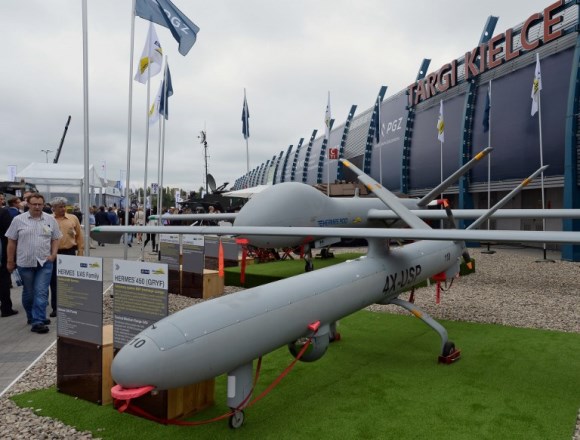
This surge in Israeli arms procurement is linked to a general growth in the defense budgets of European countries, which increased by 3 percent on average between 2015 and 2016. The rise in terrorist incidents and the problems created by the flood of refugees were two factors that contributed to Israel's increased presence in European defense deals. Israel supplied European countries with technological solutions for monitoring illegal entries, fighting terrorism, and protecting against cyber threats, a component which has become increasingly significant in the arsenal of Israeli defense companies. The most significant elements of the overall export agreements signed by the Israeli arms industry in 2016 have been the enhancement of planes and air systems (20 percent), observation and optics (18 percent), missiles and air defense systems (15 percent), ammunition and weapons positions (13 percent), radar technology (12 percent), intelligence, information, and cyber systems (8 percent), and UAVs (7 percent).

The most significant development has occurred in Western Europe, where countries are changing from weapons suppliers into major importers. This trend is well underway in Germany, largely as a result of having cooled its relations with the two most important security providers of the European continent over the past two decades: Britain and the United States. The UK's decision to leave the European Union, coupled with rising doubts regarding the US security guarantees to NATO member states following President Trump’s statement that each NATO member should increase its defense budget to 2 percent of its GDP, have helped set the stage for German Chancellor Merkel to declare that Europe must now “fend for itself.” Accordingly, Germany is currently discussing options to increase the military independence of the European Union, a policy championed by German Defense Minister Ursula Gertrud von der Leyen. Moreover, in recent months the German press and parliament members have called on the German government to develop nuclear capabilities aimed at deterring Russia.

Of all EU members, only Britain, Poland, Greece, and Estonia have thus far met the 2 percent GDP target set by President Trump. In 2016, Germany announced its desire to reach this goal as part of its newly forming security policy. At the same time, Germany and France have declared their intention to increase defense cooperation, including the joint development of Airbus Tiger attack helicopters and surface-to-air missiles, and the joint purchase of tanks and artillery. In addition, the two countries have also examined the possibility of cooperating in the development of a new fighter plane that will make the purchase of American F-35s unnecessary. These developments open a door for Israel to increase its defense exports to these key countries, mainly through cooperative Research & Development efforts that are already underway, including in UAVs, missiles, and aeronautics technologies.

A significant increase in defense expenditures has also occurred in Eastern Europe, against a backdrop of fears of Russian aggression. The crisis in Ukraine in 2014 and the weak American and European response to these events set off a warning light among some of the states of Eastern Europe, causing them to realize that they need to take responsibility for their own security. The rise of nationalist right parties in Poland and Hungary has contributed to this trend, and it reflects a desire within these countries to decrease their dependence on the European Union and intensify their sense of national pride by strengthening their own military forces, among other ways. As a result, we can expect to see an increase in defense procurement among Eastern European countries in the years to come, both in terms of heavy weapons (planes, tanks, armored vehicles, and missiles) and of methods to protect themselves from cyberattacks, which have emerged as Russia’s weapon of choice. Security and intelligence cooperation has also recently been announced between Estonia and Finland, both of which share borders with Russia. Russian aggressiveness has also been a factor underlying the defense cooperation between the Baltic states of Estonia, Latvia, and Lithuania.

Broad-scale armament is currently underway in Poland, Romania, Estonia, Finland, and Hungary, and Israel is benefiting from it. Poland has already invested more than $14 billion in military expenditures in recent years, with the clear aim of arming itself against Russia. In this framework, the Polish government signed a deal with Elbit to supply “David’s Sling” rocket and short-range missile defense systems (also known as “Magic Wand”) at an estimated price of $1 billion. At the same time, at the beginning of the year, the Orbán government in Hungary announced its intention to double its defense expenditures by 2026. Israel may take part in this new endeavor, perhaps as a result of Prime Minister Binyamin Netanyahu’s official visit to Budapest last July. Lithuania has also been party to this Israeli armament trend, as reflected in Rafael’s sale to the Lithuanian military of advanced weapons positions for a total of $100 million.

The challenges facing the countries of Europe—immigration, terrorism, and doubts regarding the reliability of American guarantees against Russian aggression—are all indicators that Europe will continue its trend of defense armament in the years to come. Israel can take advantage of this opportunity to strengthen its bilateral relations with the countries of Europe, particularly in the eastern part of the continent. Netanyahu’s meetings with the leaders of Eastern European countries last July may serve as a basis for strengthening these defense ties. Still, if Israel intends on increasing its position as a critical supplier of arms to Europe, it must follow a cautious policy of authorizing defense exports. The mounting tension between Russia and the Eastern Europe countries, which continue to arm themselves, could also have an impact on Israel’s relations with Moscow, and could therefore ultimately have direct negative security implications for Israel in light of Russia’s ongoing presence in Syria. At the same time, a suitable amount of discretion is also necessary in Israel’s defense dealings with the states of Western Europe, given Israel’s low public standing in these countries.

The opinions expressed in INSS publications are the authors’ alone.
Publication Series INSS Insight
TopicsAdvanced Technologies and National SecurityEurope
עברית

Events

All events
Israel’s National Security Conference
27 July, 2026
10:00 - 14:00

Related Publications

All publications
Generated with AI
From Red to Blue-and-White: The Strategic Necessity of Developing the Israeli Drone Industry
Chinese-made drones pose a range of security, technological, and geopolitical challenges for Israel. What measures should Israel take to mitigate the risks involved?
07/07/26
Shutterstock
The Battle over Access to Artificial Intelligence: Israel’s Next Strategic Challenge
The restrictions recently imposed on Anthropic — including the U.S. administration’s directive to limit access to certain models for users and entities outside the United States on national security grounds[1] — constitute a significant milestone in the evolving relationship between technology, national security, and foreign policy. Whereas over the past decade, the discourse surrounding digital sovereignty has focused on issues such as privacy, data localization, regulation, and cloud infrastructure, recent developments point to a transition to a new phase in which access to advanced artificial intelligence capabilities is becoming a strategic asset in itself. In this reality, not only data or chips are becoming objects of government policy, but also the models themselves. This article argues that the Anthropic case is not an isolated incident but rather a manifestation of a broader trend, in which artificial intelligence is becoming a central component of national power. As a result, access to advanced models may in the future become a policy tool, a mechanism of geopolitical influence, and a means of advancing strategic interests. For Israel, this development necessitates a reassessment of its approach to technological sovereignty and its policies in the fields of artificial intelligence, computing, and infrastructure, as well as a rethinking of its broader security paradigm. [1] The directive conveyed to Anthropic on June 12 by the Trump administration required the company to terminate access to its Fable 5 and Mythos 5 models for all foreign users, including the company’s foreign employees, users outside the United States, and international clients. According to reports, the company was given a very short timeline to implement the directive, under the threat of civil and criminal sanctions in the event of non-compliance. At a later stage, a limited exemption was granted, allowing the use of Mythos 5 for a small number of critical infrastructure organizations within the United States, while Fable 5 remained restricted.  
01/07/26
Shutterstock
The Pentagon’s AI-First Doctrine and Its Implications for Modern Warfare: Lessons from the Conflict with Iran
How has the new US policy—under which AI is positioned as a foundational component in the chain of command, intelligence gathering, and the planning of complex operations—been reflected on the battlefield, and what conclusions should be drawn in Israel?
19/03/26

Stay up to date

Registration was successful! Thanks.
  • Research

    • Topics
      • Israel and the Global Powers
      • Israel-United States Relations
      • Glazer Israel-China Policy Center
      • Russia
      • Europe
      • Antisemitism and Delegitimization
      • Iran and the Shi'ite Axis
      • The Campaign Against Iran and the Shiite Axis
      • Iran
      • Lebanon and Hezbollah
      • Syria
      • Yemen and the Houthi Movement
      • Iraq and the Iraqi Shiite Militias
      • Conflict to Agreements
      • Israeli-Palestinian Relations
      • Hamas and the Gaza Strip
      • Peace Agreements and Normalization in the Middle East
      • Saudi Arabia and the Gulf States
      • Turkey
      • Egypt
      • Jordan
      • Israel’s National Security Policy
      • Military and Strategic Affairs
      • Societal Resilience and the Israeli Society
      • Jewish-Arab Relations in Israel
      • Climate, Infrastructure and Energy
      • Terrorism and Low Intensity Conflict
      • Cross-Arena Research
      • Data Analytics Center
      • Law and National Security
      • Advanced Technologies and National Security
      • Foreign Information Manipulation and Interference
      • Economics and National Security
    • Projects
      • Preventing the Slide into a One-State Reality
      • India-Middle East-Europe Economic Corridor (IMEC)
  • Publications

    • All Publications
    • INSS Insight
    • Policy Research and Papers
    • Special Publication
    • Strategic Assessment
    • Technology Platform
    • Memoranda
    • Database
    • Posts
    • Books
    • Archive
  • About

    • Vision and Mission
    • History
    • Research Disciplines
    • Chairman of the Board
    • Board of Directors
    • Fellowship and Prizes
    • Internships
    • Annual Reports
    • Support
    • Privacy Policy and Terms of Use
  • Media

    • Communications
    • Video Gallery
    • Press Release
    • Podcast
  • Home

  • Events

  • Database

  • Team

  • Contact

  • Newsletter

  • עברית

INSS logo The Institute for National Security Studies, Strategic, Innovative, Policy-Oriented Research, go to the home page
40 Haim Levanon St. Tel Aviv, 6997556 Israel | Tel 03-640-0400 | Fax 03-744-7590 |
Developed by Daat ,Yael Group.
Accessibility Statement
This site is protected by reCAPTCHA and the Google Privacy Policy and Terms of Service apply.