The Nuclear Agreement and Iran’s Ambitions for Regional Hegemony | INSS
go to header go to content go to footer go to search
INSS logo The Institute for National Security Studies, Strategic, Innovative, Policy-Oriented Research, go to the home page
INSS
Tel Aviv University logo - beyond an external website, opens on a new page
  • Campus
  • Contact
  • עברית
  • Support Us
  • Research
    • Topics
      • Israel and the Global Powers
        • Israel-United States Relations
        • Glazer Israel-China Policy Center
        • Russia
        • Europe
        • Antisemitism and Delegitimization
      • Iran and the Shi'ite Axis
        • Operation Roaring Lion
        • Iran
        • Lebanon and Hezbollah
        • Syria
        • Yemen and the Houthi Movement
        • Iraq and the Iraqi Shiite Militias
      • Conflict to Agreements
        • Israeli-Palestinian Relations
        • Hamas and the Gaza Strip
        • Peace Agreements and Normalization in the Middle East
        • Saudi Arabia and the Gulf States
        • Turkey
        • Egypt
        • Jordan
      • Israel’s National Security Policy
        • Military and Strategic Affairs
        • Societal Resilience and the Israeli Society
        • Jewish-Arab Relations in Israel
        • Climate, Infrastructure and Energy
        • Terrorism and Low Intensity Conflict
      • Cross-Arena Research
        • Data Analytics Center
        • Law and National Security
        • Advanced Technologies and National Security
        • Foreign Information Manipulation and Interference
        • Economics and National Security
    • Projects
      • Preventing the Slide into a One-State Reality
      • India-Middle East-Europe Economic Corridor (IMEC)
  • Publications
    • -
      • All Publications
      • INSS Insight
      • Policy Research and Papers
      • Special Publication
      • Strategic Assessment
      • Technology Platform
      • Memoranda
      • Posts
      • Books
      • Archive
  • Database
    • Surveys
    • Spotlight
    • Maps
    • Dashboards
  • Events
  • Team
  • About
    • Vision and Mission
    • History
    • Research Disciplines
    • Chairman of the Board
    • Board of Directors
    • Fellowship and Prizes
    • Annual Reports
    • Internships
  • Media
    • Communications
    • Video gallery
    • Press Releases
  • Podcast
  • Newsletter
  • Campus
Search in site
  • Research
    • Topics
    • Israel and the Global Powers
    • Israel-United States Relations
    • Glazer Israel-China Policy Center
    • Russia
    • Europe
    • Antisemitism and Delegitimization
    • Iran and the Shi'ite Axis
    • Operation Roaring Lion
    • Iran
    • Lebanon and Hezbollah
    • Syria
    • Yemen and the Houthi Movement
    • Iraq and the Iraqi Shiite Militias
    • Conflict to Agreements
    • Israeli-Palestinian Relations
    • Hamas and the Gaza Strip
    • Peace Agreements and Normalization in the Middle East
    • Saudi Arabia and the Gulf States
    • Turkey
    • Egypt
    • Jordan
    • Israel’s National Security Policy
    • Military and Strategic Affairs
    • Societal Resilience and the Israeli Society
    • Jewish-Arab Relations in Israel
    • Climate, Infrastructure and Energy
    • Terrorism and Low Intensity Conflict
    • Cross-Arena Research
    • Data Analytics Center
    • Law and National Security
    • Advanced Technologies and National Security
    • Foreign Information Manipulation and Interference
    • Economics and National Security
    • Projects
    • Preventing the Slide into a One-State Reality
    • India-Middle East-Europe Economic Corridor (IMEC)
  • Publications
    • All Publications
    • INSS Insight
    • Policy Research and Papers
    • Special Publication
    • Strategic Assessment
    • Technology Platform
    • Memoranda
    • Posts
    • Books
    • Archive
  • Database
    • Surveys
    • Spotlight
    • Maps
    • Dashboards
  • Events
  • Team
  • About
    • Vision and Mission
    • History
    • Research Disciplines
    • Chairman of the Board
    • Board of Directors
    • Fellowship and Prizes
    • Internships
    • Annual Reports
    • Privacy Policy and Terms of Use
  • Media
    • Communications
    • Video gallery
    • Press Releases
  • Podcast
  • Newsletter
  • Campus
  • Contact
  • עברית
  • Support Us
bool(false)

Publications

Home Publications Chapters The Nuclear Agreement and Iran’s Ambitions for Regional Hegemony

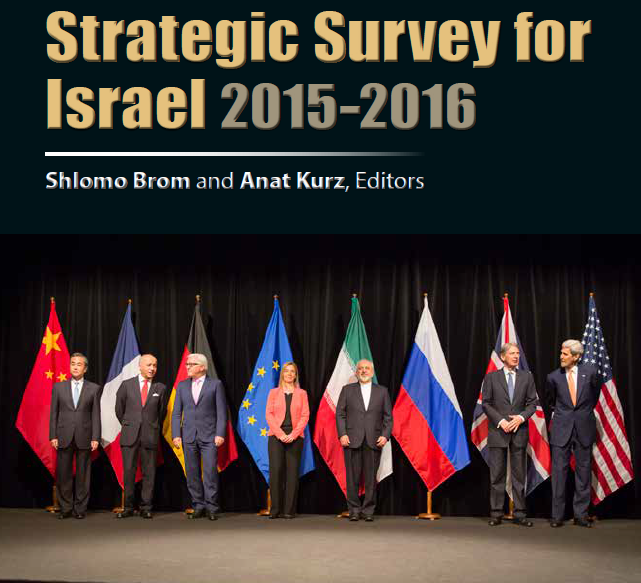
The Nuclear Agreement and Iran’s Ambitions for Regional Hegemony

in Strategic Survey for Israel 2015-2016, eds. Shlomo Brom and Anat Kurz, Tel Aviv: Institute for National Security Studies, 2016

Ephraim Kam
Striving for regional hegemony is a fundamental element in Iran’s strategic conception. Up until now, this ambition has not translated into territorial expansion. Iran’s goals are to change the conditions of its strategic environment, bolster its status in the region, influence the region’s main processes, and motivate groups and powers to acknowledge Iranian interests in the region. This ambition, relating first and foremost to the Persian Gulf area, and broadly to the Middle East as a whole, can be attributed to several causes: Iran’s geopolitical position; its potential economic wealth; its central standing in the Muslim world, mainly in the Shiite camp; its imperial history in the region; its capability for building up a strong military force; and last, but not least, Iran’s recognition that the surrounding environment poses threats and risks, but also opportunities.

The opinions expressed in INSS publications are the authors’ alone.
Publication Series Chapters
TopicsIran

Events

All events
Iran, US, Israel, and the Global Jewish Community
10 March, 2026
12:00 - 13:00
Shutterstock

Related Publications

All publications
Nir Alon/ZUMA Press Wire via REUTERS
“Operation Roaring Lion”: Summary of the First Phase
“Operation Roaring Lion,” the war against Iran and its proxies, has not yet reached its conclusion. Although the final outcome remains unclear and the current situation may soon shift, the campaign’s distinctive characteristics allow for an interim assessment. This is the most extensive war fought in the Middle East since the Second Gulf War, and the first in which Israel is fighting as an active partner in a coalition with the United States. While its global implications have yet to fully emerge, it is already clear that the war carries significant implications for the Gulf States, the global energy market, Israel’s international standing, and great-power competition.
17/05/26
REUTERS (modified by INSS)
More Than a Mediator: The Egyptian Stake in Ending the War with Iran
Why and how Cairo worked to achieve and maintain the U.S.-Iran ceasefire — and what conclusions should be drawn in Israel?
17/05/26
Shutterstock
In the Wake of “Roaring Lion”: Preliminary Insights, Hypotheses, and Dilemmas for Israel
More than two months after the outbreak of Operation “Roaring Lion,” the Islamic Republic stands with significant vulnerabilities and a new leadership, yet it also has certain achievements to its credit. These include surviving a joint American-Israeli attack and exploiting levers of pressure created during the fighting, including attacks against the Gulf states and the closure of the Strait of Hormuz. While it is premature to assess the full implications of the war, the conclusion of which remains uncertain, prominent trajectories can already be identified across six key domains: the Iranian domestic arena; the nuclear program; the missile array; the regional proxy network; Iran’s standing in the regional order; and Iran’s position in the global arena. Insights in these contexts are intended to serve as a foundation for analyzing subsequent developments in the coming months, once the “dust of war” settles and its long-term implications become evident. At present, the current status quo (“neither war nor peace”), characterized by the closure of the Strait of Hormuz alongside an American naval blockade, remains unstable. It is doubtful whether such a state can be sustained over time. For Israel, this reality implies that Iran continues to maintain its nuclear capabilities while rehabilitating its missile array. This increases the risk of a “breakout” toward nuclear weapons and the resumption of hostilities under more difficult conditions. Against this backdrop, Israel faces a fundamental question: Should it continue to strive for a resolution to the Iranian problem through a decisive victory—the achievability of which is highly questionable, particularly without active U.S. participation? Or should it adopt a policy of “conflict management” through intermittent enforcement, until a political shift occurs within Iran?
06/05/26

Stay up to date

Registration was successful! Thanks.
  • Research

    • Topics
      • Israel and the Global Powers
      • Israel-United States Relations
      • Glazer Israel-China Policy Center
      • Russia
      • Europe
      • Antisemitism and Delegitimization
      • Iran and the Shi'ite Axis
      • Operation Roaring Lion
      • Iran
      • Lebanon and Hezbollah
      • Syria
      • Yemen and the Houthi Movement
      • Iraq and the Iraqi Shiite Militias
      • Conflict to Agreements
      • Israeli-Palestinian Relations
      • Hamas and the Gaza Strip
      • Peace Agreements and Normalization in the Middle East
      • Saudi Arabia and the Gulf States
      • Turkey
      • Egypt
      • Jordan
      • Israel’s National Security Policy
      • Military and Strategic Affairs
      • Societal Resilience and the Israeli Society
      • Jewish-Arab Relations in Israel
      • Climate, Infrastructure and Energy
      • Terrorism and Low Intensity Conflict
      • Cross-Arena Research
      • Data Analytics Center
      • Law and National Security
      • Advanced Technologies and National Security
      • Foreign Information Manipulation and Interference
      • Economics and National Security
    • Projects
      • Preventing the Slide into a One-State Reality
      • India-Middle East-Europe Economic Corridor (IMEC)
  • Publications

    • All Publications
    • INSS Insight
    • Policy Research and Papers
    • Special Publication
    • Strategic Assessment
    • Technology Platform
    • Memoranda
    • Database
    • Posts
    • Books
    • Archive
  • About

    • Vision and Mission
    • History
    • Research Disciplines
    • Chairman of the Board
    • Board of Directors
    • Fellowship and Prizes
    • Internships
    • Annual Reports
    • Support
    • Privacy Policy and Terms of Use
  • Media

    • Communications
    • Video Gallery
    • Press Release
    • Podcast
  • Home

  • Events

  • Database

  • Team

  • Contact

  • Newsletter

  • עברית

INSS logo The Institute for National Security Studies, Strategic, Innovative, Policy-Oriented Research, go to the home page
40 Haim Levanon St. Tel Aviv, 6997556 Israel | Tel: 03-640-0400 | Fax: 03-744-7590 | Email: info@inss.org.il
Developed by Daat ,Yael Group.
Accessibility Statement
This site is protected by reCAPTCHA and the Google Privacy Policy and Terms of Service apply.