


Publications
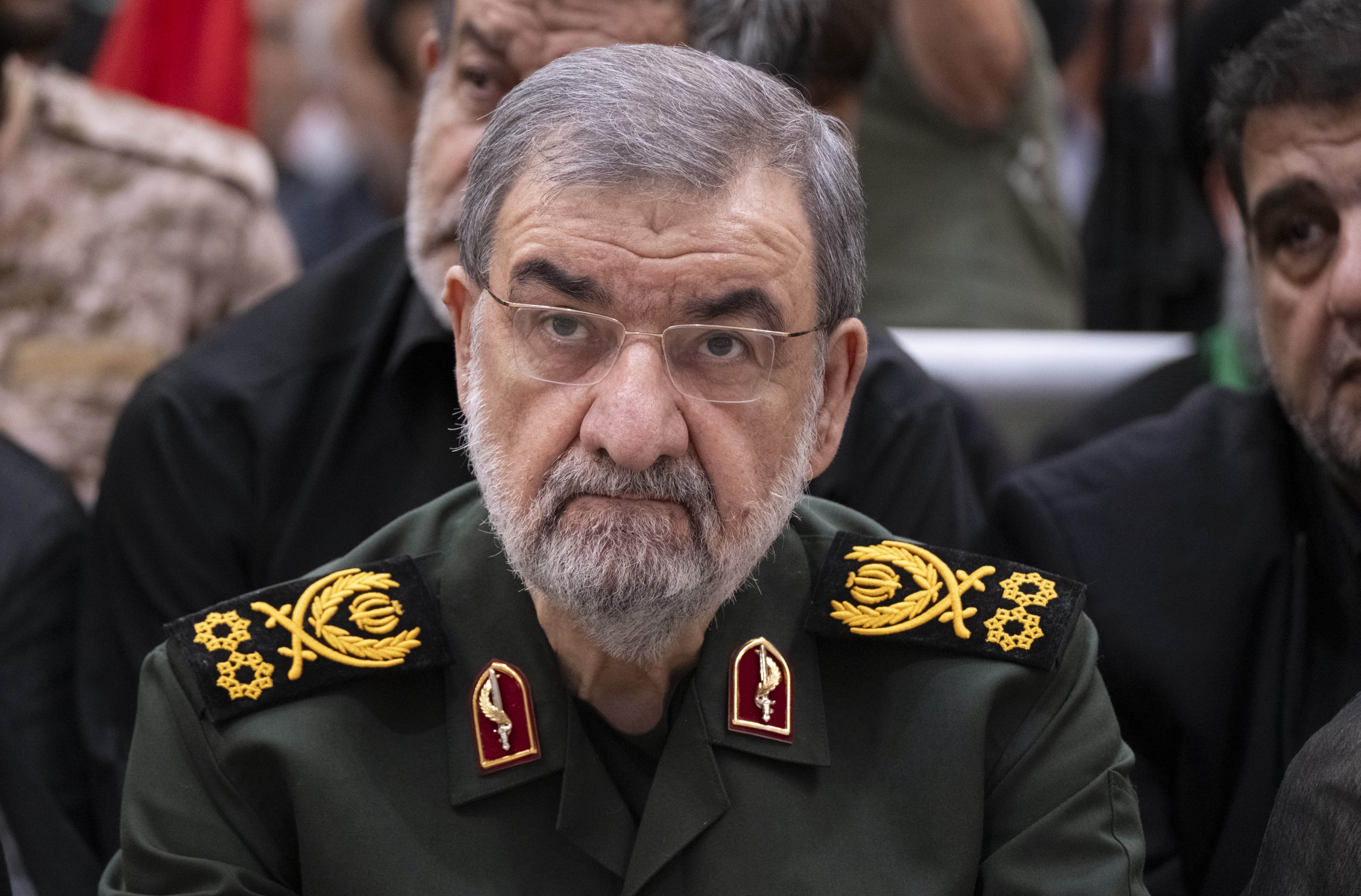
What can be learned from the rapid rise of the secretary of the Supreme National Security Council to the upper echelons of the Iranian leadership?
INSS Insight No. 2223, November 26, 2026
Follow us on GoogleThe rising standing of Mohsen Rezaei, Secretary of Iran’s Supreme National Security Council, is sparking growing interest in the possibility that he could become one of the country’s central power brokers following the war. His military and political experience, ties with senior regime officials, and access to the new Supreme Leader, Mojtaba Khamenei, could enable him to play a central role in shaping policy and forging a settlement with the United States. Iranian commentators have even described him as a potential candidate for the role of an “Iranian Napoleon”—a strong leader capable of restoring state authority and pulling the country out of its crises. Others, however, question his ability to bring about change within the existing governing structure. Given the uncertainty surrounding Mojtaba’s standing and performance, the Islamic Republic may be moving toward a governance model in which the center of gravity gradually shifts toward the security establishment and the Islamic Revolutionary Guard Corps (IRGC). It remains unclear whether Rezaei will succeed in consolidating a central position within this model over the long term.
Recent reports of the rising standing of Supreme National Security Council Secretary Mohsen Rezaei within Iran's senior leadership are generating increasing interest in the role he may play in shaping the Islamic Republic after the war. On October 29, columnist David Ignatius reported in The Washington Post that U.S. intelligence identifies Rezaei as a central power broker in the regime. According to the report, the U.S. administration assesses that Rezaei is one of the few figures capable of forging a consensus among Iran's various centers of power regarding a potential agreement with the United States, given the following factors: his access to the new leader, Mojtaba Khamenei; his standing among IRGC commanders; his ability to influence the activities of the Supreme National Security Council; and his ties to senior officials responsible for managing the economy. The report was published after U.S. Vice President JD Vance sent Rezaei a letter expressing his willingness to meet with him and discuss ending the conflict between the two countries. Rezaei's recent meeting with Russian President Vladimir Putin on November 5 also underscored his growing influence among Iran’s senior leadership.
Rezaei's current standing is particularly notable given his long and turbulent political trajectory. Born in 1954, Rezaei belongs to the founding generation of the IRGC. He was appointed commander of the organization in 1981 at the mere age of 27, commanding it through most of the Iran–Iraq War and until 1997. In the years that followed, he held senior positions in the political system, most notably serving a lengthy tenure as secretary of the Expediency Discernment Council. He ran for the presidency several times, without success. His electoral failures, alongside economic statements and promises that sometimes drew criticism and ridicule, contributed to his image as a perennial candidate unable to translate his impressive military past into political success.
The war and the upheaval it caused within the Iranian leadership opened a new window of opportunity for Rezaei. The assassinations of many senior officials—including Supreme Leader Ali Khamenei and Supreme National Security Council Secretary Ali Larijani—shifted the balance of power and brought Rezaei back to center stage. Following Mojtaba’s selection as the new leader, reports emerged that Rezaei had been appointed his military advisor. In August 2026, he was appointed the Supreme Leader's representative to the Supreme National Security Council and the Council's secretary. With this, Rezaei returned to a position of direct influence over the shaping of national security policy, after years in which his influence had been largely indirect.
Rezaei’s appointment sparked widespread reaction in Iran. The heads of the three branches of government, military commanders, and senior political and security officials sent him congratulatory messages, several of which emphasized his experience and ability to coordinate among state institutions. Rezaei’s views do not always fit neatly into the conventional division between moderates and hardliners. He frequently issues threats against the United States and Israel, and during the war he opposed compromises that he believed failed to safeguard Iranian interests. Prior to his appointment as council secretary, he even expressed reservations regarding the Memorandum of Understanding signed in June 2026 between Iran and the United States. In the past, however, he criticized the handling of nuclear negotiations by former Supreme National Security Council Secretary Saeed Jalili, who is associated with the hardline camp. Rezai stressed that the goal of diplomacy is not merely to present positions, but to achieve results. After Rezaei's appointment as council secretary, Iranian journalist Mehrdad Khadir argued that he should not be regarded as an extremist, emphasizing that Rezaei is not aligned with the worldview of hardline circles seeking to continue the war indefinitely until the reappearance of the Shi'ite "Hidden Imam."
Recent reports regarding Rezaei's growing influence have also drawn attention in the Iranian media, which has begun reassessing his standing and his prospects of becoming one of the central power brokers of the Islamic Republic. On November 7, the news site Asr-e Iran published an analysis examining whether Rezaei could succeed in rebuilding his political brand. According to the analysis, his position as secretary of the Supreme National Security Council allows him to combine three identities that have characterized him over the years: military commander, veteran politician, and advocate of solutions to the economic crisis. This combination could enable him to position himself as a “national security manager in times of crisis,” capable of coordinating the components of national power at the strategic level, including economic strength, internal cohesion, diplomatic efforts, technology, social resilience, and the capacity to govern. Nevertheless, the article stressed that the appointment alone does not guarantee his success. If Rezaei settles for an increased media presence and frequent public statements, he risks repeating the political mistakes of his past. Only by demonstrating a genuine ability to coordinate among different centers of power, bridge the gap between the leadership and the public, and resolve crises will he be able to establish a new standing.
The debate over Rezaei’s standing took an intriguing turn with references to him as the "Iranian Napoleon Bonaparte." Abdolreza Davari, a former adviser to former President Mahmoud Ahmadinejad, published a post on his X account arguing that Iran needs a strong figure, akin to Napoleon, capable of restoring state authority, streamlining decision-making processes, and harnessing the country's capabilities to rebuild the economy and strengthen national cohesion. In Davari’s view, Rezaei could be the right man for the job. Davari emphasized that many of today's military commanders and senior political figures, including Majlis Speaker Mohammad Bagher Ghalibaf and IRGC Commander Ahmad Vahidi, previously served under Rezaei's command. His former senior command position, together with his political and administrative experience and extensive ties, gives him a unique advantage in forging the broad coalition among the various centers of power that is essential to overcoming the current crisis.
Davari’s remarks fit into a broader discourse unfolding in Iran in recent years surrounding the possible emergence of an "Iranian Napoleon." One of the most prominent advocates of this idea is the economist and political commentator Saeed Laylaz. As early as a decade ago, Laylaz assessed that the Islamic Republic was moving toward a new governance model centered on a strong leader who would emerge from within the existing system and lead the country out of its political and economic deadlock. Laylaz emphasizes that Bonapartism should not necessarily be equated with military rule. In his view, it represents a transitional governance model in which a leader wielding broad authority rises above political rivalries, concentrates governing power in his hands, and advances reforms aimed at making the system more efficient. Such a leader might restrict political freedoms while simultaneously allowing greater openness in the social, cultural, and economic spheres, and even de-escalating tensions in foreign relations. In an interview with Euronews in October 2026, Laylaz assessed that Mojtaba Khamenei could fulfill the role of "Iran's Bonaparte" after the war, though he stressed that the course of the war could also pave the way for the rise of another figure.
Others, however, have questioned whether Rezaei can play a central role at this time. Reformist political commentator Ahmad Zeidabadi, for example, argued that some expect Rezaei to succeed in bringing order to the system, just as similar hopes were previously pinned on President Masoud Pezeshkian and Majlis Speaker Mohammad Bagher Ghalibaf. However, according to Zeidabadi, it is doubtful that any individual could fulfill this role within the current governing structure. Doing so requires someone capable of thoroughly grasping the situation, bringing order to the system, making decisions, and standing behind them.
The possibility that Rezaei could play a central role in a different governance model within the Islamic Republic takes on added significance amid persistent doubts regarding Mojtaba’s ability to consolidate his rule. Since being chosen as Supreme Leader, Mojtaba has not appeared in public, and information regarding his health and direct involvement in decision-making remains limited. Reports about his activities and meetings with senior regime figures—including Rezaei himself—have increased recently. Rezaei has said that he met with the new leader and he is well-versed in the details of political, economic, social, and military affairs and issues directives to senior officials. These reports, however, make it difficult to determine the extent to which Mojtaba is able to exercise his authority, assert it over the various centers of power, and arbitrate their disputes. Under these circumstances, the Islamic Republic's ongoing crisis could pave the way for a transition to an alternative governance model, in which the formal framework of Rule of the Jurisprudent (Velayat-e Faqih) is preserved, while the center of gravity gradually shifts toward the security establishment and the IRGC.
As long as wartime conditions persist, it is premature to determine how the new governing structure will stabilize. The state of emergency necessitates coordination among state institutions and may strengthen figures with security experience and cross-institutional ties, such as Rezaei. At the same time, it makes it difficult to distinguish influence driven by immediate needs from stable political authority. Once the war ends, it will be possible to better assess the direction in which the "Third Islamic Republic" is heading: whether Mojtaba will succeed in consolidating his standing as a Supreme Leader wielding genuine authority, much like his father, or whether a governing system will gradually evolve in which power is distributed among several centers and actors—or perhaps even concentrated in the hands of a strong political and security figure. In the latter scenario, Mohsen Rezaei, by virtue of his experience, ties, and current standing, could play an even more significant role than he does today. In any case, his very return to the center of decision-making illustrates just how far the process of shaping the new Islamic Republic remains from completion.