


Publications
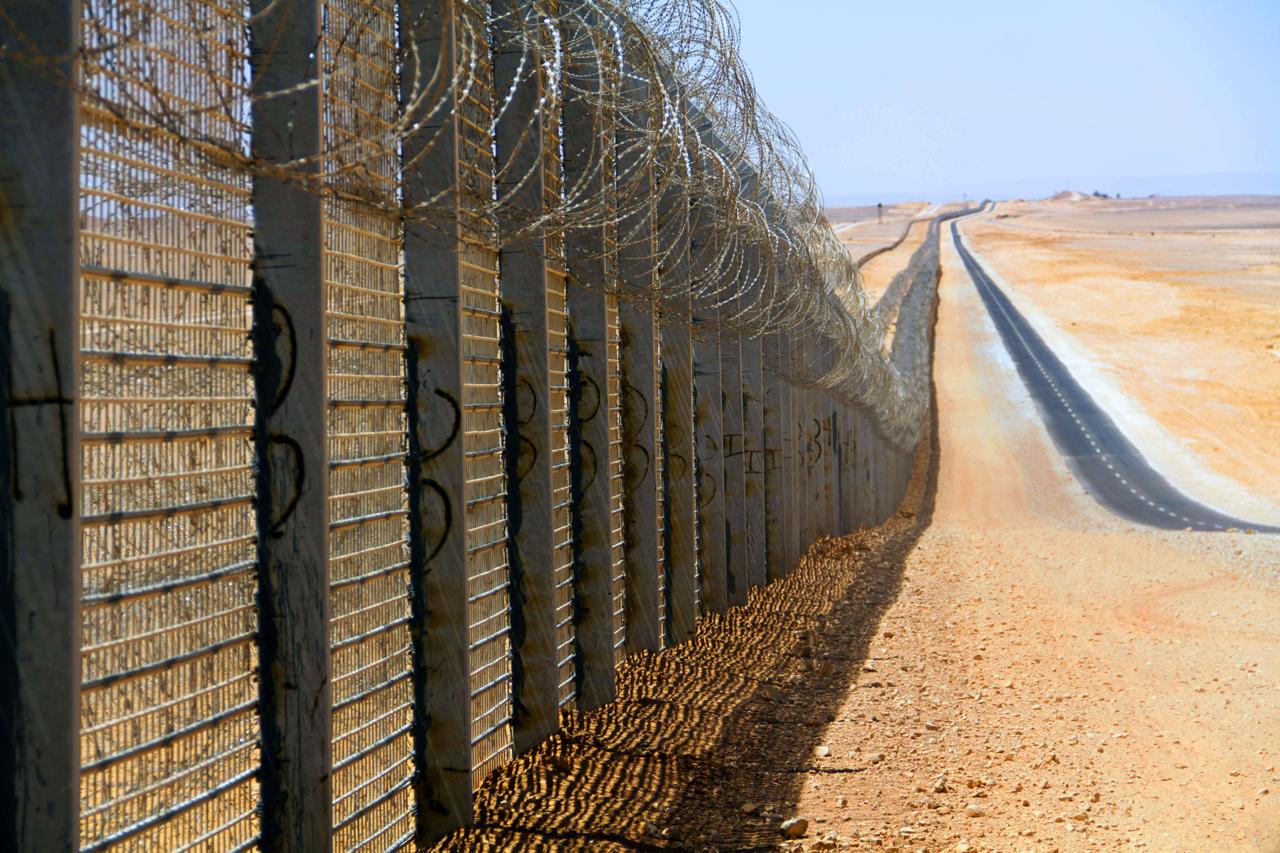
Does the security concept that took shape informally after October 7 reflect a fundamental change in the identity of the state?
Special Publication, October 12, 2026
Follow us on GoogleIsrael’s national security concept is at a turning point that demands clarification. Since October 7, 2023, it has become evident that Israel’s security policy is, in practice, guided by a new security concept rather than the unwritten security doctrine that took shape over decades. (Despite its flaws, the earlier concept helped Israel become a prosperous regional power. Had it been properly implemented, it might have prevented the colossal failure of October 7, but that is for a state commission of inquiry to determine.) This new concept has not been formally articulated or presented to the public, nor is it bindingly defined within the defense establishment. In practice, however, its principles inform decision-making and dictate Israel’s approach to security.
It is important to distinguish between three hierarchical concepts: “national identity,” “security concept,” and “security policy.” A security concept derives its authority from the state’s national identity, its constitution (if one exists), and its foundational heritage. It is a relatively stable conceptual framework that is not supposed to change from one government to the next. National security policy is subordinate to the security concept and constitutes its practical implementation, in accordance with the ideology and political considerations of a particular government. Based on this hierarchy, a profound change in the security concept, the middle layer, is critical: it signals a deeper shift in the state’s national identity above, while driving the practical security policy below. Such a transformation therefore warrants critical, in-depth examination.
This article provides a basis for public and professional debate. Its purpose is not to examine the security concept solely in military and security terms, but to uncover a potentially more fundamental shift: a change in Israel’s national identity. It seeks to provoke thought and address the question of who we are after October 7, 2023. To this end, it exposes the principles underlying the new security policy and poses questions intended to stimulate conceptual and scholarly discussion of the significance of the profound shift these principles reflect.
Principles of the Emerging "New" Concept
The following principles can be inferred from the security policy now being implemented (they represent a subjective, theoretical interpretation):
- Primacy of Jewish Identity over Democracy: The state’s Jewish identity takes precedence over its democratic system of government. This priority is intended to guarantee Israel's continued existence as a Jewish state, even at the cost of eroding its democratic values. The state's Jewish identity rests on ethnic, religious, and national foundations, and is preserved through the inspiration of the Jewish spirit and tradition. This principle dictates the need to maintain the primacy of Jewish identity over other national identities (such as Arab-Islamic or Christian).
- Peace as a Means Rather Than an End: The underlying assumption is that any arrangement with Arab actors is temporary and deceptive. Striving for peace would therefore repeat the mistake of the "conceptzia," the prevailing conceptual framework considered a primary cause of the October 7 disaster. A meaningful peace agreement is unattainable in the Middle East, as peace agreements are merely technical and temporary arrangements requiring constant reassessment. According to this view, peace is not an intrinsic value that generates security, but a means of achieving other policy objectives. Politically, "peace" is regarded as a naive concept representing the left-wing "peace camp" which stands in tension with, or in direct opposition to, "security," which represents the right-wing “security camp.”
- Rejection of the Independent Existence of Arab States: The underlying premise is that most Arab states are not genuine nation-states, but collections of tribes and ethnic groups lacking a shared history and a foundational national vision. Consequently, undermining their stability is viewed as a natural process, one that Israel can manage more effectively than it can contend with strong nation-states, and one that it should even encourage.
- War as a Foundational State: War is essential to national security and cannot be replaced by a state of peace, which, as noted, is merely a means rather than an end. "Silence is filth,"[1] and therefore its pursuit is an expression of weakness. According to this view, regarding war as a necessary evil to be avoided, along with the decades-long pursuit of arrangements and peace, are at the foundation of the mistake that led to October 7. War is necessary, and preventive war is preferable because it secures a significant achievement at the outset. Its intensity may vary with circumstances, but its constant presence is an asset to national security.
- Self-Reliance and Severing Dependence on the United States: Israel’s national security rests solely on its own capabilities and does not require the backing of a specific great-power. Although important, the relationship with the United States is driven purely by interests. Furthermore, excessive adherence to restrictions imposed on Israel by a US administration is dangerous: The United States is a “declining power” and, given its ongoing social and political shifts, will soon abandon Israel in any event. Excessive dependence on the United States exposes Israel to the influence of a progressive American value system that is incompatible with Israel's Jewish character. Severing ties with the United States is therefore not only inevitable, but essential to Israel’s independence and the resilience of its Jewish national identity.
- Absolute Priority for Initiative and Offense over Defense: Preemptive, surprise strikes are viewed as the only way to achieve victory, giving offense precedence over defense. If Israel cannot withstand a surprise attack or ensure reliable advance warning, the only conclusion is that it must pursue a proactive policy of preventive strikes and wars.
- Forward Defense: In cases where a preemptive counterstrike is not feasible, or time is needed to prepare an offensive, establishing forward defense zones wherever possible becomes crucial. These zones provide defense-in-depth against terror armies, which destabilize their host states and weaken them relative to Israel. These spaces enable Israel to move the war into enemy territory as quickly as possible. There is no contradiction between forward defense and an offensive initiative, as it is effectively a deferred attack in which forward defense serves as a structural component of the offense.
- Internalizing the Reality of the Israeli-Palestinian Conflict as a Permanent Israeli-Arab Conflict: According to this concept, the existence of a Palestinian national movement is an inauthentic Western narrative rooted in post-colonial guilt. The Palestinian struggle against Israel, and its periodic resurgence, constitutes yet another Arab attempt to fight and destroy the State of Israel. In practice, the depth of the conflict with the Palestinians and their non-recognition of Israel as a Jewish state form the basis for the view that no solution is possible. This leads to principled opposition to any political, geographic, or security separation between Israel and a Palestinian entity, and to the establishment of a Palestinian state. According to this view, security will be achieved by expanding settlement throughout the state’s territory, both within and beyond the "Green Line" (which is regarded as fictitious). Arab inhabitants of the Land of Israel who choose to remain in the Jewish state will be granted residency rights and local self-governance.
- Settlement and Civilians as a Central Component of Security: This marks a return to the security principles of the "Yishuv" era (the period prior to statehood, when security was achieved through settlement on legally purchased land, and defense forces were decentralized and relied on local defense by civilians organized in voluntary paramilitary organizations [the underground militias]). In contemporary terms, security is not viewed as the exclusive responsibility of the security forces; rather, civilians are part of the defense network. Defense is established by creating communities and outposts in all areas of friction with the Arab population, in Judea and Samaria, and in security zones in Syria, Lebanon, and the Gaza Strip. This deployment requires the IDF to implement the principles of preemptive attack and forward defense in practice, and further contributes to the destabilization of the "synthetic" Arab states.
- Priority for Industrial-Defense Independence: Israel's defense economy is highly vulnerable to long supply chains; therefore, domestic production and investment in the defense-tech sector (defense industries, cyber, and artificial intelligence) must be prioritized over other sectors. Scientific research supporting technology is considered paramount, but should be advanced independently rather than through international collaborative frameworks such as "Horizon."
Critical Questions: Confronting the Foundational Principles of Israel's Traditional Security Concept
It should be emphasized that the “new” security concept has emerged in the context of national trauma and renewed threat perception following October 7. This trauma necessitates changes to, and the reshaping of, certain aspects of the security concept. Nevertheless, if the principles outlined above indeed constitute the new concept, they reveal a profound and fundamental contradiction with the foundational principles of Israel’s traditional security concept. The significance of this turning point lies not merely in formulating a new security concept, but in the fact that it reflects a fundamental transformation in Israeli national identity as it has evolved since the founding of the state.
The following are the most significant aspects of these shifts in identity, whose meaning and implications require discussion and examination:
- The State of the Jews or a State for Jews?
- The Traditional Principle: The Declaration of Independence defined Israel as a Jewish state committed to the principles of liberal democracy, although it did not explicitly use that term. The state would uphold the principles of “freedom, justice, and peace.” Israel’s Jewish character finds expression in the establishment of a national home for the Jewish people. Its moral and democratic character derives from Jewish values, including equality before the law and the pursuit of morality and justice in the spirit of the vision of the prophets of Israel. The state’s Jewish character shapes its identity, including its commitment to "complete equality of social and political rights for all its citizens, irrespective of religion, race, or sex." In other words, it is not a theocratic state governed by religious law designed to serve "Jewish supremacy" over other religions, but rather the state of the Jews, serving as a moral and ethical beacon to the world.
- Critical Question: What are the practical, long-term implications of making religious sources, rather than civic and democratic considerations, the framework for setting security priorities? Can a policy seeking to curtail the civil rights of Israel's Arab citizens—who comprise approximately one-fifth of the country's population—still align with Israel's definition as a "Jewish and Democratic" state, a state that is a "light unto the nations," whose existence contributes to "Tikkun Olam" (repairing the world)? Furthermore, what are the international implications of the erosion of the state's secular-liberal identity and its commitment to equality before the law?
- Peace as an Interim Stage Rather Than a Strategic Objective
- The Traditional Principle: Israel has always defined itself as a state desiring arrangements and peace agreements. In the words of the Declaration of Independence, it extends its hand in peace and good neighborliness to regional states, founded on "freedom, justice, and peace." The state’s founders, across the political spectrum, repeatedly expressed the belief that peace is key to prosperity and a central component of Israel’s foreign relations and international standing—one that distinguishes it from the Arab states.
- Critical Question: What is the strategic and moral price of a security concept that defines peace agreements as a "conceptzia," a flawed delusion to be inherently mistrusted, rather than a strategic asset that enables the state to prosper and should therefore be preserved? Does treating peace as inherently temporary risk becoming a self-fulfilling prophecy that undermines Israel's long-term security? What does this concept mean for Israel's foreign policy and international standing, given that it directly contradicts the fundamental norms of the liberal Western world? And if this indeed becomes the basis of the security concept, how will Israel address the risk of emigration, including a brain drain on a scale that threatens its economy and the resilience and quality of its society?
- Prosperity "Between Wars" (David Ben-Gurion) vs. War as a Permanent State
- The Traditional Principle: The state is built during the quiet periods between wars; war is viewed as an exceptional, brief, and temporary state during which the state draws on the assets it accumulated during periods of calm. Prolonged periods of quiet are what enable national economic, educational, and social development.
- Critical Question: What happens to a democratic state’s society, economy, and culture when prolonged war comes to be accepted as a norm rather than as a temporary exception? Is this condition compatible with the state’s ability to develop and prosper, as its founders envisioned?
- Deterrence and Early Warning as a Basis for Risk Management vs. Perpetual Preemptive War
- The Traditional Principle: One of the pillars of Israel’s security concept was the combination of deterrence and early warning as tools for managing risks in a hostile environment without resorting to the constant use of force.
- Critical Question: What happens to a state that relinquishes the option of deterrence, early warning, and subsequent defense, embodied in the familiar military adage, "Even if caught by surprise, we will not be defeated"? What is the practical implication of relying on constant offensive initiative as the default strategy? Can any strategy dispense with risk management? Does the absence of risk management make Israel (or any state) more secure? What are the economic and social implications of abandoning it?
- "Soldiers Before Civilians" and the Sanctity of Civilian Life vs. The Civilian as the "True Shield"
- The Traditional Principle: Since the establishment of the IDF, a fundamental principle has been that soldiers, rather than civilians, bear the burden of defense on the front line, alongside a commitment to the sanctity of civilian life and to minimizing civilians’ exposure to combat. The state’s borders are defended by the IDF, which protects farmers plowing to the very last furrow, and not by the plow or by the farmer on a kibbutz or moshav.
- Critical Question: Doesn't a concept that positions civilians, including those in outposts and settlements, as a front-line "shield" effectively reverse the priorities of a strong, sovereign state (which places soldiers before civilians) and expose noncombatants to precisely the risks that the state, through the Israel Defense Forces, sought to spare them? What does this mean for the status of Israel's borders? A state’s force structure and defense concept should be determined by its borders, as recognized under international law and anchored in agreements. What, then, are the economic, security, and international implications of abandoning a defined border in favor of flexible, amorphous defense zones? What defense concept is suitable for such a reality?
- Great-Power Backing and Global Dependence vs. the Vision of Full Economic-Security Independence
- The Traditional Principle: Given Israel's small geographical size, scarce natural resources, and deep reliance on global trade, science, and technology networks, the defense establishment has long understood that Israel requires great-power backing. Israel cannot sustain an autarkic defense economy isolated from the world; without great-power backing, it remains exposed to severe international risks.
- Critical Question: What are the implications of lacking great-power backing and a special relationship with the United States? Would a relationship with the United States based solely on interests and commercial and economic considerations suffice for Israel? How does this posture affect Israel's regional standing? Is severing Israeli science and defense industries from international cooperation frameworks economically feasible for a small, trade-dependent state with limited natural resources? Or does it risk technological stagnation and diplomatic isolation precisely when strategic partnerships are more important than ever?
Summary
The "new" security concept described above, while never anchored in an official document or approved through a formal procedure, is what has effectively guided key aspects of Israeli security policy since October 7, 2023. Its considerable influence stems precisely from its operation as an unwritten concept revealed through practice, rather than as a government’s declared policy. It is therefore essential to articulate it explicitly and subject its details and implications to public discussion. Only then can we determine whether it represents a necessary adaptation to the current and emerging security reality, or an expression of a fundamental, unchecked shift in the state’s identity.
____________________
[1] A reference to the iconic line "Sheket hu refesh" (שֶׁקֶט הוּא רֶפֶש—"silence is filth") from the 1932 anthem "Shir Betar" (The Betar Anthem) by Ze'ev Jabotinsky, founder of Revisionist Zionism. In Revisionist thought, "silence" symbolizes passive complacency, while active national struggle is viewed as essential for dignity and survival.