


Publications
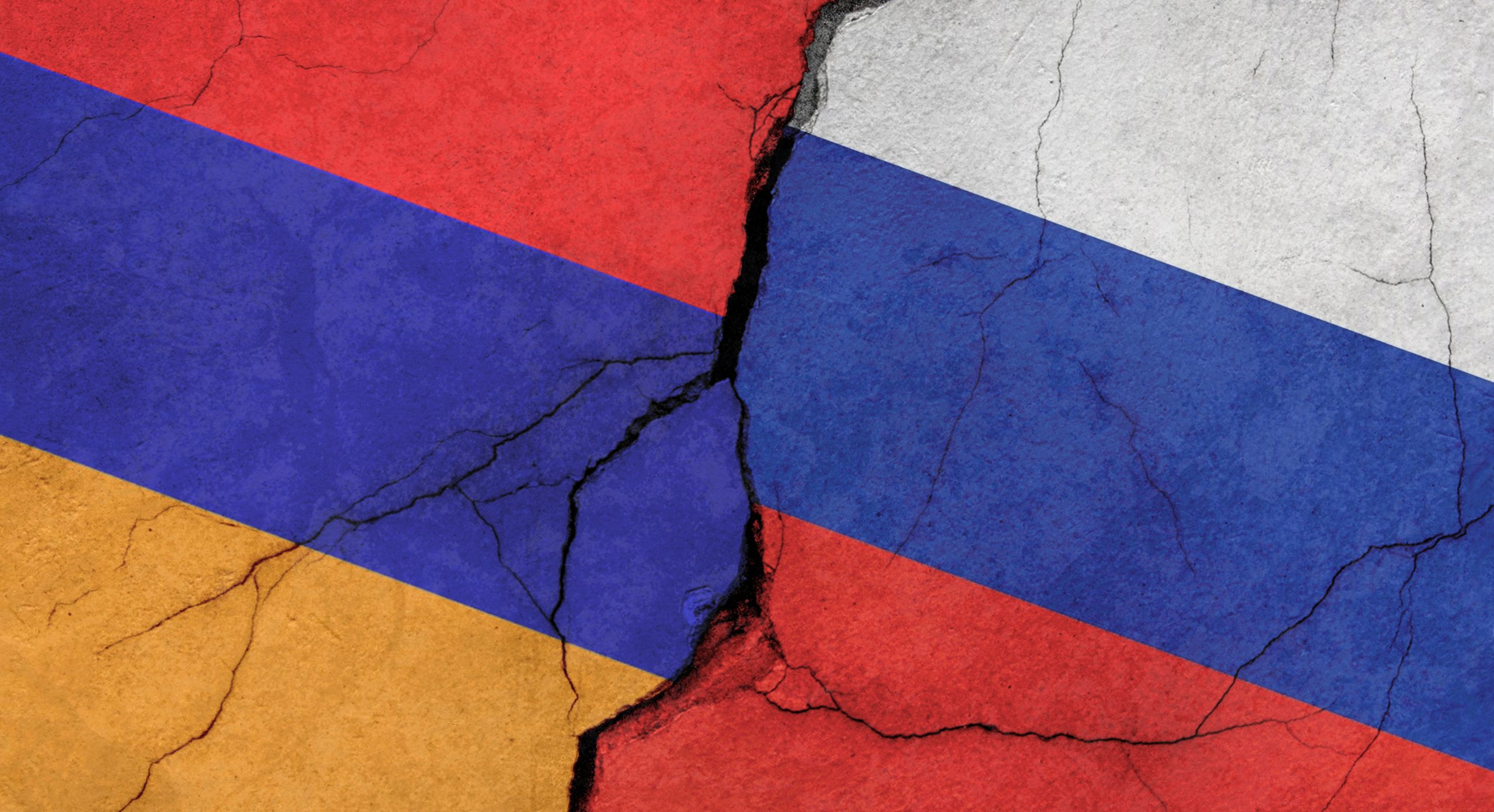
What significant changes have recently taken place in Armenia, why has it become a focus of interest for global actors—and how should Israel respond in the face of these developments in the South Caucasus?
INSS Insight No. 2172, September 23, 2026
Follow us on GoogleDespite its modest size and a population estimated at just three million, in recent years Armenia has become a focal point of interest for major global players. This interest stems first and foremost from Armenia’s geographic location, situated at one of the critical meeting points between Asia and Europe. Another reason is the dramatic pivot in Armenian foreign policy—the shift from exclusive reliance on Russia toward a pro-Western orientation, alongside the normalization of its relations with neighboring countries. Armenian Prime Minister Nikol Pashinyan has not shied away from challenging prevailing conventions in the post-Soviet sphere, ranging from his country’s historical dependence on Russia and the discourse surrounding the Armenian Genocide, to restoring relations with Turkey. While Israel must closely monitor these developments, it is essential that it maintains strong ties with its true ally in the South Caucasus—Azerbaijan.
Russia–Armenia: Who Betrayed Whom?
The Armenian parliamentary elections on June 7, 2026, revolved around one central question: which direction will Armenia head in the coming years—northward, toward Russia, or westward, toward the European Union and the United States? Armenian Prime Minister Nikol Pashinyan, who has led the country for the past eight years, offered citizens a path of continued rapprochement with the West and normalization of relations with Armenia's neighbors, while distancing the country from security and economic frameworks established by Russia in the post-Soviet sphere to maintain it as its exclusive sphere of influence. Facing Pashinyan in the election were three pro-Russian parties whose anti-Western propaganda aligned with economic pressure, influence operations, and public threats emanating from the Kremlin. Yet despite Moscow's intense pressure tactics, the majority of Armenian citizens once again placed their trust in the incumbent prime minister.
In many respects, Armenia today stands at a crossroad similar, if not identical, to the one Ukraine faced nearly two decades ago. The pro-Western orientation of successive Ukrainian governments and the country's gradual detachment from Russia ultimately led to a Russian invasion and the longest, most brutal war on European soil since World War II. Given the risks involved in the Armenian voters' choice at the ballot box, several questions must be addressed: How can their willingness to strengthen a pro-Western orientation at the expense of weakening ties with Russia be explained? What geopolitical trends does the Armenian voter's choice reflect? What regional architecture is likely to emerge if these trends continue? And what should Israel learn and do in response to these developments?
Since the middle of the previous decade, Pashinyan and his Civil Contract party have opposed Armenia’s continued dependence and exclusive reliance on Russia. In recent years, this understanding has gradually gained ground among the broader Armenian public, with negative views of Russia rising from 49% in 2023 to 66% in 2024. Ironically, the Kremlin's own decisions were the primary driver of such a dramatic decline in Armenian public opinion toward Russia. Despite a Russian military presence in Armenia and long-standing commitment to its security, Moscow remained neutral during the Second Nagorno-Karabakh War, which began with an Azerbaijani offensive in September 2020, and did not fight alongside Armenia. Although Moscow was not formally obligated to assist Armenia in defending the disputed territory, the Armenian public regarded its failure to do so as a betrayal. This sentiment was further reinforced by the non-intervention of Russian troops deployed in the region during the blockade imposed by Azerbaijan throughout 2022 and its final capture by the Azerbaijani military in September 2023. These events cemented the realization in Armenia that it could no longer entrust its security to Russia.
From Russia’s perspective, its retreat from its commitment to Armenia’s security reflected changes in the Kremlin’s geopolitical concepts in recent years. As relations with Western countries deteriorated following the sanctions imposed on Russia over its annexation of Crimea and territories in eastern Ukraine, Azerbaijan became an important partner for Russia in its energy export sector. Consequently, joining the fighting alongside Armenia would have damaged Russia's increasingly close relationship with Baku. Furthermore, military support for Armenia would have jeopardized Russia's relations with Azerbaijan's principal ally, Turkey—a critical regional player for Russian interests in both the economic and energy spheres, as well as in the Syrian context. In addition, one cannot ignore Russian President Vladimir Putin's antagonistic approach toward Pashinyan himself, due to the latter's adherence to democratization processes and his consistent efforts to curb pro-Russian circles in Armenia.
While the Armenian public grapples with the collapse of Russia's image as a historical ally following the military defeat in Nagorno-Karabakh and the displacement of the region's Armenian population, from Putin's perspective, it was precisely Armenia and its leader who were perceived as betraying the strategic partnership between the countries. In Putin's view, Armenia, like other client states in the post-Soviet sphere, is expected to remain loyal to Moscow and align itself with Russia’s positions on issues it considers critical—even when Russia’s own geopolitical calculations change. Russia regards the South Caucasus as part of its sphere of influence and believes that its relationship with Armenia should follow the same model as its relationship with Georgia, based on deeper economic integration and Russian ideological influence.
For years, Pashinyan acted in accordance with this logic, contrary to his views prior to assuming the office of Prime Minister. After his election, for example, he supported Armenia’s continued membership in the Collective Security Treaty Organization (CSTO) and the Eurasian Economic Union—institutions established by Moscow to maintain its control over the post-Soviet sphere. Armenia was also among the few countries to publicly support Russia’s intervention in Syria. In 2019, it even deployed a humanitarian mission to Syria that included security personnel, bomb-disposal experts, and doctors, and operated in full coordination with Russian forces there. In 2021, Armenia also supported the deployment of Russian forces to Kazakhstan to suppress the unrest that had erupted in the country.
Russia's invasion of Ukraine did not bring about a dramatic shift in Russian–Armenian relations. Although Yerevan adopted a formally neutral position on the war, in the economic arena it benefited from a significant strengthening of ties with Russia. This was because Moscow was forced to use Armenia and other countries in the region to bypass Western sanctions. Between 2022 and 2025, Armenia even enjoyed a temporary influx of tens of thousands of Russian tech professionals and entrepreneurs, whose capital contributed to significant economic growth in the country. As a result, bilateral trade between the countries reached $12 billion in 2024—an increase of approximately 600% from its level before the start of the war in Ukraine. Although this figure fell by half in 2025, Russia remained Armenia's primary trading partner (accounting for 35% of total foreign trade). Nevertheless, the protracted war in Ukraine led to a significant deterioration in Russian–Armenian relations. First, Russia’s growing dependence on Azerbaijan and Turkey made it impossible for Moscow to side with Armenia. Second, the war reduced Russia’s ability to exert its full pressure on the Armenian government.
Ahead of the recent elections in Armenia, Russia employed a familiar set of punitive measures against this post-Soviet country it suspected of drawing too close to the West. These "Pavlovian" repressive responses include economic pressure, disinformation campaigns, and efforts to undermine political stability. As expected, Russia exerted economic pressure by imposing restrictions on the export of Armenian goods to Russia; entities affiliated with the Kremlin funded an extensive media campaign against Pashinyan and his party; and Russia attempted to ignite a public confrontation between the Armenian government and the traditionally pro-Russian Armenian Church (a tactic similarly deployed in Ukraine). The Kremlin even attempted to enable the voting participation of approximately 100,000 Armenian citizens permanently residing in Russia to tip the election results in its favor (in Armenia, as in Israel, citizens may vote only if they are physically present in the country). The experiences of Georgia and Ukraine suggest that after exhausting such pressure tactics, Russia may resort to military action against a state that defies its control. Therefore, it is hardly surprising that, in early May, Putin warned Yerevan against following the "Ukrainian scenario." At least for now, however, the government in Yerevan and the Armenian public appear to believe that Russia, in its current condition, will not rush to pursue this path.
The West Discovers Armenia
Armenia’s distancing from Russia, under circumstances in which Moscow is unable to enforce its will on Yerevan, has opened the door to new powers seeking a foothold in the region. In recent years, the Armenian government has drawn encouragement from major geopolitical players who recognize Russia's weakness in the South Caucasus and are working to expand their own influence there. In March 2025, the Armenian parliament passed a law initiating the country's EU accession process. On May 4–5, 2026, Yerevan hosted the first Armenia–EU summit, during which the Union formally recognized Armenia's aspiration to join the bloc. The EU also reaffirmed its commitment to supporting the development of Armenian infrastructure under its "Resilience and Growth Plan" and signed numerous cooperation agreements covering a broad range of issues, including security and defense. Furthermore, Ukrainian President Volodymyr Zelenskyy was among the speakers at the summit, using his address to launch a harsh attack on Putin's Russia, which prompted the summoning of the Armenian ambassador in Moscow for a reprimand at the Russian Foreign Ministry.
The Armenia–EU summit included other developments that Russia found troubling. French President Emmanuel Macron, who conducted a working visit on the summit’s sidelines, has made no secret of Paris’s desire to bolster Armenia’s ability to contend with Russian pressure. France and Armenia had already signed a defense cooperation program in December 2025, while existing agreements for the supply of French weapons to Armenia were estimated at approximately $300 million. During President Macron's visit to Yerevan, the two countries signed a cybersecurity cooperation agreement addressing foreign interference. VIGINUM, the French agency specializing in this field, had already assisted Armenian security authorities in countering Russian interference during the recent election campaign.
Developments appear to have accelerated since the summit. In late May, Russia and the other members of the Eurasian Economic Union—Kazakhstan, Belarus, and Kyrgyzstan—issued Armenia an ultimatum: hold a referendum to determine whether Armenia is bound for EU accession or remain in the Eurasian Economic Union. At the same time, a Russian ban on imports of Armenian agricultural produce took effect in early June. In response, the European Union immediately announced €50 million in emergency economic assistance for Armenia, €34 million of which was transferred on June 19.
Armenia’s steps to expand military cooperation have further heightened Moscow’s concerns. From June 17 to 25, Armenian, US, French, and Greek forces participated in Eagle Partner 2026, a joint military exercise held at an Armenian military base. While the official objective of the exercise was defined as strengthening the readiness of Armenian forces for peacekeeping missions, official spokespersons for the Russian government labeled it a "spit in Russia's face." Against the backdrop of Armenia’s suspension of its participation in the Collective Security Treaty Organization in late 2024, a joint military exercise with three NATO members, led by the United States, sent Moscow an unmistakable message.
For its part, the United States has consistently pursued closer relations with Armenia. It has done so while Russia remains mired in its war in Ukraine, which has significantly reduced the attention Moscow can devote to the post-Soviet sphere. This US policy represents one of the rare examples of policy continuity between the Biden and Trump administrations. In the final days of President Biden's term, in early January 2025, the United States and Armenia signed a Strategic Partnership Charter. Notably, apart from Armenia, Ukraine is the only country with which Washington had signed a similar charter, in 2021. In August 2025, after Trump entered the White House, the United States hosted a trilateral summit with Armenia and Azerbaijan. During the summit, the two South Caucasus states signed a declaration to end their conflict, and plans were announced for their joint participation in the development of a transit corridor bearing Trump’s name—the Trump Route for International Peace and Prosperity (TRIPP).
In light of these developments, Washington has signaled that it does not intend to settle for mere declarations and ceremonies. Last February, Vice President Vance made an official visit to Armenia—the first of its kind at such a senior level in the history of bilateral relations—and signed a nuclear cooperation agreement with Prime Minister Pashinyan. Under the agreement, the United States pledged to provide Armenia with civilian nuclear technologies, including small modular reactors. In the longer term, these technologies could help Armenia reduce its dependence on Russia in this field, a reliance which dates back to the Soviet era. Pashinyan even noted during Vance's visit that Armenia had purchased American drones to bolster its defense capabilities. In May, prior to the recent elections, Secretary of State Marco Rubio made a brief visit to Yerevan, where he signed a comprehensive strategic cooperation charter and a series of additional agreements, including on critical minerals and metals. Judging by the Russian media’s response, Moscow regards these measures as an American attempt to push Russia out of the post-Soviet sphere.
Armenia and Its Hostile Neighbors: Between Suspicion and Partnership
Pashinyan's revolutionary foreign policy does not end with a strategic pivot toward the West. Following its crushing defeat in Nagorno-Karabakh, the Armenian government has been forced to demonstrate a genuine willingness to open a new chapter in its relations with its two hostile neighbors, Azerbaijan and Turkey. The Armenian leadership under Pashinyan has shown the considerable political courage required to rebuild relations with Azerbaijan after more than three decades of bloody conflict. This is even more true of Turkey, relations with which remain overshadowed by the memory of the Armenian genocide committed by the Ottoman Empire in 1915.
On August 8, 2025, Pashinyan and Azerbaijani President Ilham Aliyev met at the White House. Under the auspices of President Trump, they declared their countries’ readiness to work toward the final approval of a peace agreement and the establishment of diplomatic relations. The two leaders also announced their intention to restore communication channels and facilitate the operation of bilateral and international transit routes. These positive developments led the Azerbaijani President to state in January 2026 that relations between the two countries had "shifted from confrontation to cooperation." According to media reports, Azerbaijan has begun supplying oil and petroleum products to Armenia and is also permitting the transit of goods from Russia to Armenia through its territory. At the same time, Pashinyan’s victory in the recent elections gave his policy of establishing peaceful relations with Azerbaijan broad public legitimacy.
Nevertheless, the road to final reconciliation is fraught with obstacles. In the recent elections, Pashinyan failed to secure the parliamentary majority needed to amend Armenia’s constitution—a condition on which Azerbaijan insists because of what it regards as ambiguous provisions implying continued Armenian claims to Nagorno-Karabakh. The widespread mistrust among the Azerbaijani public is rooted in the lesson it drew from the conflict with Armenia: political and military weakness leads to the loss of sovereign territory. To reach the current situation, in which Azerbaijan has regained its lost territories and can dictate the terms of an agreement to Armenia, the Azerbaijani leadership had to build an efficient economic infrastructure, reform its military, and pursue a foreign policy unusual for a Muslim-majority country—one that included forging strategic relations with Israel. Military cooperation with Jerusalem was one of the key pillars in establishing Azerbaijani military superiority in the war with Armenia, prompting accusations against Israel by official Armenian representatives.
Following its defeat in Nagorno-Karabakh, Armenia has also sought to chart a new course in its relations with its other hostile neighbor, Turkey. The two countries have never established diplomatic relations. After the dissolution of the Soviet Union in 1991, Turkey recognized Armenia’s independence, but in 1993 it closed its border with the country following Armenia’s invasion of Nagorno-Karabakh. As Azerbaijan’s principal ally, Turkey supplied the Azerbaijani military with advanced weapons systems and played a key role in its modernization, enabling Azerbaijan's victory in the 2020 Nagorno-Karabakh War. Nevertheless, Turkey and Armenia embarked on a normalization process in early 2021, appointing special envoys for the matter and establishing direct flights between the two countries. Turkey lifted its ban on bilateral trade, and talks are currently underway regarding the restoration of railway lines connecting the two. Furthermore, representatives from Turkey and Azerbaijan attended the Armenia–EU summit in May—an indication that reconciliation with Armenia is helping ease one of the main points of contention between Brussels, Baku, and Ankara.
In the context of normalization with Turkey, it is important to note Pashinyan's willingness to foster a new discourse surrounding the Armenian Genocide. This includes addressing the manipulative exploitation of the issue dating back to the Soviet era, when the security services of the Soviet Union sought to ignite tensions with Turkey after the latter joined NATO in 1952. The Armenian prime minister’s position challenges long-standing conventions in the post-Soviet sphere and is intended to facilitate the long-term restoration of relations with Turkey as an important neighbor. It is worth noting that the brunt of the criticism directed at Pashinyan regarding the Armenian Genocide discourse comes primarily from the Russian establishment and Kremlin-linked elements within Russia’s Armenian community. Armenian diaspora communities abroad are generally known for adopting more extreme positions compared to the public in Armenia itself, but only in Russia do the security services intervene in the local Armenian community in an effort to influence developments within Armenia.
Armenia has another important neighbor with which it shares a 44-kilometer border: Iran. At first glance, the two countries appear to have little in common. Yet their shared history (Armenia was part of Persia for centuries) and geopolitical considerations have created conditions conducive to a partnership based on mutual interests. The two countries have developed extensive economic and energy ties. The overland corridor between them helps both contend with the rival partnership of Turkey and Azerbaijan and has enabled Armenia to overcome the isolation created by its war with Azerbaijan. For Tehran, the land route through Armenia connects it to the Black Sea and Europe. Relations between Tehran and Yerevan have grown even stronger following Armenia's defeat in Nagorno-Karabakh. In April 2025, the two countries held their first joint military exercise, with IRGC units participating on the Iranian side. In early 2026, both countries announced their intention to sign a strategic cooperation agreement later in the year. That plan appears to have been shelved for the time being, following the outbreak of war between Iran and the United States and Israel in late February. The prospective agreement was not at all mentioned in reports covering Iranian Vice President Saeed Pourmohammadi's visit to Yerevan on June 27.
During the war between Iran, the United States, and Israel, Armenia maintained a neutral stance, carefully balancing its growing partnership with the West against its important relations with Iran. Armenian law enforcement authorities took action against members of the local Iranian expatriate community who demonstrated against the Ayatollah's regime. At the height of the war, Pashinyan assessed that implementation of the TRIPP overland transit corridor would likely be delayed. This statement reflects the pressure exerted by Tehran. On June 22, 2026, for example, the Iranian ambassador to Armenia warned that the presence of “extra-regional” actors in the South Caucasus and any attempt to bring about geopolitical change in the region would cross a red line for Tehran. It is reasonable to assume that Iran’s missile and UAV attacks on US bases in the Gulf during the war sharpened Yerevan’s dilemma and could temper its enthusiasm for advancing the US-backed strategic corridor project.
Relations with Iran highlight the multi-vector nature of Armenian foreign policy, which is also evident in its dealings with other nations. Over the past four years, Armenia has strengthened its ties with India, purchasing substantial quantities of advanced weaponry from it. In recent months, the Chiefs of Staff of both militaries have conducted reciprocal visits, while Indian Prime Minister Narendra Modi has discussed upgrading bilateral relations with Pashinyan. Armenia is also working to strengthen its ties with China; during Pashinyan's meeting with Chinese President Xi Jinping in August 2025, both sides agreed to elevate bilateral relations to the level of a strategic partnership. Armenia has also applied to join the Shanghai Cooperation Organisation, in which China, alongside Russia, is one of the leading powers.
In sum, the Armenian leadership is taking advantage of the weakness of Russia, which remains mired in its war in Ukraine, to diversify the country’s foreign relations as broadly as possible. On one hand, it is deepening ties with the European Union and the United States. On the other, the effective removal of Nagorno-Karabakh from the agenda has enabled Armenia to open a new chapter in its relations with Turkey and Azerbaijan and to eliminate a major obstacle to additional geopolitical opportunities in the Caucasus and beyond. Following roughly 200 years of Russian domination over Armenia, this shift in Armenian policy is creating a new geopolitical reality in which Russia is being pushed out while competing powers enter the arena: the European Union, the United States, to a lesser extent India and China, as well as Armenia's regional neighbors—Iran and Turkey. This competition remains far from settled, and its outcome will depend on the resolve of all actors involved.
Armenia from Jerusalem's Perspective
Is Israel also taking a renewed interest in Armenia? Trade between the two countries is negligible, amounting to just $24 million in 2024. Israel has no embassy in Yerevan, and the countries’ prime ministers and foreign ministers have never conducted reciprocal official visits. Moreover, bilateral relations have lurched from one crisis to another because of the Israeli–Azerbaijani partnership and the conflicting interests of Jerusalem and Yerevan. The dispute between Jerusalem's Armenian community and the Jerusalem Municipality over property in the Old City has also done nothing to improve relations between Jerusalem and Yerevan. The question of Israeli recognition of the Armenian genocide has arisen several times over the past decade but has never resulted in formal recognition, repeatedly disappointing Armenians against the backdrop of Israel’s clear preference for preserving its relations with Turkey. Several bills recognizing the Armenian genocide have been submitted to the Knesset over the past five years. The most recent one was introduced in October 2025 but has not advanced since. Reports in the Israeli media even claimed that, prior to the dissolution of the Knesset on July 17, Prime Minister Benjamin Netanyahu blocked a parliamentary vote on the matter under pressure from Azerbaijan.
From the Armenian government’s perspective, the intended audience of the Israeli government’s June 28 decision to recognize the Armenian genocide was not in Yerevan, but in Ankara. Armenia did not regard it as an effort to repair bilateral relations, but as a provocative move directed against Turkey. Moreover, Israeli recognition comes at a time when Prime Minister Pashinyan is seeking, as noted, to turn a new page in his country's relations with Turkey and free his policy from the burdens of the past. It is therefore unsurprising that Israeli recognition was met with silence from Yerevan. Pashinyan himself noted that the political exploitation of the genocide issue runs counter to Armenia's interests.
The shifts in Armenian foreign policy and the potential geopolitical changes resulting from them certainly warrant close attention. However, the fundamental contradiction between the strategic interests of Israel and Armenia remains, and under the present circumstances, the symbolic recognition of the Armenian genocide does nothing to alter it. The political payoff of this move vis-à-vis Turkey—which has thus far responded by escalating its antisemitic rhetoric—remains unclear. With Baku, however, an ally of Turkey on one hand and of Israel on the other, the recognition move has already generated unnecessary tension at a critical time, amid the ongoing confrontation with Iran. In this turbulent era of geopolitical change, it is essential that Israel avoid damaging its relations with its closest allies.