


Publications
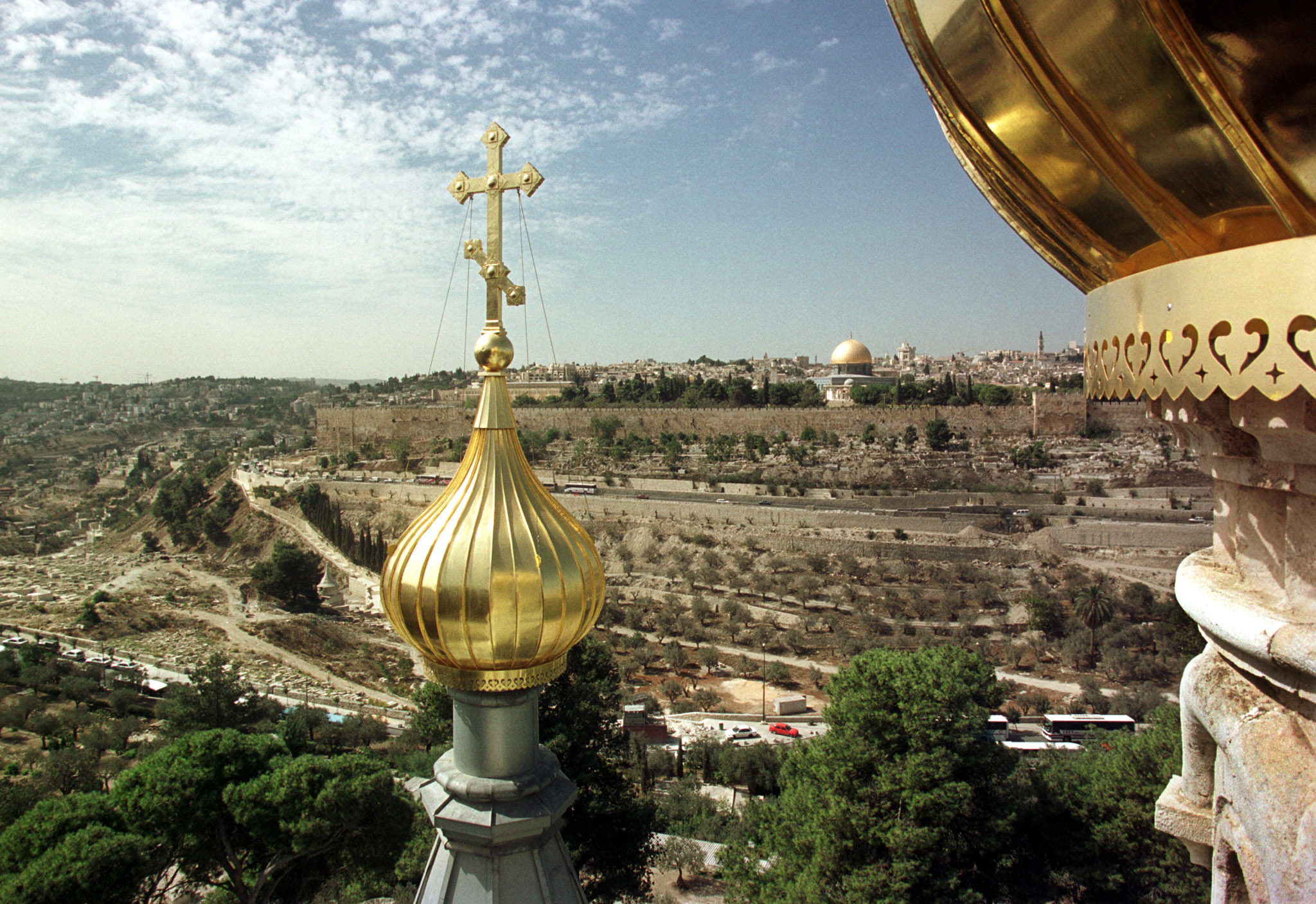
How does the Russian Church in Israel operate as an actor integrated into Moscow’s efforts to expand its influence in Israel and the Middle East?
INSS Insight No. 2176, July 30, 2026
Follow us on GoogleThe Russian Orthodox Church in Israel is commonly viewed as a religious institution whose purpose is to serve the many Orthodox pilgrims who visit the country each year. However, beyond its role as a community of believers, the church constitutes a significant political actor in Russia’s efforts to expand its influence in Israel in particular and the Middle East in general. In practice, the Russian Orthodox Church, through its institutions and representatives, serves as a governing arm of the Putinist regime in Israel. As the issue of transferring ownership of the Alexander Courtyard in Jerusalem once again comes before decision-makers, attention should be drawn to the Church’s political—and even intelligence—role, both past and present, as well as to the broader political and security implications that such a gesture toward Russia may entail.
The Church as a Political Actor: Historical Background
The Russian state has a long-standing tradition of using religious institutions as instruments of influence. In fact, from the time the Russian Orthodox Church established its presence in what was then known as the Holy Land in the nineteenth century, expanding Russia's political influence in the Middle East was one of its principal objectives. Moreover, under various historical circumstances, the Russian Orthodox Church was the sole body responsible for coordinating and overseeing Russia's presence in the region.
In fact, the ecclesiastical presence in the Holy Land was an initiative of the Russian regime, and specifically the Russian Ministry of Foreign Affairs, aimed at promoting missionary work alongside Russian political interests. The Church's activities, which began in the Holy Land in 1848, were characterized by the establishment of infrastructure such as courtyards (chatzerot—compounds that include a church, a cultural-community space, and in some cases, a monastery), hospitals, churches, guesthouses, and other institutions. The Church's first representatives were graduates of religious academies who were well versed in the ecclesiastical-diplomatic work required of them throughout their mission in Jerusalem. A deep familiarity with the Middle East, combined with their ability to identify shared interests and command respect for themselves and the regime they represented, constituted a significant part of their role in laying the foundations required for the Russian Orthodox Church's presence in the Land of Israel. Following the Crimean War in 1856, the Russian Church in the Land of Israel officially became an additional institutional arm of the Empire, whose primary role was to implement the interests of Russian foreign policy.
The following decades of the Russian mission in the Land of Israel were characterized by the intensive acquisition of land and property throughout the country. By 1914, the Russian Church owned 11 compounds. These institutions served as waystations for thousands of pilgrims each year, some of whom chose to remain in the Holy Land, thereby contributing to the spread of the Russian language and culture here. Another area in which the Church concentrated its efforts was the education of the Arab population in the Land of Israel through the establishment and operation of religious schools and teacher-training seminaries. Some of these institutions continue to operate in Israel to this day.
World War I brought about the collapse of the Russian Empire, and with it, the end of its ownership of Russian properties in the Land of Israel. The establishment of the British Mandate in the Land of Israel at the end of the war, alongside the strained relations between Britain and the Soviet Union, led to the former's refusal to recognize the latter as the lawful heir to the ecclesiastical properties. Their day-to-day administration passed into the hands of emigrants and pilgrims who remained on the land, the majority of whom were women—nuns and pilgrims. All high-ranking Church representatives departed, as they had been an integral part of the Tsarist governance system. In this respect, the interwar period represents a low point in the physical hold and the spiritual and political interests of the Russian Church in the Land of Israel. The pendulum, however, swung once again during the Second World War; throughout the war, and even more so in its aftermath, the Church became a central political actor in the Middle East.
Researchers agree that one of the main reasons for the shift in religious policy under Stalin's rule during the 1940s was the Church's potential to be mobilized in support of Soviet foreign policy objectives. The reinstatement of the head of the Church, Alexy I, in early 1945, and his visit to the country in May 1948, just days after the declaration of the State, attest to the central significance the Church held for Soviet foreign policy in the region.
The establishment of the State of Israel brought with it positive changes for Soviet-ecclesiastical diplomacy. The Soviet Union's recognition of the State of Israel, as part of its effort to strengthen the socialist bloc in the region, led to a warming of relations between the young state and the Stalinist regime. This trend was reflected in the invitation extended to Church representatives to return to Jerusalem, and in the restoration of 15 properties to Soviet ownership—a move that constituted recognition of the Soviet Union as the legitimate successor to the Tsarist Empire.
However, the status of the remaining properties and lands was never formally settled, a fact that led to repeated attempts by the Soviet Union to gain a hold on them. These efforts intensified as diplomatic relations between Israel and the Soviet Union deteriorated during the State's first decade, a period in which the Church became one of the Soviet regime's only instruments for maintaining a political presence and foothold in Israel. The Six-Day War, which led to the severing of official relations between Jerusalem and Moscow, left the Church as one of the active operatives of the Soviet regime in Israel.
The Intelligence Services and the Church
Historically, the Church and its representatives were persecuted under Soviet rule. Religion was regarded as anti-communist and anti-modern, and numerous restrictions were imposed on religious institutions. The desire to control religious representatives remained constant throughout the years of Soviet rule, and cooperation between them and the Soviet security apparatus, in its various iterations, was forced upon many of them. The secret police recruited clergy from all levels of the priesthood who provided it with reports, were subject to its manipulations, and acted in accordance with its directives. Overall, estimates indicate that approximately fifty percent of all Orthodox priests collaborated with the KGB, the Soviet secret police. Moreover, the higher an individual rose within the hierarchy of the Russian Orthodox Church, the more indispensable cooperation with the secret police became. At the same time, the KGB helped cooperating clergy advance through the ecclesiastical ranks. This was particularly true during the Cold War, in the case of Church representatives who were appointed to serve outside the borders of the Soviet Union. Thus, the Church's foothold in the State of Israel served a dual purpose—it provided a presence for both the state and the Soviet intelligence services.
The collapse of the Soviet Union in 1991 largely liberated the Church from the grip of the secret police. In light of the religious freedom and spiritual revival experienced by many religious communities and spiritual movements in Russia during the 1990s, young clergy came to view cooperation with the state and the secret police as a problematic legacy of the Soviet regime. Although Boris Yeltsin, the first president of the Russian Federation, chose not to dismantle the organization (as occurred, for example, with the Stasi in East Germany), leading instead to the KGB's formal participation in the country's liberalization process, this step remained largely symbolic. Many KGB departments continued operating with little substantive change, even after 1991. However, given the trends of democratization and the separation of church and state, the FSB (the successor to the KGB) did not view the Russian Church as a matter of independent interest, and few of its officers were closely familiar with the Church's underlying principles or the distinctive characteristics of the ecclesiastical system.
This indifference changed under the rule of President Vladimir Putin. His rise to power in 2000 marked both the strengthening of the FSB and a renewed closeness between the state and the Church. The FSB's powers expanded dramatically, and it was granted a significant foothold within the governmental sphere, far beyond that which it held under Soviet rule. Concurrently, the Church's draw toward the regime—a trend that became increasingly pronounced following Kirill's election as Patriarch in 2009—clearly attests to the political and intelligence role assumed by the Russian Church under Putin's rule. During his tenure, Patriarch Kirill (who, by most accounts, cooperated with Soviet intelligence from a young age while serving as the Russian Orthodox Church's representative to the World Council of Churches in Geneva) institutionalized the Church's relations with the state and its intelligence services. This was reflected in the establishment of an institution responsible for coordinating the joint work of Church and intelligence officials and formalizing the methods of their cooperation. A document attesting to this was found by the FBI on the computer of Dmitry Petrovsky, a representative of the Russian Church who served in the United States until 2023. This document details areas of cooperation between the Church and Russian intelligence agencies—the Federal Security Service (FSB), the Foreign Intelligence Service (SVR), and Russian Military Intelligence (GRU).
The Church as an Institutional Arm in Israel Today
Recent examples of cooperation between ecclesiastical figures, the Russian administration, and its intelligence services are numerous and varied. Two examples from recent years that are particularly relevant to Israel are presented below: the first concerns a Church-affiliated organization, and the second a representative dispatched to the region on the Church's behalf.
The Imperial Orthodox Palestine Society (IOPS) (Imperatorskoe Pravoslavnoe Palestinskoe Obshchestvo) is a clear example of the governmental foothold Russia seeks to establish in Israel. The organization, which manages Russian religious properties in the Middle East, was founded in 1882, ceased operating following the collapse of the Tsarist Empire, and resumed its activities in 1992. It is headed by Sergei Stepashin, the former prime minister of Russia and former director of the FSB, whose professional career did not develop within the Russian Orthodox Church. Overall, it is evident that the organization is staffed by senior figures from Russia's political and economic establishment, including Russian Ambassador to Israel, Anatoly Viktorov, and Nikolai Tokarev, head of Transneft (the state-owned monopoly responsible for transporting oil and petroleum products) and a former officer of the Soviet and Russian secret police (KGB and FSB). In 2015, the organization was granted official status in Israel.
In addition to managing existing properties, the organization seeks to serve as a religious and cultural center for Russian Orthodox pilgrimage. Another of its declared objectives is political and diplomatic in nature: to serve as a neutral bridge between the two sides of the Israeli-Palestinian conflict. In other words, religious and political objectives are an explicit part of the organization's goals, emphasizing the role it seeks to play in inter-regional politics and the traditional role of the Church as an arm of Russian foreign policy. Furthermore, its importance as a vehicle of this policy is reflected in the fact that Putin personally approved Stepashin's appointment. According to journalistic sources, Stepashin reports directly to Putin on the organization's activities. The veil of secrecy surrounding the organization's full membership, its admission procedures, and its political activities constitutes an integral part of the way the IOPS operates.
It is evident that secrecy is an essential aspect of the work of at least some of the ecclesiastical emissaries in Israel, including Patriarch Kirill's envoy, Archimandrite Vassian. Vassian's official role is to strengthen the Russian Orthodox Church's authority in Jerusalem, primarily vis-à-vis the Greek Orthodox Patriarch, who is the highest Orthodox authority in the Holy Land. Vassian's past illustrates the cooperation between the Church and the intelligence services. Prior to being posted to Jerusalem on October 11, 2023, Vassian served in Bulgaria as head of the Russian Orthodox Church there. During his tenure, he was identified by North Macedonian intelligence services as promoting activities liable to endanger the country's security and to divide the local Orthodox Church. Furthermore, shortly after this exposure, Bulgaria's State Agency for National Security published a report containing unequivocal findings attesting to his work on behalf of Russian intelligence. As a result of these developments, Vassian was expelled from Bulgaria in September 2023 and posted to Jerusalem just four days following October 7, 2023. Since then, he has served as head of the Russian Ecclesiastical Mission in Jerusalem and is a member of the IOPS.
The points presented in this article offer only a brief glimpse into a subject that has been extensively researched: the relationship between the Russian Orthodox Church and the use of soft power in foreign policy in general, and in Israel in particular. In light of this, it is crucial to understand that the Church is not merely a community of believers providing for the needs of pilgrims and supporting local religious activity. It also serves a clear political purpose: maintaining a continuous foothold and influence in a region of paramount importance to the Christian world, while securing control and presence in close proximity to Christianity's holy sites.
Recent Developments and Implications for Israel
Over the past year, the Russian government has intensified its pressure on Israel to transfer ownership of the Alexander Courtyard—a religious compound located in the heart of Jerusalem's Christian Quarter, approximately 70 meters from the Church of the Holy Sepulcher. The transfer of ownership of the complex was considered part of the deal to secure the release of Naama Issachar from a Russian prison in January 2020. Since then, the issue has made its way through the courts (the Jerusalem District Court and the Supreme Court), which referred the matter back to the government. In 2024, Prime Minister Netanyahu formed a committee to examine the matter, which is expected to decide in the near future whether to transfer the compound to the IOPS.
Given the past and present activities of the Russian Orthodox Church, it is evident that transferring the compound is not merely a religious or even a legal matter, but a fundamental issue with significant diplomatic implications: providing Russia—and potentially its intelligence services, as well—with another foothold in the heart of Jerusalem. Furthermore, transferring the Alexander Courtyard to the management of the IOPS would not bring the issue of Russian real estate claims to a close; on the contrary, it would likely increase Russia's appetite for additional demands. In 2022, Stepashin already declared the next three properties that Russia intends to request from Israel: the Viri Galilaei site ("Men of Galilee") plot, the Church of the Ascension ("The Candle"), and the Monastery of Saint Mary Magdalene in Jerusalem.
In light of all the above regarding the cooperation between the Russian Orthodox Church and the Putinist regime, and given that there is no legal obligation to transfer the compound, we see no advantage in handing it over to a state that consistently supports entities hostile to Israel, including Iran, its proxies, and Hamas.