


Publications
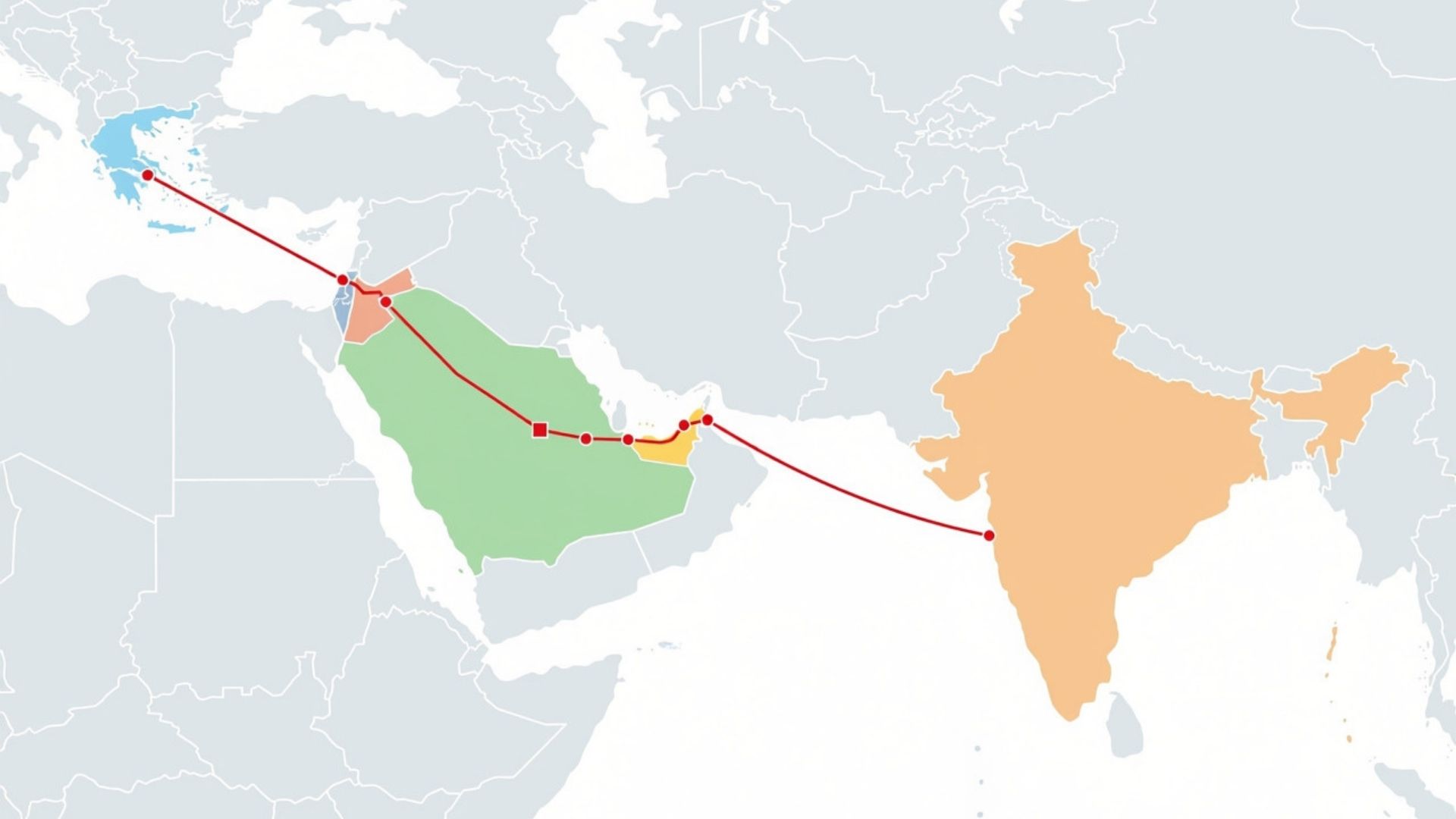
What lessons can the successes and failures of China's Belt and Road Initiative offer for the new India–Middle East–Europe Economic Corridor?
INSS Insight No. 2194, September 6, 2026
Follow us on GoogleMore than a decade separates the announcement of China’s Belt and Road Initiative (BRI) from the announcement of the India–Middle East–Europe Economic Corridor (IMEC) in September 2023. For the new initiative, this is an advantage: it can learn from the Chinese experience. Rather than viewing IMEC merely as an alternative to the BRI, this article examines what lessons can be drawn from the latter’s successes and failures. The Chinese experience points to the advantages of gradual and flexible development, which could enable IMEC to evolve as a network of complementary corridors and connections, but also highlights the need for coordination, rigorous project selection, and the development of a regulatory and logistical infrastructure alongside physical infrastructure. IMEC should neither emulate the BRI nor be built as its antithesis, but rather draw on the experience already accumulated to construct a better connectivity initiative.
The vision is both familiar and ancient: connecting Asia and Europe through trade and transport routes. In September 2023, this vision was given a contemporary expression when the leaders of India, the United States, the United Arab Emirates, Saudi Arabia, France, Germany, Italy, and the European Union announced the India–Middle East–Europe Economic Corridor (IMEC), designed to connect India and Europe through a combination of maritime and land routes. However, nearly a decade earlier, in 2013, Chinese President Xi Jinping unveiled another ambitious vision for connecting Asia to Europe: the Belt and Road Initiative (BRI).
There are clear similarities between the two initiatives, even if their scale and structures differ. The BRI is a broad global framework comprising numerous corridors and projects, while IMEC focuses on a more defined geographic path. Nevertheless, both seek to create cross-border connectivity through a combination of ports, railways, and other infrastructure; both extend beyond transport to include energy infrastructure and digital connectivity; and both attribute a broad economic and geopolitical role to infrastructure.
Since its announcement, IMEC has been presented not only as another connectivity initiative, but also as an alternative to the BRI and as part of the US-China competition to shape trade routes and influence in the Middle East. In American discourse, IMEC is also viewed as a means of counterbalancing China’s growing economic influence in the region, even though Saudi Arabia and the UAE, which participate in both initiatives, do not necessarily view IMEC in terms of competition with China.
Comparisons between the two initiatives have generally highlighted their differences. The BRI is described as a centralized Chinese initiative dictated from the top down by Beijing, whereas IMEC is presented as a partnership among several countries, without a single actor controlling it. The Chinese model is associated with financing based largely on loans, drawing criticism over the debt burden created in some participating countries. In the case of IMEC, which has yet to pass the implementation test, emphasis has thus far been placed on a combination of public and private financing and economic viability. This is accompanied by a broader contrast with the BRI, which is alleged to operate without transparency, to include projects that fail to meet high standards, and to serve primarily Chinese interests. IMEC, by contrast, is presented as an initiative based on transparency, high standards, and mutual benefit for participating countries.
However, with more than a decade of accumulated experience, the BRI presents a more complex picture. The prevailing narrative about the initiative captures important features, but it does not tell the whole story. China’s experience now makes it possible to examine not only the initiative’s achievements and failures, but also how it evolved, as its original vision met national interests, economic considerations, and local realities. The more useful question, therefore, is not only how IMEC can differ from the BRI, but what it can learn from it.
BRI: Between Image and Reality
Despite the prevailing image of the BRI as a centralized Chinese plan conceived in Beijing and implemented from the top down, in practice its development was far more complex and decentralized. When President Xi introduced the concepts of the "Silk Road Economic Belt" and the "21st Century Maritime Silk Road" in 2013, he did not present a detailed master plan with a list of projects, timetables, or even a clear definition of the initiative's boundaries. Many projects that were subsequently incorporated into the BRI predated its announcement, while others were later advanced by local governments, state-owned and private companies, banks, and partner countries pursuing interests that did not always align with the central government’s priorities. In many respects, the BRI did not create all the projects that came to fall under its umbrella; rather, it provided a broad political and conceptual framework that made it possible to bring various projects, actors, and interests under a common banner.
This ambiguity and decentralization helped the BRI expand rapidly, but also came at a cost. The ready availability of financing, combined with incentives for Chinese and local actors to bring projects under the BRI umbrella, led to the financing of projects that in some cases proved economically unviable or poorly managed. In this sense, some of the failures attributed specifically to the BRI's centralization actually stemmed from the opposite problem: the central government's difficulty in overseeing a broad initiative involving numerous actors with diverging interests. As debt problems in participating countries, international criticism, and difficulties with various projects accumulated, Beijing began tightening oversight and placing greater emphasis on project quality and economic viability. This shift became particularly evident in 2021, when Xi called, in the context of cooperation with Africa, for prioritizing "small and beautiful projects"—more focused projects designed to address local needs and yield tangible benefits. This approach has since become a broader element of BRI policy, and in 2025, China even defined it as an "important direction and priority in Belt and Road development."
This flexibility also offered a major advantage. The BRI, which initially focused primarily on transportation infrastructure and connectivity, did not remain limited to ports, roads, and railways. Over the years, it expanded to encompass digital connectivity, health, and even initiatives in space and the Arctic region. This expansion was subsequently reflected in the 14th Five-Year Plan, which incorporated into the BRI such components as the "Digital Silk Road," the "Green Silk Road," the "Health Silk Road," the "Air Silk Road," and a space-based information corridor. Thus, the BRI evolved from an initiative focused mainly on connectivity and physical infrastructure into a broad and flexible framework capable of incorporating new sectors and projects in response to technological, economic, and geopolitical shifts. It was precisely the absence of a rigid end-state that allowed the initiative to adapt to reality rather than remain bound to its initial vision.
The BRI experience also points to an important limitation: building physical infrastructure does not, in itself, guarantee effective logistical connectivity. A study published in Transport Policy in 2026, which examined 105 countries from 2007 to 2023, found that joining the BRI led to a significant improvement in countries' physical logistics infrastructure, as well as increased container traffic and maritime connectivity. By contrast, no significant improvements were found in customs efficiency, the quality of logistical services, cargo tracking, or adherence to delivery schedules, nor in governance and regulatory metrics. The conclusion is that physical infrastructure, important as it may be, is insufficient for creating an efficient logistical system. Chinese discourse on the BRI now also reflects recognition of the need to supplement physical infrastructure with an institutional and regulatory framework: Beijing emphasizes the need to combine the "hard connectivity" of infrastructure with the "soft connectivity" of rules and standards, alongside "heart connectivity" with local populations.
The Chinese experience thus offers several lessons that are particularly relevant to IMEC: a large-scale connectivity initiative need not develop according to a rigid master plan, but decentralization and flexibility require coordination and rigorous project evaluation; the ability to evolve and expand over time can be a source of strength; and building physical infrastructure is not enough without the regulatory and logistical framework that enables it to operate as a network.
Applying Lessons from the BRI to IMEC’s Future
For IMEC, the first lesson is that there is no need to wait for the formulation and implementation of a comprehensive master plan for the India-Europe corridor. It can be built gradually, like a jigsaw puzzle whose pieces connect over time to form a broader network. Upgraded border crossings, local rail lines, connections between ports and logistics hubs, new arrangements for moving cargo, or cooperation on renewable energy can each stand on their own and later become part of a broader network. This concept aligns with the emerging proposal to view IMEC not as a single linear corridor, but as a network of complementary corridors and connections that will allow for alternative routes and reduce reliance on a single transit point. However, for this puzzle to come together, each of its pieces must have value for the country in which it is implemented, even if the remaining sections of the corridor are delayed. The BRI experience has demonstrated that countries hosting infrastructure are not merely transit points; local governments have reshaped projects according to their own interests and, at times, even delayed or canceled them. Similarly, for IMEC, a regional network will be more stable if each participating country sees the infrastructure built on its territory as a national project with value in its own right, rather than merely as one segment of a transit route between India and Europe.
Nevertheless, gradual development does not eliminate the need for coordination. For the pieces of the puzzle to eventually fit together, a mechanism is needed to keep sight of the big picture. In this respect, the very difference between the two initiatives could become a disadvantage for IMEC. Despite the decentralized nature of the BRI, China provided it with a political, institutional, and financial center of gravity. IMEC lacks a comparable center of gravity: the partner countries have differing interests, and the progress of each segment depends on separate national decisions. Therefore, IMEC requires a coordination mechanism to ensure that projects advanced separately can eventually be integrated in terms of infrastructure, standards, timelines, and financing. The challenge is not to replace IMEC's multilateral structure with centralized control, but to strike a balance between decentralization, which allows each country to advance projects according to its needs, and coordination, which will ensure that these projects develop into a coherent network.
Such a mechanism would have another role as well: determining which projects merit inclusion under the IMEC umbrella. Gradual and flexible development should not turn the corridor into a framework under which virtually any project can be included. The lesson of the BRI for IMEC is the need to assess in advance each project’s economic viability, financing sources, anticipated demand, and contribution to regional connectivity. At the same time, rigorous selection does not require establishing a rigid definition today of what may ultimately fall within IMEC. Just as the BRI expanded over the years into areas that were not at the core of the initiative at its inception, IMEC must also be capable of adapting to needs and opportunities. Transport, energy, and digital connectivity were defined from the outset as components of the corridor, but new areas could be added in the future—for instance, infrastructure for data centers and advanced computing, alongside cooperation in artificial intelligence and quantum computing.
Another key lesson is that physical connectivity alone is insufficient. Alongside the establishment of ports, railways, and border crossings, IMEC's "soft infrastructure" must be built: harmonizing customs procedures, establishing common standards, digitizing documents, facilitating data exchange, developing cargo-tracking capabilities, and establishing arrangements for transfers between different national systems. The challenge is not merely how to move a train from one side of a border to the other, but how to enable cargo to cross those borders quickly, transparently, and at a competitive cost. Moreover, developing this soft infrastructure will largely determine the rules governing the transit corridor: countries participating in shaping this infrastructure will influence the standards and procedures applied throughout the corridor, while those that join at a later stage may find themselves having to adapt their systems to rules that have already been established.
Another lesson concerns not how the BRI was built, but the relationship between the two initiatives themselves. Even if IMEC was intended, in part, to offer an alternative to the BRI, this does not mean it should be built as a corridor seeking to exclude China. China’s weight in global trade, supply chains, and infrastructure industries is too vast for the establishment of an economic sphere detached from it to be a realistic or necessarily desirable goal. In 2026, for instance, the Chinese company COSCO is the fourth-largest container shipping company in the world, accounting for approximately 10.6 percent of global container fleet capacity. In 2024, China held roughly 85 percent of global manufacturing capacity across the solar supply chain. In such a reality, Chinese goods will pass through the corridor; Chinese shipping companies may transport some of them; and some of the equipment and infrastructure on which the corridor relies may be manufactured in China. The question for IMEC is therefore not whether there will be a Chinese presence, but where and under what conditions such a presence should be allowed. The crucial distinction is between strategic diversification and economic exclusion: IMEC can provide an additional route, reduce dependence on infrastructure or routes controlled by a single actor, and expand the options available to participating countries without trying to sever the new network from the Chinese economy.
IMEC does not need to emulate the BRI, nor should it be built as its antithesis. The Chinese experience demonstrates that large-scale connectivity initiatives can evolve gradually, through projects with local value and the flexibility to adapt over time. But it also teaches that decentralization requires coordination, that physical infrastructure requires a regulatory and logistical framework, and that flexibility must be balanced by rigorous project selection. Competition with the BRI likewise does not require excluding China, but rather creating alternatives that expand the range of choices and reduce dependency. IMEC’s success should therefore not be measured by whether it succeeds in replacing the BRI or pushing China out of the region, but by its ability to create a connectivity system with value in its own right, one that provides participating countries with efficient connections, additional alternatives, and greater freedom of action. In this sense, the experience of its ostensible competitor may prove to be one of the most valuable resources at IMEC’s disposal.