


Deepening the Divide: Majority among U.S. House Democrats Supports Halting Military Aid to Israel | INSS
go to header go to content go to footer go to search
INSS logo The Institute for National Security Studies, Strategic, Innovative, Policy-Oriented Research, go to the home page
INSS
Tel Aviv University logo - beyond an external website, opens on a new page
  • Campus
  • Contact
  • עברית
  • Support Us
  • Research
    • Topics
      • Israel and the Global Powers
        • Israel-United States Relations
        • Glazer Israel-China Policy Center
        • Russia
        • Europe
        • Antisemitism and Delegitimization
      • Iran and the Shi'ite Axis
        • The Campaign Against Iran and the Shiite Axis
        • Iran
        • Lebanon and Hezbollah
        • Syria
        • Yemen and the Houthi Movement
        • Iraq and the Iraqi Shiite Militias
      • Conflict to Agreements
        • Israeli-Palestinian Relations
        • Hamas and the Gaza Strip
        • Peace Agreements and Normalization in the Middle East
        • Saudi Arabia and the Gulf States
        • Turkey
        • Egypt
        • Jordan
      • Israel’s National Security Policy
        • Military and Strategic Affairs
        • Societal Resilience and the Israeli Society
        • Jewish-Arab Relations in Israel
        • Climate, Infrastructure and Energy
        • Terrorism and Low Intensity Conflict
      • Cross-Arena Research
        • Data Analytics Center
        • Law and National Security
        • Advanced Technologies and National Security
        • Foreign Information Manipulation and Interference
        • Economics and National Security
    • Projects
      • Preventing the Slide into a One-State Reality
      • India-Middle East-Europe Economic Corridor (IMEC)
  • Publications
    • -
      • All Publications
      • INSS Insight
      • Policy Research and Papers
      • Special Publication
      • Strategic Assessment
      • Technology Platform
      • Memoranda
      • Posts
      • Books
      • Archive
  • Database
    • Surveys
    • Spotlight
    • Maps
    • Dashboards
  • Events
  • Team
  • About
    • Vision and Mission
    • History
    • Research Disciplines
    • Chairman of the Board
    • Board of Directors
    • Fellowship and Prizes
    • Annual Reports
    • Internships
  • Media
    • Communications
    • Video gallery
    • Press Releases
  • Podcast
  • Newsletter
  • Campus
Search in site
  • Research
    • Topics
    • Israel and the Global Powers
    • Israel-United States Relations
    • Glazer Israel-China Policy Center
    • Russia
    • Europe
    • Antisemitism and Delegitimization
    • Iran and the Shi'ite Axis
    • The Campaign Against Iran and the Shiite Axis
    • Iran
    • Lebanon and Hezbollah
    • Syria
    • Yemen and the Houthi Movement
    • Iraq and the Iraqi Shiite Militias
    • Conflict to Agreements
    • Israeli-Palestinian Relations
    • Hamas and the Gaza Strip
    • Peace Agreements and Normalization in the Middle East
    • Saudi Arabia and the Gulf States
    • Turkey
    • Egypt
    • Jordan
    • Israel’s National Security Policy
    • Military and Strategic Affairs
    • Societal Resilience and the Israeli Society
    • Jewish-Arab Relations in Israel
    • Climate, Infrastructure and Energy
    • Terrorism and Low Intensity Conflict
    • Cross-Arena Research
    • Data Analytics Center
    • Law and National Security
    • Advanced Technologies and National Security
    • Foreign Information Manipulation and Interference
    • Economics and National Security
    • Projects
    • Preventing the Slide into a One-State Reality
    • India-Middle East-Europe Economic Corridor (IMEC)
  • Publications
    • All Publications
    • INSS Insight
    • Policy Research and Papers
    • Special Publication
    • Strategic Assessment
    • Technology Platform
    • Memoranda
    • Posts
    • Books
    • Archive
  • Database
    • Surveys
    • Spotlight
    • Maps
    • Dashboards
  • Events
  • Team
  • About
    • Vision and Mission
    • History
    • Research Disciplines
    • Chairman of the Board
    • Board of Directors
    • Fellowship and Prizes
    • Internships
    • Annual Reports
    • Privacy Policy and Terms of Use
  • Media
    • Communications
    • Video gallery
    • Press Releases
  • Podcast
  • Newsletter
  • Campus
  • Contact
  • עברית
  • Support Us
bool(false)

Publications

Home Publications INSS Insight Deepening the Divide: Majority among U.S. House Democrats Supports Halting Military Aid to Israel

Deepening the Divide: Majority among U.S. House Democrats Supports Halting Military Aid to Israel

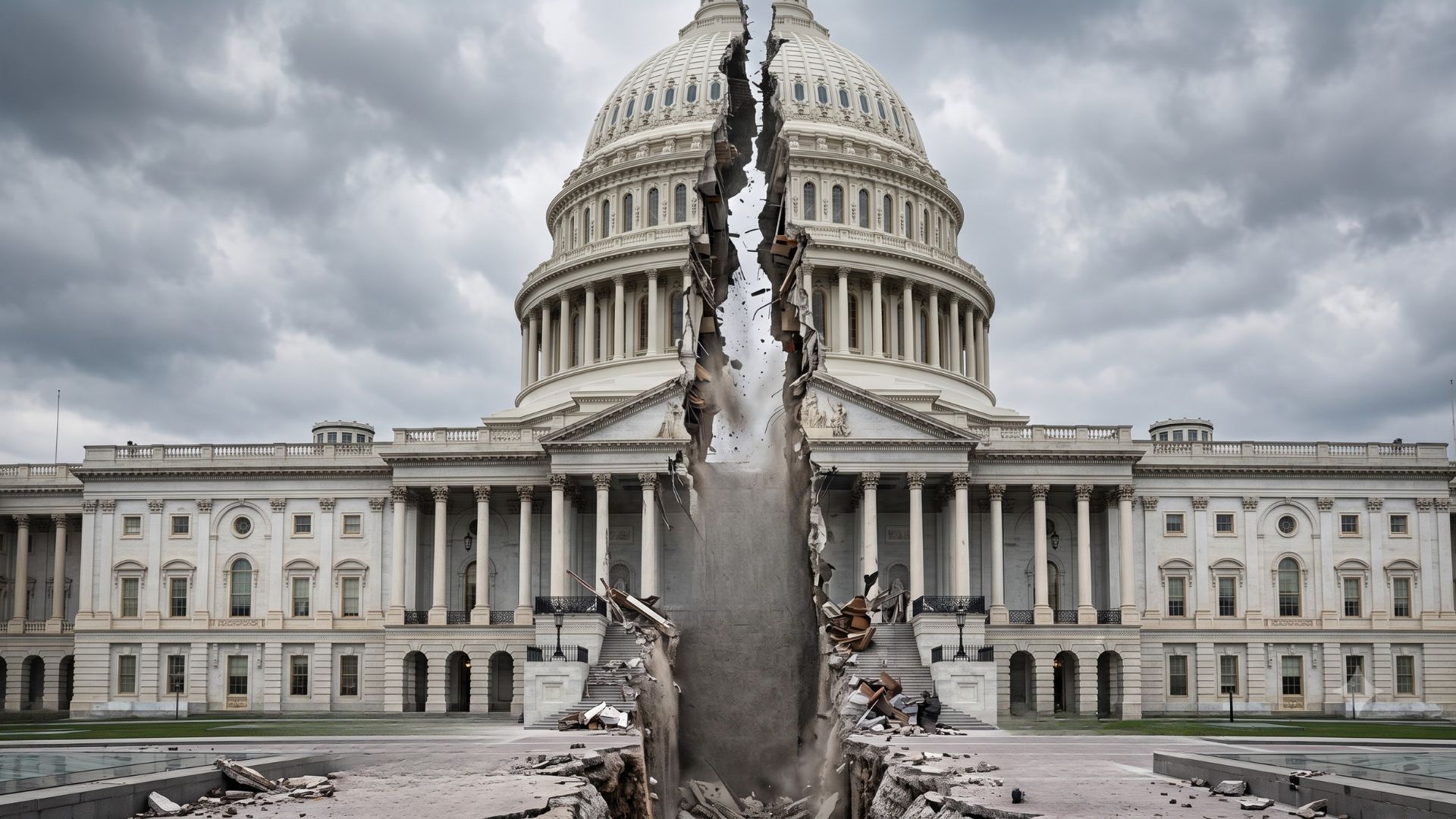
A majority of House Democrats supported a proposal to immediately halt the $3.3 billion in annual funding for military procurement guaranteed to Israel. What are the implications of this troubling development ahead of the November midterm elections?

INSS Insight No. 2171, July 16, 2026

Follow us on Google
עברית
Avishay Ben Sasson-Gordis

The U.S. House of Representatives voted yesterday to reject an amendment that would immediately end $3.3 billion in promised annual foreign military funding to Israel.  Approximately half of the Democratic Party—a plurality of the party’s members—voted in favor of the measure. Although the proposal to end the aid failed due to opposition from the Republican Party and the other half of the Democrats, the significant share of members who supported it reflects the deep rift in the Democratic Party’s relationship with Israel. This rift was also evident in the party’s primary elections, where the alliance with Israel has become a wedge issue that mostly benefits Israel’s detractors. If the Democratic Party wins a majority in the House of Representatives, as expected in the upcoming November midterm elections, it is likely to push for sharp changes in the structure of relations with Israel. These changes could already affect the security MoU, which remains in effect until 2028. A shift in Israeli policy, particularly regarding the Palestinian issue, could soften the stance of the Democratic Party’s center toward Israel, but it will not eliminate the criticism. To be effective, such a change in Israel’s current policy would require more than general commitments or rhetorical declarations.


A plurality of Democratic members of Congress (103 out of 212) supported a budget amendment last night aimed at immediately halting the $3.3 billion in annual foreign military funding guaranteed to Israel by the U.S. administration. Ninety-eight Democrats voted against the proposal, while another ten voted present.

The proposal, submitted by insurgent Republican Congressman Thomas Massie from the party's right wing, failed as expected, with every Republican except Massie voting against it. Senior Democratic figures, including former House Speaker Nancy Pelosi, the Democratic Whip, as well as representatives known for their pro-Israel record, voted in favor of the proposal. Other party leaders, including Minority Leader Hakeem Jeffries, opposed halting the budget but refrained from whipping against the measure. This was partly due to the understanding that such a move was likely to fail, and would further deepen the party's existing rift over the relationship with Israel.

In statements issued by members of Congress explaining their decisions on the proposal, negative references predominated regarding the current Israeli government and its leader; the manner in which Israel has conducted and continues to conduct its wars in the region—including the harm to innocent civilians (with many using the term "genocide"); and the argument that Israel is a wealthy nation with a large defense budget and therefore does not require direct U.S. aid. Some opponents of the resolution refrained from defending Israel directly, instead attributing their opposition to the fact that the proposal was a political stunt by Republicans and that it included provisions to which they objected.

The results of the vote point to a severe erosion of Israel's standing among Democrats. Even though the proposal failed, it carries several critical implications for Israel:

  1. The Future of U.S. Military Aid to Israel – If, as expected, a Democratic majority forms in Congress following the midterm elections on November 3, Israel is likely to see intense pressure from lawmakers to alter the framework of relations between Israel and the United States. Their first objective will be to modify the annual financial aid that Israel uses for procurement (primarily) from U.S. defense industries. Israel and the United States are currently negotiating a new security Memorandum of Understanding (MoU) to replace the agreement signed in 2018. According to reports, this memorandum includes a gradual reduction of the direct aid component. The question now is no longer whether this aid will decrease, but how quickly. Furthermore, programs involving cooperation between the two countries’ defense industries are also likely to face greater scrutiny, while pressure will increase to invoke existing legislation governing the use of U.S.-supplied weapons in order to impose restrictions on Israel’s military procurement as well.
  2. The Weakness of the MoU Model – The Memorandum of Understanding (MoU) between Israel and the United States is signed between the governments of the two countries and is not enacted as legislation in either nation. As a result, the U.S. administration is required to secure annual congressional approval for the aid allocated to Israel. In the past, Israel enjoyed broad, bipartisan support in the United States, and therefore the appropriation of these funds posed no significant difficulty. Yesterday’s vote, however, illustrates that not only is the next agreement at risk, but the fulfillment of the current agreement in the years remaining may also run into obstacles. If Congress succeeds in blocking funds that have already been pledged, Israel (and the U.S. administration along with it) will be forced to find alternative sources of funding for procurement commitments already made against this budget.
  3. The Centrality of the Palestinian Issue and the Pro-Israel Lobby – For an ever-growing majority among Democratic Party supporters, Israel is perceived as an oppressive state whose policies run counter to their values and to U.S. interests. At the core of this perception is Israel's policy regarding the Palestinians. This trend is also impacting the perception of the pro-Israel lobby, AIPAC, which is rapidly becoming a symbol of negative forces operating within American politics. A shift in the Israeli government's policy on the Palestinian issue would make it easier for Israel’s supporters in the party—of whom there are still many, including those who felt compelled to support yesterday's proposal—to justify their support for the alliance between the two countries. However, as time passes, the minimum demands placed on Israel in this regard will only increase, and the power of general promises to reverse the trend will diminish.
  4. In a Broader Context, Challenges Also Exist on the Republican Side of the Aisle – The results of last night’s vote might give the impression that Israel’s standing within the Republican Party is secure, as only one renegade congressman, who has clashed with President Trump, supported ending the aid. However, in other circles, a different type of erosion in Israel's standing is evident, one unrelated to its policies in the Palestinian sphere. Vice President Vance, currently on the defensive amid the stagnation of the efforts he is associated with to resolve the war in Iran, has issued a series of harsh statements regarding Israel. In an interview on Joe Rogan’s popular podcast released yesterday, Vance agreed with the assertion that Jeffrey Epstein—the convicted sex offender who remains the subject of intense and persistent attention on the American right—had ties to the Mossad or to the highest levels of Israeli intelligence. He also claimed that Israel is waging a public diplomacy campaign against him due to his support for the agreement with Iran, and is pushing for a perpetual war. This comes against the backdrop of reports that Israel has hired a former Trump campaign consultant to shore up its standing among young conservatives. Vance is widely regarded as a leading contender to head the Republican Party in the post-Trump era. He is not the party's most extreme voice when it comes to Israel, but his remarks make it clear that, even within the future Republican Party, Israel’s status is far from guaranteed.
The opinions expressed in INSS publications are the authors’ alone.
Avishay Ben Sasson-Gordis
Dr. Avishay Ben Sasson-Gordis is a Ruderman Family Foundation Scholar in Residence and a Senior Researcher at the Institute for National Security Studies (INSS) at Tel Aviv University, where he heads the Israel-United States Research Field. He works on the implications of domestic American politics, and US policy more broadly on Israeli national security. Avishay is a Liberalism Rekindled postdoctoral fellow at the Hebrew University of Jerusalem. His academic work focuses on the democratic backsliding and the political theory of the military. He is a frequent commentator on Israeli current affairs in international and Israeli media, and his commentary has appeared in Foreign Affairs, Haaretz, and World Politics Review.

Publication Series INSS Insight
TopicsIsrael-United States Relations
עברית

Events

All events
Israel’s National Security Conference
27 July, 2026
10:00 - 14:00

Related Publications

All publications
REUTERS and U.S. Air Force photo by Master Sgt. Donald R. Allen (modified by INSS)
The Engine and F-35 Aircraft Deal for Turkey: Implications for the Regional and Global Balance of Power
The current U.S. administration is advancing a major deal, valued at over $700 million, to sell F110 engines to Turkey for its KAAN aircraft project. Despite the administration’s attempts to bypass congressional barriers, this move is not an isolated event; rather, it is a strategic accelerator intended to pave the way for Ankara’s full return to the F-35 program. While Washington’s rationale seeks to preserve Turkey as an anchor within NATO, in practice, it creates a serious dilemma and presents a weighty, threefold strategic risk: Undermining NATO from within: Empowering an actor that is engaged in aggressive competition against Western allies (such as Greece) and is entrenching a defiant military presence in Cyprus. Fueling Regional Friction: Granting legitimacy to a competitive power that provides a safe haven for Hamas and supports the al-Sharaa regime in Syria. Creating a Systemic Risk to the Global F-35 Network: Deploying 5th-generation capabilities in proximity to Russian S-400 systems risks compromising and cracking the information security of the platform as a whole. This threat is not limited to the erosion of Israel’s qualitative edge or the exposure of its defense industries; it constitutes a direct threat to every country in the world equipped with the F-35, alongside concerns over the possible proliferation of KAAN aircraft to additional militaries across the Sunni sphere.
15/07/26
U.S.–Israel Alliance as a Litmus Test: The Democratic Primaries and the Struggle over the Party’s Future
The stance on Israel has emerged as a key test at the ballot box during the Democratic primaries. How does this manifest, how does it impact Washington-Jerusalem relations, and does Israel have any recourse?
13/07/26
Generated with AI
Time to Break the Strategic Limbo: Israel’s Core Challenge
Israel finds itself in a continuous stagnation, wherein impressive tactical military achievements are not translating into political and strategic victory. How can this 'limbo' be resolved across the various fronts?
05/07/26

Stay up to date

Registration was successful! Thanks.
  • Research

    • Topics
      • Israel and the Global Powers
      • Israel-United States Relations
      • Glazer Israel-China Policy Center
      • Russia
      • Europe
      • Antisemitism and Delegitimization
      • Iran and the Shi'ite Axis
      • The Campaign Against Iran and the Shiite Axis
      • Iran
      • Lebanon and Hezbollah
      • Syria
      • Yemen and the Houthi Movement
      • Iraq and the Iraqi Shiite Militias
      • Conflict to Agreements
      • Israeli-Palestinian Relations
      • Hamas and the Gaza Strip
      • Peace Agreements and Normalization in the Middle East
      • Saudi Arabia and the Gulf States
      • Turkey
      • Egypt
      • Jordan
      • Israel’s National Security Policy
      • Military and Strategic Affairs
      • Societal Resilience and the Israeli Society
      • Jewish-Arab Relations in Israel
      • Climate, Infrastructure and Energy
      • Terrorism and Low Intensity Conflict
      • Cross-Arena Research
      • Data Analytics Center
      • Law and National Security
      • Advanced Technologies and National Security
      • Foreign Information Manipulation and Interference
      • Economics and National Security
    • Projects
      • Preventing the Slide into a One-State Reality
      • India-Middle East-Europe Economic Corridor (IMEC)
  • Publications

    • All Publications
    • INSS Insight
    • Policy Research and Papers
    • Special Publication
    • Strategic Assessment
    • Technology Platform
    • Memoranda
    • Database
    • Posts
    • Books
    • Archive
  • About

    • Vision and Mission
    • History
    • Research Disciplines
    • Chairman of the Board
    • Board of Directors
    • Fellowship and Prizes
    • Internships
    • Annual Reports
    • Support
    • Privacy Policy and Terms of Use
  • Media

    • Communications
    • Video Gallery
    • Press Release
    • Podcast
  • Home

  • Events

  • Database

  • Team

  • Contact

  • Newsletter

  • עברית

INSS logo The Institute for National Security Studies, Strategic, Innovative, Policy-Oriented Research, go to the home page
40 Haim Levanon St. Tel Aviv, 6997556 Israel | Tel 03-640-0400 | Fax 03-744-7590 |
Developed by Daat ,Yael Group.
Accessibility Statement
This site is protected by reCAPTCHA and the Google Privacy Policy and Terms of Service apply.