


Publications
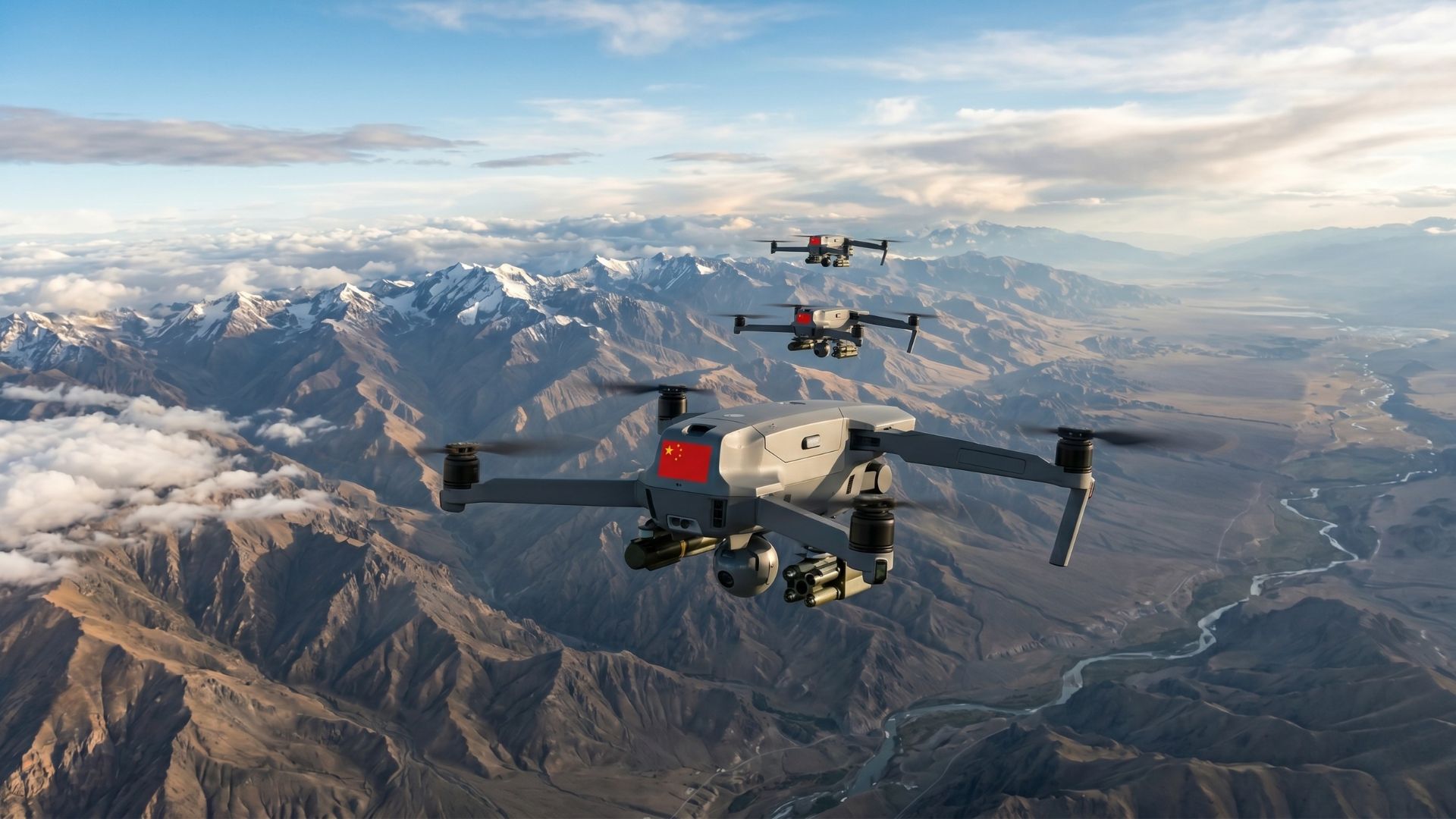
Chinese-made drones pose a range of security, technological, and geopolitical challenges for Israel. What measures should Israel take to mitigate the risks involved?
INSS Insight No. 2155, July 7, 2026
Follow us on GoogleThe increasing use of drones on the battlefield, particularly since the Swords of Iron war, has underscored Israel’s reliance on Chinese-made drones and components, as well as Chinese dominance in the industry’s supply chains. Despite their operational advantages, Chinese drones pose a range of security, technological, and geopolitical challenges for Israel, highlighting the need to strengthen the domestic drone industry while reducing dependence on foreign technology.
In April, it was reported that the IDF is expected to procure thousands of First Person View (FPV) strike drones manufactured by the Israeli company XTEND. This follows a previous tender won by the company to produce and supply approximately 5,000 low-cost strike drones for the IDF. The move reflects the growing recognition within Israel's defense establishment that drones have become a major force multiplier and an essential component of modern warfare. At the same time, it expresses Israel's efforts to strengthen its domestic drone industry, expand production capacity in the field, and reduce reliance on Chinese-made drones and technologies.
This move comes against the backdrop of the growing importance of drones on the battlefield in recent years. Their ability to conduct reconnaissance, imaging, and real-time intelligence gathering, alongside their capacity to carry explosives and execute relatively low-cost precision strikes, has made them an accessible, lethal, and challenging asset, particularly in asymmetric warfare. The dual-use nature of civilian drones, which can be rapidly adapted for intelligence and strike purposes, has also turned them into a central tool in the hands of terrorist organizations.
In Israel, this trend intensified following October 7, 2023, as drones became a pivotal tool for both the IDF and its enemies. Hamas and Hezbollah make extensive use of drones for intelligence, reconnaissance, and attacks, with Hezbollah even increasing its use of inexpensive, homemade FPV drones against IDF forces on the Lebanese border. Alongside the operational challenge drones pose on the battlefield, regardless of their country of origin, the dominance of Chinese-made drones and Chinese companies—led by DJI—in the civilian-commercial drone market underscores the need to strengthen domestic production and reduce dependence on foreign technology.
Chinese Drones in Israel: Security, Technological, and Geopolitical Risks
The IDF currently makes extensive use of drones for a range of operational missions, including reconnaissance, intelligence gathering, scanning areas and buildings, escorting forces, directing fire, conducting strikes, and search and rescue operations. Since the outbreak of the Swords of Iron war, the operational use of drones has expanded, particularly in urban combat. During the war, the IDF procured a variety of drones, including civilian models manufactured by Chinese companies DJI and Autel. These have become widespread due to their relatively low cost, advanced imaging and reconnaissance quality, high availability, and ease of operation. Within the IDF, they are also considered relatively easy for regular and reserve forces to learn and integrate into their operations. Furthermore, some of the civilian drones introduced into IDF use during the war, including Chinese-made drones, came from donations intended to address the urgent operational needs that emerged after October 7.
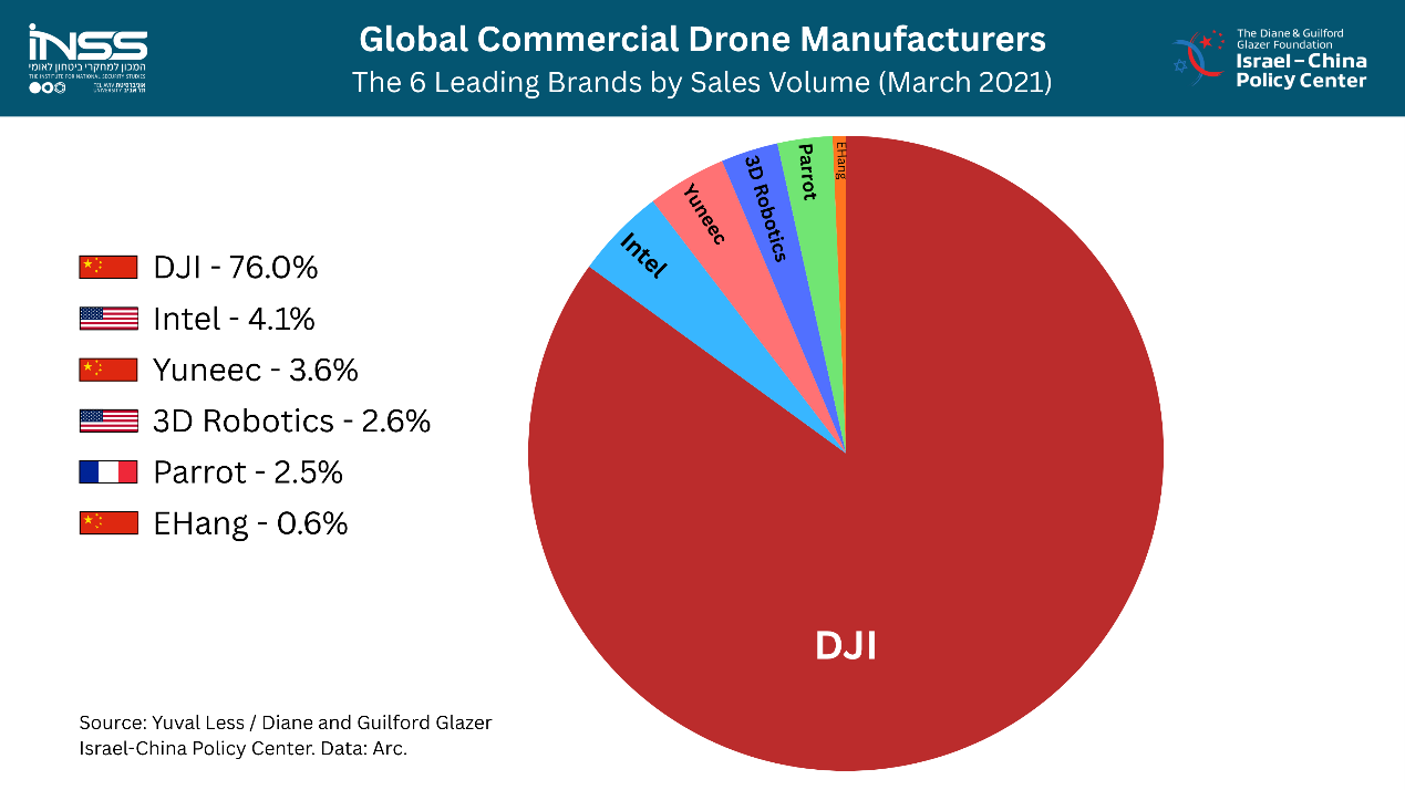
This Chinese dominance in this field is no coincidence. For years, China has invested in developing strategic technological industries and, through companies like DJI, has successfully established dominance in the global civilian-commercial drone market. According to ARC Group (a global investment banking and strategic advisory firm), China's DJI controls over 70% of this market, alongside other Chinese companies active in the sector (see Graph A).
Graph A
Despite the advantages offered by Chinese drones, they pose a range of security, technological, and geopolitical challenges for Israel. Today, drones are essentially advanced systems equipped with cameras, communication components, and connectivity to software and cloud services. These features enable the collection and processing of vast amounts of data in real time, including visual footage, location data, and patterns of activity. One of the primary risks in this context is the leakage of sensitive data. While this risk exists with any connected drone, regardless of its country of origin or manufacturer, it is acute in the case of Chinese drones connected to manufacturer systems. In the case of DJI, concerns over data leakage intensified amid allegations in the United States of potential ties between the company and Chinese government and security entities, as well as the potential access such entities might have to data collected through its products. In 2019, the Cybersecurity and Infrastructure Security Agency (CISA), operating under the U.S. Department of Homeland Security (DHS), issued an alert regarding the potential data security risks involved in using Chinese-made drones. The U.S. Department of Defense (DoD) even designated DJI as a "Chinese military company"—a claim the company strongly rejected. Concerns over data leakage to China are further heightened in light of deepening strategic ties between China and Iran, and by the possibility that sensitive information could find its way, directly or indirectly, to Iranian actors and proxy organizations, including Hezbollah and Hamas. Another risk is the threat of hacking and remote takeover of drones. During the Swords of Iron war, IDF officers warned that Hamas had managed to remotely take control of Chinese drones, gather intelligence, and even identify the locations of operators in the field.
The IDF is aware of the risks involved in using Chinese drones in operational systems, and various adaptations have been implemented to reduce potential exposure. These include "sanitization" measures, such as disabling certain communication components, removing memory cards and transmission-capable components, and imposing additional restrictions intended to reduce the risk of exposing sensitive operational information and prevent unauthorized connections. However, even after making these adaptations and implementing security measures, it remains difficult to guarantee full control and oversight over all components, software, and cloud systems in connected foreign platforms.
Alongside these risks, there is also a geopolitical dimension concerning China's control over supply chains in the drone industry. China holds key positions in the manufacturing of critical components, including lithium batteries, motors, and cameras, giving it a strategic grip on the global drone market. Beijing has even demonstrated in the past that it can use this control as political and economic leverage, including through export restrictions on components and equipment to Western countries. For Israel, the intensifying competition between China and the United States and the deepening tension between China and the West could turn reliance on Chinese components, technology, and supply chains into a strategic vulnerability during times of crisis, escalation, or conflict between the two powers.
At the same time, recent years have seen an intensifying trend within the Western bloc toward reducing dependence on Chinese technology in sensitive sectors, including the drone industry. Countries around the world, including the United Kingdom, Australia, Canada, and India, are actively working to minimize their reliance on Chinese manufacturing and supply chains, which they identify as a security and geopolitical vulnerability. Their measures include encouraging domestic production, prioritizing Western alternatives, and restricting the use of Chinese drones in security systems and at sensitive sites.
In recent years, the United States has led a firm stance against Chinese drones, most notably those manufactured by DJI, citing national security concerns. Simultaneously, it is working to strengthen its domestic industry and reduce dependence on Chinese technology. In 2020, the U.S. Department of Commerce placed DJI on its Entity List (blacklist) due to allegations of the company’s involvement in human rights abuses and the surveillance of the Uyghur minority in China. In 2024, the "American Security Drone Act" came into effect in the United States, prohibiting U.S. government agencies from procuring or operating Chinese-made drones and software due to espionage and national security concerns. In June 2025, President Donald Trump signed the "Unleashing American Drone Dominance" executive order, aimed at bolstering the American drone industry, expanding domestic manufacturing capabilities, securing supply chains, and reducing reliance on Chinese manufacturers.
Awareness of the risks associated with Chinese technology is also permeating the Israeli defense establishment. In recent years, the IDF and the Ministry of Defense have expanded their procurement of drones from Israeli companies, including XTEND, alongside a gradual transition toward using Israeli- or Western-made drones. In parallel, the Ministry of Defense is working to boost domestic production and encourage the development of an Israeli drone industry as part of an effort to reduce dependence on foreign technology in sensitive areas. As part of this effort, the "Blue-and-White" drone tender is also being promoted, designed to strengthen defense industries and expand the domestic production base for IDF operational needs.
Conclusions and Recommendations
Despite Israel's efforts to reduce its reliance on foreign technology and encourage domestic production, minimizing dependence on Chinese technology and components is a long-term process that demands sustained investment in local capabilities and a cohesive strategy for sensitive sectors. Within the IDF and the defense establishment, reliance persists on drones and components dependent on Chinese supply chains, and even non-Chinese products often integrate Chinese-made components. This reality exposes Israel to security and technological risks, and places it at odds with the trend among many of its Western partners, who are actively working to limit the use of Chinese drones and reduce their dependence on Chinese technology in sensitive fields. Israel should therefore take several steps to mitigate the risks arising from the current situation:
- Reducing the use of Chinese-made civilian drones in operational systems: Israel should work to gradually reduce the use of Chinese-made drones, including those produced by DJI and Autel, across all IDF units, and transition to systems developed in Israel or the West, even if doing so entails higher costs in the short term. This transition should encompass all types of drones used by the IDF, including those used for reconnaissance, intelligence gathering, patrol, accompanying forces, directing fire, conducting strikes, and rescue operations. Beyond national-security considerations and the need to reduce exposure to foreign technology, expanding the use of Israeli-made drones would also help strengthen the domestic industry, increase production volumes, and develop operational capabilities tailored to the IDF’s needs and Israel’s unique combat conditions. Even when Chinese drones undergo modifications and are equipped with various security measures, there are operational and strategic advantages to relying on systems developed and manufactured in Israel.
- Diversifying supply chains and reducing dependence on critical Chinese components: While it is impossible, and often economically impractical, to eliminate imports from China entirely, Israel must reduce its reliance on Chinese components in sensitive fields in general, and in the drone sector in particular. Not every Chinese component necessarily poses a national security risk, but extra caution must be exercised regarding components with communication, navigation, imaging, transmission, and control capabilities. In this context, it is important not only to reduce the use of complete Chinese systems but also to increase oversight and control over Chinese components integrated into Israeli systems and non-Chinese technologies, given China's dominance in global supply chains.
- Strengthening domestic production and expanding Israel's manufacturing capacity: Bolstering domestic manufacturing is essential to meeting the IDF's operational needs, which require the widespread, continuous use of drones on a large scale. Although Israel possesses advanced technological knowledge and operational experience, gaps remain in its capacity for mass production. Israel should therefore expand existing production lines and establish additional manufacturing facilities to increase domestic manufacturing capacity. In parallel, Israel needs to develop a domestic drone ecosystem encompassing production, components, software, and maintenance, while strengthening and deepening cooperation with countries such as the United States, Australia, and India, which are likewise working to reduce their dependence on China.
* The author wishes to thank Dr. Liran Antebi for her contribution to the recommendations in this article