


Publications
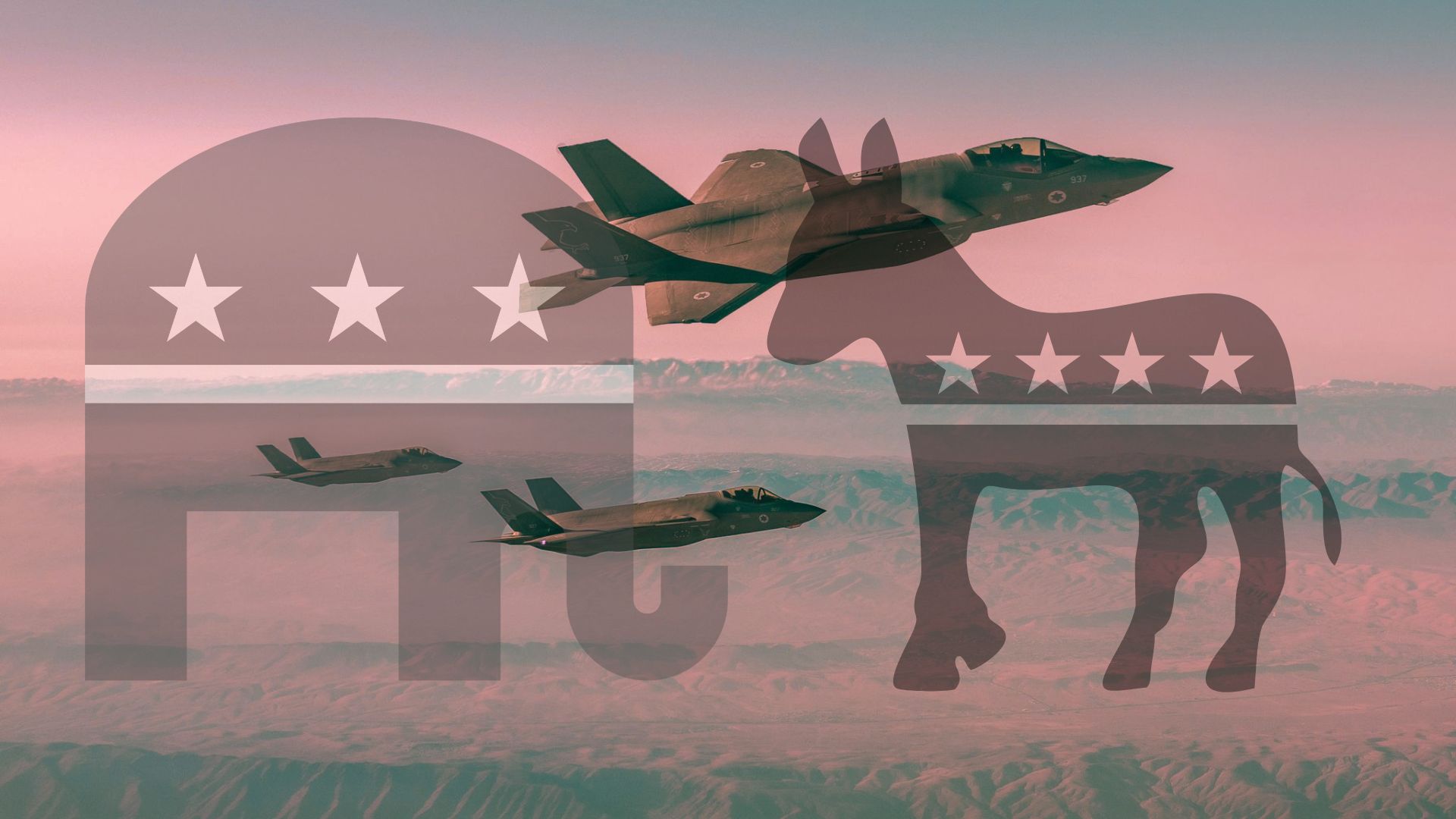
The Israeli-American war is speeding up U.S. trends of falling support for Israel and pushback against the traditional alliance. What can be done to prevent the further politicization of these strong bilateral ties?
INSS Insight No. 2121, March 26, 2026
Follow us on GoogleThe war with Iran has intensified debate in the United States over Israel’s role in American foreign policy and the future of the US–Israel relationship. While the conflict is unlikely to fundamentally transform Israel’s standing in the United States, it appears poised to accelerate trends already underway: growing partisan polarization, declining support for Israel among Democrats and younger Americans, and the emergence of dissenting voices within the Republican coalition. These dynamics risk shifting the US–Israel relationship from a largely bipartisan consensus to a contested domestic political issue. To mitigate further politicization, Israel should consider the domestic American context in decisions about the war’s duration, minimize civilian harm, emphasize regional cooperation, broaden the range of Israeli voices engaging the American public, and signal steps toward reducing tensions with the Palestinians.
From the first days of the campaign, President Donald Trump offered various explanations for the decision to strike Iran, including the need to prevent the resumption of its nuclear program, dismantle its ballistic missile capabilities, end its support for regional proxies, and even change the regime itself. The multiplicity of explanations—and the shifting way in which they were presented—led critics of the administration, as well as some of its supporters, to argue that the United States had entered the war arbitrarily and without clearly defined objectives.
Within this context, two competing narratives emerged from inside the administration regarding Israel’s role. One narrative emphasized Israel’s value to the United States as a reliable ally and a highly capable military partner. Secretary of Defense Pete Hegseth, for example, praised Israel’s “unmatched skill and iron determination,” describing the Israel Defense Forces as a genuine “force multiplier.” A second narrative, reflected in remarks by Secretary of State Marco Rubio in the early days of the campaign, suggested that Israel had essentially compelled the United States to enter the war. According to this account, the administration believed that Israel was preparing to attack Iran, and that to protect US forces in the region from an expected Iranian retaliation, the United States had to strike first.
Trump’s wide-ranging explanations for the war and the twin narratives about Israel’s role quickly reverberated in congressional debates, on the campaign trail, and in the broader public discourse. They struck an anxious chord in the American Jewish community as well. The long-term consequences of the war for Israel will depend not only on its tactical or strategic outcomes but also on how it shapes American perceptions of Israel and attitudes toward the US–Israel alliance.
Congress and Electoral Politics
In early March, the Senate and the House of Representatives voted on resolutions under the War Powers Act, intended to compel the administration to obtain congressional authorization for continuing the war.
During the debate, Republican leaders echoed the president’s arguments in favor of the war—citing the threats posed by Iran’s nuclear and ballistic missile programs and its support for proxy militias throughout the region—and praised Israel’s partnership in the campaign. Nevertheless, several rank-and-file Republican members of Congress criticized the administration for acting on Israel’s behalf, and contrary to the principle of “America First.” A similar claim was raised during the twelve-day war with Iran in June, but at that time, Trump himself dismissed it, arguing that as the architect of the America First doctrine, he alone could determine what served American interests.
Democratic leaders rejected the claim that Iran posed an imminent threat, criticized the absence of a clear “exit strategy,” and warned of the risk of escalation into a broader regional war. Some also argued that the administration had chosen to launch an expensive overseas conflict rather than address the rising cost of living within the United States.
Beyond Washington, the war has shaped domestic electoral politics in both parties during the season of primary campaigns for the 2026 congressional elections. Republican strategists have warned that the spike in energy prices caused by the war will hurt their party at the polls, where they are already projected to lose seats. Democratic candidates in several races have sharply criticized the US–Israeli campaign of airstrikes, describing the joint military action as “illegal” or as “yet another endless war.” Some candidates have also announced that they will refuse campaign contributions from the pro-Israel lobby, AIPAC, exacerbating a growing trend of rejecting donations from the lobby.
The criticism expanded to include prominent figures within the Democratic Party who had previously been regarded as solidly pro-Israel. For example, California Governor Gavin Newsom, often described as a leading presidential candidate in 2028, characterized Prime Minister Netanyahu as having pushed the United States into war with Iran and stated that he “never has and never will” accept campaign funding from AIPAC. He also remarked about Israel that some people are “talking about it appropriately as sort of an apartheid state.”
Public Opinion
Multiple national polls conducted since the beginning of the fighting have reported that a majority of the public opposes the military action. Polls conducted by CNN, the Washington Post, Marist, and Quinnipiac found opposition levels ranging from roughly 52% to 59%, compared with support levels ranging from 39% to 44%.
The partisan divide over the war has been sharp and consistent across the polls, with 77%–84% Republicans supporting the joint US–Israeli campaign (including an even larger majority of MAGA Republicans) and 82%–92% of Democrats opposing it. (Independents have ranged in between but lean toward opposing the campaign.)
Age differences have been less extreme but also quite consistent. In the Washington Post survey, support for the military action ranged from 23% among respondents aged 18–29 to 49% among respondents aged 65 and older.
Overall, support for the war at its outset has been low compared with previous American military operations, which typically began with majority public backing. At the same time, the level of support mirrors President Trump’s approval ratings within the general public and among subsets of Republicans, Independents, and Democrats.
The war has unfolded as Israel’s standing in American public opinion reached a new low. In February, Gallup reported that on its benchmark measure—whether respondents feel more sympathy toward Israelis or Palestinians—a historic reversal had occurred. For the first time in decades, more Americans reported sympathizing with Palestinians than Israelis. This realignment, driven mainly by Democrats and Americans aged 54 and younger, had been underway for many years but accelerated sharply during the Gaza war, amid extensive media coverage of civilian casualties, humanitarian suffering, and settler violence.
Since the start of the Iran war, only the Quinnipiac poll has asked a direct question about the US–Israel alliance. The survey found that 44% of respondents believe the United States supports Israel “too much”—the highest level recorded since the poll began asking the question in 2017. In the same survey, 44% said the level of support is “about right,” while 5% said the support is “not enough.”
The American Jewish Community
Although reliable surveys of American Jewish opinion regarding the war are not yet available, the public discourse suggests a complicated picture. On one hand, the Jewish media has focused on concerns that Israel—or American Jews themselves—might be blamed for a war that is unpopular with the broader public. Secretary of State Rubio’s remarks suggesting that Israel influenced the American decision to strike received extensive coverage. So too did comments by Tucker Carlson, Megyn Kelly, and other right-wing media personalities who blame the war on Israel or Jewish influence. Claims of this kind raised concerns about the revival of longstanding antisemitic tropes regarding Jewish power and dual loyalty.
On the other hand, most major Jewish organizations expressed support for the joint military action. The list of organizations issuing statements of support and solidarity included the Reform movement, which often takes a critical stance toward the Trump and Netanyahu governments. An exception was J Street, associated with the liberal wing of the pro-Israel advocacy network, which described the action as a “war of choice” lacking a clear strategy for achieving its objectives. The mix of concern about antisemitism—which has risen significantly since the beginning of the Gaza war—and support for the joint US–Israel action against the Islamic Republic seems to capture the ambivalent attitude of much of the American Jewish public.
Assessment
The war with Iran is unlikely to fundamentally transform Israel’s standing in the United States. However, it does appear poised to accelerate political and generational trends that were already underway.
Within the Republican Party, most leaders have viewed the war as evidence of Israel’s shared interests with the United States and its value as a military and strategic partner. At the same time, a competing current within the Republican coalition has become more visible. Some commentators and public figures—particularly those associated with a more isolationist approach to foreign policy and circles where conspiratorial or antisemitic ideas circulate—have argued that the war contradicts the principles of America First and reflects excessive Israeli influence on US policy. While this position still represents a minority among Republican elected officials, it increasingly resonates with younger audiences and certain segments of conservative media.
Within the Democratic Party and the broader left, the war appears to have deepened an already significant sense of estrangement from Israel. Even before the conflict, Israel’s standing among Democrats and progressives had reached historic lows. The war with Iran seems to be reinforcing these trends by linking Israel to an unpopular president and an unwanted military engagement abroad. As a result, criticism of US–Israel relations—once largely confined to the progressive wing of the party—has become more visible in mainstream Democratic discourse, including in congressional primary campaigns.
The deep political polarization characteristic of policy debates in the United States has played a central role in shaping these developments. Much of the hostility toward Israel among Democratic voters is intertwined with opposition to the Trump administration itself. In this sense, attitudes toward Israel are increasingly influenced by domestic political identities within the United States rather than through assessments of Israeli policy alone.
Taken together, these dynamics suggest that the war marks a new stage in the long-term process by which US–Israel relations shift from a broad bipartisan consensus to a more polarized political issue. This development represents a dramatic and negative trend for Israel. As long as Israel was perceived primarily as a foreign-policy issue, its role in domestic American political debate remained secondary—partly because American voters generally assign relatively low importance to foreign policy. Once support for—or opposition to—Israel becomes a defining marker of partisan identity, the likelihood that Israel will retain cross-party support diminishes.
In the short term, Republican control of key branches of government is likely to ensure continued strong support for Israel. Over the longer term, however, declining support among Democrats, certain segments of the right, and younger Americans will likely translate to growing opposition to military aid, diplomatic backing, and the broader political framework of the US–Israel relationship.
Policy Recommendations
For Israel, the central strategic challenge is not only the immediate political debate surrounding the war itself but also the long-term trajectory of American opinion toward Israel and the US–Israel alliance. The war with Iran did not cause the deterioration of Israel’s standing among Democrats, younger Americans, and parts of the MAGA right, but it has likely accelerated the negative trends. To mitigate further politicization of US–Israel relations, Israel should consider the following steps:
- Factor in Israel’s standing in the United States when determining the timing of the war’s conclusion. As in most conflicts of this type, public support for the war is likely to erode over time, increasing the political costs of the campaign for Israel.
- Minimize civilian casualties and damage to essential infrastructure in Iran, as such harm could reinforce the perception—formed among many Americans during the Gaza war—of Israeli indifference to civilian welfare.
- Emphasize cooperation with regional partners and highlight the development of regional security frameworks that could help stabilize the Middle East after the war.
- Broaden the range of Israeli voices addressing the American public, particularly civilian experts and public figures who may be seen as less polarizing than official government representatives.
- Advance steps signaling a desire to reduce tensions with the Palestinians, including proactive measures against settler violence in the West Bank and the presentation of a political horizon for the Israeli–Palestinian conflict—an issue that continues to significantly shape American public attitudes toward Israel.