


Publications
What are the implications of the talks expected to take place between the Iranians and the Americans, against the backdrop of the buildup of US military forces in the region—and what are the ramifications for Israel?
INSS Insight No. 2096, February 5, 2026
Follow us on GoogleTensions between Iran and the United States, which escalated following an American military buildup several days after the outbreak of protests across Iran, are currently in a temporary lull. This pause comes amid plans to hold a meeting between the two countries on February 6 in Oman (after a last-minute crisis that put the talks at risk was likely resolved). President Trump is aware of the risk to the credibility of US deterrence should no meaningful achievement vis-à-vis Iran be attained, given the expectations created by the massive military deployment in the Middle East. At the same time, it appears that he has not yet been presented with a short-term operational plan capable of ensuring a decisive outcome.
The Iranian regime itself is at its lowest point since its establishment and is focused on survival. Accordingly, the planned meeting reflects the desire of both sides—encouraged by regional mediating states—to reach understandings that would avert a military confrontation. However, the gaps between Tehran and Washington are deep, and without a significant Iranian concession, the military option is likely to return to the forefront. Moreover, an agreement that addresses only the nuclear program and enables the relief—even partial—of sanctions would provide the regime in Tehran with much-needed oxygen while deeply disappointing the Iranian public. From Israel’s perspective, such an agreement would not resolve the challenges posed by Iran’s rapid missile production and its continued support for the military arsenals of Hezbollah and the militias in Iraq and Yemen.
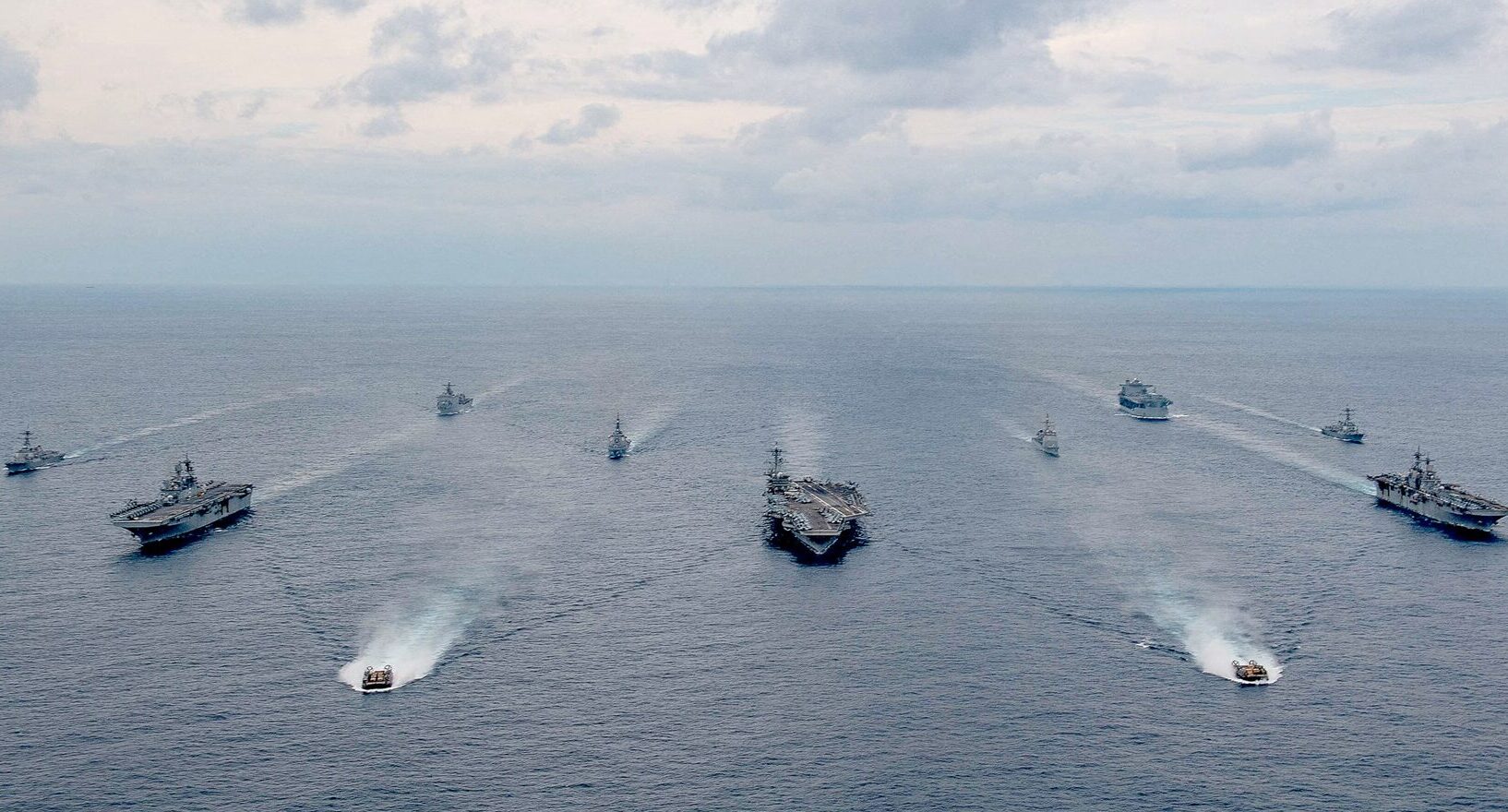
More than a month after the outbreak of protests in Iran—which have since subsided due to the regime’s brutal repression—tensions remain high amid President Trump’s promises to come to the aid of the protesters, an extensive concentration of US military forces in the region, and repeated presidential threats to order military action against Iran. It now appears that the president’s envoys, Steve Witkoff and Jared Kushner, are expected to meet Iranian Foreign Minister Abbas Araghchi in Oman on February 6. This meeting, if it takes place, would be the first since Israel’s Operation Rising Lion and the US strike on Iranian nuclear facilities in June 2025, when the Trump administration gave the green light to an Israeli strike and subsequently took part in it, despite negotiations that were underway at the time between Washington and Tehran.
The planned meeting is the result of intensive diplomatic efforts by regional states—particularly Turkey, Qatar, and Egypt—aimed at preventing a military confrontation between the United States and Iran. It remains unclear whether representatives of these countries will be present at the talks. The very intent to hold the meeting signals a desire to ease tensions; however, it is still uncertain whether this willingness reflects a genuine intent by the sides to bridge the deep gaps in their positions, which have been publicly articulated in recent days—especially regarding the future of Iran’s nuclear program.
President Trump finds himself between two poles: On the one hand, he has repeatedly reiterated his demands of Iran while simultaneously threatening military action. He is clearly aware of the high expectations created by the massive US military buildup in the region and, in particular, of the negative implications for the credibility of US deterrence, both regionally and beyond, should he retreat from his threats without achieving a significant outcome with Iran. On the other hand, his basic worldview and the political agenda with which he entered the White House are grounded in “ending wars” (through arrangements and from a position of strength), rather than initiating them. In consultations with his national security team, the president demanded that an operational plan be presented to him that would achieve a rapid decision with minimal risk of entanglement. He likely seeks to replicate the success of the focused strike against the Fordow nuclear site in June 2025 and the operation to remove President Maduro from Venezuela. Both uses of force concluded without American casualties and were short, targeted, and—above all—successful operations.
However, even though it remains unclear what the United States would define this time as a strategic target for an attack on Iran, achieving successful results would likely require large-scale military efforts. Such objectives could not, with a high degree of probability, be achieved through a short and focused operation. The president declared on his social media platform that, alongside assistance to the protesters—up to and including the possibility of regime change—he intends to force Iran to abandon its uranium enrichment program, reduce its ballistic missile arsenal, and halt support for its regional proxies.
While the US defense establishment has mobilized accordingly and large forces have been deployed to the region, it appears that to date no plan has been presented that would guarantee the desired achievements—certainly not within a short timeframe and without entanglement in a prolonged, large-scale war. According to Iranian threats, such a war would include attacks on US bases in the region, on Israel, and on additional US allies in the Gulf.
Since the protests erupted on December 28, 2025, Iran has been operating in a mindset of regime survival. The widespread nature of the protests, President Trump’s decision after several days to side publicly with the protesters, reports in Israel hinting at giving assistance to them, and the public alignment of Reza Pahlavi—the son of the deposed shah—with the protest movement all reinforced the regime’s assessment that the unrest was aimed at its overthrow. Under these circumstances, the regime perceived these events as more severe than previous outbreaks of popular protest and even existential in nature. Accordingly, the violence it employed to suppress the protests was broader and more brutal than in the past.
Against this backdrop, Iran’s leadership, led by Supreme Leader Ali Khamenei, decided to confront the US military buildup along two parallel tracks. The regime conveyed a clear message that it has no intention of surrendering and is determined to face any military action undertaken by the United States. In parallel, Iran activated an intensive diplomatic track, including talks between Foreign Minister Araghchi and his counterparts in the Gulf states, a visit to Turkey, and a visit by the Secretary of the Supreme National Security Council, Ali Larijani, to Moscow. At the same time, Iran’s proxies—Hezbollah, the militias in Iraq, and the Houthis—were instructed to publicly align with Iran. Indeed, they issued threats, albeit in Hezbollah’s case in relatively vague terms, to activate their capabilities should Iran be attacked.
Thus, the upcoming meeting in Oman is intended to reflect the desire of both sides—encouraged by the mediating states—to exhaust all diplomatic possibilities and to avoid a military confrontation, despite the continued exchange of inflammatory statements and adherence to their positions. At this stage, it is unclear whether the mediators’ efforts have included substantive discussions regarding the steps required to bridge the gaps between Washington and Tehran. Consequently, it is still unknown whether the meeting will be largely symbolic or whether it could serve as a step toward continued negotiations. Unverified reports suggest the establishment of two parallel working groups—one focused on the nuclear issue and the other on the remaining points of contention—but Iranian officials have made clear that they intend to deal exclusively with the nuclear issue.
It is highly probable that Iran would be willing to show some flexibility on nuclear issues, potentially even regarding uranium enrichment, given its current inability to carry out enrichment following the strikes on its nuclear sites in June 2025. However, with regard to the other demands—particularly the requirement to reduce its missile arsenal—Tehran has stated that it will not compromise. Indeed, the heightened sense of threat to the regime only reinforces, in its view, the necessity of retaining this central deterrent asset. The demand to cease support for regional allies is likewise unacceptable to Iran’s leadership, as it is rooted in the regime’s ideological foundations and carries significant deterrent potential. Against this backdrop, it appears difficult to bridge the gaps between Washington and Tehran unless fears on both sides regarding the consequences of a military confrontation lead them to significantly soften their positions.
Iran is currently in its most severe condition in decades, marked by an unprecedented convergence of acute security threats and the deepest internal crisis it has ever faced. In the security arena, the disintegration of the Iranian-led “Axis of Resistance” and Iran’s complete failure to deter direct strikes against it by Israel and the United States are evident. Domestically, public rage and explicit calls for the regime’s overthrow have intensified in response to the exceptional violence employed by the regime to suppress the protests. At the same time, the regime lacks solutions to its economic problems, including the collapse of its currency and rampant inflation, shortages of water and energy, as well as deep structural problems and pervasive corruption.
At the same time, President Trump is assessing the scope of achievements that might realistically be attained through negotiations, while maintaining a credible military threat. Agreeing to the meeting also enables him to demonstrate to US regional partners and the American public that a serious diplomatic effort was made to reach an agreement before any decision to escalate pressure. Yet there is little indication that the president has abandoned the military option. It could return to the forefront with greater intensity if he concludes that Iran is reverting to its previous negotiation pattern—namely, stalling—or if he assesses that the prospects of persuading Tehran to agree to a framework that could be presented as an American victory have failed.
Even at this stage, however, Tehran has already secured a significant achievement simply by postponing an American attack. This outcome likely strengthens those factions in Iran that favored a hard line toward Washington. Indeed, the Iranian foreign minister has already stated that the results of the Iranian people’s resolute stance will soon be evident in the diplomatic arena.
In any case, an agreement that addresses only the nuclear issue, while lifting sanctions on Iran—even partially—would provide the regime with the oxygen it needs to survive. At the same time, the Iranian public, many of whom believed that President Trump would come to its aid and perhaps even topple the regime, would experience profound disappointment. For this reason, any agreement should address not only security-related issues but also guarantees for the lives of detained and wounded protesters, as well as commitments by the regime concerning its conduct toward its citizens. Such provisions could contribute to the continued erosion of the regime’s legitimacy.
From Israel’s perspective as well, a nuclear-only agreement—important as it may be—would leave critical challenges unresolved. It would not address Iran’s missile program, which continues to expand at a rapid pace, nor Iran’s ongoing support for the military arsenals of Hezbollah and militias in Iraq and Yemen. These threats would become even more acute if, in exchange for nuclear understandings, the regime were to receive substantial sanctions relief, enabling it to rearm itself and its proxies.