


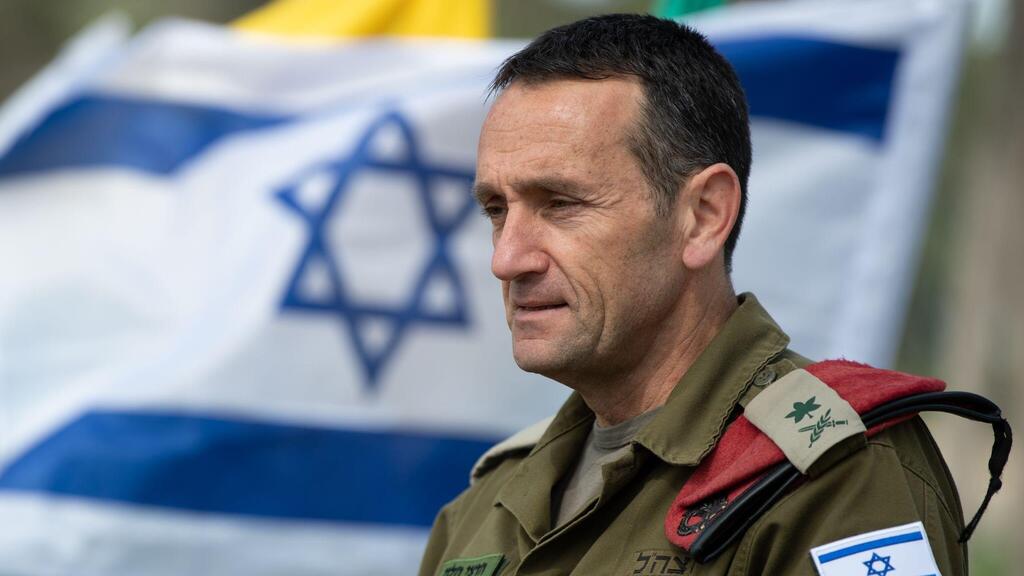
The Force Buildup Challenges that Await the Incoming IDF Chief of Staff | INSS
go to header go to content go to footer go to search
INSS logo The Institute for National Security Studies, Strategic, Innovative, Policy-Oriented Research, go to the home page
INSS
Tel Aviv University logo - beyond an external website, opens on a new page
  • Campus
  • Contact
  • עברית
  • Support Us
  • Research
    • Topics
      • Israel and the Global Powers
        • Israel-United States Relations
        • Glazer Israel-China Policy Center
        • Russia
        • Europe
        • Antisemitism and Delegitimization
      • Iran and the Shi'ite Axis
        • The Campaign Against Iran and the Shiite Axis
        • Iran
        • Lebanon and Hezbollah
        • Syria
        • Yemen and the Houthi Movement
        • Iraq and the Iraqi Shiite Militias
      • Conflict to Agreements
        • Israeli-Palestinian Relations
        • Hamas and the Gaza Strip
        • Peace Agreements and Normalization in the Middle East
        • Saudi Arabia and the Gulf States
        • Turkey
        • Egypt
        • Jordan
      • Israel’s National Security Policy
        • Military and Strategic Affairs
        • Societal Resilience and the Israeli Society
        • Jewish-Arab Relations in Israel
        • Climate, Infrastructure and Energy
        • Terrorism and Low Intensity Conflict
      • Cross-Arena Research
        • Data Analytics Center
        • Law and National Security
        • Advanced Technologies and National Security
        • Foreign Information Manipulation and Interference
        • Economics and National Security
    • Projects
      • Preventing the Slide into a One-State Reality
      • India-Middle East-Europe Economic Corridor (IMEC)
  • Publications
    • -
      • All Publications
      • INSS Insight
      • Policy Research and Papers
      • Special Publication
      • Strategic Assessment
      • Technology Platform
      • Memoranda
      • Posts
      • Books
      • Archive
  • Database
    • Surveys
    • Spotlight
    • Maps
    • Dashboards
  • Events
  • Team
  • About
    • Vision and Mission
    • History
    • Research Disciplines
    • Chairman of the Board
    • Board of Directors
    • Fellowship and Prizes
    • Annual Reports
    • Internships
  • Media
    • Communications
    • Video gallery
    • Press Releases
  • Podcast
  • Newsletter
  • Campus
Search in site
  • Research
    • Topics
    • Israel and the Global Powers
    • Israel-United States Relations
    • Glazer Israel-China Policy Center
    • Russia
    • Europe
    • Antisemitism and Delegitimization
    • Iran and the Shi'ite Axis
    • The Campaign Against Iran and the Shiite Axis
    • Iran
    • Lebanon and Hezbollah
    • Syria
    • Yemen and the Houthi Movement
    • Iraq and the Iraqi Shiite Militias
    • Conflict to Agreements
    • Israeli-Palestinian Relations
    • Hamas and the Gaza Strip
    • Peace Agreements and Normalization in the Middle East
    • Saudi Arabia and the Gulf States
    • Turkey
    • Egypt
    • Jordan
    • Israel’s National Security Policy
    • Military and Strategic Affairs
    • Societal Resilience and the Israeli Society
    • Jewish-Arab Relations in Israel
    • Climate, Infrastructure and Energy
    • Terrorism and Low Intensity Conflict
    • Cross-Arena Research
    • Data Analytics Center
    • Law and National Security
    • Advanced Technologies and National Security
    • Foreign Information Manipulation and Interference
    • Economics and National Security
    • Projects
    • Preventing the Slide into a One-State Reality
    • India-Middle East-Europe Economic Corridor (IMEC)
  • Publications
    • All Publications
    • INSS Insight
    • Policy Research and Papers
    • Special Publication
    • Strategic Assessment
    • Technology Platform
    • Memoranda
    • Posts
    • Books
    • Archive
  • Database
    • Surveys
    • Spotlight
    • Maps
    • Dashboards
  • Events
  • Team
  • About
    • Vision and Mission
    • History
    • Research Disciplines
    • Chairman of the Board
    • Board of Directors
    • Fellowship and Prizes
    • Internships
    • Annual Reports
    • Privacy Policy and Terms of Use
  • Media
    • Communications
    • Video gallery
    • Press Releases
  • Podcast
  • Newsletter
  • Campus
  • Contact
  • עברית
  • Support Us
bool(false)

Publications

Home Publications INSS Insight The Force Buildup Challenges that Await the Incoming IDF Chief of Staff

The Force Buildup Challenges that Await the Incoming IDF Chief of Staff

When General Herzi Halevi assumes his post as the commander-in-chief of the IDF this coming January, he will be faced with some urgent issues regarding IDF force buildup, including a new low point in the rate of enlistment; declining motivation among soldiers; and gaps relating to the IDF’s preparedness for the next war. This article considers these issues and offers recommendations for the incoming Chief of Staff

INSS Insight No. 1653, October 27, 2022

Follow us on Google
עברית
Tamir Hayman
Eden Kaduri
Ofer Shelah

The appointment of the new IDF Chief of Staff is an opportunity to examine fundamental issues and significant challenges that will likely figure during his upcoming tenure. The success of the Chief of Staff and the enhancement of IDF strength are not the exclusive responsibility of the commander of the military and are not only military matters but are rather a critical issue for Israel’s national security, which requires the involvement and direction of the political echelon. This article considers several of the most urgent issues regarding IDF force buildup that the incoming Chief of Staff will confront: the erosion of the idea of the people’s army; the formulation of IDF manpower policy in light of declining enlistment; decreasing ability to retain quality manpower and the reduction in the number of active duty reserve soldiers; the challenge of the IDF’s logistical preparedness; and the challenge of ground forces preparedness.


As expected, the Israel government approved the appointment of General Herzi Halevi as the 23rd commander in chief of the IDF. The success of the Chief of Staff and the enhancement of IDF power are not the exclusive responsibility of the commander of the military and are not only military matters but are rather a critical issue for Israel’s national security, which requires the involvement and direction of the political echelon. This essay will relate to several of the most urgent issues regarding IDF force buildup that the incoming Chief of Staff will confront.
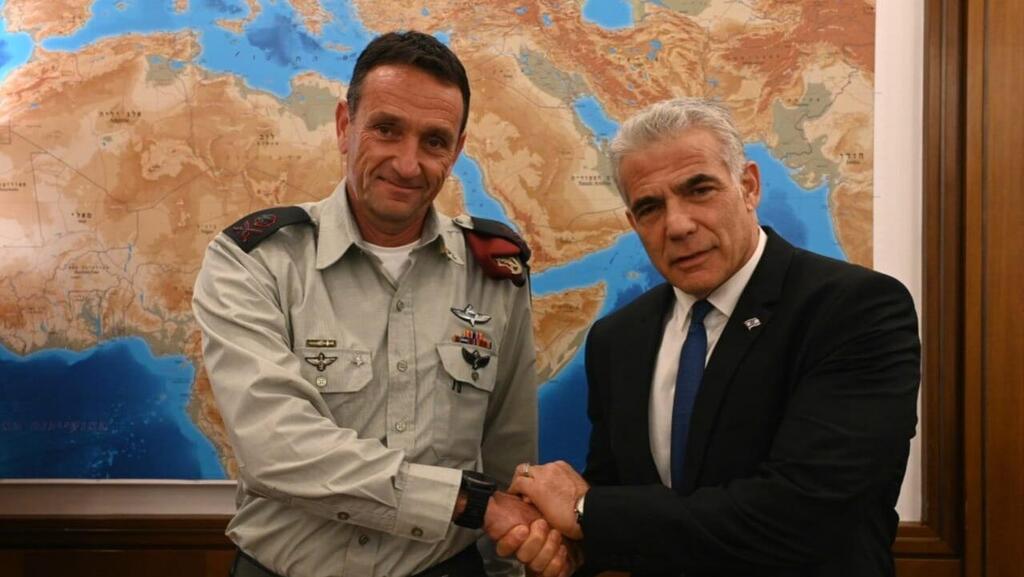
Prime Minister Lapid and the elected Chief of Staff Halevi |

The erosion of the idea of the people’s army: David Ben Gurion presented his vision of the IDF as “the people’s army,” in which enlistment would be compulsory for all and would reflect the melting pot policy of Israel’s multicultural society. Over the years, however, the model of the people’s army has weakened, raising the question of the IDF’s role in Israeli society. Induction statistics show a sharp reduction in the rate of new soldiers enlisting, and 2020 marked a low point, with only 64 percent of those obligated to enlist doing so. The sectors that overall do not enlist, primarily ultra-Orthodox Jewish and Arab communities, comprise a rising percentage of the population at large. At the same time there is the unfulfilled potential of national and civil service, which included just 18,000 volunteers in 2022, of whom 30 percent were Arab and Druze. Among populations that do serve, and especially among the upper classes, there is reduced motivation for service in general, as well as reduced interest in combat service and the army as a career. This trend led the IDF to cancel its motivation survey in 2007, after hiding the results for years, and finding only 64 percent motivation for combat service. However, avoiding the statistics neither changes them nor solves the problem.

Furthermore, the public is increasingly critical of the IDF as an organization (in contrast with its role as a security body). Issues such as officer pensions and service conditions contributed to reduced trust in the IDF (a survey by the Israeli Democracy Institute found a 12 percent decrease in January 2022), particularly regarding its financial conduct (in a 2020 survey by the Institute for National Security Studies, 51 percent of respondents chose the answer “the IDF does not conduct its finances correctly”) and conduct towards soldiers. In this context there was, for the first time, majority support for transitioning to a professional army model; these statistics almost certainly reflect dissatisfaction with the current situation rather than a deeply reasoned choice to leave behind the people’s army model.
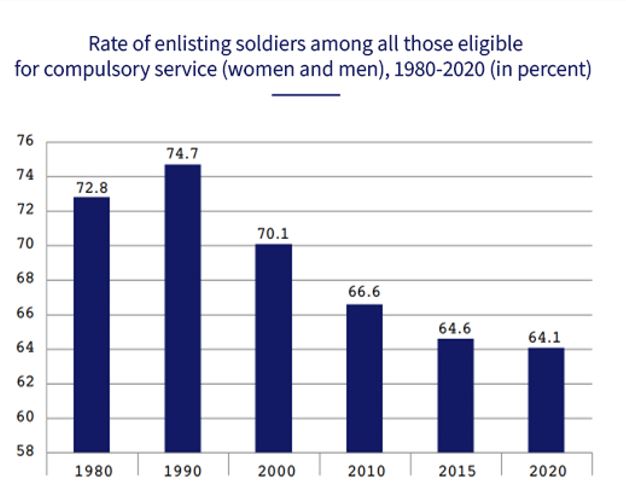
Source: Israeli Democracy Institute, based on statistics from the IDF Manpower Directorate

Career army service and reserve duty: The IDF, a reflection of Israeli society, is influenced by dramatic changes in the labor market and trends in society. Alongside the erosion of the “combat ethos,” it is increasingly clear that the military struggles to retain much-needed talent in its ranks. The number of active reserve duty soldiers, which according to The Marker is just 4 percent, long ago reached the point where the few who perform meaningful service as reservists are essentially volunteers, who thereby shoulder a significant burden.

IDF logistical preparedness: Over recent years many questions have arisen regarding the IDF’s preparedness for the next war. The charge that “the IDF isn’t ready for the next war” is likely an overstatement, but it is also clear that the IDF’s logistical preparedness must be strengthened, while examining the military’s needs over the long term. One of many examples occurred during Operation Guardian of the Walls – due to privatization, operational plans depend on vehicles driven by Arab drivers, yet it is difficult to rely on their appearing for duty and fulfilling this role amidst an event of this sort. The new Chief of Staff will also need to deal with the budgetary implications of the current US aid agreement, whereby from 2025 there will be a dramatic reduction, practically a cancellation, of the conversion policy that allows converting 26 percent of the aid to Israel to Israeli shekels. This will create a major burden on the IDF shekel budget, and in turn have serious implications for force buildup.

Erosion of ground forces preparedness: The fitness of the ground forces, which comprise the majority of IDF combat forces, has eroded in recent years for a variety of reasons: avoiding the use of force in recent campaigns, which leads to a sense of insignificance among compulsory and reserve duty soldiers and undermines the forces’ confidence in themselves and willingness to deploy them; preparedness gaps between compulsory and reserve duty soldiers, which raise questions about the ability of reserve units to fulfill their role; and the emphasis on air, intelligence, and special forces, which contributes to the reduced significance of the principal ground forces.

Policy Recommendations

Human Resources: The new Chief of Staff and the Ministry of Defense should promote via legislation the establishment of civilian-security service, which will strengthen public security and home front security during emergencies. The security establishment will continue to prioritize military service when screening candidates; those who will not serve in the military can be referred to public security bodies, search and rescue units, law and order agency, and other security bodies on the civilian front. In parallel with this legislation, there should also be extensive administrative work to determine the desired size of the IDF, in accordance with a national security concept that should be authorized by the cabinet and an operational concept that meets current and future challenges.

At the same time, the Chief of Staff should update career service in the IDF: create conditions for retaining quality manpower among combat forces and retaining talent in technological forces, while taking into consideration the changing nature of work and learning from other security organizations in Israel and around the world. He must restore, via legislation and with a new public discourse, the appreciation of the IDF as a capable and talented body, and the perception that those who serve in it merit praise.

Force Buildup: In the new operational concept the role of the ground forces must be updated. The steps necessary to strengthen the ground forces – measures whose seeds were already sown in small, singular frameworks in the ground forces – must be derived from this concept, including: the building of modern forces, which combine the most advanced autonomous tools; the embedding of intelligence; and firepower capabilities. Such forces will include a strong reserve corps component, which is equal in capabilities to regular army forces and can fight alongside them in combat. These reserve duty units will have a specific budget allocated in the framework of the IDF reserve duty model. Force buildup in the IDF must be based on updated, implementable operational plans; approval of these plans by the political echelon will prove the intention to execute them in emergency situations. The major technological changes in cyber and social media, fire at all ranges, and active defense must be incorporated, not only in islands of elite forces but throughout the entire IDF. This must occur while recognizing budgetary constraints, including the implications of the US aid agreement, cost-saving and greater efficiency wherever needed, and emphasis on preparedness and strength.

A military seen by both those who serve in it and the Israeli public as efficient and prepared for its missions is a military that can retain talent and fulfill its aims when needed.

The opinions expressed in INSS publications are the authors’ alone.
Publication Series INSS Insight
TopicsMilitary and Strategic AffairsSocietal Resilience and the Israeli Society
עברית

Events

All events
Israel’s National Security Conference
27 July, 2026
10:00 - 14:00

Related Publications

All publications
REUTERS and U.S. Air Force photo by Master Sgt. Donald R. Allen (modified by INSS)
The Engine and F-35 Aircraft Deal for Turkey: Implications for the Regional and Global Balance of Power
The current U.S. administration is advancing a major deal, valued at over $700 million, to sell F110 engines to Turkey for its KAAN aircraft project. Despite the administration’s attempts to bypass congressional barriers, this move is not an isolated event; rather, it is a strategic accelerator intended to pave the way for Ankara’s full return to the F-35 program. While Washington’s rationale seeks to preserve Turkey as an anchor within NATO, in practice, it creates a serious dilemma and presents a weighty, threefold strategic risk: Undermining NATO from within: Empowering an actor that is engaged in aggressive competition against Western allies (such as Greece) and is entrenching a defiant military presence in Cyprus. Fueling Regional Friction: Granting legitimacy to a competitive power that provides a safe haven for Hamas and supports the al-Sharaa regime in Syria. Creating a Systemic Risk to the Global F-35 Network: Deploying 5th-generation capabilities in proximity to Russian S-400 systems risks compromising and cracking the information security of the platform as a whole. This threat is not limited to the erosion of Israel’s qualitative edge or the exposure of its defense industries; it constitutes a direct threat to every country in the world equipped with the F-35, alongside concerns over the possible proliferation of KAAN aircraft to additional militaries across the Sunni sphere.
15/07/26
Generated with AI
Time to Break the Strategic Limbo: Israel’s Core Challenge
Israel finds itself in a continuous stagnation, wherein impressive tactical military achievements are not translating into political and strategic victory. How can this 'limbo' be resolved across the various fronts?
05/07/26
REUTERS
Alternatives for the Gaza Strip Following the Campaign Against Iran
As the campaign against Iran winds down, attention is expected to return to the Gaza Strip. In the meantime, Hamas is exploiting the strategic vacuum to rehabilitate its governance and military capabilities. Simultaneously, the Trump framework remains stalled, and the “Board of Peace” faces professional, operational, and budgetary difficulties in advancing its declared objectives. The issue of demilitarization remains trapped between Israel’s demand for the complete and immediate disarmament of Hamas and the organization’s stalling tactics. Israel faces three main alternatives: (1) Renewal of efforts to fully implement the Trump framework across the Strip, a course that carries the risk of “mock demilitarization” and depends on Hamas’s consent; (2) Gradual stabilization and reconstruction of areas cleared of Hamas while continuing to erode its control in areas still under its rule. This option is vulnerable to violent disruption and could entrench the Strip’s division; (3) A return to war and the reoccupation of the Gaza Strip, which would entail extremely heavy military, economic, and diplomatic costs for Israel. The key recommendation is to avoid perpetuating the status quo, which establishes Hamas’s rule, and instead adopt a proactive approach. Israel should allow the implementation of the Mladenov framework for gradual demilitarization, beginning with heavy weapons, while coordinating with the Trump administration regarding scenarios that would justify use of force. If Hamas obstructs the process, Israel should implement a differential alternative: the entry of a civilian committee and Palestinian police into “green zones” cleared of Hamas (alongside increasing Israeli security responsibility modeled on Judea and Samaria). Simultaneously, Hamas’s capabilities and governance in the “red zone” should be systematically degraded, including the gradual erosion of its territorial control. The alternative of returning to war and military occupation should remain a last-resort alternative, contingent on the formulation of an exit strategy and a designated body to assume civilian responsibility.
10/06/26

Stay up to date

Registration was successful! Thanks.
  • Research

    • Topics
      • Israel and the Global Powers
      • Israel-United States Relations
      • Glazer Israel-China Policy Center
      • Russia
      • Europe
      • Antisemitism and Delegitimization
      • Iran and the Shi'ite Axis
      • The Campaign Against Iran and the Shiite Axis
      • Iran
      • Lebanon and Hezbollah
      • Syria
      • Yemen and the Houthi Movement
      • Iraq and the Iraqi Shiite Militias
      • Conflict to Agreements
      • Israeli-Palestinian Relations
      • Hamas and the Gaza Strip
      • Peace Agreements and Normalization in the Middle East
      • Saudi Arabia and the Gulf States
      • Turkey
      • Egypt
      • Jordan
      • Israel’s National Security Policy
      • Military and Strategic Affairs
      • Societal Resilience and the Israeli Society
      • Jewish-Arab Relations in Israel
      • Climate, Infrastructure and Energy
      • Terrorism and Low Intensity Conflict
      • Cross-Arena Research
      • Data Analytics Center
      • Law and National Security
      • Advanced Technologies and National Security
      • Foreign Information Manipulation and Interference
      • Economics and National Security
    • Projects
      • Preventing the Slide into a One-State Reality
      • India-Middle East-Europe Economic Corridor (IMEC)
  • Publications

    • All Publications
    • INSS Insight
    • Policy Research and Papers
    • Special Publication
    • Strategic Assessment
    • Technology Platform
    • Memoranda
    • Database
    • Posts
    • Books
    • Archive
  • About

    • Vision and Mission
    • History
    • Research Disciplines
    • Chairman of the Board
    • Board of Directors
    • Fellowship and Prizes
    • Internships
    • Annual Reports
    • Support
    • Privacy Policy and Terms of Use
  • Media

    • Communications
    • Video Gallery
    • Press Release
    • Podcast
  • Home

  • Events

  • Database

  • Team

  • Contact

  • Newsletter

  • עברית

INSS logo The Institute for National Security Studies, Strategic, Innovative, Policy-Oriented Research, go to the home page
40 Haim Levanon St. Tel Aviv, 6997556 Israel | Tel 03-640-0400 | Fax 03-744-7590 |
Developed by Daat ,Yael Group.
Accessibility Statement
This site is protected by reCAPTCHA and the Google Privacy Policy and Terms of Service apply.