


Arab Society and the Parliamentary Elections to the 21st and 22nd Knesset | INSS
go to header go to content go to footer go to search
INSS logo The Institute for National Security Studies, Strategic, Innovative, Policy-Oriented Research, go to the home page
INSS
Tel Aviv University logo - beyond an external website, opens on a new page
  • Campus
  • Contact
  • עברית
  • Support Us
  • Research
    • Topics
      • Israel and the Global Powers
        • Israel-United States Relations
        • Glazer Israel-China Policy Center
        • Russia
        • Europe
        • Antisemitism and Delegitimization
      • Iran and the Shi'ite Axis
        • Operation Roaring Lion
        • Iran
        • Lebanon and Hezbollah
        • Syria
        • Yemen and the Houthi Movement
        • Iraq and the Iraqi Shiite Militias
      • Conflict to Agreements
        • Israeli-Palestinian Relations
        • Hamas and the Gaza Strip
        • Peace Agreements and Normalization in the Middle East
        • Saudi Arabia and the Gulf States
        • Turkey
        • Egypt
        • Jordan
      • Israel’s National Security Policy
        • Military and Strategic Affairs
        • Societal Resilience and the Israeli Society
        • Jewish-Arab Relations in Israel
        • Climate, Infrastructure and Energy
        • Terrorism and Low Intensity Conflict
      • Cross-Arena Research
        • Data Analytics Center
        • Law and National Security
        • Advanced Technologies and National Security
        • Foreign Information Manipulation and Interference
        • Economics and National Security
    • Projects
      • Preventing the Slide into a One-State Reality
      • India-Middle East-Europe Economic Corridor (IMEC)
  • Publications
    • -
      • All Publications
      • INSS Insight
      • Policy Papers
      • Special Publication
      • Strategic Assessment
      • Technology Platform
      • Memoranda
      • Posts
      • Books
      • Archive
  • Database
    • Surveys
    • Spotlight
    • Maps
    • Dashboards
  • Events
  • Team
  • About
    • Vision and Mission
    • History
    • Research Disciplines
    • Chairman of the Board
    • Board of Directors
    • Fellowship and Prizes
    • Internships
  • Media
    • Communications
    • Video gallery
    • Press Releases
  • Podcast
  • Newsletter
  • Campus
Search in site
  • Research
    • Topics
    • Israel and the Global Powers
    • Israel-United States Relations
    • Glazer Israel-China Policy Center
    • Russia
    • Europe
    • Antisemitism and Delegitimization
    • Iran and the Shi'ite Axis
    • Operation Roaring Lion
    • Iran
    • Lebanon and Hezbollah
    • Syria
    • Yemen and the Houthi Movement
    • Iraq and the Iraqi Shiite Militias
    • Conflict to Agreements
    • Israeli-Palestinian Relations
    • Hamas and the Gaza Strip
    • Peace Agreements and Normalization in the Middle East
    • Saudi Arabia and the Gulf States
    • Turkey
    • Egypt
    • Jordan
    • Israel’s National Security Policy
    • Military and Strategic Affairs
    • Societal Resilience and the Israeli Society
    • Jewish-Arab Relations in Israel
    • Climate, Infrastructure and Energy
    • Terrorism and Low Intensity Conflict
    • Cross-Arena Research
    • Data Analytics Center
    • Law and National Security
    • Advanced Technologies and National Security
    • Foreign Information Manipulation and Interference
    • Economics and National Security
    • Projects
    • Preventing the Slide into a One-State Reality
    • India-Middle East-Europe Economic Corridor (IMEC)
  • Publications
    • All Publications
    • INSS Insight
    • Policy Papers
    • Special Publication
    • Strategic Assessment
    • Technology Platform
    • Memoranda
    • Posts
    • Books
    • Archive
  • Database
    • Surveys
    • Spotlight
    • Maps
    • Dashboards
  • Events
  • Team
  • About
    • Vision and Mission
    • History
    • Research Disciplines
    • Chairman of the Board
    • Board of Directors
    • Fellowship and Prizes
    • Internships
    • Privacy Policy and Terms of Use
  • Media
    • Communications
    • Video gallery
    • Press Releases
  • Podcast
  • Newsletter
  • Campus
  • Contact
  • עברית
  • Support Us
bool(false)

Strategic Assessment

Home Strategic Assessment Arab Society and the Parliamentary Elections to the 21st and 22nd Knesset

Arab Society and the Parliamentary Elections to the 21st and 22nd Knesset

Research Forum | July 2019
Ephraim Lavie
Meir Elran
Morsi Abu Mokh

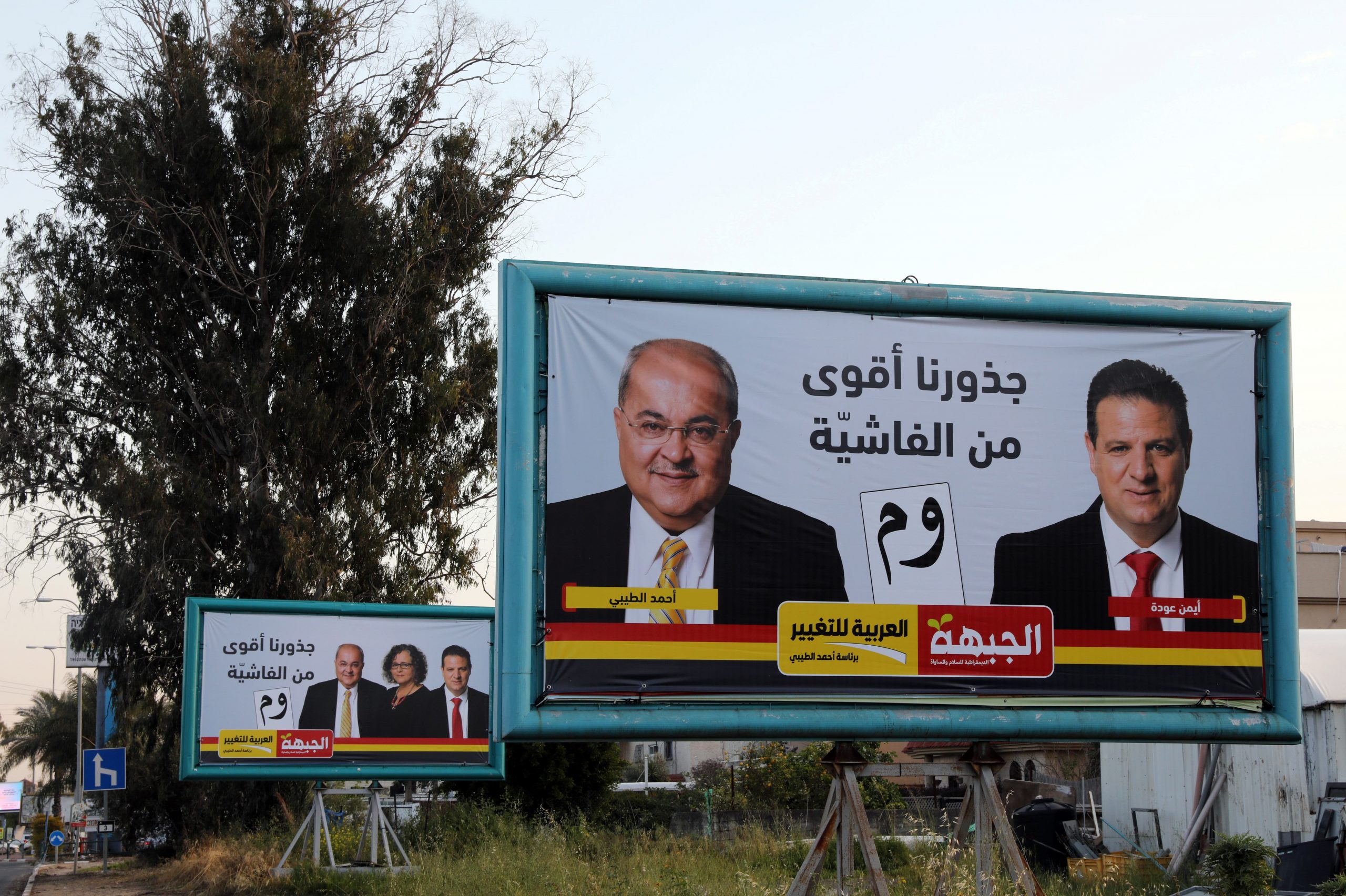
The Arab public’s disappointment with the Joint List and the dissolution of the List on the eve of the 21st Knesset elections in April 2019, as well as the campaign waged by opposition factions urging voters to boycott the elections, resulted in low voter turnout and a drop in Arab parliamentary representation, from 13 to 10 seats (Hadash-Ta’al with six seats and Ra’am-Balad with four). After the Knesset was dissolved, these parties decided to make an effort to revive the Joint List and gain the public’s trust in advance of the 22nd Knesset elections, scheduled for September 2019. Their aim is to increase the number of Knesset seats and function as the kingmaker. Members of the Joint List hope to gain influence in national decisions on economic and social issues important to the Arab public and demonstrate the willingness of this sector to integrate further into Israeli society, with the primary goal of shaping the future of the Arab minority in Israel.


The opinions expressed in INSS publications are the authors’ alone.
Publication Series Research Forum

Events

All events
Iran, US, Israel, and the Global Jewish Community
10 March, 2026
12:00 - 13:00
Shutterstock

Related Publications

All publications
Interactive Map: Transportation, Communication, and Energy Infrastructure in the Middle East
The integrated map offers a broad, clear, and accessible visual overview of the current state and plans for transportation, communication, and energy infrastructure in the Middle East. At a time when regional infrastructure is becoming a central factor in shaping economic, political, and security relations, the map enables a rapid understanding of the complex network of connections spanning across the region. By integrating multiple layers of information, users can focus on each domain separately or explore interactions among them, including land and maritime transport routes, communication lines, and digital infrastructure, as well as energy transmission networks for oil, gas, and renewable energy. The map highlights not only what currently exists in practice, but also initiatives in planning, projects under development, and future opportunities for regional cooperation. This interactive presentation allows users to identify key trends, understand how infrastructure influences the flow of goods, information, and energy, and pinpoint strategic nodes. In this way, the map serves as a decision-support tool for policymakers, researchers, professionals, and the broader public alike. Beyond presenting data, the integrated map provides a wider geographical, economic, and strategic context, helping to interpret the evolving dynamics of the Middle East, where infrastructure is not only a means of connection but also a central driver in shaping a shared regional future.
07/05/26
CTI via REUTERS
China-Taiwan Relations: Between Dialogue and Deterrence
What are the significance and implications of the historic visit to China by the leader of the Taiwanese opposition?
07/05/26
Shutterstock
In the Wake of “Roaring Lion”: Preliminary Insights, Hypotheses, and Dilemmas for Israel
More than two months after the outbreak of Operation “Roaring Lion,” the Islamic Republic stands with significant vulnerabilities and a new leadership, yet it also has certain achievements to its credit. These include surviving a joint American-Israeli attack and exploiting levers of pressure created during the fighting, including attacks against the Gulf states and the closure of the Strait of Hormuz. While it is premature to assess the full implications of the war, the conclusion of which remains uncertain, prominent trajectories can already be identified across six key domains: the Iranian domestic arena; the nuclear program; the missile array; the regional proxy network; Iran’s standing in the regional order; and Iran’s position in the global arena. Insights in these contexts are intended to serve as a foundation for analyzing subsequent developments in the coming months, once the “dust of war” settles and its long-term implications become evident. At present, the current status quo (“neither war nor peace”), characterized by the closure of the Strait of Hormuz alongside an American naval blockade, remains unstable. It is doubtful whether such a state can be sustained over time. For Israel, this reality implies that Iran continues to maintain its nuclear capabilities while rehabilitating its missile array. This increases the risk of a “breakout” toward nuclear weapons and the resumption of hostilities under more difficult conditions. Against this backdrop, Israel faces a fundamental question: Should it continue to strive for a resolution to the Iranian problem through a decisive victory—the achievability of which is highly questionable, particularly without active U.S. participation? Or should it adopt a policy of “conflict management” through intermittent enforcement, until a political shift occurs within Iran?
06/05/26

Stay up to date

Registration was successful! Thanks.
  • Research

    • Topics
      • Israel and the Global Powers
      • Israel-United States Relations
      • Glazer Israel-China Policy Center
      • Russia
      • Europe
      • Antisemitism and Delegitimization
      • Iran and the Shi'ite Axis
      • Operation Roaring Lion
      • Iran
      • Lebanon and Hezbollah
      • Syria
      • Yemen and the Houthi Movement
      • Iraq and the Iraqi Shiite Militias
      • Conflict to Agreements
      • Israeli-Palestinian Relations
      • Hamas and the Gaza Strip
      • Peace Agreements and Normalization in the Middle East
      • Saudi Arabia and the Gulf States
      • Turkey
      • Egypt
      • Jordan
      • Israel’s National Security Policy
      • Military and Strategic Affairs
      • Societal Resilience and the Israeli Society
      • Jewish-Arab Relations in Israel
      • Climate, Infrastructure and Energy
      • Terrorism and Low Intensity Conflict
      • Cross-Arena Research
      • Data Analytics Center
      • Law and National Security
      • Advanced Technologies and National Security
      • Foreign Information Manipulation and Interference
      • Economics and National Security
    • Projects
      • Preventing the Slide into a One-State Reality
      • India-Middle East-Europe Economic Corridor (IMEC)
  • Publications

    • All Publications
    • INSS Insight
    • Policy Papers
    • Special Publication
    • Strategic Assessment
    • Technology Platform
    • Memoranda
    • Database
    • Posts
    • Books
    • Archive
  • About

    • Vision and Mission
    • History
    • Research Disciplines
    • Chairman of the Board
    • Board of Directors
    • Fellowship and Prizes
    • Internships
    • Support
    • Privacy Policy and Terms of Use
  • Media

    • Communications
    • Video Gallery
    • Press Release
    • Podcast
  • Home

  • Events

  • Database

  • Team

  • Contact

  • Newsletter

  • עברית

INSS logo The Institute for National Security Studies, Strategic, Innovative, Policy-Oriented Research, go to the home page
40 Haim Levanon St. Tel Aviv, 6997556 Israel | Tel: 03-640-0400 | Fax: 03-744-7590 | Email: info@inss.org.il
Developed by Daat ,Yael Group.
Accessibility Statement
This site is protected by reCAPTCHA and the Google Privacy Policy and Terms of Service apply.