


Publications
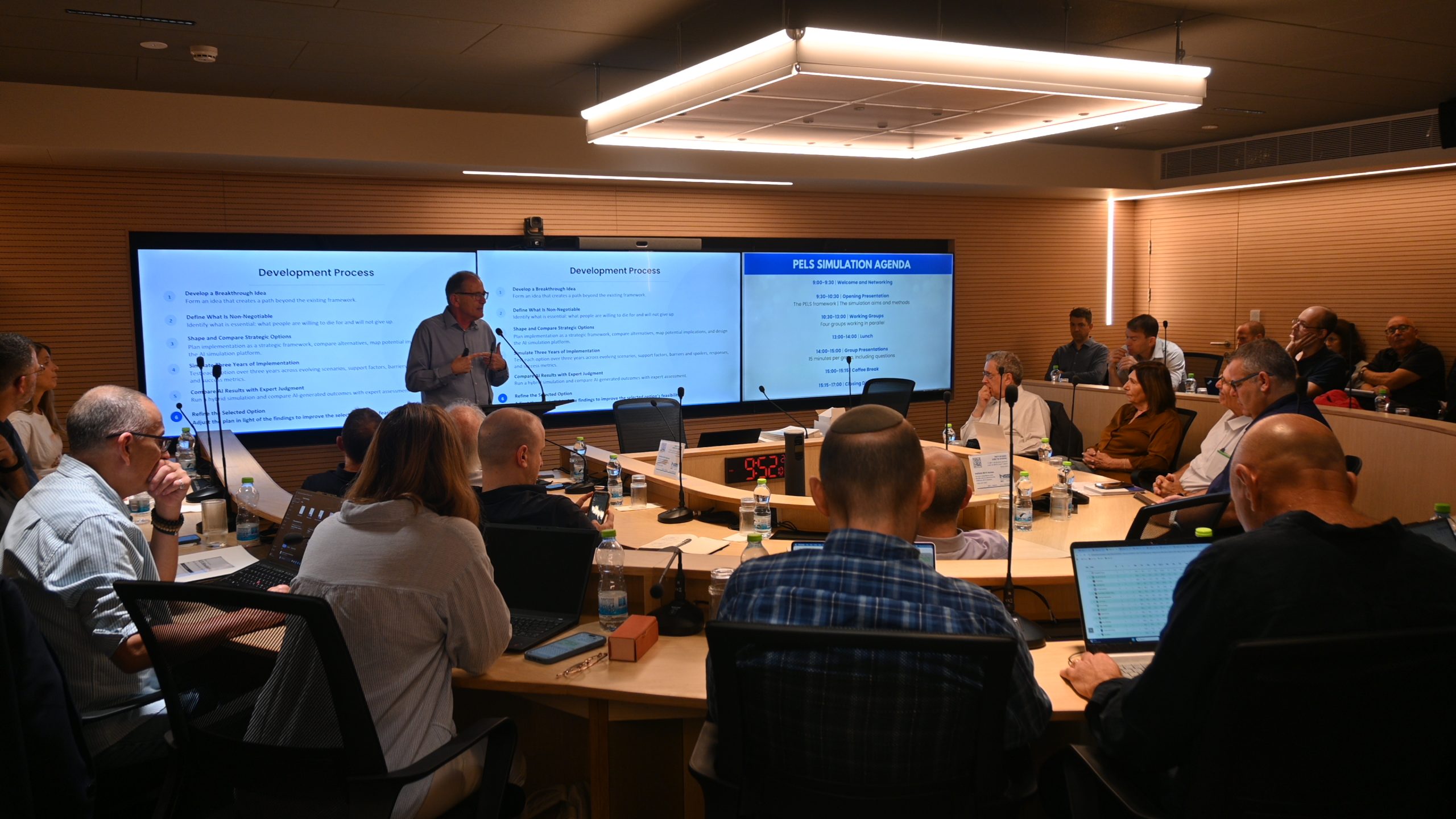
The Institute for National Security Studies (INSS) recently convened 50 leading Israeli and international experts to analyze a digital simulation run by 50 AI agents, evaluating four alternatives for addressing the Israeli-Palestinian conflict. Explore the initial insights from the event
INSS Insight No. 2204, October 21, 2026
Follow us on GoogleOn October 15, 2026, the Institute for National Security Studies (INSS) held a hybrid workshop, bringing together human experts and artificial intelligence to evaluate four alternatives for addressing the Israeli-Palestinian conflict:
- Continued conflict management – within an evolving framework and adjusting to developments on the ground.
- The "Decisive Plan" – applying Israeli sovereignty over Judea and Samaria, dismantling the Palestinian Authority, and encouraging Palestinian emigration from the area.
- A comprehensive agreement based on the vision of two states for two peoples.
- Transforming the conflict through a phased model designed to prevent a slide toward a one-state reality. The framework includes political, territorial, and demographic separation, alongside strengthening the civil capabilities of a Palestinian entity with limited sovereignty (PELS: Palestinian Entity with Limited [Security] Sovereignty).
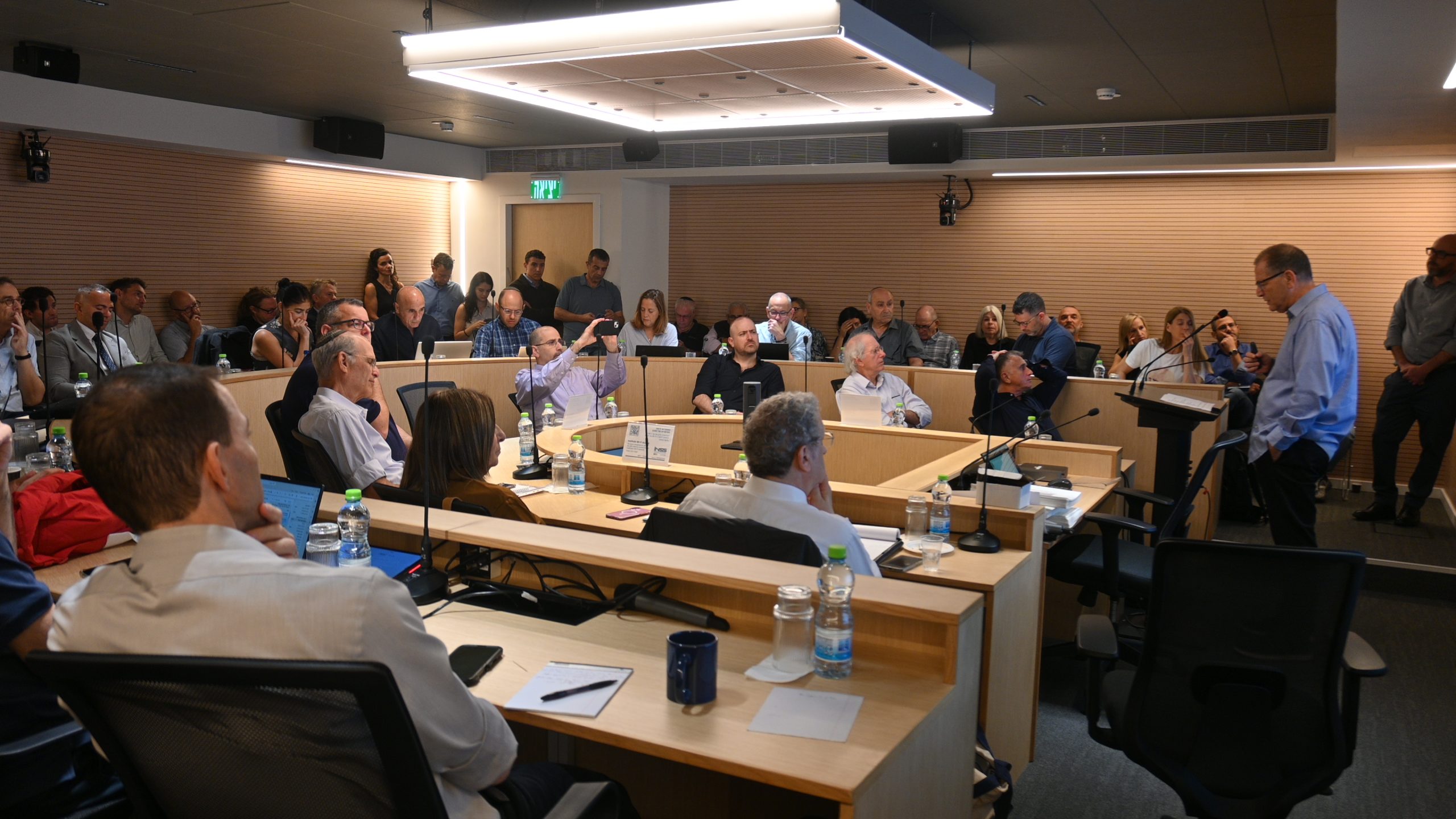
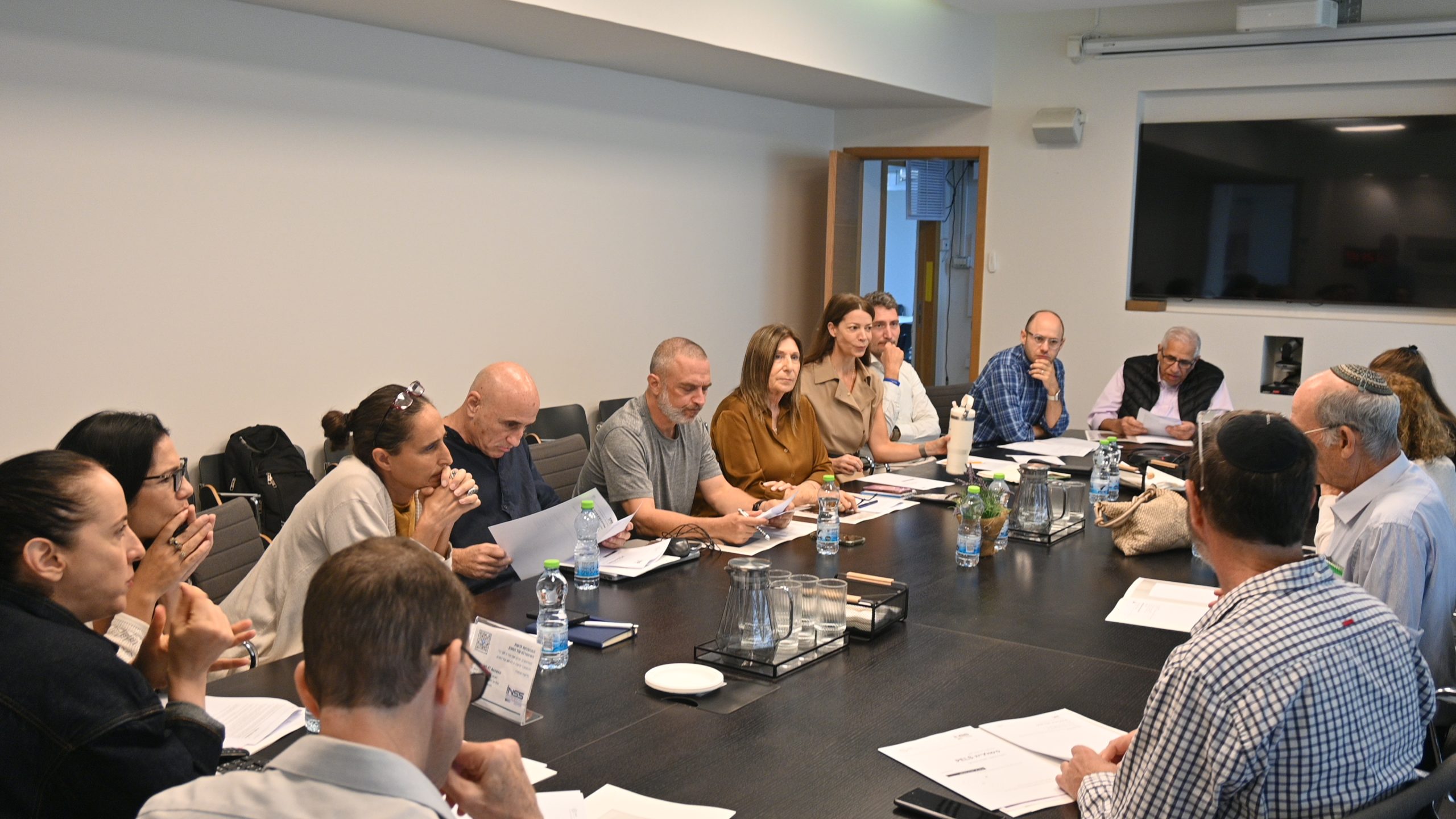
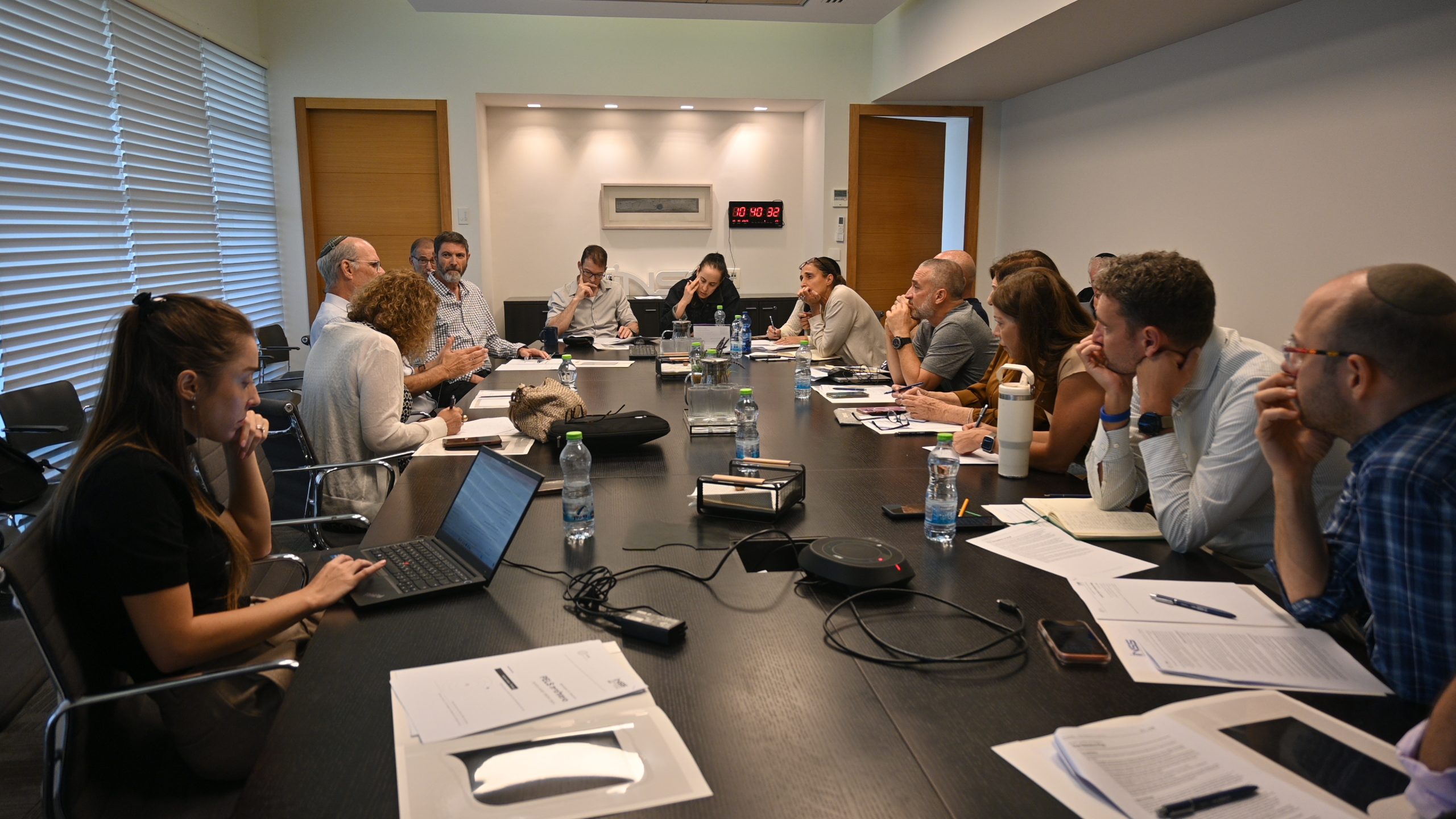
During the workshop, approximately 50 Israeli and international experts examined the results of a digital (AI) simulation conducted by the Institute over the past several months. They discussed the various alternatives and their implications for Israel's national security and strategic interests.
The simulation itself utilized an artificial intelligence platform featuring approximately 50 AI agents that simulated real-world actors. These agents made decisions across hundreds of runs for each alternative under consideration, including communicating with one another and responding to crises. The simulation evaluated how the different alternatives might unfold over a three-year period (effectively, through the end of the decade).
The simulation's starting point was the false dichotomy present in current political and international discourse, which forces a choice between two illusions:
- The illusion of unilateralism: Creeping annexation and the Decisive Plan. The result would be a one-state reality, with the loss of the state’s Jewish or democratic character, international and regional isolation, and ongoing friction and terrorism.
- The illusion of a comprehensive agreement: The belief that Israel and the Palestinians can reach a comprehensive agreement based on two states for two peoples in one fell swoop, with a practical resolution for every core issue under dispute.
Initial Insights Emerging from the Simulation
- A divide in worldviews within Israeli society:
- On the one hand, some believe that Palestinian national aspirations can be defeated and Israeli sovereignty extended over all of Judea and Samaria. Those who support the Decisive Plan understand that it would result in a one-state reality and are willing to face sanctions and international isolation to achieve it.
- On the other hand, some recognize that a one-state reality would mean abandoning the Zionist vision of a Jewish, democratic, secure, and prosperous state, as well as facing international isolation and boycotts and losing US support.
- The conflict-management alternative survived and remained in place over the three-year period, but conditions on the ground deteriorated in the vast majority of runs. Continuing to manage the conflict is the most convenient option for any government because it requires no difficult decisions. In most cases, however, it failed to prevent a slide toward a one-state reality, rising levels of violence on both sides, the weakening of the Palestinian Authority, and the growing strength of Hamas.
- The Decisive Plan was halted in most runs, but it created facts on the ground that were difficult to reverse. In most cases, the plan was not fully implemented within the three-year period, mainly because of US and international pressure, Palestinian opposition to cantonization, and the failure of efforts to encourage voluntary emigration. However, the unilateral steps that were taken—including extending Israeli sovereignty over Judea and Samaria and bringing down the Palestinian Authority—created a reality that was difficult to reverse, even after the process was halted.
- A comprehensive agreement best serves Israel’s long-term interests, but it is not feasible at present and would require bridging many gaps and overcoming many obstacles. Its implementation depends on Israel assuming overriding security responsibility west of the Jordan River while retaining freedom of action to enforce security arrangements; on an effective Palestinian Authority that holds a monopoly on the use of force among Palestinians and works to deradicalize Palestinian society; on a weakened Hamas, unable to build up its military capabilities or restore its terrorist infrastructure; on regional and international support that holds the Palestinians to their commitments; and on regional and economic benefits for Israel.
- Under current conditions, the gaps that must be bridged to advance a comprehensive agreement cannot be overcome. A transition plan is therefore needed to build the conditions for a political settlement while keeping the security keys in Israel’s hands. This is the PELS plan. Progress also depends on political stability in Israel and the Palestinian Authority. The collapse of the Palestinian Authority or elections in Israel are likely to halt any political process.
- The PELS alternative yielded better results and is now emerging as the only path to halt the deterioration toward a one-state reality. At the same time, it transforms the conflict and charts a trajectory toward a future political settlement while preserving Israel’s operational freedom of action and its overriding security responsibility west of the Jordan River.
- A close link emerged between implementing the 20-point plan presented by President Trump to stabilize and rebuild the Gaza Strip and the ability to advance a political process with the Palestinian Authority. This requires adhering to the plan to disarm Hamas, transferring civilian control of the Gaza Strip to the National Committee for the Administration of Gaza (NCAG), and encouraging the Palestinian Authority to implement the necessary reforms so that, in the future, it can eventually assume responsibility for the Strip, as well.
- There can be no political progress without eradicating Jewish terrorism. Firm enforcement against terrorism and violence by Jewish extremists is needed, alongside continuing efforts to thwart Palestinian terrorism. These steps are essential to stability, to reducing international pressure on Israel, and to building Israeli-Palestinian trust. The Israeli government’s tolerance of continued Jewish terrorism demonstrates its ineffectiveness and unwillingness to confront it forcefully. This means that it weakens its demand for overriding security responsibility.
- The Palestinian Authority is the weak link in any phased track. Functional weakness, succession struggles, or collapse could halt PELS and any political settlement, creating a vacuum that Hamas or other extremist elements would fill. Hamas has an effective veto if it is not disarmed and removed from power.
- Israeli politics struggles to sustain processes aimed at reaching an agreement. Fragile coalitions, frequent elections, and pressure from political groups make it difficult to advance a gradual, continuous process.
To change course, Israel’s next government must act immediately on two fronts: eradicate Jewish terrorism and strengthen the Palestinian Authority rather than promote its collapse. These steps would reinforce Israel’s position that the Palestinian entity must be demilitarized and that Israel must retain overriding security responsibility. At the same time, they would help reduce international pressure on Israel and enlist moderate Arab states in the process.
In summary, the PELS alternative performed better on the success measures examined in the simulation: (1) Security—protecting Israeli citizens and their sense of security; (2) Effective Palestinian governance, without Hamas in its institutions, maintaining internal stability, and acting decisively to prevent terrorism and violence; (3) Territorial and functional contiguity that enables the IDF to reduce friction between populations alongside preventing the growth of terrorist infrastructure in Judea and Samaria; (4) Regional and international legitimacy and support; (5) Relative internal stability in Israel; (6) Ability to neutralize spoilers; (7) Creating the conditions for establishing a political process, based on the understanding that, in the long term, separation into two distinct political entities is the only way to preserve the Zionist vision of the State of Israel.
A key insight that emerged during the workshop was the possibility of transitioning between the different strategic alternatives. Genuine conflict management, one that sets strategic goals and improves conditions on the ground rather than worsening them, could serve as a transition to the PELS plan. PELS, in turn, could provide a bridge and help lay the groundwork for a future comprehensive agreement, expand the Abraham Accords, and fundamentally change Israel’s strategic position.
Meanwhile, in the absence of a public decision, the Decisive Plan is advancing on the ground without broad public support in Israel, while the public remains unexposed to the implications of a one-state reality: the loss of the state’s Jewish and democratic character, harm to internal and external security, severe international isolation, damage to the economy, and an increasing trend of Israelis emigrating from the country.