


Publications
INSS Insight No. 889, January 17, 2017
Follow us on Google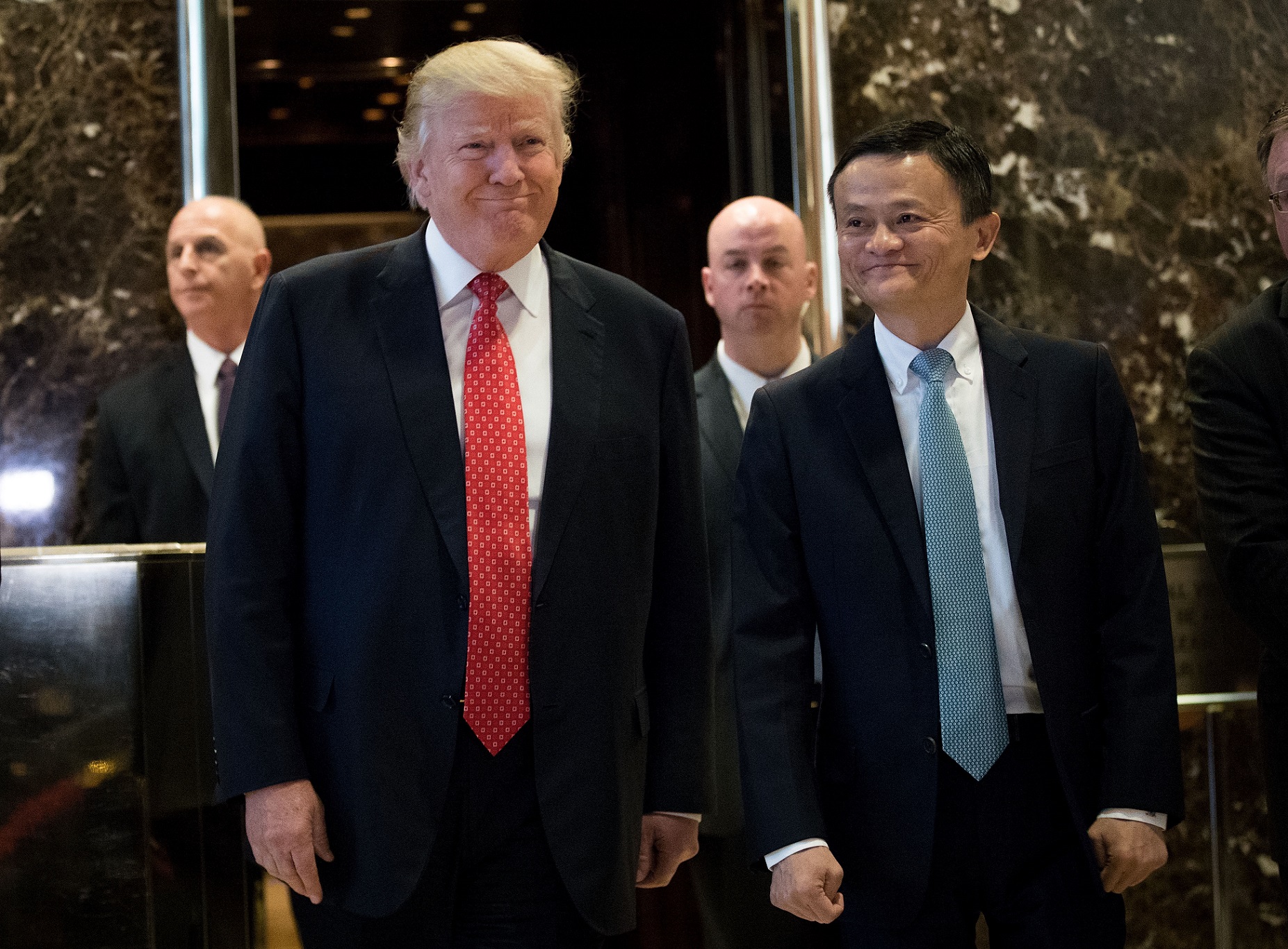
The election of Donald Trump heralds a change in United States policy, and relations with China are emerging as a major focus of the new administration. It appears that each side is seeking to identify the other’s weaknesses during a mutually sensitive transition period, and to maximize benefits through brinkmanship. Yet it is possible that Trump will heed the advice of the State Department and strive for calm between the two powers and seek to settle their differences constructively. For Israel, the rising tensions between the United States and China have mostly negative potential. When tensions between Washington and Beijing spill over from the economic sphere to the military-security sphere, as is the case at present, there is a real risk that Israel, though careful to operate strictly within existing understandings on security matters, could see its relations with both sides undermined. Therefore, the government of Israel would do well to discuss not only Middle East issues with the incoming US administration, but also the triangle of Israel-US-China relations, and preempt possible tensions through quiet, professional channels of communication, far from the sound and fury of the public media.
The election of Donald Trump heralds a change in United States policy, and with the inauguration of a new administration on January 20, 2017, official policies, many of which remain vague at this point, will begin to take shape. Relations with China are emerging as a major focus of the new administration; they are a key variable in the United States economy – an issue that played a central role in Trump’s election campaign.
The campaign was replete with attacks on China, accused by Trump of a long list of wrongdoings, from the “rape” of the US economy, through the wild devaluation of the yuan in order to cut the cost of Chinese products on the global market, to China’s being behind “the fraud” of global warming. Elections in the United States are often marked by belligerent rhetoric regarding foreign affairs, but the style Trump chose was exceptional in its virulence, reminiscent of the Cold War. For the average American, suffering from years of stagnant wages in real terms and the loss of manufacturing jobs, China is now viewed as a more potent threat than Russia, a fact Trump has leveraged for his own purposes.
In the Chinese street as well as in government circles, many at first thought that the election campaign was one element and that the presidency would be another: surely, Trump, once elected, would restrain himself. Ironically, until recently Trump was quite popular in China, despite, for example, having mocked the accents of Asian businesspeople at one of his rallies. This popularity was earned because Trump was seen as a pragmatic businessman devoid of political correctness. Some hoped for an end to the ideological era of the previous decade, and were eager to see a separatist, business-oriented US foreign policy that would skirt the liberal discourse and preoccupation with human rights outside the United States, reduce friction with China, and leave China with greater latitude for action.
However, as in many areas, here too Trump demonstrated his strategic unpredictability. In early December, contrary to the diplomatic tradition of a “One China” policy going back several decades, he spoke on the telephone with the President of Taiwan. Notwithstanding the surprised yet restrained Chinese response, Trump escalated the situation, and seemed to make his commitment to the “One China” policy conditional on a future deal with Beijing that would include trade, currency exchange rates, mutual tariffs, the South China Sea, and North Korea. Whether carefully planned or a hasty response to circumstances, Trump’s conduct can be attributed to his businesslike outlook, seeking to destabilize his negotiating partners by proclaiming extreme opening positions to which he is not effectively committed in the long run.
If US policy on Taiwan were to be reversed, the foundations of US-China relations would be badly shaken. One might have expected the prospect of such a reversal to spark euphoria among the ideological supporters of Taiwanese independence and those hoping for a more hawkish, interventionist US foreign policy in East Asia. But the atmosphere in Taiwan is very tense at the moment, and there is much concern that Trump, known as a non-ideologue, chose to question the “One China” legacy as a means of pressuring Beijing on other matters, and that in the end Taiwan will have to pay the price. Indeed, Taiwan has recently found itself under mounting pressure because of belligerent Chinese declarations as well as increased military presence in the region. By contrast, Trump has already pulled back somewhat from his earlier stance and announced that a meeting with the Taiwanese President would be “a little inappropriate.”
While the White House hurried to make it clear that the “One China” policy was not a bargaining chip to be used against Beijing, China responded harshly, explaining that undermining the policy – a core issue from its perspective – would not only damage trade relations between the two countries but could also trigger military escalation, thus affecting the global economy.
Beijing’s declarations were followed swiftly by action: the Chinese navy seized a US underwater drone in international waters in the South China Sea, where China deployed additional military assets; there was noticeably more Chinese aerial and naval activity near Taiwan, including live fire exercises; and a Chinese aircraft carrier embarked on its maiden voyage in the East and South China Seas.
The strong Chinese response attests to the fact that the Taiwan issue has become inextricably entwined with China’s notion of territorial integrity: it is seen as a core national interest, where failure can test the Communist Party’s grip on power. President-elect Trump’s readiness to use Taiwan as an economic bargaining chip hit the Chinese regime at a particularly sensitive time, as it gears up for the 19th National Congress of the Communist Party in November 2017, when a majority of the Politburo Standing Committee members are expected to retire. The volatile combination of fresh doubts over Taiwan’s future and an imminent change of guard at the helm of the Party greatly reduces Beijing’s margin of tolerance.
And as if the exchange of verbal blows and intense military signaling around Taiwan were not enough, Trump added fuel to the fire by appointing Peter Navarro, a “China hawk,” as director of the White House National Trade Council. The titles alone of Navarro’s books– including Death by China and The Coming China Wars – were enough to cause further preoccupation with the possibility of an impending trade war, if not worse. Later, Trump also spoke favorably of increasing the US nuclear arsenal, a statement that did not please Chinese ears, even if it may have been made in non-Chinese contexts. The confirmation hearings of James Mattis and Rex Tillerson, Trump’s nominees for Secretary of Defense and Secretary of State, respectively, generated additional adverse reactions from the Chinese – despite the more balanced positions of the prospective secretaries.
Concurrently, Trump has appointed Iowa Government Terry Branstad to serve as the US ambassador to China, perhaps thanks to Branstad’s longstanding friendship with Chinese President Xi Jinping. Recently, Trump also dispatched Dr. Henry Kissinger, who was National Security Advisor and Secretary of State in the 1970s, to represent him in meetings in China; Kissinger, greatly respected by the Chinese leadership, was one of the key figures in establishing China-US relations, then intended to drive a wedge between China and the former Soviet Union. Trump likewise met with Jack Ma, chairman of the Chinese Alibaba Group; he commended Ma as an exemplary entrepreneur who could create many jobs for Americans. With these steps, Trump seemed to acknowledge the importance of interpersonal relationships in international relations, and may be establishing quiet lines of communication so as to ease the tensions caused by his pronouncements in the public domain.
It appears that each side is seeking to identify the other’s weaknesses during a mutually sensitive transition period, and to maximize benefits through brinkmanship. The Chinese view Trump’s victory in the US election as evidence of the decline of the American economic and political system. On more than one occasion, Trump himself has declared his desire to improve US infrastructure so that it matches that of China. On the other hand, Trump is encouraged by Wall Street’s reactions to his emerging economic policies amid reports of an economic crisis that is brewing in China. The last interest rate hike in the United States reduced China’s foreign currency reserves, thus placing downward pressures on the yuan. Yet neither a devaluation of the Chinese currency nor an all-out trade war is in the United States’ best interest. It is therefore possible that Trump will eventually heed the advice of the State Department and Kissinger, namely, to strive for calm between the two powers and seek to settle their differences constructively.
For Israel, the rising tensions between the United States and China have mostly negative potential. To date, Israel has wisely managed to maintain close strategic relations with the United States while developing extensive economic ties with China. Following the serious crisis in the previous decade over Israeli security exports to China, which angered the United States, Israel has been careful to coordinate such exports much more closely with the administration. Both Israel and China find it expedient to conduct their relations primarily in the economic sphere, and in recent years there has been a significant increase in bilateral trade. China’s markets, capital, and manufacturing capacity represent tremendous growth potential for the Israeli economy, revolving around cutting edge technology, innovation, and infrastructure projects.
However, when tensions between the United States and China spill over from the economic sphere to the military-security sphere, as is the case at present, there is a real risk that Israel, though careful to operate strictly within existing understandings on security matters, could see its relations with both sides undermined. Therefore, the government of Israel would do well to discuss not only Middle East issues with the incoming US administration, but also the triangle of Israel-US-China relations, and preempt possible tensions through quiet, professional channels of communication, far from the sound and fury of the public media.
____________________________________
Niv Horesh is a professor of contemporary Chinese studies at Durham University in England.