


Publications
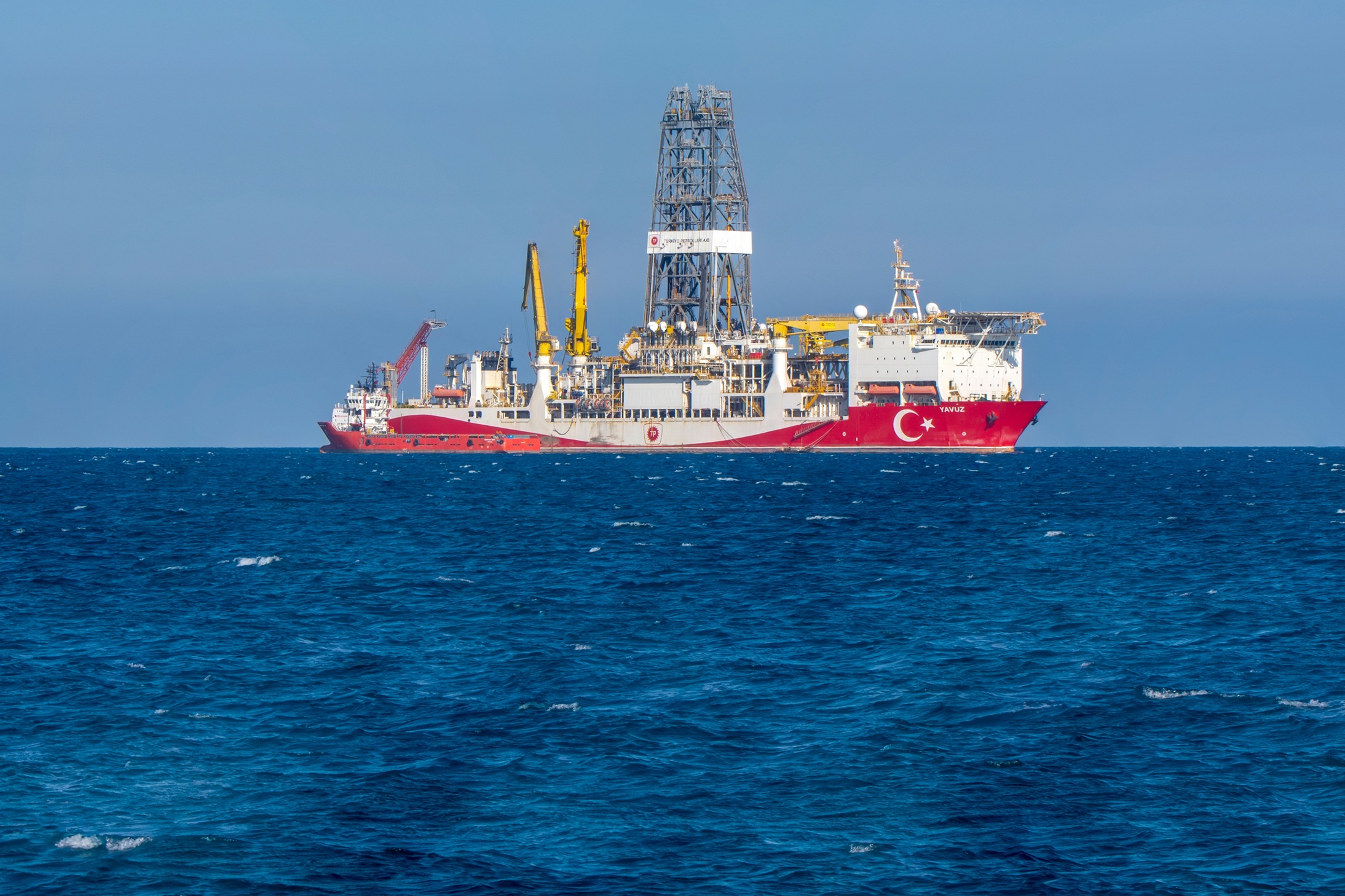
Turkey’s shift from a dependent consumer to an active maritime power, and the new challenges to Israel’s alliance system and freedom of action.
INSS Insight No. 2219, November 29, 2026
Follow us on GoogleIn recent years, Turkey has transformed its foreign and security policy, shifting from a dependent energy consumer and passive transit state to an active player projecting maritime power far beyond its shores. Using a fleet of drilling and survey vessels owned entirely by the state through the Turkish Petroleum Corporation (TPAO), and closely escorted by the Turkish Navy, Ankara operates independently in sensitive maritime zones—from involvement in disputes over maritime boundaries in the Eastern Mediterranean (around Cyprus and the Greek islands), through developing reserves in the Black Sea, to maintaining a presence in the Red Sea and at the entrance to the Gulf of Aden. In Somalia, Ankara has received a mandate to provide maritime security, along with exclusive rights to explore for oil and gas in the Indian Ocean. These moves establish an integrated model—an “energy hub”—that merges control over natural resources, an assertive maritime presence, and the provision of security patronage to host states. This model challenges Israel’s freedom of action in the energy sector and its regional alliance system in the Eastern Mediterranean and at the gateway to the Red Sea.
Over the past two decades, Turkey’s foreign and security policy has been shaped by one central ambition: transitioning from a passive, defensive regional actor to an independent player capable of projecting power beyond its borders. Realizing this vision has run up against a major structural barrier—deep dependence on energy imports. Turkey imports over 90% of its oil and gas consumption, a profound structural gap compared to regional energy exporters that enjoy energy independence and abundant reserves, such as Azerbaijan and Kazakhstan. This dependence is compounded by Ankara’s heavy reliance on a small number of fuel suppliers, primarily Russia and Iran, alongside supplementary sources in Iraq and Azerbaijan. This situation weighs on the balance of payments, fuels a chronic trade deficit, and restricts Ankara’s room for maneuver vis-à-vis its main energy suppliers.
In light of this, the Turkish leadership reached a clear conclusion: strategic independence is impossible without energy independence. The traditional approach, which focused on securing supply routes and leveraging Turkey’s geographic location as a transit hub between East and West, was reassessed as inadequate. A new objective was set in its place: moving toward an active policy of exploration, production, and full control over the energy value chain.
The scarcity of onshore resources led Ankara to shift its center of gravity to the maritime domain—from the continental shelf and Exclusive Economic Zones (EEZ) in the Black Sea and the Mediterranean to distant arenas in the Indian Ocean. This move brought Turkey’s demand for fuel together with its geopolitical ambitions, turning oil and gas exploration into a direct instrument of national security and regional influence.
Ankara is no longer content with merely securing its domestic needs; it is working to transform energy into a lever of influence in the international arena. Turkish activity has expanded beyond its territorial waters into areas of high geopolitical sensitivity, tightly combining national security, active diplomacy, an assertive foreign policy, and independent industrial and technological capabilities. Its drilling and survey fleet is no longer merely an engineering tool; it is a key operational arm of Ankara’s foreign and security policy.
Turkey’s Drilling and Survey Fleet – The Infrastructure for Realizing the Strategy
Turkey’s shift toward an active energy policy rests on a profound conceptual change: moving from complete dependence on international companies (such as Shell, BP, and Eni) to building full technological and operational independence. In the past, any deepwater exploration and drilling activity required Ankara to contract with foreign corporations, which were often deterred from operating in disputed areas for political or legal reasons.
To overcome this constraint, the Turkish government spearheaded a strategy of independently acquiring and developing drilling and seismic survey vessels. This move was led by the Turkish Petroleum Corporation (TPAO – Türkiye Petrolleri Anonim Ortaklığı), which within just a few years evolved from a domestic company into an international player with one of the most advanced drilling fleets in the world. This independence grants Ankara unilateral freedom of action, enabling it to bypass the constraints of maritime law. Since Turkey is not a signatory to the United Nations Convention on the Law of the Sea (UNCLOS) and does not recognize the economic rights it grants to the Greek islands and Cyprus, it issues exploration licenses directly to TPAO without relying on international approval. Thus, Ankara is able to dispatch research and drilling vessels into fiercely disputed waters, using its national fleet as an instrument to establish facts on the ground and assert sovereignty.
Seismic Research, Deepwater Drilling, and Completing the Value Chain
The development of TPAO’s fleet gradually established an independent, end-to-end operational capability—from seismic surveys to identify geological structures, through deepwater drilling, to offshore industrial production. The vessels' names, deliberately drawn from the country’s Ottoman and Turkish past (sultans, commanders, and admirals), are intended to anchor Ankara’s maritime claims in its "Blue Homeland" (Mavi Vatan) doctrine.
Building the drilling and production infrastructure rested on three main pillars that together complete the maritime value chain:
The Mapping and Seismic Survey Phase: The infrastructure for drilling operations relies on seismic survey vessels, which map the seabed and identify geological structures with hydrocarbon potential. This effort began with the acquisition of the Barbaros Hayreddin Paşa (named after the Ottoman admiral Hayreddin Barbarossa) in 2013, which conducted extensive 2D and 3D mapping in the Mediterranean and Black seas. It was joined in 2017 by the Oruç Reis (named for Barbarossa’s brother), which was built in Turkish shipyards. The Oruç Reis's operations stood at the center of the maritime tensions with Greece and Cyprus in 2020. Today, it serves as the lead mapping vessel on distant missions in Somalia’s Exclusive Economic Zone.
The Deepwater Drilling Fleet – From Sixth to Seventh Generation: Ankara’s drilling fleet developed in two main technological waves:
- Sixth-Generation Vessels and the Nearby Arena: The first wave of acquisitions established the capacity to operate in water depths of up to 3,000 meters and drill to a maximum depth of 12,000 meters. The flagship Fatih (Mehmed the Conqueror), which entered service in 2018, marked a turning point for Turkey with the discovery of the Sakarya gas field in the Black Sea in 2020. It was joined by the Yavuz (Selim the Grim), deployed mainly in the Eastern Mediterranean and escorted by warships to challenge the boundaries of Cyprus’s Exclusive Economic Zone, alongside the Kanuni (Suleiman the Magnificent), which specializes in well completion and testing in close coordination with the Fatih.
- Seventh-Generation Vessels and International Projection: The arrival of advanced seventh-generation vessels upgraded the fleet's operational range and technological capabilities. The Abdülhamid Han (Abdul Hamid II), which joined the fleet in 2022 and is capable of drilling to a depth of approximately 12,200 meters, represents Turkey’s independent technological spearhead in deep water. Concurrently, the cutting-edge Çağrı Bey (named after the Seljuk commander) was designated from the outset for complex international missions, foremost among them leading the deepwater drilling operation off the coast of Somalia.
Closing the Loop – Floating Production Units (FPU): The final stage in the independent value chain was completed in 2024 with the acquisition and launch of the Osman Gazi (named after the founder of the Ottoman Empire)—Turkey’s first Floating Production Unit. Its deployment at the Sakarya field marks the transition from exploration and drilling to independent offshore gas production, processing, and delivery to the domestic market, while reducing dependence on the facilities or pipelines of foreign international companies.
Not Just "Hardware" – Human Capital and Expertise
Acquiring advanced drilling vessels involves more than purchasing equipment. Historically, Turkey has faced a severe shortage of deepwater engineers, and the solution was built through a multi-stage strategy.
In the first stage (2017–2020), following the acquisition of the Yavuz and Fatih, a significant portion of critical roles—rig managers, chief drillers, and subsea system operators—were staffed by experienced foreign specialists from international oilfield services companies (primarily Baker Hughes, Schlumberger, and Subsea 7, as well as contractors from the UK, Norway, and Croatia). Turkish professionals were paired with these foreign experts for mentoring and hands-on training.
At the same time, TPAO established direct partnerships with the country’s leading technical universities, foremost among them İTÜ (Istanbul Technical University) and ODTÜ (Middle East Technical University in Ankara), which boast long-standing faculties of petroleum and natural gas engineering and marine engineering. Specialized vocational training institutions were also established in operational zones, such as the Zonguldak province adjacent to the Sakarya project.
Turkey also established advanced simulation centers modeling deepwater drilling, well control, and the operation of Dynamic Positioning (DP) systems. These enable crews to earn standardized international certifications (such as IWCF and IADC) without relying entirely on facilities abroad. Simultaneously, Turkish naval officers and maritime academy graduates were retrained for these roles, integrating into command, navigation, maritime security coordination, and the operation of advanced instrumentation systems.
This technological expertise turned engineering capability into operational success in the field. The discovery of the Sakarya field in 2020 was neither a matter of luck nor the result of dependence on a foreign company; it was built on years of mapping, analysis, and accumulated experience.
The Fleet's Strategic Significance
The fleet's importance extends far beyond the industrial dimension. Full sovereign control over the vessels and their crews transforms this fleet into a direct geopolitical arm of Ankara. The fleet enables Turkey to maintain a continuous maritime presence, establish faits accomplis in disputed waters, and deter regional actors—from the Eastern Mediterranean to the approaches of the Indian Ocean.
In practice, the drilling and research vessels operate as policy instruments and strategic security assets. Their operations are fully coordinated among four entities: TPAO, the Ministry of Energy, the Turkish Navy, and the Presidency. The vessels are frequently escorted by frigates, submarines, and unmanned aerial vehicles (UAVs). In doing so, Ankara demonstrates a conceptual shift from "energy as dependence" to "energy as power"—a basis for territorial claims, deterrence, and positioning Turkey as a maritime power, in accordance with the "Blue Homeland" doctrine.
Somalia and the Horn of Africa: From Humanitarian Aid to Strategic Presence
Turkey’s presence in Somalia is a prime example of the gradual evolution of a regional penetration strategy. Its involvement began in 2011 with a declared humanitarian focus, when President Erdoğan visited Mogadishu at the height of a severe famine. Within just a decade, this aid was translated into a broad presence encompassing economic, infrastructural, security, and technological dimensions. Ankara assumed management and operation of the Port of Mogadishu and the capital's international airport, and in 2017 inaugurated its largest overseas military base, TURKSOM, which serves as a central training and instruction hub for the Somali military.
This deployment later expanded from a conventional land presence to a multi-dimensional defense envelope. Alongside operating attack drones and fighter jets from bases in Somalia, Ankara is advancing a plan to establish a satellite launch and ballistic missile testing site on Somali soil, taking advantage of the country’s proximity to the equator and the open launch range over the Indian Ocean. These infrastructures, combined with parallel efforts to establish a maritime presence in the Red Sea off the coast of Sudan, grant Ankara continuous maritime and security presence spanning the entrance to the Bab el-Mandeb Strait and the international shipping lanes leading to the Indian Ocean.
This infrastructural and security foothold paved the way for a move into the energy domain. Turkey signed a series of agreements with the federal government in Mogadishu granting the Turkish Petroleum Corporation (TPAO) exclusive licenses to explore for and produce oil and gas in Somalia’s Exclusive Economic Zone (EEZ). These waters are considered among the world's most promising and least-mapped regions in terms of hydrocarbon potential. The agreements were put into operation through the direct deployment of the Turkish fleet: the Oruç Reis seismic survey vessel conducted comprehensive 3D mapping, accompanied by deepwater drilling vessels. The rapid pace of operations demonstrates Ankara’s ability to overcome logistical challenges thousands of kilometers from its home ports and shorten the timeline from mapping to actual drilling.
This energy expansion is anchored in a binding ten-year maritime defense pact, under which the Turkish Navy received a full mandate to secure Somalia’s maritime domain, protect the research and drilling vessels against piracy and terrorism, and rebuild the local coast guard and navy—in exchange for a significant share of the revenues from natural resources.
Flashpoints
The expansion of TPAO’s operations and the consolidation of Ankara’s military presence place Turkey on a collision course with a range of regional actors and major powers. In the Eastern Mediterranean, Ankara faces opposition from Greece, Cyprus, and Egypt, which view its activities as an attempt to undermine the balance of power and challenge the status quo. At the same time, it is competing for market share with established European energy corporations.
In the Horn of Africa and the Red Sea, Turkish penetration clashes with the United Arab Emirates' maritime expansion efforts, which seek to establish a network of military and commercial ports along the coasts. Ankara’s positioning as a guarantor of Mogadishu’s sovereignty has placed it in a containment posture against Ethiopia’s ambitions to gain maritime access via Somaliland. Furthermore, domestic political instability in Somalia and strained relations between the central government and federal member states (such as Puntland) have prompted criticism over the transparency of the agreements and the way future energy revenues will be distributed. The deployment of air, naval, and infrastructural assets on Somali soil has also raised concern among Western powers, which are monitoring Turkey’s emergence as a player with a presence at critical maritime chokepoints at the entrance to the Indian Ocean.
Strategic Implications for Israel and Courses of Action
Turkey’s maritime strategy carries direct implications for Israel’s national security in two key arenas. In the Eastern Mediterranean, the Turkish Navy's show of force and its operations in disputed areas are intended to divide the maritime domain and challenge the status quo that has taken shape among Israel, Greece, Cyprus, and Egypt. This activity creates a barrier against initiatives to lay subsea infrastructure to Europe and necessitates heightened readiness by the Israeli Navy to protect gas rigs and shipping lanes.
Simultaneously, Turkey’s military and naval entrenchment in Somalia and off the coast of Sudan places an assertive actor that has strained relations with Israel at the critical chokepoint of the Bab el-Mandeb Strait, Israel’s southern maritime trade artery to Asia.
In Israel’s security discourse, concerns are occasionally voiced that the Turkish force deployment effectively creates a strategic grip around shipping lanes. Although Turkey’s main motivation centers on energy independence and projecting power vis-à-vis Greece, the UAE, and European states, and despite Ankara’s extended supply lines and economic constraints, Turkey’s foothold at critical maritime junctions requires Israel to maintain constant intelligence and operational vigilance.
A significant development compounding the complexity of this challenge is the diplomatic warming between Turkey and Egypt in recent years. The thaw in relations between Ankara and Cairo, reflected in summit visits and cooperation agreements, could blur the traditional fault lines in the Eastern Mediterranean. This rapprochement raises concerns in Jerusalem over the erosion of the regional bloc established over the past decade (Israel–Greece–Cyprus–Egypt) and could enable Turkey to institutionalize maritime and energy understandings with Egypt that would weaken Israel’s strategic position. From Ankara’s perspective, restoring relations with Cairo is intended to guarantee freedom of movement for research vessels, oil tankers, and gas shipments through the Suez Canal—a vital artery connecting its foothold in the Mediterranean logistically with its activities in the Red Sea and the Horn of Africa.
In light of this dynamic reality, Israel should adopt a proactive, multi-dimensional approach. First, it should preserve and deepen its strategic ties with Egypt while strengthening coordination mechanisms within the East Mediterranean Gas Forum (EMGF), in addition to tightening its alliance with Greece and Cyprus while enlisting countries such as Italy and France to anchor stability in the Mediterranean. Second, Israel should deepen maritime and intelligence cooperation with the United Arab Emirates in the Horn of Africa and the southern Red Sea to monitor the Turkish presence around Bab el-Mandeb. Finally, alongside operational readiness and rigorous protection of gas rigs and trade routes, Israel should maintain professional channels of communication to prevent friction and unwanted maritime incidents with Turkish naval forces.
Conclusion
Turkey’s transition from a dependent energy consumer to a proactive maritime actor marks a paradigm shift in its foreign and security policy. Turkish ambitions extend beyond reducing its domestic trade deficit through increased sovereign production. The primary objective is to upgrade its status from a passive gas pipeline transit hub to an independent natural gas trading, pricing, and liquefaction hub. This vision of an "energy hub" combines three pillars: control over energy junctions and pipelines; a drilling fleet and navy capable of sustained deepwater operations; and the provision of a security umbrella to host countries. This combination grants Ankara the capacity to shape the geopolitical and economic order along the continuum stretching between the Eastern Mediterranean, the Red Sea, and the northwestern Indian Ocean. The TPAO-owned drilling and research fleet is no longer merely an engineering and commercial tool; it has become the spearhead of national power projection, enabling Ankara to operate independently in deepwater arenas without relying on foreign corporations.
A key question for the future is whether Turkey will succeed in translating its maritime presence into sustainable economic and diplomatic assets. Reliance on unstable regimes exposes its gains to local political volatility, where changes in government could undermine concessions. Overexpansion also raises concerns of neo-Ottoman tendencies and fuels opposition among local elites and competing regional actors. Geographic overextension, combined with the instability of host countries and friction with regional actors, will strain Turkey’s resources and could limit its ability to realize its vision of an energy hub.
For Israel and its regional alliance system, Turkey’s conduct calls for a combination of stronger maritime and energy alliances and prudent risk management, aimed at safeguarding freedom of navigation and the resilience of national energy assets.