


Publications
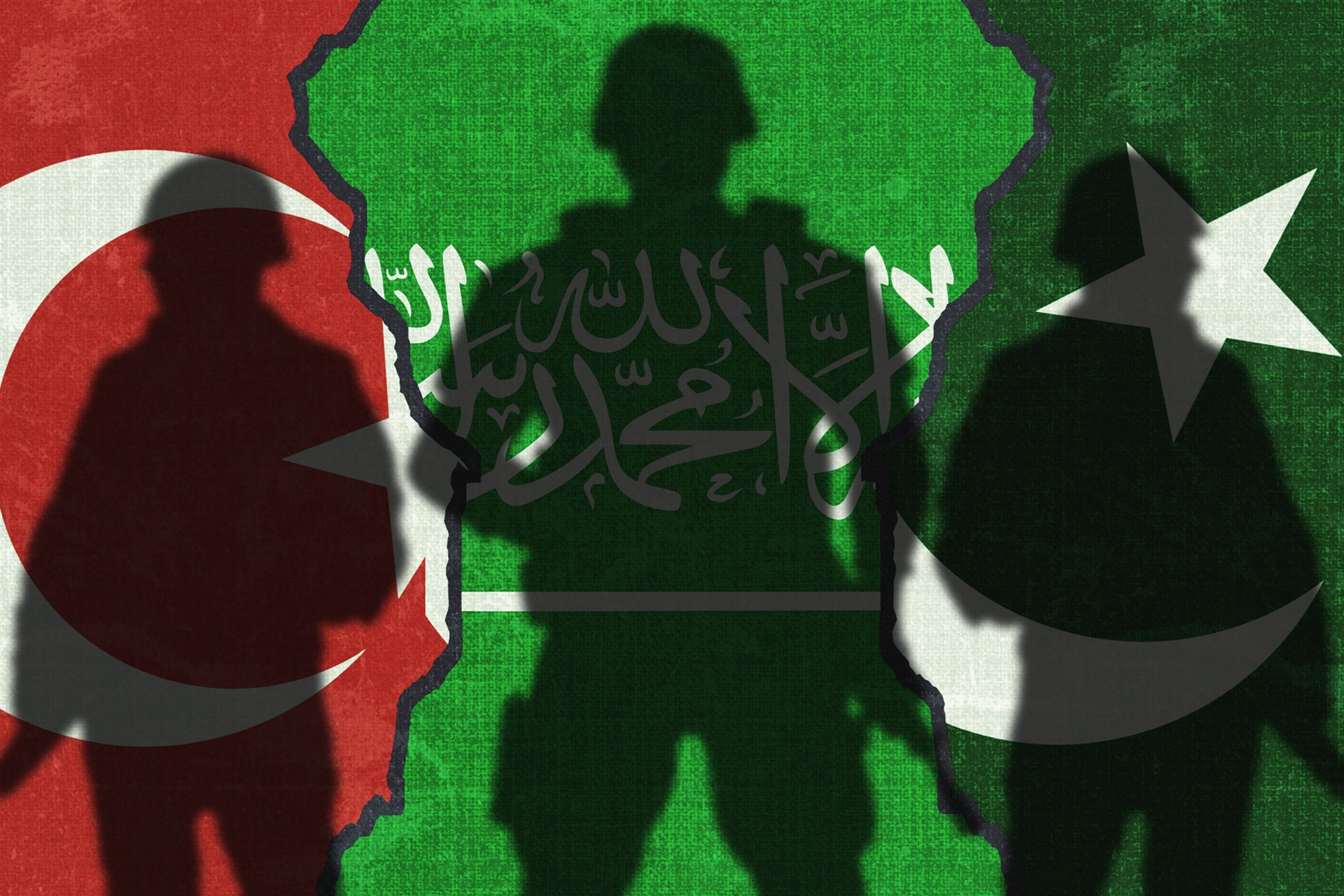
An analysis of the implications of the defense agreement between Saudi Arabia, Turkey, and Pakistan through four possible scenarios – and recommendations for Israel
INSS Insight No. 2187, August 20, 2026
Follow us on GoogleThe Mecca Joint Defense Agreement, signed between Saudi Arabia, Turkey, and Pakistan on August 7, includes a mutual defense clause and links three major Muslim states. The agreement has raised concerns in Israel and other countries, including Greece and India. However, its viability as a close military alliance is questionable due to divergent threat maps, competition for Sunni leadership, and the complex relations that both Turkey and Pakistan maintain with Iran. Pakistan’s nuclear arsenal lends the alliance deterrent weight but does not provide an automatic nuclear umbrella. This article examines the significance of the alliance across four scenarios: the continuation of the current status, purely deterrent declarations, the deepening of military cooperation, and the expansion of the alliance to additional states, including Egypt. Israel should avoid openly opposing the alliance in a way that could strengthen its cohesion. At the same time, it should deepen ties with the UAE, Greece, Cyprus, and India and work to restore relations with Egypt. Israel must also continue pursuing rapprochement with Saudi Arabia while maintaining open channels with Turkey.
The Mecca Agreement, signed between Saudi Arabia, Turkey, and Pakistan on August 7, represents a significant development that poses complex challenges for Israel. While the full text of the agreement has not been published, media reports indicate that it includes a mutual defense clause – "an attack on one is an attack on all." The agreement thus establishes a security framework linking three of the most powerful states in the Muslim world: a regional power and NATO member; the Custodian of the Two Holy Mosques and holder of some of the world's largest oil reserves; and a state with the largest conventional military in the Muslim world, equipped with nuclear weapons. According to the Turkish foreign minister, the agreement was preceded by more than two years of discussions and was based on a defense agreement signed between Pakistan and Saudi Arabia in September 2025. Alongside this, significant gaps remain among the three partners, casting doubt on the ability to translate the mutual defense clause into an effective military alliance.
It is best to analyze the Mecca Agreement by evaluating four potential scenarios. The first is a continuation of the current status: the agreement would remain largely at the level of existing cooperation among these actors, with military aspects that do not extend beyond the current state of their relations—namely, joint exercises (sometimes within a broader regional framework), cooperation in the defense industry, and the occasional deployment of Pakistani forces to Saudi territory at Riyadh’s request. The second scenario is that the agreement acquires a more significant military dimension, with the three countries holding joint exercises, and the mutual defense clause also finding expression on the ground, particularly in relation to Saudi Arabia’s confrontation with the Houthis and Iran. The third scenario involves the expansion of the agreement to include additional states, particularly Egypt, while regionally isolating Iran and Israel. The fourth scenario centers on the agreement's primary objective: a deterrent signal to Iran and Israel not to disrupt the regional order, with the actors issuing firm public statements to that end.
The scenarios that largely envision a continuation of the status quo among the three countries, particularly the first scenario, stem from doubts about whether Turkey and Pakistan would actually come to Saudi Arabia’s aid in wartime. Furthermore, it is unclear what form such aid would take. This is due, among other things, to the pattern of relations that both Ankara and Islamabad maintain with Tehran. Pakistan, for example, has a complex relationship with Tehran and shares a long border with it. It cannot afford to view Iran solely through the Saudi prism — as became evident during the war that began on February 28, when Pakistan chose to serve as a mediator between Iran and the United States. Turkey, for its part, competes with Iran in certain arenas while cooperating with it in others, maintains trade and energy ties with it, and has for years pursued a policy that combines competition with dialogue. Therefore, if and when Saudi Arabia requests solidarity against Iran and/or the Houthis, the question will not be what is written in the agreement, but what Ankara and Islamabad are prepared to risk on Riyadh’s behalf. The partners may agree on the principle of mutual defense and still be divided on almost every important question: who the enemy is, when the commitment is triggered, what constitutes a proportionate response, who sends forces and where, and what happens when one partner wants to fight while the others prefer to mediate.
A considerable degree of suspicion also remains between Saudi Arabia and Turkey. Relations have improved significantly compared with the years when Ankara and Riyadh stood on opposing sides of regional struggles, but the rapprochement has not erased past grievances or the competition for influence in the Sunni world. Over the years, the two countries have held differing positions regarding the Muslim Brotherhood, Qatar, Egypt, and the question of the preferred political order in the region. They also compete for economic, political, and security influence. From Riyadh's perspective, Turkey's "southward expansion" and growing influence in areas close to the Gulf are undesirable; from Ankara’s perspective, accepting Saudi leadership of the Sunni world is incompatible with Turkey’s own aspirations of leadership.
Geographic distance adds another complication. There is no territorial contiguity between the three countries. Each faces a different threat environment, has different priorities, and concentrates the bulk of its resources in different arenas. Turkey looks simultaneously toward Russia, the Black Sea, Syria, Iraq, the Eastern Mediterranean, and the Caucasus. Pakistan is preoccupied first and foremost with India, its confrontation with Afghanistan, and the security of its borders. Saudi Arabia is focused on the Gulf, the Red Sea, Yemen, and, above all, Iran. These are not necessarily three countries confronting the same enemy; rather, they are three countries seeking to benefit from cooperation, despite having very different threat maps.
Hence, the Pakistani nuclear dimension also requires interpretive caution. The fact that Pakistan possesses an operational arsenal of nuclear weapons gives the alliance symbolic and deterrent weight, but it does not mean that Saudi Arabia or Turkey have automatically received a nuclear umbrella. Precisely because Pakistan's nuclear weapons are intended primarily to deter India, substantial evidence would be required before one could speak of extending Pakistan's nuclear deterrence to the Middle East.
The second scenario, in which the Mecca Agreement indeed develops into a substantive defensive alliance, is the most dramatic and concerning from the perspective of Iran and Israel. If the three countries succeed in overcoming their differences and establishing command and coordination mechanisms, conducting regular trilateral exercises, integrating air defense systems, expanding intelligence cooperation, and developing joint defense industries, the framework may gradually gain substantive military capabilities that would constrain both Iran’s and Israel’s room for maneuver. In recent years, Ankara has built an impressive defense industry and turned arms exports into a central instrument of its foreign policy. Easier access to Saudi investments would enable Turkey not only to develop new products but also to expand production lines, making it an even more significant arms supplier. This could have broader regional implications, as actors that come to view Turkey as an attractive arms supplier may also become more receptive to Ankara’s positions.
The third scenario, which involves expanding the agreement to additional countries, may further expose the limitations of the mutual defense clause. Adding more actors will inevitably introduce additional conflicting interests and pull the agreement in controversial directions. As a result, the cohesion of the alliance would decline and its strategic significance would diminish. However, if Egypt were to join the agreement, it would further complicate efforts to restore Israel’s relations with Cairo, which have deteriorated significantly as a result of the repercussions of October 7. Some interpretations even suggest that such a move would contradict the peace treaty between Israel and Egypt.
The fourth scenario focuses primarily on the agreement’s declaratory deterrent message. The signatories to the Mecca Agreement view Iran and Israel as actors that undermine regional stability, contrary to the aspiration to preserve the regional order. This perception helps explain why the agreement’s declaratory dimension is so important. Similar to the declarations that accompanied the establishment of the East Mediterranean Gas Forum (EMGF) and the trilateral summits between Israel, Cyprus, and Greece since 2016, statements surrounding the Mecca Agreement have stressed that it is “not directed against any actor” and that the agreement is open to additional countries provided they are committed to its principles. In this sense, the agreement is, to a large extent, a mirror image of developments that have already taken place in the Eastern Mediterranean. Nor should it be overlooked that the signatories’ need to formulate an independent deterrent message stems from disappointment with the manner in which the United States has conducted itself in the region and from preparations for a possible reduction in US involvement in the Middle East in the coming years.
The Pakistani case clearly illustrates the potential gap between close strategic relations and the willingness to fulfill a military commitment in a time of crisis. In 2015, despite its close security and economic ties with Riyadh, Pakistan refused to join the Saudi-led coalition in the war in Yemen—a particularly important precedent given the mutual defense clause now in place. Likewise, during the attacks attributed to Iran against Saudi oil facilities in 2019, Pakistan did not mount a direct military response in defense of the Kingdom, despite the deep security partnership between the two countries dating back to the end of the twentieth century. This fact demonstrated once again that Islamabad does not regard every threat to Saudi Arabia as automatically requiring it to take action. The same pattern was evident during the confrontation with Iran in 2026: Pakistan sought to preserve its role as a mediator between Tehran and Washington, and its significant military deployment in Saudi Arabia took place only after a ceasefire had been reached. Furthermore, the deployment came shortly after a Saudi commitment to provide Pakistan with an additional $3 billion in support. Thus, the issue is not the absence of a strategic relationship between the two countries, but rather the limits of commitment: Pakistan is willing to assist Saudi Arabia, but seeks to do so under conditions, at a time, and on a scale that do not jeopardize its relations with Iran or other Pakistani interests.
Saudi Arabia has a long but unsuccessful history of building effective regional security alliances and frameworks: the establishment of the Gulf Cooperation Council (GCC) in 1981; the Islamic Military Counter Terrorism Coalition, established in 2015; the Saudi-led coalition against the Houthis in the war in Yemen in 2015; and the Council of Arab and African States Bordering the Red Sea and Gulf of Aden, established in 2020. In all these cases, Riyadh repeatedly succeeded in bringing countries together under new frameworks but struggled to translate them into joint military capability or tangible strategic commitment—as a rule, they remained largely on paper. Gaps in threat perceptions, the partners' desire to maintain autonomy, competing regional interests, and concerns about subordination to Saudi leadership limited the effectiveness of these frameworks. Yet military effectiveness may not be the only, or even the primary, benchmark of their success. The very establishment of alliances allows Saudi Arabia to consolidate its status as a regional and Islamic leader, place Riyadh at the center of the emerging security architecture, signal to adversaries and partners alike, improve its bargaining power vis-à-vis Washington, and gain prestige and influence. From this perspective, Saudi history is not merely a story of failed alliances, but one of using the very process of building them as an instrument of foreign policy.
Another key factor explaining Saudi alliance policy is the growing uncertainty regarding the credibility and limits of the US security umbrella. From Riyadh's perspective, the lesson from shifts in US policy in the region is not necessarily that Washington should be replaced by another ally, but rather that exclusive security dependence on it should be avoided. Accordingly, Saudi Arabia is gradually building a portfolio of parallel security and strategic relationships: it is maintaining the vital alliance with the United States, deepening security cooperation with Pakistan and Turkey, developing strategic ties with China, and, at the same time, engaging in dialogue and seeking to reduce tensions with Iran. These relationships are not necessarily contradictory; rather, they reflect a hedging strategy that enables Riyadh to diversify risks, expand its room for maneuver, and strengthen its bargaining power vis-à-vis Washington. In this sense, the Mecca Agreement does not necessarily signify a Saudi shift away from the US camp, but rather an effort to reduce the costs of dependence on it: to continue benefiting from American protection and technology while simultaneously demonstrating that Saudi Arabia has additional partners, channels, and operational options.
At the same time, an intermediate scenario may be more significant than the question of whether Pakistan or Turkey would actually go to war to defend Saudi Arabia: the alliance can gradually gain military "teeth" even without reaching the point of an automatic mutual defense commitment. Therefore, the true test of the Mecca Agreement is not merely its mutual defense clause, but whether it will be followed by the creation of permanent mechanisms, joint capabilities, and mutual security dependence that did not exist in previous Saudi frameworks.
Alongside its security and strategic dimensions, the Mecca Agreement also has a distinct symbolic-religious dimension that may be part of an effort to grant the new framework broad Muslim legitimacy. The very choice to sign the agreement in Mecca—the holiest city in Islam and the place identified above all with Saudi Arabia's unique status in the Muslim world—is not without significance. The prominence given after the signing to the leaders’ prayers and the surrounding religious symbolism has linked the security agreement to a shared Islamic identity. For Riyadh, this carries an additional advantage: it presents itself not only as the financier and political leader of the framework, but also as the entity that provides it with an Islamic center of gravity and legitimacy, by virtue of its status as the Custodian of the Two Holy Mosques. This dimension is particularly important in the case of three countries in which religion and Islamic identity play a significant role in the legitimacy and political discourse of their respective leaderships. Furthermore, if additional Muslim countries join in the future, the symbolism of the "Mecca Agreement" may help frame it not merely as an interest-based grouping of three states, but as an initiative with a pan-Islamic dimension, thereby also serving the Kingdom’s aspiration to consolidate its status as a center of leadership in the Muslim world.
Indirect Benefits and Opportunities for Israel
Alongside the numerous risks inherent in the Mecca Agreement, there are also potential benefits for Israel. From Jerusalem's perspective, strengthening Saudi Arabia's security is not necessarily a negative development. Israel and Saudi Arabia share an interest in maintaining Gulf stability, ensuring freedom of navigation, curbing the power of armed non-state actors, and limiting Iran's ability to undermine the regional order. To the extent that the new framework helps Riyadh improve its missile and UAV defense capabilities and reinforce its deterrence, Israel may also benefit indirectly.
The very composition of the alliance may also yield indirect advantages for Israel. The new triangle does not necessarily unite the Arab and Muslim world, but in certain respects actually exposes and deepens the fault lines within it. The most prominent actor absent from the framework is the United Arab Emirates, one of the Arab states closest to Israel since the Abraham Accords.
Abu Dhabi's absence is not a minor detail. Relations between Saudi Arabia and the United Arab Emirates have become more complex and competitive in recent years, even as the two countries continue to cooperate in many domains. They do not always see eye to eye on the war in Yemen, economic issues, seaports and trade, relations with regional actors, or the distribution of influence across the Arab sphere. Furthermore, the UAE's relations with Pakistan are at a low point, partly due to Pakistan's policy toward Iran during the war, which was perceived in Abu Dhabi as appeasement. Relations between the UAE and Turkey have also improved, but the competition between them has not disappeared. If Abu Dhabi comes to view the new alliance as a framework that gives Turkey and Pakistan growing influence over Saudi security policy, it could actually heighten Emirati suspicions. Rather than producing a unified Muslim bloc, the agreement could therefore contribute to the emergence of competing axes within the Arab and Muslim worlds. Under such circumstances, the UAE may seek to strengthen its relations with India on the one hand and Israel on the other, as a form of counterweight to the Mecca “alliance.”
Israel should avoid turning itself into a common threat capable of generating a high level of cohesion that the alliance currently lacks. Nor should Israel attempt to divide the new framework or openly act against it. Instead, Israel would be better served by taking advantage of the multiplicity of interests in the region: deepening its partnership with the United Arab Emirates, maintaining open channels with Turkey to the extent possible, continuing to pursue rapprochement with Saudi Arabia, and making clear to Riyadh that cooperation with Israel does not contradict its ties with Ankara and Islamabad. Restoring relations with Egypt also becomes more urgent in light of the signing of the Mecca Agreement. At the same time, Israel should preserve its warm relations with Cyprus, Greece, and India, all of which have also reacted with concern to recent developments.
The Mecca Agreement may alter the regional balance of power, but it also reveals how far the Arab and Muslim worlds remain from constituting a single strategic bloc. For Israel, the challenge is not to prevent new ties from emerging among regional states, but to ensure that, within the unfolding system of axes, rivalries, and partnerships, it remains an actor that is difficult to bypass and worth cooperating with.