


Publications
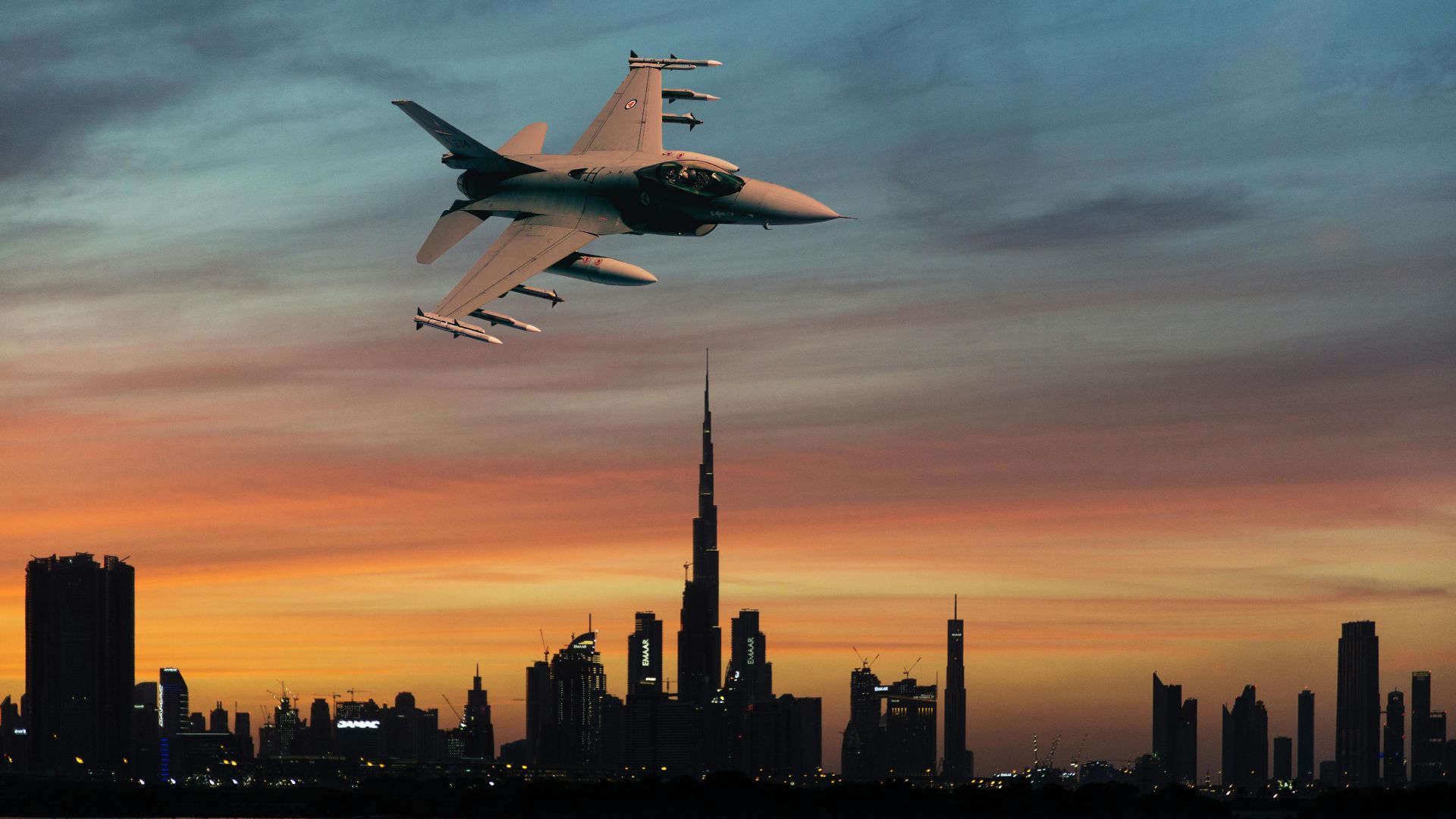
Why have the Gulf states' massive investments in military power failed to prove themselves on the battlefield—and what are the implications?
Special Publication, October 13, 2026
Follow us on GoogleFor years, the Arab Gulf states have invested heavily in procuring a wide range of advanced weapons systems. However, recent confrontations with Iran and its proxies highlight the difficulty of translating this investment into an independent, sustained operational capability. The gap stems from personnel constraints, organizational fragmentation, partial interoperability, and dependence on external capabilities and support—as well as the fact that defense procurement serves other objectives, including political, status-related, and regime-oriented goals. The gap is further exacerbated by a built-in asymmetry vis-à-vis Iran and its proxies, which can deploy missiles, UAVs, and relatively inexpensive, dispersed forces against costly defense systems and platforms, imposing a war of attrition that erodes the Gulf states’ technological advantage. Consequently, it becomes difficult for the United States to transfer a larger share of the regional security burden to these states, compelling Washington to continue providing critical capabilities and intervening in times of crisis. For Israel, this means that while the Gulf states can be valuable political and economic partners, they cannot yet serve as a robust regional military pillar.
In the midst of the war with Iran in March 2026, when Iranian missiles struck Saudi Arabia, American Senator Lindsey Graham posed a piercing question to the Saudis: "If you're not willing to use your military now, when will you be?" Graham noted that the United States had sold the kingdom advanced weaponry and even described its military as "capable." His remarks addressed the Saudi reluctance to employ effective military force against Iran, but they touch upon a broader paradox that has puzzled many: How is it that countries that have spent astronomical sums over decades purchasing some of the world's most advanced weapons systems remain relatively passive vis-à-vis Iran and struggle against its proxies to independently defend their own territory and critical infrastructure?
Between Resource Allocation and Military Effectiveness
As the wealth generated by oil began to make its mark, the Arab monarchies of the Gulf turned to investing extraordinary resources in building up their military capabilities. Saudi Arabia, the United Arab Emirates, Qatar, Kuwait, and even Bahrain and Oman consistently rank among the world's leading countries in military expenditure relative to GDP, or in the volume of arms imports relative to the size of their territory, population, and armed forces. They possess air forces equipped with advanced generations of Western fighter jets, air defense systems, precision-guided munitions, naval vessels, UAVs, and advanced intelligence, command, and control systems. Saudi Arabia and the UAE have also invested in developing domestic defense industries and diversifying their sources of procurement, while in recent years, the UAE, Qatar, and Kuwait have even advanced mandatory conscription.
Unlike many countries facing budget constraints, the Gulf states have had access for years to both capital and the world's major arms suppliers, yet massive procurement has not translated into military effectiveness. The Gulf case therefore makes it possible to isolate the financial variable to a large extent and ask what stands between resource allocation and operational results.
The discussion begins with the distinction between “military inputs” and “military effectiveness”—a military’s ability to convert the resources at its disposal into operational results. Budget figures, the number of fighter aircraft, or the quantity and quality of air defense batteries provide only a partial picture. Modern military power depends on a much broader ecosystem: the quality of personnel, operational experience, readiness, command-and-control, inter-service interoperability, and the capacity to learn. Some Gulf states lack the ability to fully and independently operate and maintain certain advanced systems they have acquired. The question, then, is not whether the Gulf states have made military progress (this is a fact), but whether the development of their organizational and human capabilities has kept pace with the rate of their acquisitions, or with the security challenges they face.
To explain this gap, one must begin with a fundamental question that is sometimes absent from the discussion: What, in fact, are the objectives of arms procurement? There is an implicit assumption that states acquire arms to maximize their ability to counter threats. However, in the Gulf states, defense procurement serves several functions simultaneously. Alongside its operational purpose, it is an instrument for foreign policy, regime security, and competition for status. Therefore, we should not necessarily expect a linear relationship between each additional dollar allocated to procurement and a corresponding improvement in military capability.
Functions of Defense Procurement
This fact is especially pronounced in intra-Gulf competition. Alongside the Iranian threat, military procurement has long reflected relations among the monarchies themselves. Regional competition and the Gulf states’ desire to establish themselves as countries of stature and prestige have, over the years, become drivers of military buildup. This aspect merits greater attention from researchers and policymakers. The competition among Riyadh, Abu Dhabi, and Doha plays out not only in the security sphere; it is also evident in civil aviation, seaports, financial centers, investment, sports, tourism, diplomacy, and the capacity to mediate international crises. Military power serves as an additional component in this rivalry for regional and international stature.
This sometimes leads to a tendency to acquire advanced weapons platforms that are highly visible and carry significant symbolic value. Procuring the most advanced fighter aircraft or the newest air defense system is not merely a response to a specific threat; it is also a statement, both internally and externally, regarding the country's status. The issue is not that these systems are useless; most have considerable operational value. Rather, the problem is that the desire to acquire "the best" does not necessarily align with the need to build the most effective force mix. Resources directed toward expensive platforms are not necessarily matched by comparable investment in munitions stockpiles, spare parts, maintenance personnel, hardening, logistics, redundancy, personnel training, and expanding the conscription base — components that are far less visible politically, but critical in wartime.
Another factor driving military buildup is the role of procurement in strengthening foreign relations. In the Gulf, an arms deal is neither a purely commercial transaction nor a simple transfer of military capability. It can serve as a mechanism for tying the supplier country to the security of the purchasing state. This is particularly evident in relations with the United States. Acquiring a US fighter aircraft or air defense system creates a relationship that often spans decades. It encompasses crew training, maintenance, supply of spare parts and munitions, upgrades, consulting, joint exercises, and routine contact between defense ministries and armed forces. Large contracts also create economic and employment stakes in the supplier country. In this sense, the Gulf states acquire not just a weapons system, but a strategic relationship. This implies that some of the return on defense spending is meant to manifest not on the battlefield, but in the diplomatic arena.
The same logic helps explain the diversification of procurement sources. Turning to China and Russia, for example, has served over the years to bolster ties with them, gain leverage over Washington, and reduce dependence on a single supplier. Yet, even then, the operational costs were clear: systems from different sources require distinct spare parts, dedicated training, and separate maintenance frameworks. This reflects a critical tension: political optimization and military optimization do not always align. For an air force commander, a standardized fleet may be ideal. For political leadership, spreading procurement among the United States, France, Britain, China, or other countries may be a way to expand the roster of actors invested in the state's security. Consequently, what may appear as military inefficiency can be entirely rational from a political standpoint.
An additional layer relates to the political structure of the Arab monarchies. For years, scholarship on Gulf militaries has emphasized the tension between defending the state and protecting the regime. For a ruling family, a strong, autonomous, cohesive military with a centralized chain of command may also pose a potential internal threat. In various countries, this has led to institutional fragmentation, parallel forces, national or presidential guards, and the division of responsibilities among different centers of power. From the standpoint of regime survival, this makes sense. Dispersing power reduces the ability of any single actor to seize control of the system. From a military standpoint, however, it can undermine unity of command, information sharing, joint planning, and the capability to deploy all available resources as a unified system. This is one of the keys to understanding the paradox: not everything that appears to be a failure of the military system is necessarily a failure from the perspective of the political system. Regime survival considerations have shaped how resources, authority, and power are distributed within the defense establishment, often at the expense of cohesion, professionalism, and operational capability against external threats.
Structural Constraints
Even when the political will exists to build a professional military, the Gulf states face a structural constraint that is particularly difficult to solve through money alone: personnel. This issue is especially acute in countries with small populations, where the pool of military-age citizens is inherently limited. Aircraft, air defense systems, and naval vessels can be acquired quickly. However, training skilled pilots, technicians, engineers, intelligence personnel, systems operators, and staff officers takes years, and cannot always keep pace with the rate of advanced weapons acquisitions.
Compounding this challenge is the difficulty of recruiting and retaining high-quality personnel: in wealthy countries such as these, educated young people have access to well-paid and comfortable career alternatives. A military career, especially in demanding, highly technical, and less prestigious roles, is not always the most attractive option. The result is a persistent gap between the ability to rapidly procure advanced platforms and the ability to develop over time the human capital needed to operate, maintain, and integrate them into complex operations. This gap also helps explain why some Gulf militaries rely extensively on foreign advisers, technicians, contractors, and military personnel. While this reliance does not necessarily impair routine operations and can even provide high-level technical expertise, issues emerge when transitioning from peacetime routine to emergencies, when the commitment of foreign personnel becomes uncertain.
The gap between resources and capacity also exists at the regional level. Taken together, the military capabilities of all six Arab Gulf states would appear to constitute a very significant military force. However, summing up capabilities is not equivalent to integrating those capabilities. For years, the six states have sought to establish joint defense systems. Yet fully integrating the air picture, sensors, intelligence, and command-and-control requires a high level of mutual trust and agreement on how authority will be divided. Intra-Gulf rivalries, the desire to preserve autonomy, and concerns over disclosing sensitive information impede this process.
This difficulty is especially pronounced in defense against missiles and UAVs. The geography of the Gulf makes it impossible for any one country to treat its airspace as a closed system, and the US has been pressing the Gulf states for years to integrate their defenses in this area. A threat may be detected over one country's territory, transit over another, and target a third. Operationally, a regional system makes sense. Politically, however, the system remains largely organized around separate sovereign states.
The difficulty in building military independence is also linked to the American security guarantee. The US presence in the Gulf has granted the monarchies access to capabilities that would be extremely difficult and costly to develop independently. If the strategic assumption is that the United States will stand by a country in a major war and provide the missing capabilities, there is less political incentive to pay the price of building all of those capabilities independently. This creates a paradox of dependence: the US security umbrella enables local militaries to develop, but also reduces the urgency of building effective capabilities. The lack of self-sufficiency, in turn, reinforces the need for continued guarantees.
This does not mean that relying on the United States is necessarily a strategic mistake. For small countries facing Iran, which has an asymmetric advantage over them, a division of labor with an external power may be entirely rational. The question is a different one: What happens when the level of US involvement no longer aligns with the core assumptions on which local military capabilities were built?
Another limitation can be described as the wealth paradox. Budgetary constraints force a military to prioritize, streamline, and carefully calibrate the balance between platforms, personnel, training, maintenance, and logistics. Oil wealth enabled the Gulf states to circumvent some of these constraints through procurement: buying advanced systems, hiring foreign experts and contractors, and using arms deals as a mechanism to tie external powers to their security. In this sense, security can be "purchased" rather than building all the capabilities needed to provide it independently. It can therefore be argued that wealth has weakened these militaries by reducing the pressure to develop independence, prioritization, and efficiency under resource constraints.
Generalizations should nonetheless be avoided. One weakness of some early scholarship on Arab militaries was its tendency to explain military performance through cultural attributes. In contrast, comparative analysis of the Gulf states highlights significant variation. The United Arab Emirates represents the most important case. The UAE has invested not only in procurement, but also in organizational reforms, personnel training, compulsory national service, special operations forces, and accumulating operational experience. This makes it an important case study: if a Gulf state can significantly improve its ratio between resources and military effectiveness, then the gap is not an inevitable consequence of culture or geography.
At first glance, Saudi Arabia’s operational experience should be considerable. Since the onset of the conflict with the Houthis, Saudi forces have gained experience in deploying airpower, gathering intelligence, defending against missiles and UAVs, and managing a prolonged campaign. Yet by the time the 2022 ceasefire took effect, Saudi Arabia, which has the world's seventh-largest defense budget, had failed to decisively defeat the Houthis.
The current campaign illustrates this predicament clearly. The Houthis have managed to rapidly expand their foothold in the Bab al-Mandab strait, while simultaneously continuing to launch missiles and UAVs toward Saudi territory and infrastructure. In September 2026, Riyadh reportedly sought US assistance, citing its inability to confront the Houthis on its own. Riyadh also appears wary of deploying its full military force against the Houthis, fearing that escalation could provoke further strikes against its vulnerable oil infrastructure and draw the kingdom back into a wide-scale war in Yemen. Thus, the Saudi problem is not simply military weakness, but rather the difficulty of translating an immense advantage in resources and technology into operational capability and strategic results against a poor, decentralized, and adaptive adversary. Therefore, the Houthi case also illustrates the limits of technological superiority in asymmetric warfare.
Because material and technological advantages in the Gulf do not automatically translate into military effectiveness, there is a need to evaluate the power of the Gulf states differently. Defense budgets, arms deals, and orders of battle are important, but they are not enough. Alongside conventional metrics, one must evaluate a range of variables, including the proportion of local personnel capable of operating and maintaining systems; readiness and availability; operational experience; logistical depth; joint-service interoperability; integration with neighboring states; the degree of dependence on contractors and foreign countries; and other data that are generally not found in unclassified material.
Summary and Implications for Israel
In the case of the Gulf states, as noted, part of the spending on military buildup yields political returns: relations with the United States or other powers. Part yields status-related returns: prestige and influence, and part yields regime-oriented returns: the stability of the royal house. Only part yields military returns in the narrow sense. This distinction may help explain why the gap persists despite being recognized for years. This is not necessarily a system whose weaknesses decision-makers fail to understand. They simply measure the returns on procurement more broadly than a military analyst does.
Military effectiveness is also relative: a military’s capabilities are assessed not only in terms of its resources, but also in relation to its adversary, the adversary’s characteristics, and its way of fighting. Alongside the asymmetry in military capabilities that tilts in Iran's favor, there is an asymmetry in vulnerability. The wealthy Gulf states rely on concentrations of energy infrastructure, ports, desalination plants, airports, and economic centers, where limited strikes can inflict substantial economic damage. Iran and its proxies, by contrast, are better suited to a war of attrition and show a willingness to bear high costs over time. Thus, an adversary that is technologically inferior can, in fact, diminish the significance of the Gulf states’ material advantage and expose their difficulty in translating technological superiority into military effectiveness.
Over recent decades, the Gulf states have come a long way in their force building, and some are now capable of executing missions that were previously almost entirely dependent on external forces. As evidence, some of them—most notably the UAE—carried out limited strikes on Iranian territory, even though they did not claim responsibility for these attacks. Therefore, the gap between the scale of investment and operational performance should not be taken as evidence that procurement has been futile or that Gulf militaries are incapable of improving. The scale of procurement itself, however, may create a misleading impression of the military power at their disposal.
In the Gulf, the pace of procurement sometimes exceeds the pace of developing personnel and institutions; competition for prestige and status encourages the acquisition of platforms with high symbolic value; arms deals also serve to tie external powers to the Gulf states and diversify their support pillars; regime security considerations shape force structures; the local personnel base is limited; integration among the states remains partial; and the US security umbrella provides a measure of "comfort," enabling critical capabilities to remain in the hands of an external actor for years.
Looking to the future, acquiring additional systems—including the advanced F-35 fighter aircraft purchased by Saudi Arabia—will not solve the problem on its own. Even after the aircraft arrive, appropriate training systems will need to be established, and operational doctrine and readiness must be adapted accordingly. In other words, the war demonstrated once again the difference between acquiring equipment and building military capability.
The gap in numbers is especially striking. SIPRI data indicate that Saudi Arabia alone spent approximately $83.2 billion on defense in 2025, compared to Iran's approximately $7.4 billion—more than eleven times as much. (Iran’s actual defense spending is estimated to be higher, but the gap remains dramatic). Despite this, Iran managed to threaten all the Gulf states, which required significant external assistance to defend themselves. This may be the starkest illustration of the gap between military spending and effective military capability.
These should not all be viewed as mere “failures.” Some are the direct result of rational strategic choices. Purchasing American weaponry can yield significant political dividends even when it is not the most efficient route to military force building; diversifying suppliers may complicate logistics while reducing political dependence; and institutional fragmentation may undermine military efficiency while fortifying regime security against internal threats. The Gulf states are not necessarily failing to achieve their procurement goals; rather, those goals extend far beyond military effectiveness alone.
The Gulf states’ limited military effectiveness has implications beyond their own security. For the United States, it makes it difficult to transfer a greater share of the regional security burden to its Gulf allies. As they struggle to defend themselves and deter Iran and its proxies, Washington must continue to provide critical capabilities and even intervene in times of crisis, despite seeking to devote less attention and fewer resources to the Middle East.
For Israel, this means that, while the Gulf states can be important political and economic partners, their economic power and the scale of their arms procurement should not be taken as signs that they are a reliable military pillar. A robust regional front against Iran therefore requires not only political cooperation with the Gulf states, but also a substantial improvement in their military effectiveness and their ability to operate together over time.
*The author wishes to thank Col. (res.) D. and Col. (res.) R. for their helpful comments.