


Publications
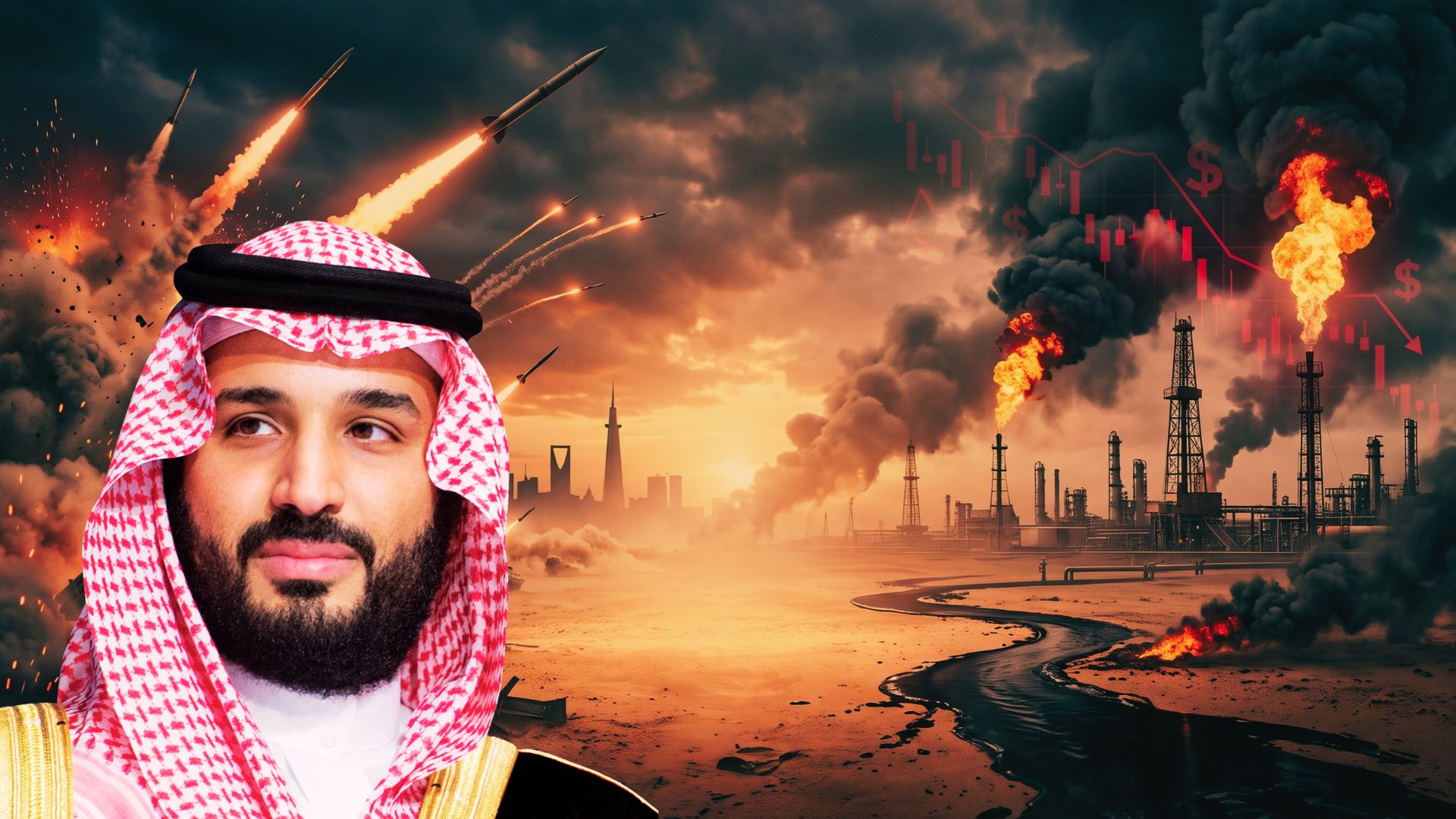
How are the converging security, economic, and political threats facing Saudi Arabia confronting the royal house with one of the greatest tests it has known?
INSS Insight No. 2214, November 11, 2026
Follow us on GoogleSaudi Arabia currently faces a convergence of security, economic, and political threats, among the most severe it has ever known. The novelty lies not in the mere existence of these threats, but in their simultaneous accumulation and occurrence: the war with Iran and its proxies, foremost among them the Houthis, exposes the limits of the kingdom’s ability to defend its territory and infrastructure; its capacity to regularly export oil — the lifeline of its economy and the source of its power — has been impaired; doubts persist regarding the credibility of the American security umbrella; and disruptions to investment, trade, and aviation are exacerbating economic challenges that predate the war, including a substantial budget deficit and difficulties in realizing Vision 2030. The convergence of these threats is testing, all at once, two central promises on which the new political order rests: security and prosperity. The question is therefore to what extent the royal house can maintain its stability when the sources of its resilience are under simultaneous pressure and the cost of sustaining them continues to rise.
The war between Israel and the United States with Iran, which began in February 2026, places Saudi Arabia before an exceptional test. The threats to the kingdom come from several directions and harm not only the security of its citizens, but also energy infrastructure, aviation, trade, and its ability to attract investments. Disruptions in the Strait of Hormuz, the Houthi threat to shipping in the Red Sea and Bab el-Mandeb, attacks on strategic installations within the kingdom’s territory, and the intensification of the war in Yemen compel Riyadh to allocate ever-growing resources to security at a time when it seeks to carry out deep economic and social change.
The war with Iran did not find Saudi Arabia at the height of its economic strength. Even prior to it, the kingdom was contending with a large and growing budget deficit, a rise in public debt, difficulties in implementing key projects under Vision 2030, and an increasing need to prioritize investments. The Houthi threat, which remains despite years of fighting in Yemen and enormous investment in defense, adds an ongoing security dimension to these constraints. The war has thus exacerbated existing weaknesses, narrowed the leadership’s room for maneuver, and tested its ability to deliver on its promises.
These circumstances are unusual because they are unfolding after a fundamental change in the structure of Saudi governance. Since its founding, the monarchy has relied on a system of checks and balances among different branches of the royal family, separate security apparatuses, the religious establishment, business elites, and a broad system of resource distribution. This system was cumbersome, but it allowed responsibility and risks to be dispersed among different centers. Since his appointment as crown prince in 2017, bin Salman has weakened rival centers of power, curtailed the independence of the religious establishment, brought large parts of the economic elite under his authority, and concentrated most governing powers in his own hands. The result is a more centralized and effective system in terms of its ability to make decisions, but also one in which successes and failures are increasingly associated with a single person.
This gives rise to an essential distinction among three dimensions: the stability of the Saudi state, the survival of the House of Saud dynasty, and the stability of Mohammed bin Salman's personal rule. All three are connected, but they are not the same. A crisis in the crown prince’s standing does not necessarily mean the monarchy will collapse, just as policy failure does not in itself signal an immediate threat to his rule. Moreover, a regime can remain stable even as it struggles to achieve its goals, is forced to scale back its ambitions, or pays an increasingly high economic and political price to maintain its control.
Methodological note: The fall of regimes is among the most difficult political developments to predict. Regimes that appear stable can quickly plunge into crisis, while regimes facing war, economic crisis, and popular protest may survive for years and even grow stronger. Therefore, the indicators proposed below should not be seen as tools for predicting "the fall of the regime." Their role in this context is more modest: to break down the concept of "stability" into its components, identify the sources of resilience and signs of erosion, and examine the interaction between the various sources of pressure. This also means that the answer to the question should not be a binary choice between stability and collapse. A wide range of possibilities lies between these two scenarios: a decline in the regime’s ability to achieve its goals, a need to change priorities, erosion of legitimacy, increased dependence on external support, tensions within the elite, or a shift in relations between the state and society. These developments are important in their own right, even if they do not lead to the fall of the regime. Therefore, the analysis below should not be seen as an attempt to predict the fall of the regime. Its aim is to identify the centers of gravity on which its stability rests, assess their endurance, and to clarify under what circumstances the erosion of several of them at once could turn an external crisis into a domestic political challenge.
The First Center of Gravity: Control of the Means of Coercion
The war has exposed a significant gap between Saudi Arabia’s enormous investment in security and its ability to defend its territory and strategic assets. The kingdom’s territory, the multiplicity of threats, and the limitations of its air defense systems compel it to prioritize the defense of critical facilities and areas. However, it is important to distinguish between the ability of the security apparatuses to counter external threats and their ability to guarantee the regime’s stability from within. With regard to the monarchy’s survival, the decisive question is not only whether the military can protect the country’s infrastructure, but whether the security services remain loyal to the leadership, cohesive, and capable of maintaining its control over the country. In this respect, Mohammed bin Salman’s consolidation of control over the security apparatuses is one of the main sources of resilience for his rule. The removal of Muhammad bin Nayef as crown prince and the dismissal of Mutaib bin Abdullah as head of the National Guard in 2017 weakened power centers associated with other branches of the royal family, reduced the political autonomy of the security apparatuses, strengthened bin Salman’s control over the means of coercion, and diminished the ability of potential rivals to rely on independent centers of power.
Thus, even if the war exposes significant vulnerabilities, it should not be deduced that the political stability of the crown prince has been undermined. The risk to his rule will grow primarily if military failures translate into tensions within the security apparatuses or doubts among their commanders regarding his leadership. Unusual dismissals of senior commanders, politically motivated arrests, or confrontations between security bodies could point to such a development.
The Second Center of Gravity: The Royal House and the Ruling Elite
Since the monarchy was established, its rule has rested on the distribution of authority, positions, and resources among different branches of the royal family. This arrangement helped balance centers of power and resolve disputes within the extended family. Bin Salman, however, has reduced potential rivals’ ability to challenge his leadership and strengthened the stability of his own rule. The concentration of power also made strategic decisions and their outcomes much more identifiable with him. The war tests this order, but one should not assume that military failures or economic difficulties will necessarily lead to resistance within the royal house. Even if princes begin to question bin Salman’s judgment, there would still be a long road leading from those doubts to organizing politically against him. The concentration of power in his hands, his control over the security apparatuses, and the expected high cost of opposing him limit his rivals’ ability to act. Moreover, during wartime, even those dissatisfied with his leadership may prefer continuity in government to the risks of an internal struggle.
Therefore, the threat to the stability of his rule does not stem from the protraction of the war or the accumulation of failures, but from the possibility that these developments could undermine the confidence of central figures in the family in his ability to secure the kingdom's future, while also creating the political and institutional conditions that would allow them to act against him. Such a development would be especially significant if a succession crisis were accompanied by cracks in the loyalty of the security apparatuses. The strength of centralization is also its source of risk: bin Salman succeeded in neutralizing competing centers of power, but in doing so he has also weakened the mechanisms through which the monarchy can cope with a challenge to his leadership without undermining its stability.
The Third Center of Gravity: A New Social Contract
Bin Salman has changed the monarchy’s basis of legitimacy. The old model rested on a combination of rentier distribution of oil revenues and an alliance with the religious establishment. The new model increasingly relies on Saudi nationalism, social openness, economic opportunity, employment, and the promise of a better future. Vision 2030 is therefore not merely an economic plan; it is a central part of the unwritten political contract with the Saudi public. The state promises its citizens prosperity, social mobility, and an improved quality of life, and in return expects acceptance of a centralized political system that does not allow participation in decision-making.
The reforms have produced tangible gains. Women’s participation in the workforce has expanded, and young Saudis have gained access to employment opportunities that were previously unavailable. Yet the reforms’ very success has created new expectations. For the younger generation, social openness, diverse employment, and economic opportunities are no longer exceptional benefits granted by the government; they are taken for granted, and the public expects this trend to continue.
The political test, then, is not whether every one of Vision 2030’s megaprojects is completed as originally planned. Saudi Arabia can scale back projects, delay investments, and change priorities without undermining the regime’s stability. The more important question is whether the public begins to feel that economic and social mobility have stalled, employment opportunities are shrinking, and the promised future is receding. The war may indeed encourage national rallying around the leadership, especially when the kingdom is perceived by the public as a victim of external aggression. But if a sense of insecurity persists and is accompanied by a decline in the standard of living and expectations of prosperity, a gap may emerge between the promises of the regime and its ability to deliver on them. This does not guarantee protest or political resistance, but it represents a potential erosion of one of bin Salman’s central sources of legitimacy.
The Fourth Center of Gravity: Economy and Resource Allocation
The war is exacerbating negative trends that had emerged even before it began. The kingdom was already facing a large budget deficit, declining oil revenues, rising public debt, and difficulties financing and implementing major projects under Vision 2030. The war therefore began at a time when the economy was struggling to fund the full range of ambitions set out by bin Salman. However, economic resilience should be distinguished from political resilience. Saudi Arabia still possesses significant assets, a stable financial system, and the ability to raise capital, and it does not face an immediate financing crisis. Therefore, the key question for regime stability is whether it can continue funding both growing security needs and the new social contract.
For years, the kingdom’s stability has rested on its ability to distribute resources, provide jobs, offer subsidies, and compensate different segments of the population. As budgetary pressure grows, the leadership must decide between defense expenditures, megaprojects, public-sector employment, and social investments. This means a gradual shift from the politics of distributing plenty to the politics of prioritization, in which favoring one group may come at the expense of another.
The war also has consequences that extend beyond the state budget. One of bin Salman's primary goals is to transform Saudi Arabia into an economy that attracts foreign capital, international companies, tourists, and skilled workers. Attacks on airports, energy installations, and strategic infrastructure, alongside threats to shipping lanes, raise the kingdom's risk premium and undermine investor confidence, while the damage to its economic reputation could persist even after the war ends. Hence, the war adds unplanned expenditures and makes it harder to resolve the structural problems that preceded it. As the gap between ambitions and the ability to deliver grows, the legitimacy on which bin Salman’s rule rests is likely to erode.
The Fifth Center of Gravity: The Limits of Saudi Power
The center of gravity currently under the greatest pressure is the leadership's ability to provide security. Since 2009, Saudi Arabia has intermittently devoted military and economic resources to its campaign against the Houthis, but has failed either to defeat them or to eliminate the threat they pose. Despite the enormous disparity in power between the two sides, the Houthis can strike deep inside the kingdom, disrupt critical infrastructure, and threaten shipping lanes in the Red Sea and the Bab el-Mandeb Strait.
Houthi attacks on airports, energy facilities, and strategic sites are not merely a military challenge; they strike at the heart of bin Salman’s economic and political vision. The crown prince has sought to make the kingdom a regional and international hub for investment, tourism, transportation, and technology. Yet it is difficult to realize this ambition when airports are shut down, foreign companies are forced to reassess their risks, and energy infrastructure remains under threat. The Houthis do not need to defeat the Saudi army; their ability to maintain a high level of security uncertainty and raise the costs of economic activity in the kingdom is sufficient.
At the same time, the war deepens the question regarding the reliability of the kingdom's external supports, chief among them the United States. For years, the alliance with Washington compensated for Saudi Arabia's military weaknesses. But the war demonstrates that American assistance with defense, arms supplies, and intelligence is not equivalent to a commitment to achieve a decisive outcome in any confrontation in which the kingdom is involved. Riyadh’s efforts to expand security cooperation with Pakistan, Turkey, and other partners do not, at this stage, provide a substitute for U.S. capabilities.
Moreover, the war reveals the gap between Mohammed bin Salman’s political power at home and his limited influence over his strategic environment. The crown prince managed to concentrate unprecedented power in his hands and cultivated the image of a leader capable of shaping regional reality. Yet he cannot dictate U.S. priorities, China does not offer a genuine security alternative, and the Houthi threat persists despite massive investments in defense. Paradoxically, the very person who sought to establish his standing by demonstrating power finds himself repeatedly forced to return to a policy of appeasement and de-escalation vis-à-vis Iran. This does not mean bin Salman has lost control at home, but that his strategic room for maneuver has narrowed. He remains strong enough to rule the kingdom, but not strong enough to ensure its security.
Assessment
There is no formula for combining military weakness, economic slowdown, and erosion of legitimacy to determine whether and when they will lead to a governing crisis. Historical experience shows that absolute regimes can withstand heavy pressure, and at times even emerge stronger in their wake. The significance of the present moment, however, lies in the possibility that pressure will build simultaneously across several centers of gravity. Ongoing strikes on infrastructure could raise the kingdom's defense costs and risk premium; an economic slowdown could necessitate cuts and prioritization; and disappointment with the outcomes could weaken trust in bin Salman's ability to deliver security and prosperity.
Yet even this sequence would not necessarily lead to a crisis of government. The most dangerous transition will occur if economic and security erosion translates into political doubts among the ruling elite, and subsequently also into tensions within the security apparatuses. In a system where the public has no means of replacing the leadership, the threat to the crown prince is likely to emerge first and foremost from within the power centers of the royal house. Reports from October 2026 also describe the extraordinary precautions taken by Mohammed bin Salman as he moves between fortified palaces, equipped with bunkers and surrounded by a tight security perimeter. The growing concern for the crown prince's personal safety adds an important dimension to the crisis: the war not only threatens state assets, but also requires the man who holds most of the governing power to protect his own physical safety. This is not evidence of a direct threat to his rule, but it illustrates the severity of the situation.
Therefore, one must assess not only economic and military indicators, but also the regime's ability to adapt: whether it changes priorities without severely harming key groups; whether it manages to preserve the loyalty of the security apparatuses; whether the elite remains cohesive; and whether the public continues to believe that the current difficulties are temporary and that the promise of prosperity remains achievable.
At present, the security apparatuses show no visible signs of division, there is no organized opposition with a real ability to challenge the royal house, and the state still has significant economic resources. However, the war makes preserving stability more expensive and narrows the leadership's room for maneuver. Riyadh must increase security spending, address ongoing threats to infrastructure and export routes, maintain investor confidence, and continue delivering the benefits of social and economic change to the public.
The threat to the monarchy's stability does not necessarily stem from popular protest, but from the possibility that the accumulation of security failures and economic pressures will gradually undermine key members of the elite’s confidence in Mohammed bin Salman’s ability to secure the kingdom’s future. There is currently no evidence that such a process is underway, and the control mechanisms constructed by the crown prince give his rule considerable resilience. However, the concentration of power in his hands also makes him the primary individual responsible for failures and limits the system's ability to manage a crisis in his leadership. The war does not necessarily place the House of Saud at risk of collapse, but it exposes the gap between regime stability and state power. The question that remains is how far this gap can widen before the economic and security costs become a political cost.