


The Iranian Nuclear Crisis: The International Determination Deficit | INSS
go to header go to content go to footer go to search
INSS logo The Institute for National Security Studies, Strategic, Innovative, Policy-Oriented Research, go to the home page
INSS
Tel Aviv University logo - beyond an external website, opens on a new page
  • Campus
  • Contact
  • עברית
  • Support Us
  • Research
    • Topics
      • Israel and the Global Powers
        • Israel-United States Relations
        • Glazer Israel-China Policy Center
        • Russia
        • Europe
        • Antisemitism and Delegitimization
      • Iran and the Shi'ite Axis
        • The Campaign Against Iran and the Shiite Axis
        • Iran
        • Lebanon and Hezbollah
        • Syria
        • Yemen and the Houthi Movement
        • Iraq and the Iraqi Shiite Militias
      • Conflict to Agreements
        • Israeli-Palestinian Relations
        • Hamas and the Gaza Strip
        • Peace Agreements and Normalization in the Middle East
        • Saudi Arabia and the Gulf States
        • Turkey
        • Egypt
        • Jordan
      • Israel’s National Security Policy
        • Military and Strategic Affairs
        • Israel's Security Strategy
        • Societal Resilience and the Israeli Society
        • Jewish-Arab Relations in Israel
        • Climate, Infrastructure and Energy
        • Terrorism and Low Intensity Conflict
      • Cross-Arena Research
        • Data Analytics Center
        • Law and National Security
        • Advanced Technologies and National Security
        • Foreign Information Manipulation and Interference
        • Economics and National Security
    • Projects
      • Preventing the Slide into a One-State Reality
      • India-Middle East-Europe Economic Corridor (IMEC)
  • Publications
    • -
      • All Publications
      • INSS Insight
      • Policy Research and Papers
      • Special Publication
      • Strategic Assessment
      • Technology Platform
      • Memoranda
      • Posts
      • Books
      • Archive
  • Database
    • Surveys
    • Spotlight
    • Maps
    • Dashboards
  • Events
  • Team
  • About
    • Vision and Mission
    • History
    • Research Disciplines
    • Chairman of the Board
    • Board of Directors
    • Fellowship and Prizes
    • Annual Reports
    • Internships
  • Media
    • Communications
    • Video gallery
    • Press Releases
  • Podcast
  • Newsletter
  • Campus
Search in site
  • Research
    • Topics
    • Israel and the Global Powers
    • Israel-United States Relations
    • Glazer Israel-China Policy Center
    • Russia
    • Europe
    • Antisemitism and Delegitimization
    • Iran and the Shi'ite Axis
    • The Campaign Against Iran and the Shiite Axis
    • Iran
    • Lebanon and Hezbollah
    • Syria
    • Yemen and the Houthi Movement
    • Iraq and the Iraqi Shiite Militias
    • Conflict to Agreements
    • Israeli-Palestinian Relations
    • Hamas and the Gaza Strip
    • Peace Agreements and Normalization in the Middle East
    • Saudi Arabia and the Gulf States
    • Turkey
    • Egypt
    • Jordan
    • Israel’s National Security Policy
    • Military and Strategic Affairs
    • Israel's Security Strategy
    • Societal Resilience and the Israeli Society
    • Jewish-Arab Relations in Israel
    • Climate, Infrastructure and Energy
    • Terrorism and Low Intensity Conflict
    • Cross-Arena Research
    • Data Analytics Center
    • Law and National Security
    • Advanced Technologies and National Security
    • Foreign Information Manipulation and Interference
    • Economics and National Security
    • Projects
    • Preventing the Slide into a One-State Reality
    • India-Middle East-Europe Economic Corridor (IMEC)
  • Publications
    • All Publications
    • INSS Insight
    • Policy Research and Papers
    • Special Publication
    • Strategic Assessment
    • Technology Platform
    • Memoranda
    • Posts
    • Books
    • Archive
  • Database
    • Surveys
    • Spotlight
    • Maps
    • Dashboards
  • Events
  • Team
  • About
    • Vision and Mission
    • History
    • Research Disciplines
    • Chairman of the Board
    • Board of Directors
    • Fellowship and Prizes
    • Internships
    • Annual Reports
    • Privacy Policy and Terms of Use
  • Media
    • Communications
    • Video gallery
    • Press Releases
  • Podcast
  • Newsletter
  • Campus
  • Contact
  • עברית
  • Support Us
bool(false)

Publications

Home Publications INSS Insight The Iranian Nuclear Crisis: The International Determination Deficit

The Iranian Nuclear Crisis: The International Determination Deficit

INSS Insight No. 599, August 27, 2014

Follow us on Google
עברית
Emily B. Landau
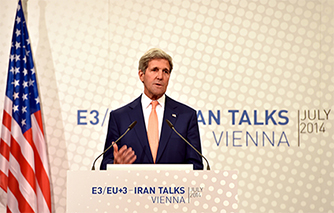
The Interim Deal of November 2013 between the P5+1 and Iran, although only meant to stop the clock and provide time for the real negotiation on a comprehensive deal, is now hailed as a “landmark deal.” The P5+1 are no longer demanding that Iran back away from its military ambitions; they are not even pressing for the weaponization aspects to be confronted head-on and quickly. Rather, they are demonstrating a relatively lax attitude on that front, while quietly shifting the goal of the negotiation from an Iranian strategic U-turn in the nuclear realm to an attempt to ensure that enough time – 6 months, a year, or maybe 18 months – remains between the current situation and the possibility for Iran to break out to a bomb. This assumes amazing verification capabilities that are far from given.

Judging by Israeli media coverage over the past month and a half, one could easily think that the Iranian nuclear crisis is over or moving safely to a positive resolution. In fact, nothing could be further from the truth. While Operation Protective Edge has not surprisingly consumed the lion’s share of media reporting and analysis, other crises have not necessarily receded or been resolved. In fact, judging from the current state of the P5+1-Iran nuclear negotiations, it is doubtful whether a good deal will ever be achieved.

The Interim Deal’s July 20, 2014 deadline came and went, and was barely noticed in Israel. But the decision to continue negotiations for another four months was a significant development. According to information in the public domain, Iran and the P5+1 are far apart in their positions on most of the critical nuclear issues, yet the US administration based its decision to continue negotiating for another four months on the assessment that significant progress had been made. In an open letter to the Iranians, former nuclear negotiator Robert Einhorn echoed the message of “significant progress” on major issues, mentioning the Arak reactor and the Fordow facility, and justified the decision to extend talks, even while noting that “a substantial number of very hard issues remained unresolved when the July deadline arrived.”

Media reports tend to highlight the uranium enrichment/centrifuge issue as the major stumbling block in the talks. Einhorn’s letter as well calls it the “make or break” issue of the talks. But there are additional crucial issues at stake, as well as a new development that could complicate the situation, and torpedo any remaining prospect of achieving a good deal: cooperation with Iran in confronting the Islamic State (IS). The prospect of US or broader international cooperation with Iran in confronting IS was raised in recent days by both Britain’s Prime Minister and France’s Foreign Minister. Iran would be happy to be able to leverage the IS crisis (as well as the Gaza war) in its favor in the nuclear talks, a trap the P5+1 must be careful to avoid. Amid conflicting signals coming from Tehran, one message was that Iran would agree to cooperate, but would insist on “payment” in the form of sanctions relief. But why would the West consider any concession in return for Iran doing what is in its interest to do regardless? In weighing such cooperation with Iran, it should also be kept in mind that Iran no longer minces words in reference to Israel – Khamenei has spoken openly in recent weeks about the need to annihilate the “Zionist entity.”

As to the nuclear issues under review, Iran is of course most emphatic about what it will not do. If there has been any progress at all in the talks since January, it has been minimal and marginal. Rouhani lately reiterated that Iran will not give up on any of its nuclear “rights,” and asserted that the “illegal” sanctions are soon to be lifted. This is a true reflection of Iran’s guidelines for negotiating with the P5+1: minimal nuclear concessions in return for maximum sanctions relief.

The most critical issue on the agenda – not least because it targets Iran’s narrative of nuclear “rights” – is the question of its weaponization activities. If the P5+1 were to insist on exposure of Iran’s blatant violation of the NPT, this would shatter Tehran’s long-held narrative. As a violator of the NPT, Iran could no longer profess innocence of any wrongdoing; it could not claim any “rights” according to the NPT, nor pronounce sanctions to be “illegal.” This could actually pave the way for greater P5+1 leverage vis-à-vis all of the dismantlement issues currently on the table.

Another crucial issue is the sunset provision – or how many years Iran will be required to adhere to the terms of a comprehensive agreement before it goes back to being considered an “ordinary” NPT member state. In fact, if Iran does not back away from its military aspirations, there is very little reason to accept that the provisions be short-lived or that restrictions be lifted.

Indeed, the true problem with this latest round of negotiations is the loosening not only of the economic leverage that the US and EU built up in recent years, but the relaxed determination of the P5+1 to uphold its original goal of having Iran back away from its military nuclear ambitions. Even though throughout the past seven months of negotiations the US team has emphasized that nothing will be resolved until everything is resolved, reality on the ground challenges that principle. What we see happening is that any indication of progress is played up and hailed, while the overwhelming lack of Iranian cooperation is relatively muted. Clearly, the negotiators want to focus on the progress, and would rather not see the problems – a well-known dynamic that has characterized and challenged the effectiveness of negotiations with Iran ever since the EU-3 took the lead in 2003.

The Interim Deal of November 2013, although only meant to stop the clock and provide time for the real negotiation on a comprehensive deal, is now hailed as a “landmark deal.” The P5+1 are no longer demanding that Iran back away from its military ambitions; they are not even pressing for the weaponization aspects to be confronted head-on and quickly. Rather, they are demonstrating a relatively lax attitude on that front, while quietly shifting the goal of the negotiation from an Iranian strategic U-turn in the nuclear realm to an attempt to ensure that enough time – 6 months, a year, or maybe 18 months – remains between the current situation and the possibility for Iran to break out to a bomb. This assumes amazing verification capabilities that are far from given. Indeed, the problematic (albeit implicit) message accompanying the current focus on breakout time is that Iran is quite likely to cheat on the deal. Ironically, a decade of negotiations with Iran has apparently come to this.

When in characterizing the talks P5+1 negotiators choose to focus on (minor) “progress” over (major) “problems,” they display ongoing justification for a continuation of negotiations, although they are clearly not moving toward a good deal. The minimal (insignificant) progress makes them resist declaring negotiations a failure, even as they prove unable to achieve the deal they have been striving for since 2003. A likely outcome at this point is a bad nuclear deal with Iran, which will not only keep Iran’s quick breakout capability intact, but will legitimize it by virtue of a concluded deal. From Israel’s perspective, it can only continue to try to influence the dynamic from the sidelines. In this regard, as well as many others, Israel must work hard to maintain good bilateral relations with the US.

The opinions expressed in INSS publications are the authors’ alone.
Publication Series INSS Insight
TopicsIranIsrael-United States Relations
עברית

Events

All events
Israel’s National Security Conference
27 July, 2026
10:00 - 14:00

Related Publications

All publications
Morteza Nikoubaz via REUTERS connect
The Disappearing Leader: The Struggle for Mojtaba Khamenei’s Legitimacy
Mojtaba Khamenei succeeded his father following his assassination last February, but has not appeared in public since. How is Iran working to preserve the Supreme Leader's legitimacy, and how might his continued absence impact the regime's stability?
15/09/26
From Military Force to Economic Isolation: The New Phase in Trump's Iran Policy
The complete guide to the Trump administration’s economic campaign against Iran—and the implications for Israel
27/08/26
From Nuclear Threshold to Nuclear Weapons? Reassessing Iran's Nuclear Doctrine
The debate within Iran’s leadership over the possibility of a nuclear breakout, and its implications for the Islamic Republic’s nuclear policy following two military campaigns
13/08/26

Stay up to date

Registration was successful! Thanks.
  • Research

    • Topics
      • Israel and the Global Powers
      • Israel-United States Relations
      • Glazer Israel-China Policy Center
      • Russia
      • Europe
      • Antisemitism and Delegitimization
      • Iran and the Shi'ite Axis
      • The Campaign Against Iran and the Shiite Axis
      • Iran
      • Lebanon and Hezbollah
      • Syria
      • Yemen and the Houthi Movement
      • Iraq and the Iraqi Shiite Militias
      • Conflict to Agreements
      • Israeli-Palestinian Relations
      • Hamas and the Gaza Strip
      • Peace Agreements and Normalization in the Middle East
      • Saudi Arabia and the Gulf States
      • Turkey
      • Egypt
      • Jordan
      • Israel’s National Security Policy
      • Military and Strategic Affairs
      • Israel's Security Strategy
      • Societal Resilience and the Israeli Society
      • Jewish-Arab Relations in Israel
      • Climate, Infrastructure and Energy
      • Terrorism and Low Intensity Conflict
      • Cross-Arena Research
      • Data Analytics Center
      • Law and National Security
      • Advanced Technologies and National Security
      • Foreign Information Manipulation and Interference
      • Economics and National Security
    • Projects
      • Preventing the Slide into a One-State Reality
      • India-Middle East-Europe Economic Corridor (IMEC)
  • Publications

    • All Publications
    • INSS Insight
    • Policy Research and Papers
    • Special Publication
    • Strategic Assessment
    • Technology Platform
    • Memoranda
    • Database
    • Posts
    • Books
    • Archive
  • About

    • Vision and Mission
    • History
    • Research Disciplines
    • Chairman of the Board
    • Board of Directors
    • Fellowship and Prizes
    • Internships
    • Annual Reports
    • Support
    • Privacy Policy and Terms of Use
  • Media

    • Communications
    • Video Gallery
    • Press Release
    • Podcast
  • Home

  • Events

  • Database

  • Team

  • Contact

  • Newsletter

  • עברית

INSS logo The Institute for National Security Studies, Strategic, Innovative, Policy-Oriented Research, go to the home page
40 Haim Levanon St. Tel Aviv, 6997556 Israel | Tel 03-640-0400 | Fax 03-744-7590 |
Developed by Daat ,Yael Group.
Accessibility Statement
This site is protected by reCAPTCHA and the Google Privacy Policy and Terms of Service apply.