


The Conflict with the United States on Sanctions and the Internal Political Tension in Iran | INSS
go to header go to content go to footer go to search
INSS logo The Institute for National Security Studies, Strategic, Innovative, Policy-Oriented Research, go to the home page
INSS
Tel Aviv University logo - beyond an external website, opens on a new page
  • Campus
  • Contact
  • עברית
  • Support Us
  • Research
    • Topics
      • Israel and the Global Powers
        • Israel-United States Relations
        • Glazer Israel-China Policy Center
        • Russia
        • Europe
        • Antisemitism and Delegitimization
      • Iran and the Shi'ite Axis
        • The Campaign Against Iran and the Shiite Axis
        • Iran
        • Lebanon and Hezbollah
        • Syria
        • Yemen and the Houthi Movement
        • Iraq and the Iraqi Shiite Militias
      • Conflict to Agreements
        • Israeli-Palestinian Relations
        • Hamas and the Gaza Strip
        • Peace Agreements and Normalization in the Middle East
        • Saudi Arabia and the Gulf States
        • Turkey
        • Egypt
        • Jordan
      • Israel’s National Security Policy
        • Military and Strategic Affairs
        • Israel's Security Strategy
        • Societal Resilience and the Israeli Society
        • Jewish-Arab Relations in Israel
        • Climate, Infrastructure and Energy
        • Terrorism and Low Intensity Conflict
      • Cross-Arena Research
        • Data Analytics Center
        • Law and National Security
        • Advanced Technologies and National Security
        • Foreign Information Manipulation and Interference
        • Economics and National Security
    • Projects
      • Preventing the Slide into a One-State Reality
      • India-Middle East-Europe Economic Corridor (IMEC)
  • Publications
    • -
      • All Publications
      • INSS Insight
      • Policy Research and Papers
      • Special Publication
      • Strategic Assessment
      • Technology Platform
      • Memoranda
      • Posts
      • Books
      • Archive
  • Database
    • Surveys
    • Spotlight
    • Maps
    • Dashboards
  • Events
  • Team
  • About
    • Vision and Mission
    • History
    • Research Disciplines
    • Chairman of the Board
    • Board of Directors
    • Fellowship and Prizes
    • Annual Reports
    • Internships
  • Media
    • Communications
    • Video gallery
    • Press Releases
  • Podcast
  • Newsletter
  • Campus
Search in site
  • Research
    • Topics
    • Israel and the Global Powers
    • Israel-United States Relations
    • Glazer Israel-China Policy Center
    • Russia
    • Europe
    • Antisemitism and Delegitimization
    • Iran and the Shi'ite Axis
    • The Campaign Against Iran and the Shiite Axis
    • Iran
    • Lebanon and Hezbollah
    • Syria
    • Yemen and the Houthi Movement
    • Iraq and the Iraqi Shiite Militias
    • Conflict to Agreements
    • Israeli-Palestinian Relations
    • Hamas and the Gaza Strip
    • Peace Agreements and Normalization in the Middle East
    • Saudi Arabia and the Gulf States
    • Turkey
    • Egypt
    • Jordan
    • Israel’s National Security Policy
    • Military and Strategic Affairs
    • Israel's Security Strategy
    • Societal Resilience and the Israeli Society
    • Jewish-Arab Relations in Israel
    • Climate, Infrastructure and Energy
    • Terrorism and Low Intensity Conflict
    • Cross-Arena Research
    • Data Analytics Center
    • Law and National Security
    • Advanced Technologies and National Security
    • Foreign Information Manipulation and Interference
    • Economics and National Security
    • Projects
    • Preventing the Slide into a One-State Reality
    • India-Middle East-Europe Economic Corridor (IMEC)
  • Publications
    • All Publications
    • INSS Insight
    • Policy Research and Papers
    • Special Publication
    • Strategic Assessment
    • Technology Platform
    • Memoranda
    • Posts
    • Books
    • Archive
  • Database
    • Surveys
    • Spotlight
    • Maps
    • Dashboards
  • Events
  • Team
  • About
    • Vision and Mission
    • History
    • Research Disciplines
    • Chairman of the Board
    • Board of Directors
    • Fellowship and Prizes
    • Internships
    • Annual Reports
    • Privacy Policy and Terms of Use
  • Media
    • Communications
    • Video gallery
    • Press Releases
  • Podcast
  • Newsletter
  • Campus
  • Contact
  • עברית
  • Support Us
bool(false)

Publications

Home Publications INSS Insight The Conflict with the United States on Sanctions and the Internal Political Tension in Iran

The Conflict with the United States on Sanctions and the Internal Political Tension in Iran

INSS Insight No. 820, May 4, 2016

Follow us on Google
Sima Shine
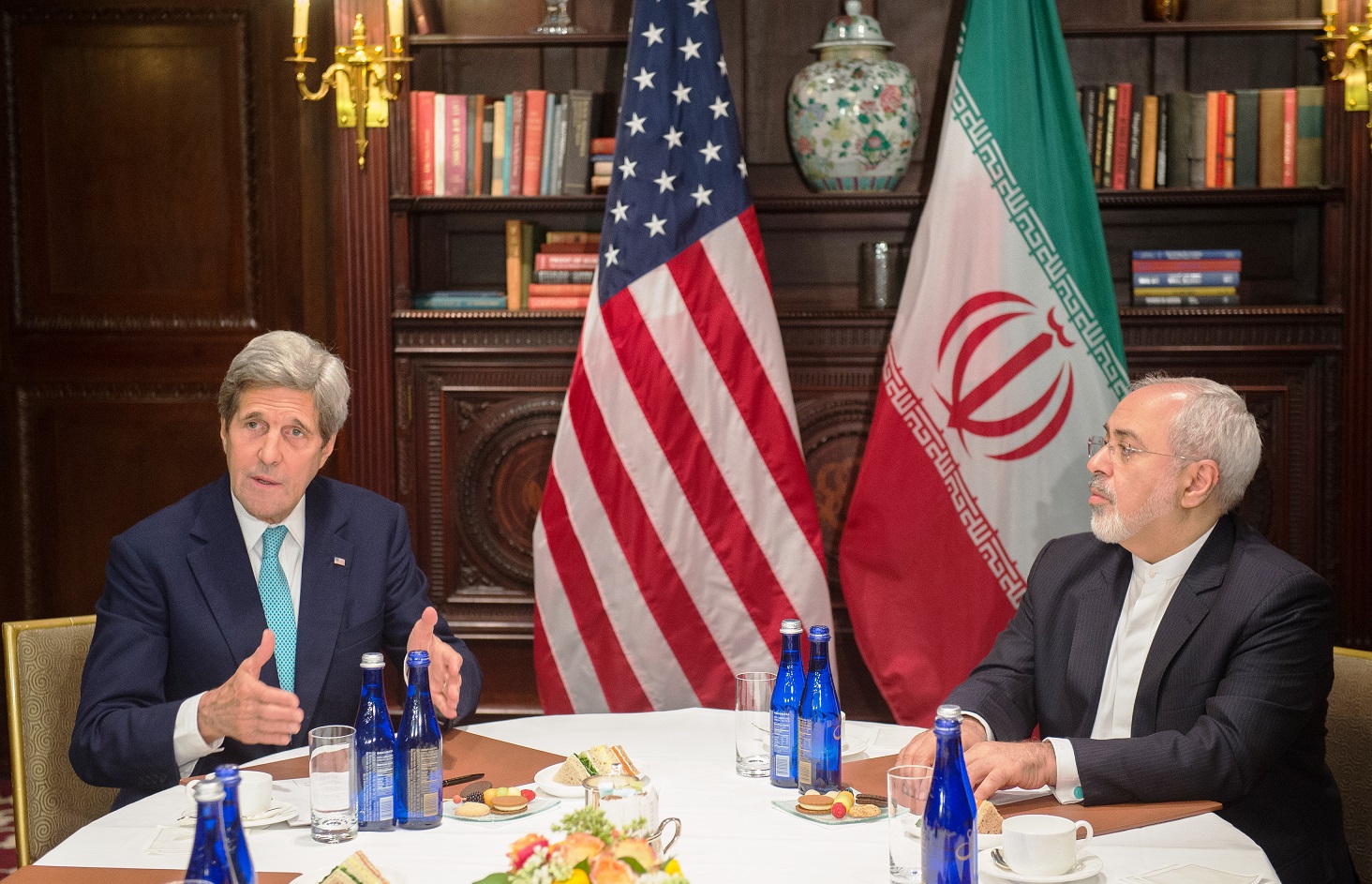
US Secretary of State John Kerry (l) and Iranian Foreign Minister Mohammad Javad Zarif, New York, April 22, 2016. Photo: Bryan R. Smith / AFP
An escalating conflict between Iran and the United States concerning Iranian allegations that the United States is not fulfilling its commitments under the nuclear agreement has made headlines in recent weeks. Tehran has accused the US administration of fomenting an anti-Iran atmosphere, which leads to reluctance on the part of banks and international companies to conduct business with Iran. This issue became ready political material in Iran for the opponents of the nuclear agreement and the opponents of President Rouhani, and the heightened debate intensified the rhetoric surrounding the second round of parliamentary elections. The Rouhani camp, though strengthened in the elections, did not win an absolute majority. Both Tehran and Washington have a strong interest in solving the disputes between them, yet political and structural factors in both countries make it difficult to bridge the gaps.

An escalating conflict between Iran and the United States concerning Iranian allegations that the United States is not fulfilling its commitments under the nuclear agreement has made headlines in recent weeks. The governor of the Central Bank of Iran, who visited the United States in April to attend the annual spring meeting of the World Bank Group and the International Monetary Fund, claimed that as far as Iran was concerned, “almost nothing” had happened in the economic sphere in the three months since implementation of the agreement began. This sharp statement was followed two days later by the publication of the first quarter report by the Iranian Foreign Ministry on implementation of the agreement. In the context of the implications of lifting the sanctions for the Iranian economy, the report explicitly stated that at this stage, Iran has found it difficult to translate the removal of sanctions into a significant improvement in its economic performance. The report ascribed direct responsibility to the United States for not acting in good faith, although responsibility was also attributed to the deep structural problems in the Iranian economy; without significant reform, the desired economic change expected by the public in Iran in exchange for the nuclear agreement cannot be achieved.

The report mentions a number of external factors as responsible for the situation. It emphasizes that the sanctions lifted by the United States are linked only to the nuclear issue, while many sanctions imposed on Iran for development of surface-to-surface missiles, support for terrorism, and human rights violations remain in place. Banking regulations that were adopted in recent years as part of the US campaign against money laundering and transferring money of terrorist organizations, without any direct connection to Iran, complicate the situation for Tehran. Iran, which was cut off from the international banking system by the sanctions, is currently not ready for changes that require legislation and regulatory adjustments, and is therefore experiencing difficulty banking in the international theater. The United States has also not withdrawn its sanctions banning Iranian trading in dollars, and the United States is directly accused in the report of creating an anti-Iranian atmosphere. On this subject, Supreme Leader Ali Khamenei explicitly stated, “On paper they say that foreign banks can do business with Iran, but in practice, they are fomenting Iranophobia.” As he sees it, this American policy reinforces his assessment in principle that the United States is still the enemy and cannot be trusted. He therefore holds that Iran should develop an “economy of resistance,” and demands that the Rouhani government implement this economy and continue to develop Iran’s military power. He therefore supports continuation of missile testing, and publicly opposes Rafsanjani’s saying that “tomorrow's world is the world of dialogue, not missiles.”

At the same time, the report – and with much courage – points to internal Iranian issues responsible for the unsteady state of the economy, such as corruption, the lack of transparency, and burdensome laws for foreign investors. Above all, the report stresses the need to create an atmosphere of trust and a business climate comfortable for foreign investors as elements that must be addressed in order to achieve significant improvement in the economy.

The difficulties in implementing economic relief following the lifting of sanctions quickly became material for political challenges among the opponents of the nuclear agreement and the political opponents of President Hassan Rouhani. They see the difficulties as an opportunity to prove that the United States did not genuinely intend to allow Iran to benefit from the agreement, and that any concession of important capabilities in the nuclear program was a fundamental error. The controversy was also reflected in the election propaganda used by the two main camps in Iranian politics for the second round of the parliamentary elections that took place on April 29, 2016. According to the final results, the Rouhani camp, though strengthened, did not win an absolute majority, and it will need support from independent Majlis members in order to make progress on their socioeconomic agenda.

With the tension caused by the Iranian claims against the United States in the background,  the sanctions issue was raised in the first meeting of the joint Iranian-P5+1 committee in Vienna on April 25, 2016. At the meeting, it was decided to establish a task force to discuss Iran’s complaints about implementation of the agreement, and for its part, the United States undertook to take no action to thwart the development of business between the various international parties and Iran, and to make this clear once again to all the relevant parties.

Even if the current crisis is solved, however, the question is not expected to disappear from the Iranian or American political arenas. In Iran, the Rouhani camp needs tangible economic achievements to strengthen the President’s standing ahead of next year’s presidential elections. Rouhani and his government therefore attach great importance to creation of the conditions to promote foreign investments, while increasing oil exports and the ability to move funds in the global arena. These intentions clash with the desire of extremist conservative factions to prevent massive penetration of Iran by foreign entities, preserve economic assets and positions of power accumulated during the years of sanctions, and in particular, prevent the Rouhani camp from consolidating its power. For its part, the US government has a clear interest in strengthening the Rouhani camp and safeguarding the stability of the nuclear agreement for many years. At the same time, the effort in the Republican-led Congress to promote legislation aimed against Iran – mostly in non-nuclear matters – has continued. President Obama has made it clear that he will veto any legislation he believes capable of having a negative impact on the nuclear agreement, but the Iranians fear that the next US president and the Congressional make-up in the coming years will not be favorable to them.

Joining the tense atmosphere between Tehran and Washington on implementation of the US obligations in the nuclear agreement was a US Supreme Court ruling that Iran was responsible for the killing of 241 US Marines in Beirut in October 1983 and other acts of terrorism, including an attack on the living quarters of US army personnel in the Khobar Towers in Saudi Arabia in 1996. The Court authorized the use of $2 billion of money belonging to the Central Bank of Iran that had been frozen as compensation for the parties making the claim. The ruling, which was opposed by all the political camps in Iran, was a golden opportunity for Rouhani’s opponents, led by his predecessor, former President Mahmoud Ahmadinejad, to allege that Rouhani’s policy of compromise on the nuclear issue encouraged the Supreme Court decision. For their part, Rouhani and his supporters quickly blamed Ahmadinejad for investing Iranian money in dollars, despite warnings against this practice. In any case, the Iranian administration threatened a lawsuit against the US in the International Court of Justice in The Hague. These developments do not improve the atmosphere between Iran and the United States, and reinforce anti-American sentiments among many factions in the extremist conservative wing in Iran, headed by Khamenei, who again emphasized that even if the United States continues to impose sanctions against Iran for the next hundred years, Iran’s development and progress would not be affected.

Thus while both Tehran and Washington have a strong interest in solving the disputes between them and ensuring proper implementation of the nuclear agreement, internal and structural difficulties do not enable a rapid and tangible economic improvement in Iran. The factions opposed to Rouhani’s policy will continue to exploit their power in the ruling bodies, where they have the upper hand: they will attack and prevent him from advancing social and economic reforms in line with his ideas, while judicial and political independence in the United States will continue to allow parties wishing to place obstacles in the way of bilateral relations to do so. The result of this complex set of factors is that the disputes between Iran and the United States fuel the internal political conflict in Iran, which in turn feeds the sources of the dispute between Iran and the United States.

Israel has mixed interests in this context. On the one hand, it is important for Israel that Iran fulfill its obligations in the coming years under the provisions of the agreement. On the other hand, Israel has an interest in influencing the international system to pressure Iran to change its regional policy, with an emphasis on the issues relevant to its national security. Yet in any event, it is important for Israel to avoid giving the impression that it is encouraging the Republicans to promote an anti-Iranian agenda that is liable to cause the agreement to collapse.

The opinions expressed in INSS publications are the authors’ alone.
Publication Series INSS Insight
TopicsIranIsrael-United States Relations

Events

All events
Israel’s National Security Conference
27 July, 2026
10:00 - 14:00

Related Publications

All publications
Morteza Nikoubaz via REUTERS connect
The Disappearing Leader: The Struggle for Mojtaba Khamenei’s Legitimacy
Mojtaba Khamenei succeeded his father following his assassination last February, but has not appeared in public since. How is Iran working to preserve the Supreme Leader's legitimacy, and how might his continued absence impact the regime's stability?
15/09/26
From Military Force to Economic Isolation: The New Phase in Trump's Iran Policy
The complete guide to the Trump administration’s economic campaign against Iran—and the implications for Israel
27/08/26
From Nuclear Threshold to Nuclear Weapons? Reassessing Iran's Nuclear Doctrine
The debate within Iran’s leadership over the possibility of a nuclear breakout, and its implications for the Islamic Republic’s nuclear policy following two military campaigns
13/08/26

Stay up to date

Registration was successful! Thanks.
  • Research

    • Topics
      • Israel and the Global Powers
      • Israel-United States Relations
      • Glazer Israel-China Policy Center
      • Russia
      • Europe
      • Antisemitism and Delegitimization
      • Iran and the Shi'ite Axis
      • The Campaign Against Iran and the Shiite Axis
      • Iran
      • Lebanon and Hezbollah
      • Syria
      • Yemen and the Houthi Movement
      • Iraq and the Iraqi Shiite Militias
      • Conflict to Agreements
      • Israeli-Palestinian Relations
      • Hamas and the Gaza Strip
      • Peace Agreements and Normalization in the Middle East
      • Saudi Arabia and the Gulf States
      • Turkey
      • Egypt
      • Jordan
      • Israel’s National Security Policy
      • Military and Strategic Affairs
      • Israel's Security Strategy
      • Societal Resilience and the Israeli Society
      • Jewish-Arab Relations in Israel
      • Climate, Infrastructure and Energy
      • Terrorism and Low Intensity Conflict
      • Cross-Arena Research
      • Data Analytics Center
      • Law and National Security
      • Advanced Technologies and National Security
      • Foreign Information Manipulation and Interference
      • Economics and National Security
    • Projects
      • Preventing the Slide into a One-State Reality
      • India-Middle East-Europe Economic Corridor (IMEC)
  • Publications

    • All Publications
    • INSS Insight
    • Policy Research and Papers
    • Special Publication
    • Strategic Assessment
    • Technology Platform
    • Memoranda
    • Database
    • Posts
    • Books
    • Archive
  • About

    • Vision and Mission
    • History
    • Research Disciplines
    • Chairman of the Board
    • Board of Directors
    • Fellowship and Prizes
    • Internships
    • Annual Reports
    • Support
    • Privacy Policy and Terms of Use
  • Media

    • Communications
    • Video Gallery
    • Press Release
    • Podcast
  • Home

  • Events

  • Database

  • Team

  • Contact

  • Newsletter

  • עברית

INSS logo The Institute for National Security Studies, Strategic, Innovative, Policy-Oriented Research, go to the home page
40 Haim Levanon St. Tel Aviv, 6997556 Israel | Tel 03-640-0400 | Fax 03-744-7590 |
Developed by Daat ,Yael Group.
Accessibility Statement
This site is protected by reCAPTCHA and the Google Privacy Policy and Terms of Service apply.