The Academization of Intelligence: A Comparative Overview of Intelligence Studies in the West | INSS
go to header go to content go to footer go to search
INSS logo The Institute for National Security Studies, Strategic, Innovative, Policy-Oriented Research, go to the home page
INSS
Tel Aviv University logo - beyond an external website, opens on a new page
  • Campus
  • Contact
  • עברית
  • Support Us
  • Research
    • Topics
      • Israel and the Global Powers
        • Israel-United States Relations
        • Glazer Israel-China Policy Center
        • Russia
        • Europe
        • Antisemitism and Delegitimization
      • Iran and the Shi'ite Axis
        • Operation Roaring Lion
        • Iran
        • Lebanon and Hezbollah
        • Syria
        • Yemen and the Houthi Movement
        • Iraq and the Iraqi Shiite Militias
      • Conflict to Agreements
        • Israeli-Palestinian Relations
        • Hamas and the Gaza Strip
        • Peace Agreements and Normalization in the Middle East
        • Saudi Arabia and the Gulf States
        • Turkey
        • Egypt
        • Jordan
      • Israel’s National Security Policy
        • Military and Strategic Affairs
        • Societal Resilience and the Israeli Society
        • Jewish-Arab Relations in Israel
        • Climate, Infrastructure and Energy
        • Terrorism and Low Intensity Conflict
      • Cross-Arena Research
        • Data Analytics Center
        • Law and National Security
        • Advanced Technologies and National Security
        • Foreign Information Manipulation and Interference
        • Economics and National Security
    • Projects
      • Preventing the Slide into a One-State Reality
      • India-Middle East-Europe Economic Corridor (IMEC)
  • Publications
    • -
      • All Publications
      • INSS Insight
      • Policy Research and Papers
      • Special Publication
      • Strategic Assessment
      • Technology Platform
      • Memoranda
      • Posts
      • Books
      • Archive
  • Database
    • Surveys
    • Spotlight
    • Maps
    • Dashboards
  • Events
  • Team
  • About
    • Vision and Mission
    • History
    • Research Disciplines
    • Chairman of the Board
    • Board of Directors
    • Fellowship and Prizes
    • Annual Reports
    • Internships
  • Media
    • Communications
    • Video gallery
    • Press Releases
  • Podcast
  • Newsletter
  • Campus
Search in site
  • Research
    • Topics
    • Israel and the Global Powers
    • Israel-United States Relations
    • Glazer Israel-China Policy Center
    • Russia
    • Europe
    • Antisemitism and Delegitimization
    • Iran and the Shi'ite Axis
    • Operation Roaring Lion
    • Iran
    • Lebanon and Hezbollah
    • Syria
    • Yemen and the Houthi Movement
    • Iraq and the Iraqi Shiite Militias
    • Conflict to Agreements
    • Israeli-Palestinian Relations
    • Hamas and the Gaza Strip
    • Peace Agreements and Normalization in the Middle East
    • Saudi Arabia and the Gulf States
    • Turkey
    • Egypt
    • Jordan
    • Israel’s National Security Policy
    • Military and Strategic Affairs
    • Societal Resilience and the Israeli Society
    • Jewish-Arab Relations in Israel
    • Climate, Infrastructure and Energy
    • Terrorism and Low Intensity Conflict
    • Cross-Arena Research
    • Data Analytics Center
    • Law and National Security
    • Advanced Technologies and National Security
    • Foreign Information Manipulation and Interference
    • Economics and National Security
    • Projects
    • Preventing the Slide into a One-State Reality
    • India-Middle East-Europe Economic Corridor (IMEC)
  • Publications
    • All Publications
    • INSS Insight
    • Policy Research and Papers
    • Special Publication
    • Strategic Assessment
    • Technology Platform
    • Memoranda
    • Posts
    • Books
    • Archive
  • Database
    • Surveys
    • Spotlight
    • Maps
    • Dashboards
  • Events
  • Team
  • About
    • Vision and Mission
    • History
    • Research Disciplines
    • Chairman of the Board
    • Board of Directors
    • Fellowship and Prizes
    • Internships
    • Annual Reports
    • Privacy Policy and Terms of Use
  • Media
    • Communications
    • Video gallery
    • Press Releases
  • Podcast
  • Newsletter
  • Campus
  • Contact
  • עברית
  • Support Us
bool(false)

Publications

Home Publications Cyber, Intelligence, and Security The Academization of Intelligence: A Comparative Overview of Intelligence Studies in the West

The Academization of Intelligence: A Comparative Overview of Intelligence Studies in the West

Cyber, Intelligence, and Security, Volume 3, No. 1, May 2019

עברית
Kobi Michael
Aaron Kornbluth
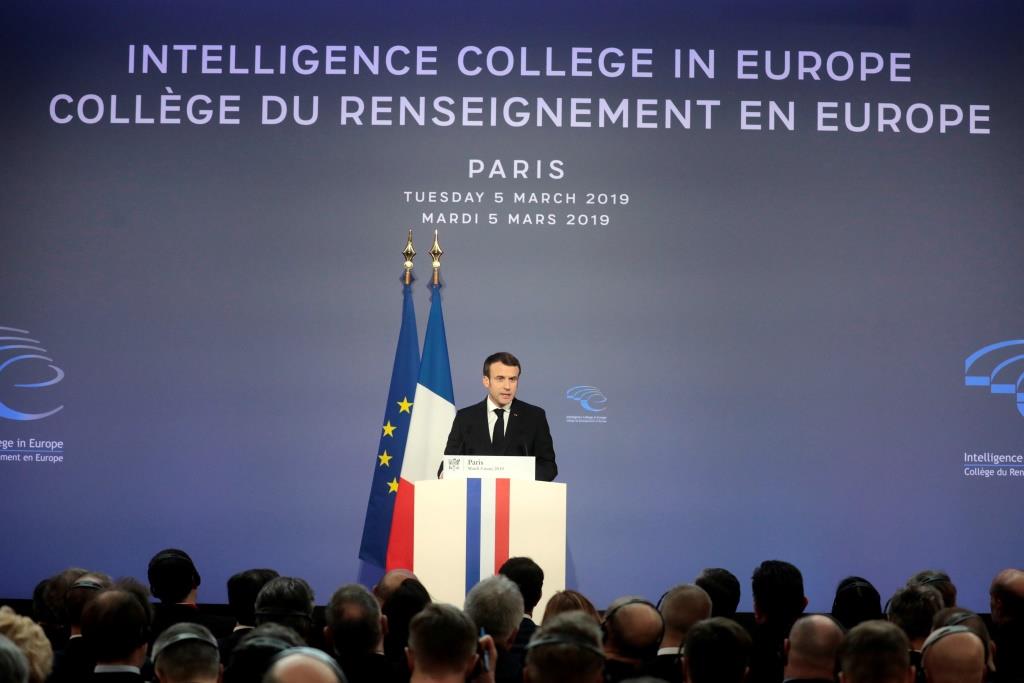
French President Emmanuel Macron delivers a speech during the closing session of the Intelligence College in Europe meeting at the Foreign Affairs Ministry in Paris, France March 5, 2019.

“Academization of intelligence” is defined as the academic research, conceptualization, and teaching about the world of intelligence. Its goal is to study the field of intelligence’s essence, activities, and influence on the national security of the state and its decision-making processes. Policymakers and political leaders have recognized the increasingly significant role of intelligence in shaping policy and decision-making processes. These developments and concerns accelerated the academization of intelligence and gave the field its due attention and prominence. As the demand for intelligence practitioners increased, American and Western universities responded to the growing need for formulating academic programs and courses devoted to intelligence, which significantly accelerated the academization of intelligence. The United States, the United Kingdom, and Canada are at the forefront of efforts to academize intelligence. In other Western countries, such as Spain, France, and Germany, the process of academicization has been slower and burdened by the darker roles played by the intelligence services at certain points in history.


The opinions expressed in INSS publications are the authors’ alone.
Publication Series Cyber, Intelligence, and Security
TopicsForeign Information Manipulation and Interference
עברית

Events

All events
Iran, US, Israel, and the Global Jewish Community
10 March, 2026
12:00 - 13:00
Shutterstock

Related Publications

All publications
Shutterstock
The Lone Editor as a Source of Knowledge Bias Concerning Israel on English Wikipedia: The Case of Iskandar323
Bias against Israel on English Wikipedia is a known and documented phenomenon, yet its internal mechanisms often remain hidden from the broader public. This article examines the underlying mechanisms of this phenomenon through a focused analysis of the behavioral patterns of Iskandar323, a senior and experienced editor who operated on the platform for nearly twelve years before being permanently banned in early 2026 for violating prior restrictions on editing articles on the Israeli–Palestinian conflict. The study is based on mapping the scope of his activity, categorizing his primary areas of editing within the domain under examination, and conducting a qualitative content analysis of selected edits in core articles. The findings indicate a systematic pattern of knowledge poisoning that does not rely solely on the insertion of false information but rather operates through reframing, omission of context, selective organization of facts, and wording changes with broad interpretive implications. Two main axes of activity emerge from the analysis: the first involves rewriting the foundations of Jewish identity, Zionism, and the State of Israel by weakening the Jewish connection to historical sites and spaces, reframing ancient Jewish history in the Land of Israel, and undermining the right to national self-determination; the second involves shaping the narrative of the Israeli–Palestinian conflict in a manner that frames Israel within a one-sided, judgmental critical framework. The banning of Iskandar323 demonstrates that Wikipedia’s enforcement mechanisms are capable of functioning effectively. However, the fact that many of his edits remained in place even after his pattern of activity was exposed raises questions regarding the effectiveness of oversight, transparency, and accountability on the platform. It also underscores the need to consider state-level initiatives, including a formal complaint to the Wikimedia Foundation, alongside a legal examination of aspects of responsibility related to the phenomenon as a means of reducing existing harm and preventing its recurrence in the future.
04/05/26
Shutterstock
Iran’s Strategic Communications in the Campaign: Intimidation, Deterrence, and Resilience
Iran’s use of missile launches, public messaging, and digital activity to create a cumulative effect of deterrence, attrition, and demoralization
23/03/26
The ISNAD Campaign Against Israel—Toward a New Strategy?
How has the anti-Israeli influence campaign linked to the Muslim Brotherhood changed following the end of the war in Gaza?
23/02/26

Stay up to date

Registration was successful! Thanks.
  • Research

    • Topics
      • Israel and the Global Powers
      • Israel-United States Relations
      • Glazer Israel-China Policy Center
      • Russia
      • Europe
      • Antisemitism and Delegitimization
      • Iran and the Shi'ite Axis
      • Operation Roaring Lion
      • Iran
      • Lebanon and Hezbollah
      • Syria
      • Yemen and the Houthi Movement
      • Iraq and the Iraqi Shiite Militias
      • Conflict to Agreements
      • Israeli-Palestinian Relations
      • Hamas and the Gaza Strip
      • Peace Agreements and Normalization in the Middle East
      • Saudi Arabia and the Gulf States
      • Turkey
      • Egypt
      • Jordan
      • Israel’s National Security Policy
      • Military and Strategic Affairs
      • Societal Resilience and the Israeli Society
      • Jewish-Arab Relations in Israel
      • Climate, Infrastructure and Energy
      • Terrorism and Low Intensity Conflict
      • Cross-Arena Research
      • Data Analytics Center
      • Law and National Security
      • Advanced Technologies and National Security
      • Foreign Information Manipulation and Interference
      • Economics and National Security
    • Projects
      • Preventing the Slide into a One-State Reality
      • India-Middle East-Europe Economic Corridor (IMEC)
  • Publications

    • All Publications
    • INSS Insight
    • Policy Research and Papers
    • Special Publication
    • Strategic Assessment
    • Technology Platform
    • Memoranda
    • Database
    • Posts
    • Books
    • Archive
  • About

    • Vision and Mission
    • History
    • Research Disciplines
    • Chairman of the Board
    • Board of Directors
    • Fellowship and Prizes
    • Internships
    • Annual Reports
    • Support
    • Privacy Policy and Terms of Use
  • Media

    • Communications
    • Video Gallery
    • Press Release
    • Podcast
  • Home

  • Events

  • Database

  • Team

  • Contact

  • Newsletter

  • עברית

INSS logo The Institute for National Security Studies, Strategic, Innovative, Policy-Oriented Research, go to the home page
40 Haim Levanon St. Tel Aviv, 6997556 Israel | Tel: 03-640-0400 | Fax: 03-744-7590 | Email: info@inss.org.il
Developed by Daat ,Yael Group.
Accessibility Statement
This site is protected by reCAPTCHA and the Google Privacy Policy and Terms of Service apply.