


The Six Day War: The Victory that Spurred a Fixed Mindset | INSS
go to header go to content go to footer go to search
INSS logo The Institute for National Security Studies, Strategic, Innovative, Policy-Oriented Research, go to the home page
INSS
Tel Aviv University logo - beyond an external website, opens on a new page
  • Campus
  • Contact
  • עברית
  • Support Us
  • Research
    • Topics
      • Israel and the Global Powers
        • Israel-United States Relations
        • Glazer Israel-China Policy Center
        • Russia
        • Europe
        • Antisemitism and Delegitimization
      • Iran and the Shi'ite Axis
        • The Campaign Against Iran and the Shiite Axis
        • Iran
        • Lebanon and Hezbollah
        • Syria
        • Yemen and the Houthi Movement
        • Iraq and the Iraqi Shiite Militias
      • Conflict to Agreements
        • Israeli-Palestinian Relations
        • Hamas and the Gaza Strip
        • Peace Agreements and Normalization in the Middle East
        • Saudi Arabia and the Gulf States
        • Turkey
        • Egypt
        • Jordan
      • Israel’s National Security Policy
        • Military and Strategic Affairs
        • Societal Resilience and the Israeli Society
        • Jewish-Arab Relations in Israel
        • Climate, Infrastructure and Energy
        • Terrorism and Low Intensity Conflict
      • Cross-Arena Research
        • Data Analytics Center
        • Law and National Security
        • Advanced Technologies and National Security
        • Foreign Information Manipulation and Interference
        • Economics and National Security
    • Projects
      • Preventing the Slide into a One-State Reality
      • India-Middle East-Europe Economic Corridor (IMEC)
  • Publications
    • -
      • All Publications
      • INSS Insight
      • Policy Research and Papers
      • Special Publication
      • Strategic Assessment
      • Technology Platform
      • Memoranda
      • Posts
      • Books
      • Archive
  • Database
    • Surveys
    • Spotlight
    • Maps
    • Dashboards
  • Events
  • Team
  • About
    • Vision and Mission
    • History
    • Research Disciplines
    • Chairman of the Board
    • Board of Directors
    • Fellowship and Prizes
    • Annual Reports
    • Internships
  • Media
    • Communications
    • Video gallery
    • Press Releases
  • Podcast
  • Newsletter
  • Campus
Search in site
  • Research
    • Topics
    • Israel and the Global Powers
    • Israel-United States Relations
    • Glazer Israel-China Policy Center
    • Russia
    • Europe
    • Antisemitism and Delegitimization
    • Iran and the Shi'ite Axis
    • The Campaign Against Iran and the Shiite Axis
    • Iran
    • Lebanon and Hezbollah
    • Syria
    • Yemen and the Houthi Movement
    • Iraq and the Iraqi Shiite Militias
    • Conflict to Agreements
    • Israeli-Palestinian Relations
    • Hamas and the Gaza Strip
    • Peace Agreements and Normalization in the Middle East
    • Saudi Arabia and the Gulf States
    • Turkey
    • Egypt
    • Jordan
    • Israel’s National Security Policy
    • Military and Strategic Affairs
    • Societal Resilience and the Israeli Society
    • Jewish-Arab Relations in Israel
    • Climate, Infrastructure and Energy
    • Terrorism and Low Intensity Conflict
    • Cross-Arena Research
    • Data Analytics Center
    • Law and National Security
    • Advanced Technologies and National Security
    • Foreign Information Manipulation and Interference
    • Economics and National Security
    • Projects
    • Preventing the Slide into a One-State Reality
    • India-Middle East-Europe Economic Corridor (IMEC)
  • Publications
    • All Publications
    • INSS Insight
    • Policy Research and Papers
    • Special Publication
    • Strategic Assessment
    • Technology Platform
    • Memoranda
    • Posts
    • Books
    • Archive
  • Database
    • Surveys
    • Spotlight
    • Maps
    • Dashboards
  • Events
  • Team
  • About
    • Vision and Mission
    • History
    • Research Disciplines
    • Chairman of the Board
    • Board of Directors
    • Fellowship and Prizes
    • Internships
    • Annual Reports
    • Privacy Policy and Terms of Use
  • Media
    • Communications
    • Video gallery
    • Press Releases
  • Podcast
  • Newsletter
  • Campus
  • Contact
  • עברית
  • Support Us
bool(false)

Publications

Home Publications Chapters The Six Day War: The Victory that Spurred a Fixed Mindset

The Six Day War: The Victory that Spurred a Fixed Mindset

Tel Aviv: The Institute for National Security Studies, 2018

Follow us on Google
עברית
Moshe Ya'alon

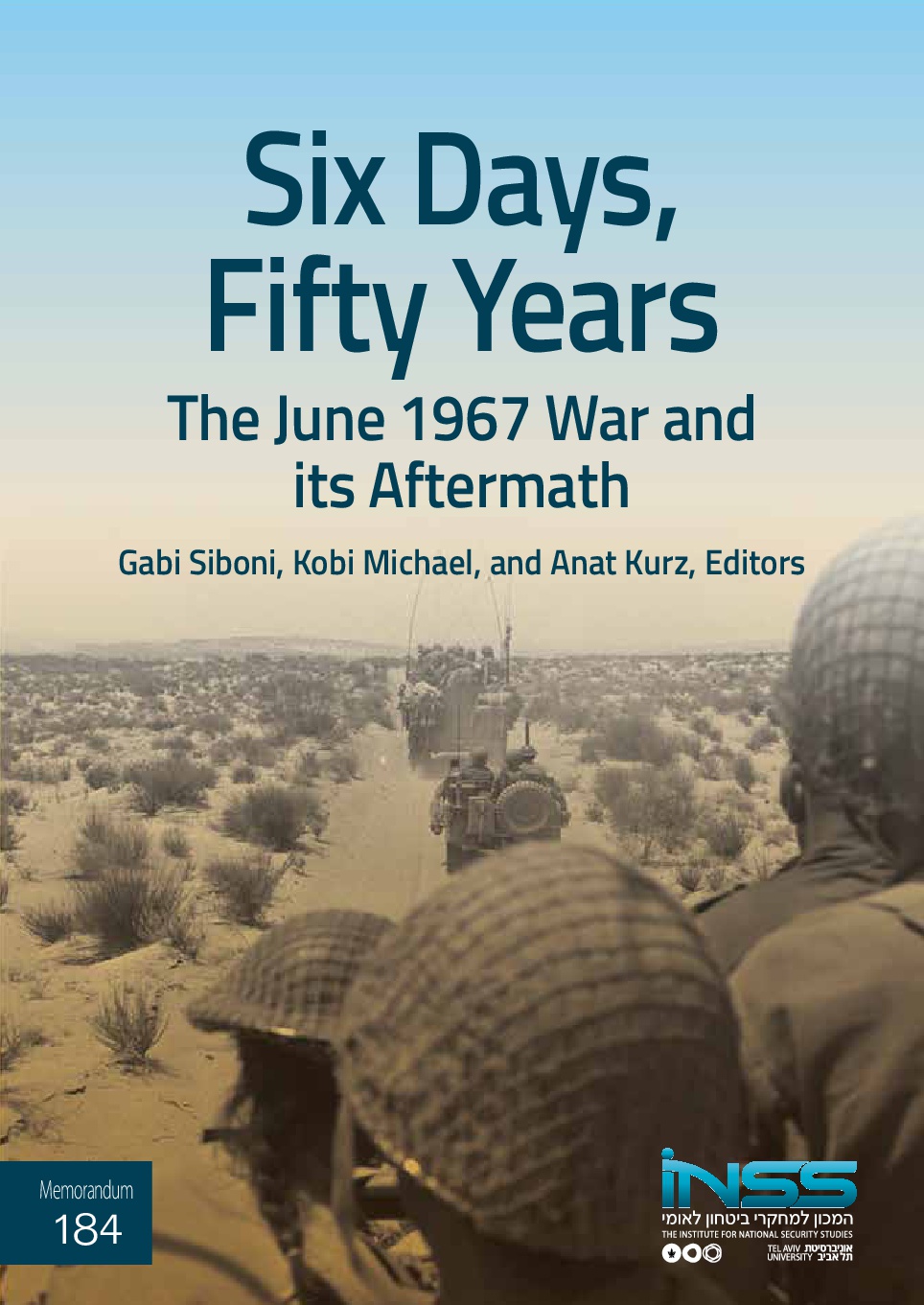
The period immediately prior to the Six Day War was marked by anxiety over the State of Israel’s ability to survive a war in which it was attacked by the Egyptian, Jordanian, and Syrian militaries, assisted by reinforcements from Iraq, Saudi Arabia, and possibly Libya, Sudan, Tunisia, Morocco, and Algeria. There was a sense of an existential threat to the state, whose narrowest point at the Tulkarm-Netanya line was not more than 14 kilometers wide, and as a result the Israeli leadership attempted repeatedly to avoid the war by diplomatic means. When efforts to do so were exhausted, the IDF launched a preemptive air attack (Operation Moked) against Egypt, Syria, Jordan, and Iraq and achieved air superiority, which was a decisive factor in the Israeli victory. The spectacular and quick victory led to the expansion of Israel’s borders to the Jordan River, the liberation of Jerusalem and Judea and Samaria, the removal of the Syrian threat from the Golan Heights and the Egyptian threat from the Sinai Peninsula, and the deployment of the IDF on the banks of the Suez Canal. All this contributed to a sense of exhilaration and even euphoria among Israeli society, the IDF command, and the political leadership. The expanded State of Israel after the war hardly resembled the tiny state prior it.


The opinions expressed in INSS publications are the authors’ alone.
Publication Series Chapters
TopicsMilitary and Strategic AffairsSocietal Resilience and the Israeli Society
עברית

Events

All events
Israel’s National Security Conference
27 July, 2026
10:00 - 14:00

Related Publications

All publications
Generated with AI
Time to Break the Strategic Limbo: Israel’s Core Challenge
Israel finds itself in a continuous stagnation, wherein impressive tactical military achievements are not translating into political and strategic victory. How can this 'limbo' be resolved across the various fronts?
05/07/26
REUTERS
Alternatives for the Gaza Strip Following the Campaign Against Iran
As the campaign against Iran winds down, attention is expected to return to the Gaza Strip. In the meantime, Hamas is exploiting the strategic vacuum to rehabilitate its governance and military capabilities. Simultaneously, the Trump framework remains stalled, and the “Board of Peace” faces professional, operational, and budgetary difficulties in advancing its declared objectives. The issue of demilitarization remains trapped between Israel’s demand for the complete and immediate disarmament of Hamas and the organization’s stalling tactics. Israel faces three main alternatives: (1) Renewal of efforts to fully implement the Trump framework across the Strip, a course that carries the risk of “mock demilitarization” and depends on Hamas’s consent; (2) Gradual stabilization and reconstruction of areas cleared of Hamas while continuing to erode its control in areas still under its rule. This option is vulnerable to violent disruption and could entrench the Strip’s division; (3) A return to war and the reoccupation of the Gaza Strip, which would entail extremely heavy military, economic, and diplomatic costs for Israel. The key recommendation is to avoid perpetuating the status quo, which establishes Hamas’s rule, and instead adopt a proactive approach. Israel should allow the implementation of the Mladenov framework for gradual demilitarization, beginning with heavy weapons, while coordinating with the Trump administration regarding scenarios that would justify use of force. If Hamas obstructs the process, Israel should implement a differential alternative: the entry of a civilian committee and Palestinian police into “green zones” cleared of Hamas (alongside increasing Israeli security responsibility modeled on Judea and Samaria). Simultaneously, Hamas’s capabilities and governance in the “red zone” should be systematically degraded, including the gradual erosion of its territorial control. The alternative of returning to war and military occupation should remain a last-resort alternative, contingent on the formulation of an exit strategy and a designated body to assume civilian responsibility.
10/06/26
Nir Alon/ZUMA Press Wire via REUTERS
“Operation Roaring Lion”: Summary of the First Phase
“Operation Roaring Lion,” the war against Iran and its proxies, has not yet reached its conclusion. Although the final outcome remains unclear and the current situation may soon shift, the campaign’s distinctive characteristics allow for an interim assessment. This is the most extensive war fought in the Middle East since the Second Gulf War, and the first in which Israel is fighting as an active partner in a coalition with the United States. While its global implications have yet to fully emerge, it is already clear that the war carries significant implications for the Gulf States, the global energy market, Israel’s international standing, and great-power competition.
17/05/26

Stay up to date

Registration was successful! Thanks.
  • Research

    • Topics
      • Israel and the Global Powers
      • Israel-United States Relations
      • Glazer Israel-China Policy Center
      • Russia
      • Europe
      • Antisemitism and Delegitimization
      • Iran and the Shi'ite Axis
      • The Campaign Against Iran and the Shiite Axis
      • Iran
      • Lebanon and Hezbollah
      • Syria
      • Yemen and the Houthi Movement
      • Iraq and the Iraqi Shiite Militias
      • Conflict to Agreements
      • Israeli-Palestinian Relations
      • Hamas and the Gaza Strip
      • Peace Agreements and Normalization in the Middle East
      • Saudi Arabia and the Gulf States
      • Turkey
      • Egypt
      • Jordan
      • Israel’s National Security Policy
      • Military and Strategic Affairs
      • Societal Resilience and the Israeli Society
      • Jewish-Arab Relations in Israel
      • Climate, Infrastructure and Energy
      • Terrorism and Low Intensity Conflict
      • Cross-Arena Research
      • Data Analytics Center
      • Law and National Security
      • Advanced Technologies and National Security
      • Foreign Information Manipulation and Interference
      • Economics and National Security
    • Projects
      • Preventing the Slide into a One-State Reality
      • India-Middle East-Europe Economic Corridor (IMEC)
  • Publications

    • All Publications
    • INSS Insight
    • Policy Research and Papers
    • Special Publication
    • Strategic Assessment
    • Technology Platform
    • Memoranda
    • Database
    • Posts
    • Books
    • Archive
  • About

    • Vision and Mission
    • History
    • Research Disciplines
    • Chairman of the Board
    • Board of Directors
    • Fellowship and Prizes
    • Internships
    • Annual Reports
    • Support
    • Privacy Policy and Terms of Use
  • Media

    • Communications
    • Video Gallery
    • Press Release
    • Podcast
  • Home

  • Events

  • Database

  • Team

  • Contact

  • Newsletter

  • עברית

INSS logo The Institute for National Security Studies, Strategic, Innovative, Policy-Oriented Research, go to the home page
40 Haim Levanon St. Tel Aviv, 6997556 Israel | Tel 03-640-0400 | Fax 03-744-7590 |
Developed by Daat ,Yael Group.
Accessibility Statement
This site is protected by reCAPTCHA and the Google Privacy Policy and Terms of Service apply.