


Resuscitating US-Saudi Relations | INSS
go to header go to content go to footer go to search
INSS logo The Institute for National Security Studies, Strategic, Innovative, Policy-Oriented Research, go to the home page
INSS
Tel Aviv University logo - beyond an external website, opens on a new page
  • Campus
  • Contact
  • עברית
  • Support Us
  • Research
    • Topics
      • Israel and the Global Powers
        • Israel-United States Relations
        • Glazer Israel-China Policy Center
        • Russia
        • Europe
        • Antisemitism and Delegitimization
      • Iran and the Shi'ite Axis
        • The Campaign Against Iran and the Shiite Axis
        • Iran
        • Lebanon and Hezbollah
        • Syria
        • Yemen and the Houthi Movement
        • Iraq and the Iraqi Shiite Militias
      • Conflict to Agreements
        • Israeli-Palestinian Relations
        • Hamas and the Gaza Strip
        • Peace Agreements and Normalization in the Middle East
        • Saudi Arabia and the Gulf States
        • Turkey
        • Egypt
        • Jordan
      • Israel’s National Security Policy
        • Military and Strategic Affairs
        • Israel's Security Strategy
        • Societal Resilience and the Israeli Society
        • Jewish-Arab Relations in Israel
        • Climate, Infrastructure and Energy
        • Terrorism and Low Intensity Conflict
      • Cross-Arena Research
        • Data Analytics Center
        • Law and National Security
        • Advanced Technologies and National Security
        • Foreign Information Manipulation and Interference
        • Economics and National Security
    • Projects
      • Preventing the Slide into a One-State Reality
      • India-Middle East-Europe Economic Corridor (IMEC)
  • Publications
    • -
      • All Publications
      • INSS Insight
      • Policy Research and Papers
      • Special Publication
      • Strategic Assessment
      • Technology Platform
      • Memoranda
      • Posts
      • Books
      • Archive
  • Database
    • Surveys
    • Spotlight
    • Maps
    • Dashboards
  • Events
  • Team
  • About
    • Vision and Mission
    • History
    • Research Disciplines
    • Chairman of the Board
    • Board of Directors
    • Fellowship and Prizes
    • Annual Reports
    • Internships
  • Media
    • Communications
    • Video gallery
    • Press Releases
  • Podcast
  • Newsletter
  • Campus
Search in site
  • Research
    • Topics
    • Israel and the Global Powers
    • Israel-United States Relations
    • Glazer Israel-China Policy Center
    • Russia
    • Europe
    • Antisemitism and Delegitimization
    • Iran and the Shi'ite Axis
    • The Campaign Against Iran and the Shiite Axis
    • Iran
    • Lebanon and Hezbollah
    • Syria
    • Yemen and the Houthi Movement
    • Iraq and the Iraqi Shiite Militias
    • Conflict to Agreements
    • Israeli-Palestinian Relations
    • Hamas and the Gaza Strip
    • Peace Agreements and Normalization in the Middle East
    • Saudi Arabia and the Gulf States
    • Turkey
    • Egypt
    • Jordan
    • Israel’s National Security Policy
    • Military and Strategic Affairs
    • Israel's Security Strategy
    • Societal Resilience and the Israeli Society
    • Jewish-Arab Relations in Israel
    • Climate, Infrastructure and Energy
    • Terrorism and Low Intensity Conflict
    • Cross-Arena Research
    • Data Analytics Center
    • Law and National Security
    • Advanced Technologies and National Security
    • Foreign Information Manipulation and Interference
    • Economics and National Security
    • Projects
    • Preventing the Slide into a One-State Reality
    • India-Middle East-Europe Economic Corridor (IMEC)
  • Publications
    • All Publications
    • INSS Insight
    • Policy Research and Papers
    • Special Publication
    • Strategic Assessment
    • Technology Platform
    • Memoranda
    • Posts
    • Books
    • Archive
  • Database
    • Surveys
    • Spotlight
    • Maps
    • Dashboards
  • Events
  • Team
  • About
    • Vision and Mission
    • History
    • Research Disciplines
    • Chairman of the Board
    • Board of Directors
    • Fellowship and Prizes
    • Internships
    • Annual Reports
    • Privacy Policy and Terms of Use
  • Media
    • Communications
    • Video gallery
    • Press Releases
  • Podcast
  • Newsletter
  • Campus
  • Contact
  • עברית
  • Support Us
bool(false)

Publications

Home Publications INSS Insight Resuscitating US-Saudi Relations

Resuscitating US-Saudi Relations

INSS Insight No. 535, April 2, 2014

Follow us on Google
עברית
Yoel Guzansky
Oded Eran
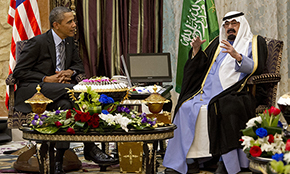
President Obama’s recent visit to Saudi Arabia was aimed at restoring Riyadh’s confidence that the United States would come to the monarchy’s defense in times of need. The bilateral bargain of oil for security has long been the underpinning of US-Saudi relations, and Saudi Arabia has upheld its part of the bargain by regulating its oil exports, partly on the basis of US strategic considerations. However, US conduct on certain regional issues, particularly the Iranian nuclear project and the situation in Syria, has led to a growing sense of disenchantment and the perception that the US is a superpower in retreat. There is growing suspicion in Riyadh that the US will not maintain its part of the equation and deliver security. And in the end, expectations that Obama’s visit would herald a shift in US-Saudi relations were premature.

President Obama’s recent visit to Saudi Arabia was aimed at restoring Riyadh’s confidence that the United States would come to the monarchy’s defense in times of need. The bilateral bargain of oil for security has been the underpinning of US-Saudi relations since the meeting between President Franklin D. Roosevelt and King Ibn Saud aboard the destroyer USS Quincy in the Suez Canal in February 1945. In the decades that followed, Saudi Arabia upheld its part of the bargain by regulating its oil exports, partly on the basis of US strategic considerations. However, US conduct on certain regional issues, particularly the Iranian nuclear project and the situation in Syria, has led to a growing sense of disenchantment and the perception that the US is a superpower in retreat. There is growing suspicion in Riyadh that the US will not maintain its part of the equation and deliver security.

Obama’s first visit to Saudi Arabia in 2009 was intended to emphasize the significance of the kingdom in Washington’s eyes and its leading role in the Arab world. The President sought to consult with the Saudi king on Iran and obtain his support for jumpstarting Palestinian-Israeli peace negotiations. In a symbolic vein, he went to Riyadh to turn over a new leaf in US relations with the Muslim world by visiting the birthplace of Islam.

The US and Saudi Arabia share several interests. For well over 70 years, US presidents, Republican and Democrat alike, have expressed their commitment to the kingdom’s security. The strong relationship has withstood serious crises, such as the 1973 oil embargo and the post-9/11 era. The US continues to need Saudi Arabia for assistance in the war against terror and access to Yemen, Afghanistan, Pakistan, and its immediate Gulf neighbors. At the same time, Saudi Arabia depends on the US to maintain stability in the region through military deployment and involvement in regional matters, from leading the negotiations with Iran to mediating the Israeli-Palestinian peace process.

These mutual interests, though, have not been sufficient to disguise the divides between the countries’ respective views and analyses of some key Middle East issues. Riyadh was bewildered by what it perceived as the US abandonment of President Mubarak. It is concerned by the possibility of rapprochement between Tehran and Washington. This rapprochement is viewed in Saudi Arabia, as in some other capitals in the region, as based on Iranian subterfuge and American wishful thinking. Riyadh is less concerned by the technical details of the Iranian nuclear program than by the specter of strong US-Iran relations resulting from a permanent agreement, which would strengthen Iran’s posture in the Gulf region. Such an agreement would facilitate Washington’s intended disengagement from the region. Riyadh also believes that improved relations with Iran will extend Assad’s stay in power in Syria. Saudi Arabia suspects that Washington’s decision not to use force in Syria in 2013 was linked to what was then a potential interim agreement with Iran. President Obama certainly tried to reassure his hosts that “the US will not accept a bad deal,” but these assurances fell short of assuaging the Saudis.

But Riyadh’s alternatives are limited. No other power, whether Russia, China or India, is either capable or willing to assume the US role. Riyadh could instead opt for a more limited security arrangement, and Crown Prince Salman’s recent visit to Pakistan, Japan, India, and China may be an indicator that the monarchy is considering all its options.

On Syria, King Abdullah likely urged President Obama to act more forcefully to bring Assad down. Before their meeting, leaks appeared in the press about US intentions to increase military support for the Syrian opposition. Given the multitude of rebel groups and the shifting control of the area they occupy, it is not clear how feasible this idea is. Washington and Riyadh may have narrowed their differences on this issue, but disagreements, especially Riyadh’s desire to have “moderate” rebels provided with shoulder-launched surface-to-air missiles (MANPADs), still remain, as the US fears these weapons may fall into the wrong hands. If Washington continues to reject the Saudi assessment on the need to act more forcefully to support the rebels, Saudi Arabia could itself decide to supply rebel groups with certain categories of equipment not approved by Washington.

The Saudis have most probably clarified again to the US President that Bahrain is a “red line,” and that the Sunni royal house there should not be pressured to carry out reforms that will further weaken it vis-à-vis the Iranian-backed Shiite majority. It stands to reason that the file on human rights in Saudi Arabia was also not opened during Obama’s visit. During this short visit, President Obama granted an International Women of Courage Award to a Saudi woman for her activities in children’s and women’s health in the Kingdom. Apparently, criticizing the deficiencies in political and human rights in Saudi Arabia is not consistent with rebuilding confidence in the US.

The issue of energy was also present in the background of the visit, as indeed was the whole bilateral relationship. The Saudi regime is aware of the declining importance of Middle East energy resources to the US, which will be energy independent by 2020. In Riyadh’s view, this has diminished Washington’s readiness to stand by its unwritten commitment to “oil for security” and given the US greater maneuverability in its policy in the region.

Expectations that the visit would herald a shift in US-Saudi relations were premature. As the cliché goes, the significance of the meeting was in its occurrence. Neither side can run away from its interests and guiding principles. Various commentators have also alluded to an informal, invisible “alliance” between Israel and Saudi Arabia based on their mutual concern regarding the Iranian nuclear threat and Tehran’s support of non-state actors in the Middle East. The two states are also concerned by the perceived American withdrawal from the region. Thus to a large extent, there are seeming similarities between the interests of the two states. However, the challenges faced by Israel and Saudi Arabia are different in origin, and their relationships with the US are of different natures. Even if press reports of meetings between Israeli and Saudi officials are correct, this “alliance” does not necessarily further Israel’s cause in Washington or elsewhere.
The opinions expressed in INSS publications are the authors’ alone.
Publication Series INSS Insight
TopicsSaudi Arabia and the Gulf StatesIsrael-United States Relations
עברית

Events

All events
Israel’s National Security Conference
27 July, 2026
10:00 - 14:00

Related Publications

All publications
Interactive Live Map: Fighting between the Houthis, the Yemeni Government, and the Saudi-led Coalition
This interactive map tracks the conflict in Yemen from July 2026 onward. It is continuously updated and based on open-source intelligence (OSINT), including geolocated visual documentation, satellite imagery, statements by official and non-state actors, and reporting from regional and international media outlets. The map aims to illustrate and document military activity and the movement of front lines over time.
16/09/26
REUTERS (modified by INSS)
The Day After Hormuz: Can the Gulf Free Itself from the Chokepoint?
Is a True Alternative to the Strait of Hormuz Attainable?
16/09/26
Shutterstock
The Mecca Agreement: Real Substance or Mere Intent?
An analysis of the implications of the defense agreement between Saudi Arabia, Turkey, and Pakistan through four possible scenarios – and recommendations for Israel
20/08/26

Stay up to date

Registration was successful! Thanks.
  • Research

    • Topics
      • Israel and the Global Powers
      • Israel-United States Relations
      • Glazer Israel-China Policy Center
      • Russia
      • Europe
      • Antisemitism and Delegitimization
      • Iran and the Shi'ite Axis
      • The Campaign Against Iran and the Shiite Axis
      • Iran
      • Lebanon and Hezbollah
      • Syria
      • Yemen and the Houthi Movement
      • Iraq and the Iraqi Shiite Militias
      • Conflict to Agreements
      • Israeli-Palestinian Relations
      • Hamas and the Gaza Strip
      • Peace Agreements and Normalization in the Middle East
      • Saudi Arabia and the Gulf States
      • Turkey
      • Egypt
      • Jordan
      • Israel’s National Security Policy
      • Military and Strategic Affairs
      • Israel's Security Strategy
      • Societal Resilience and the Israeli Society
      • Jewish-Arab Relations in Israel
      • Climate, Infrastructure and Energy
      • Terrorism and Low Intensity Conflict
      • Cross-Arena Research
      • Data Analytics Center
      • Law and National Security
      • Advanced Technologies and National Security
      • Foreign Information Manipulation and Interference
      • Economics and National Security
    • Projects
      • Preventing the Slide into a One-State Reality
      • India-Middle East-Europe Economic Corridor (IMEC)
  • Publications

    • All Publications
    • INSS Insight
    • Policy Research and Papers
    • Special Publication
    • Strategic Assessment
    • Technology Platform
    • Memoranda
    • Database
    • Posts
    • Books
    • Archive
  • About

    • Vision and Mission
    • History
    • Research Disciplines
    • Chairman of the Board
    • Board of Directors
    • Fellowship and Prizes
    • Internships
    • Annual Reports
    • Support
    • Privacy Policy and Terms of Use
  • Media

    • Communications
    • Video Gallery
    • Press Release
    • Podcast
  • Home

  • Events

  • Database

  • Team

  • Contact

  • Newsletter

  • עברית

INSS logo The Institute for National Security Studies, Strategic, Innovative, Policy-Oriented Research, go to the home page
40 Haim Levanon St. Tel Aviv, 6997556 Israel | Tel 03-640-0400 | Fax 03-744-7590 |
Developed by Daat ,Yael Group.
Accessibility Statement
This site is protected by reCAPTCHA and the Google Privacy Policy and Terms of Service apply.