


Publications
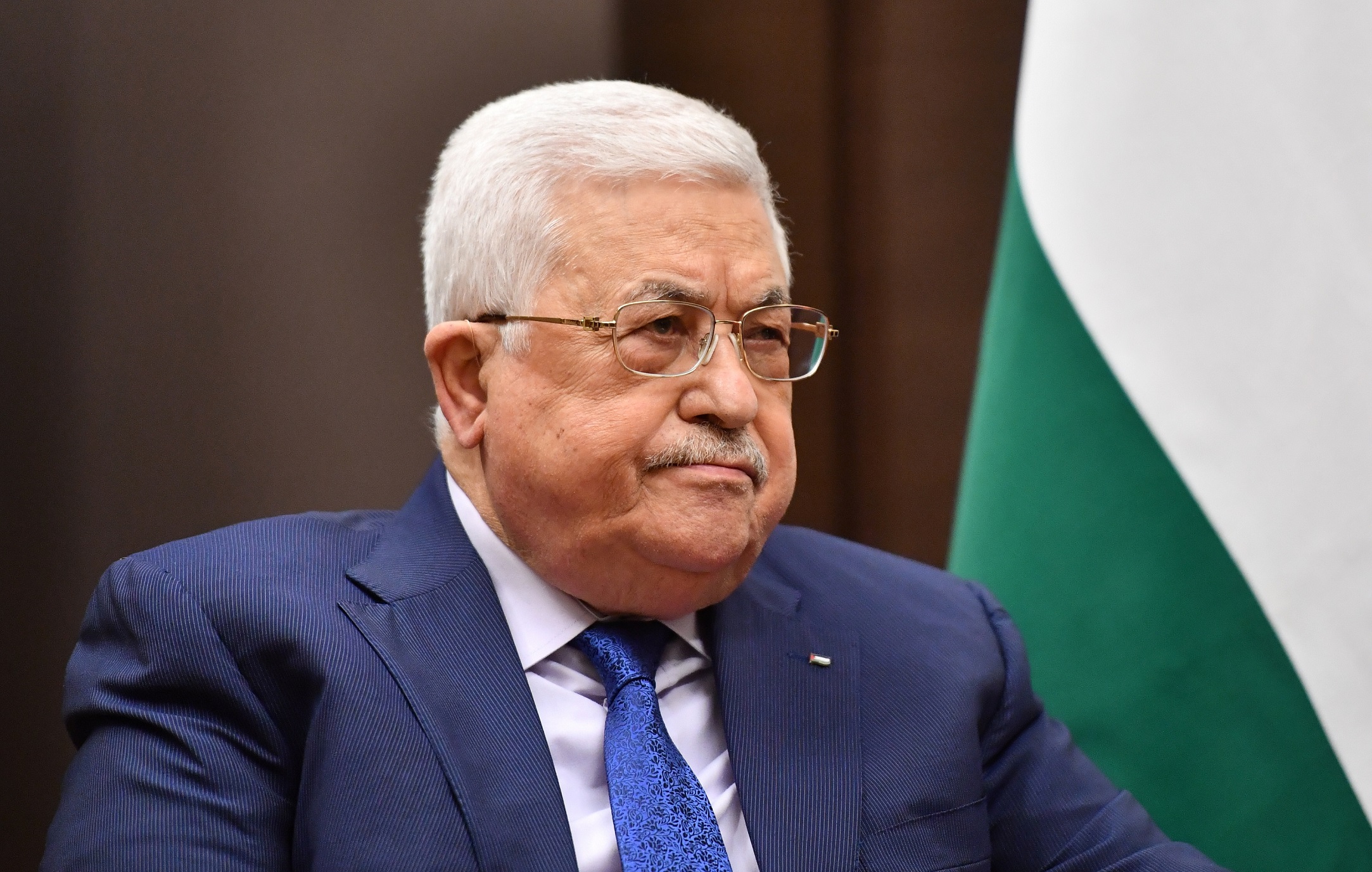
Ahead of the battle over who will succeed him, Abu Mazen is using a series of decisions on appointments and candidacies taken recently at the Fatah Central Committee to appoint loyalists and allies to senior positions; these appointments are expected to be approved by the PLO’s Central Council. These decisions are seen as an underhanded move by Abu Mazen and his associates, and have sparked anger in the Palestinian arena, both among the public and the political opposition, which will try with greater effort to stir up the West Bank. This in turn could well weaken the Palestinian Authority and undermine the security of the Jewish settlements there
INSS Insight No. 1551, February 6, 2022
Follow us on GoogleA series of decisions on appointments and candidacies taken recently at the Fatah Central Committee caused an uproar in the Palestinian arena. Their implementation would be interpreted as an attempted takeover of the PLO and the Palestinian Authority (PA) power centers by the “Abu Mazen camp” in Fatah, perpetuation of the intra-Palestinian divide, delay of the elections to PA institutions to an unknown date, and increased dependence on Israel. In effect, reflecting a lack of interest in public legitimacy, these decisions open a new front by the PA vis-à-vis the public, alongside the existing fronts with respect to Hamas, those disillusioned with Fatah, and other organizations. These are steps that could gradually cast the Palestinian Authority and its apparatuses, in the eyes of the public, as being under the patronage of Israel. Israel for its part should remove itself from this context and emphasize its interest in bringing the Palestinians to political and economic independence and help young Palestinians with the creation of worthwhile employment opportunities.
A series of decisions made by the Central Committee of the Fatah movement headed by Chairman Abu Mazen prior to the convening of the PLO's Central Council has sparked anger in the Palestinian arena and raised questions regarding the future of the PLO and the possibility of intra-Palestinian reconciliation. The questions also relate to the very ability to carry out the policy to which Abu Mazen is committed, according to the speech he gave in September 2021 at the UN Security Council. This includes rescinding the recognition of Israel and withdrawing from the Palestinians’ commitments if Israel doesn’t end the occupation within one year. In a process that was imposed on the members of the committee and did not allow any real room for opposition, a series of appointments and candidacies were declared regarding figures from among Abu Mazen's associates and loyalists. The committee's announcement stated that it was decided to renew the confidence in Abu Mazen as Chairman of Fatah and the PLO; to approve the candidacy of Hussein al-Sheikh, the Minister of Civil Affairs who is very close to him, as member of the PLO's Executive Committee; and to approve the candidacy of Rawhi Fattouh, a member of the Fatah Central Committee, also an Abu Mazen loyalist, as Chairman of the Palestinian National Council (PNC) in place of the elderly Salim Zanoun, who recently announced his retirement.
These decisions have many important implications regarding control of the PLO and Fatah institutions, and regarding the struggle that has already begun over the succession. The expression of confidence in Abu Mazen and his continuation as PLO head aimed to strengthen his legitimacy as Chairman, given the drop in public support for him since April 2021 when he decided to cancel the elections scheduled for May, and in order to enable governmental stability until rule is transferred to his successors.
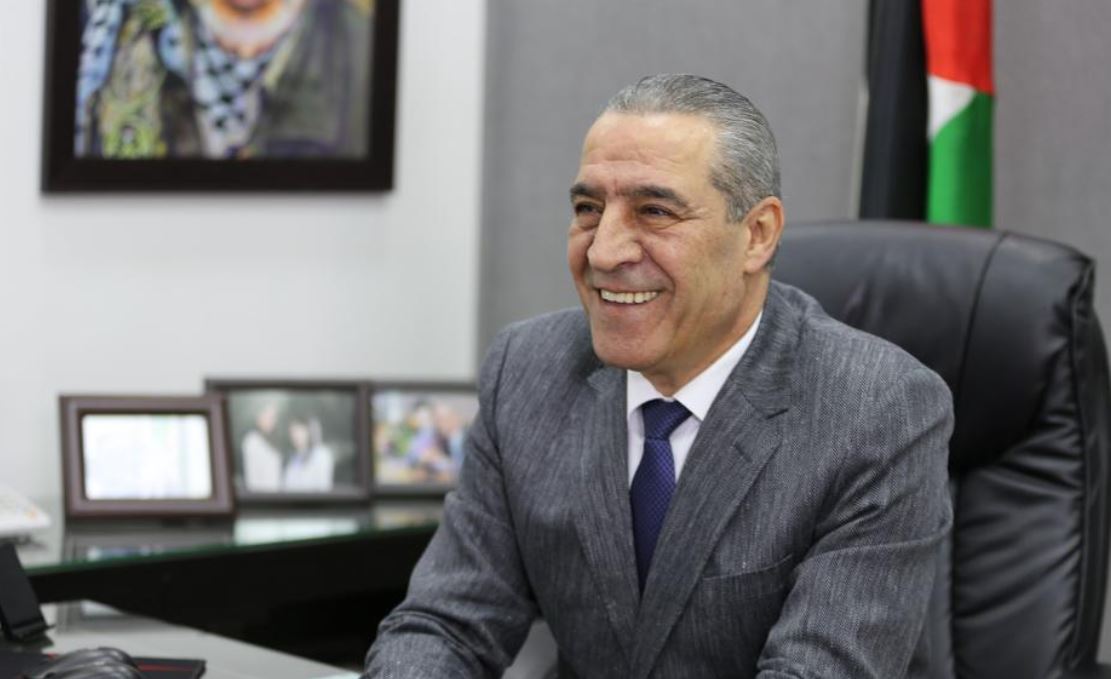
The candidacy of Hussein al-Sheikh is the more controversial move because in the Fatah leadership there are more senior and more accomplished figures, and due to the advantage that membership in the Executive Committee grants him in competing to succeed Abu Mazen. His past complications with bribery and sexual harassment have also received considerable public attention. Al-Sheikh accompanies Abu Mazen in all of the talks that maintain the connection with foreign figures and Israel and ensure the survival of the Palestinian Authority. If he is able to inherit the position of Saeb Erekat, who died a year ago, as Secretary General of the Executive Committee and responsible for the political negotiation portfolio, he will be situated in a more comfortable starting position than others in the succession struggle. However, his selection does not guarantee him the position of PLO Secretary General. Saeb Erekat earned this position many years after he held the PLO's negotiations portfolio and was not considered a potential successor of the President. Abu Mazen, in contrast, served as Secretary General of the Executive Committee under Arafat and was recognized by all as his successor, many years before he was president.
The candidacy of Rawhi Fattouh aimed to place the management of the PNC and the Central Committee in the hands of a loyal figure, at a time when it would be necessary to pass decisions that are expected to face opposition on issues of policy, succession, and the transfer of powers, and perhaps also to bend regulations and procedures. Fattouh, originally from Rafah, is one of Abu Mazen's cronies and agents. In the past he served as Speaker of the Palestinian Legislative Council and also filled Arafat's position after his death, until Abu Mazen's election as president. His appointment is criticized given his reputation as a corrupt figure.
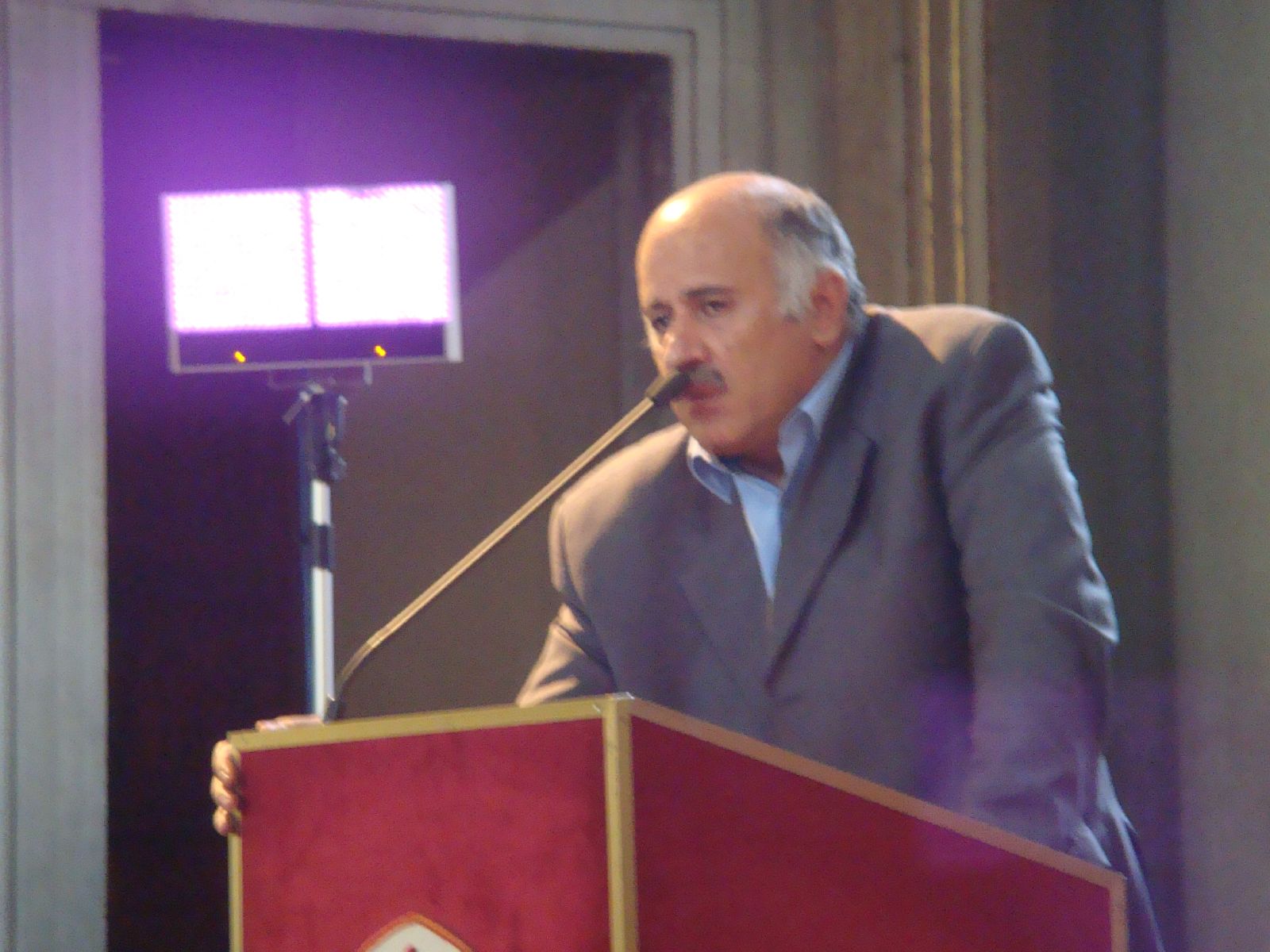
These decisions are described as an underhanded move by Abu Mazen and his associates, denying other, eligible candidates or allowing objections from participants in the meeting. The main victims of the move are Jibril Rajoub, who many still consider one of the candidates for successor; Mahmoud al-Aloul, a longtime Fatah figure who until the decision was considered a candidate and a close associate of Abu Mazen; and Tawfiq al-Tirawi, a senior Fatah figure and former Chairman of General Intelligence who in recent years moved away from Abu Mazen.
The attempt to push these figures out of the race could open a new front within Fatah, which is likely not desired by Abu Mazen. Jibril Rajoub claimed during the discussion that he is the victim of a plot that the President's associates devised against him, and that it is inconceivable that loyalty would be the sole condition for receiving one position or another. The three have not yet publicly criticized the decisions on the appointments, but it is clear that they are greatly disappointed. Shortly before the convening of the Central Committee, Rajoub himself returned from his trips to Syria and Lebanon, where he failed in his attempts to convince the Popular Front to participate in the Council’s convention. In his interviews with the Lebanese media, Rajoub praised the intra-Palestinian reconciliation and his relations with Hamas; it is not clear whether the way he did so is in line with Abu Mazen's wishes.
The Central Council is scheduled to convene on February 6, 2022. Unlike in the past, the preparations for the Council (which has already been postponed once) and the efforts to boycott them, which were revived with greater intensity following these decisions, did not include calling for Hamas and other organizations outside of the PLO to participate. If there are no new developments, Abu Mazen and his associates will probably succeed in approving the candidacies chosen in the Central Committee, despite the opposition, thus tightening their control of the PLO, the Palestinian Authority, and all of its institutions.
Among the implications of the approval:
- Postponing the elections to the national institutions to an unknown date. Abu Mazen's Fatah is unwilling to face an election in the near future, apparently due to fear of failing, because of the considerable loss of public support for the movement and its leader.
- Increasing the dependence on Israel in security affairs and day-to-day functioning, and on foreign sources on questions of funding and international legitimacy.
- Accepting the absence of a political process – as was expected thus far – in the format of negotiations leading to a permanent agreement, and coming to terms with a process with lower expectations. Abu Mazen’s threats in his General Assembly speech are unlikely to be carried out.
- Undermining inter-organizational reconciliation and offending Algeria, which since January 15 has hosted delegations of the Palestinian factions in its capital in order to advance the process. The Central Committee's decisions completely contradict the Algiers discussions and might close the door to reconciliation for the foreseeable future.
- Signaling negatively to the younger generation regarding the leadership's level of commitment to their future and their expectation of new opportunities.
- Closing the pending corruption cases, and using this as a tool for accusing potential opponents of decisions, inside or outside Fatah.
If the appointments are approved unchanged by the PLO Central Council, they will be interpreted as Abu Mazen giving up on public legitimacy and nullifying it as a source of authority for his camp. The decisions will also be interpreted as tying his fate and the fate of his rule to Israel and the international community – or some part thereof, with which they would come to terms – and with Arab countries that for a while now are eager for quiet from the direction of the Palestinians. This would in effect be opening a broad new front vis-à-vis the Palestinian public, which is disillusioned and yearns for change, and with respect to the Palestinian factions that are part of the opposition. These could be joined by the factions of Mohammed Dahlan, Marwan Barghouti, and other disheartened Fatah figures, who are harmed by the decisions, which in effect leave them without a political home. Barghouti created a separate list before the elections that were planned for May 2021, but was not removed from Fatah like Nasser al-Qudwa, because of his electoral strength, and he has maintained his place as a member of the Central Committee.
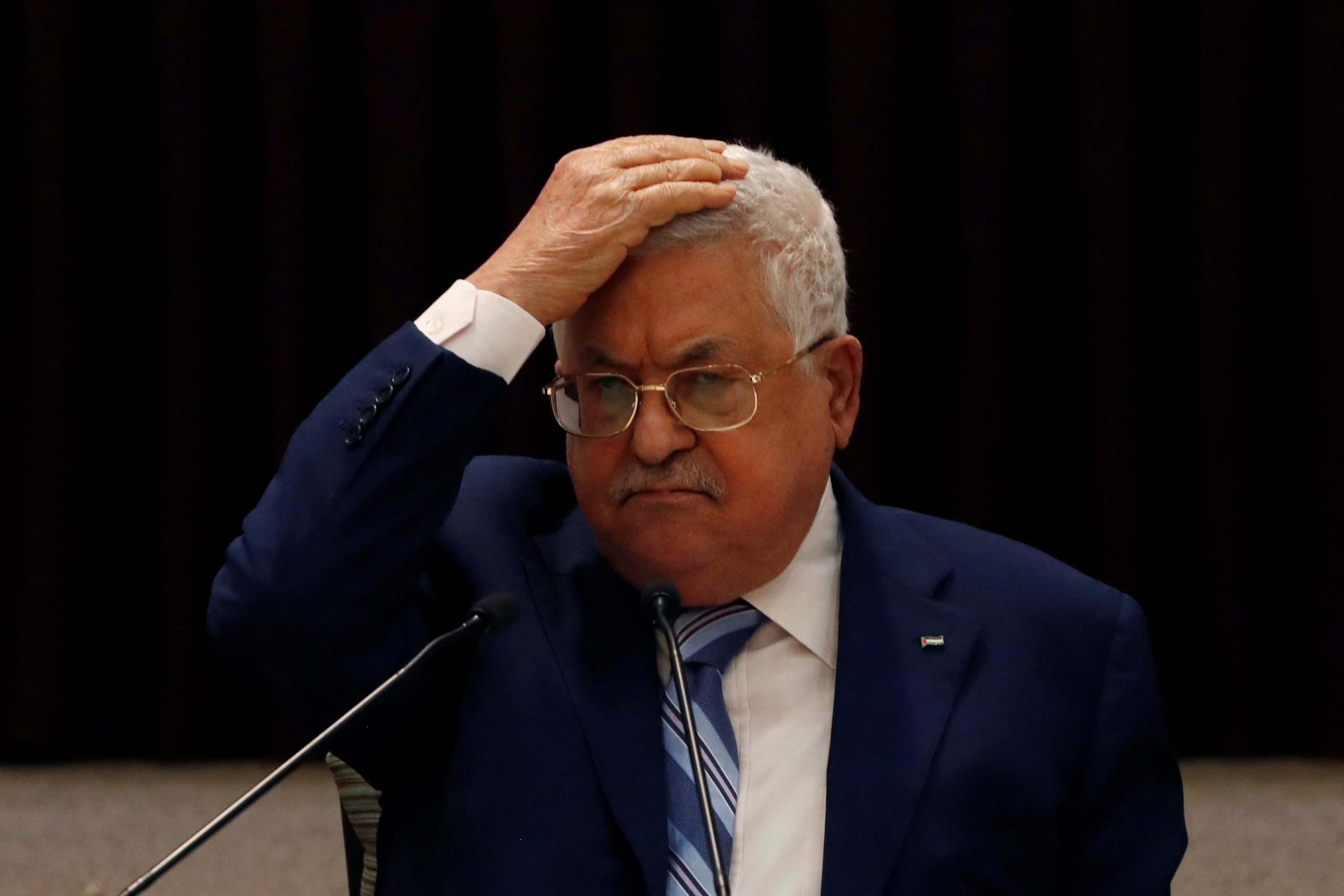
In such a reality, the pressure exerted on the West Bank by Hamas from the Gaza Strip and from within the West Bank itself could increase, with the aim of stirring up the population and increasing the protests against the Palestinian Authority and Israel. If many disillusioned figures and factions join this effort, it could arouse a large portion of the public, full of antagonism toward the PA and its security apparatuses. This would test and gradually erode the loyalty that these forces currently display toward the Palestinian Authority, as they would be accused of collaborating with Israel.
In this case much pressure would fall on Israel’s shoulders, not only as the ruler of the West Bank but also the patron of the Palestinian Authority. The use of attacks and terrorism could increase and the security of the Israeli settlements in the West Bank would require reinforcements and control of territories for the purpose of security and defense. Such a development could return Israel to the places that it left before the Oslo process and in certain areas even to go back to ruling over Palestinian populations.
Meetings that Israeli ministers held recently with Abu Mazen and other senior officials in the Palestinian Authority indicate the PA’s increased dependence on Israel. But in order to try to prevent these occurrences, which could bring Israel back to increased control over the West Bank, Israel should renounce the status of patron, which could develop in the relations between it and the Palestinian Authority; emphasize its independence of the Palestinian Authority and its aspirations to advance political and economic independence; and create as many opportunities as possible for young, disenchanted Palestinians in fields of advancement-oriented, well-paying, and professional employment.